
A few items
Measure the personal selection rather than every item nearby.
Angel / Storage When Only Part of a Flat Is Moving
Be clear about what is leaving—and what is not.
Storage does not have to mean emptying a whole flat. If you are moving selected possessions from an occupied Angel home, identify each included piece and leave shared or landlord-owned furniture outside the instruction unless it has been expressly agreed.
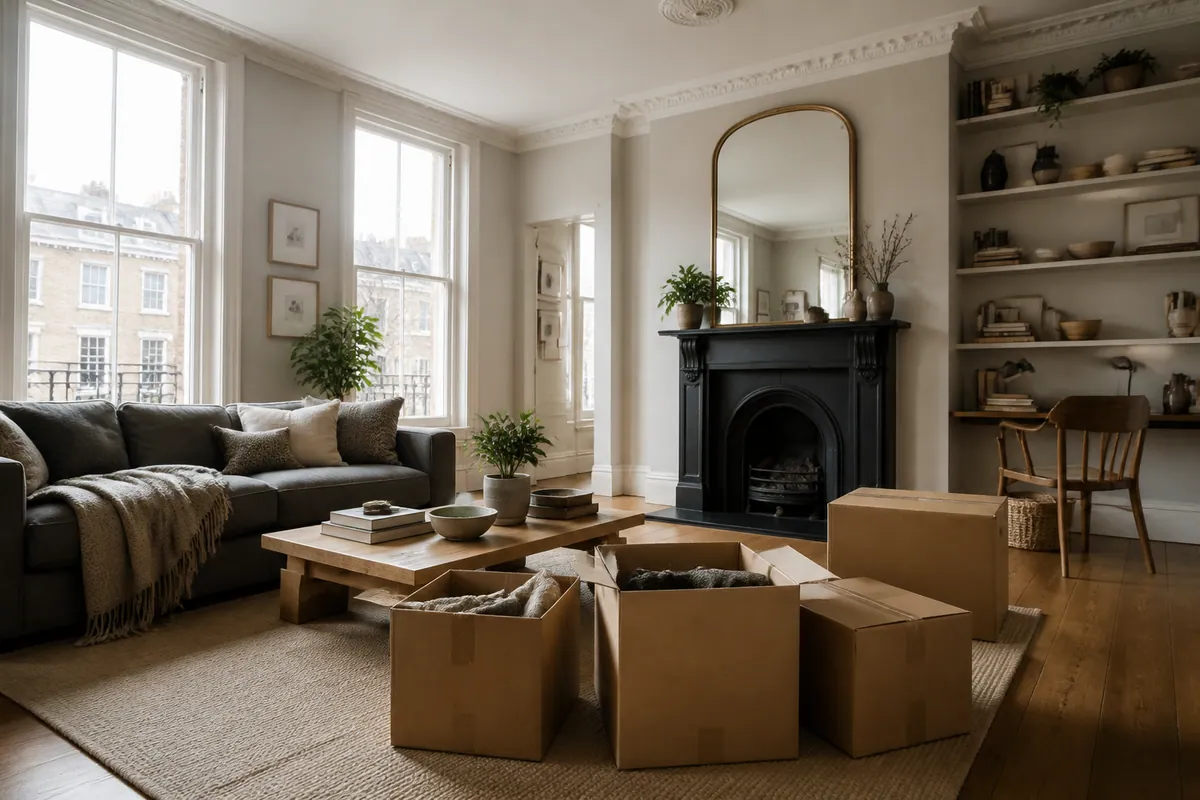
Choose your starting point
Choose the category matching your selected load, then describe individual pieces. A room photograph provides context but can include furniture belonging to somebody else, so it should not replace the written selection.
Inventory focus
Count only the authorised personal cartons and note dimensions. Identify fragile contents and ownership groups; keep essential personal records with you rather than among ordinary boxes.
Add this to your inventory ↓
A useful first conversation
An Angel partial collection needs a deliberate boundary. Enter only the items to be assessed for storage, and explain any shared pieces awaiting permission without counting them as confirmed additions.

Angel, before collection day
For a partial Angel collection, ownership and selection should remain clear even after cartons are packed. A photograph may include shared or landlord-owned furniture that is not part of the instruction. Link the selected possessions to an item record and explain who can authorise handover. The remaining occupants should not be expected to resolve the selection on collection day.
Your item-list example: a desk chair, packed books and personal small furniture. This is an illustration for the enquiry, not a description of a booked job. Record the actual pieces and quantities you want assessed.
Photograph the selected items together with the route from the room. Label boxes by owner where the flat’s contents are being divided.
Plan the route out of your property ↓Dimensions before estimates
One tall cupboard can require more route planning than several cartons. Measurements, protruding handles and the proposed protection matter even when most of the room’s contents are staying behind.
Measure the personal selection rather than every item nearby.
Identify owned furniture that remains rigid during handling.
Keep shared pieces outside the agreed individual inventory.
Assess the complete authorised selection with its access needs.
A selected personal load is not acceptance of every object in the flat. Identify unusual belongings before including them.
What changes at home?
One person may leave while another continues living in the flat. Prepare the collection without blocking their rooms or shared exit, and avoid treating communal belongings as part of an individual’s move.
If one occupied room is being changed, separate the owner’s retained pieces from supplied furniture.
Keep possessions still awaiting an ownership or disposal decision outside the confirmed selection.
Give personal seasonal boxes an owner reference as well as an expected next-use date.
One connected arrangement
Build the item list first, then name the person who can identify it at collection. If instructions change between occupants, resolve them before the crew is expected to decide what should leave.
Check the path from the selected room without assuming access to the entire home.
Agree preparation for the owned pieces specifically included in the enquiry.
Use the confirmed selection when arranging the collection.
Confirm suitability and terms for the individual’s declared belongings.
Identify the owner’s return group and authorised receiving arrangement.

Plan the return before the departure
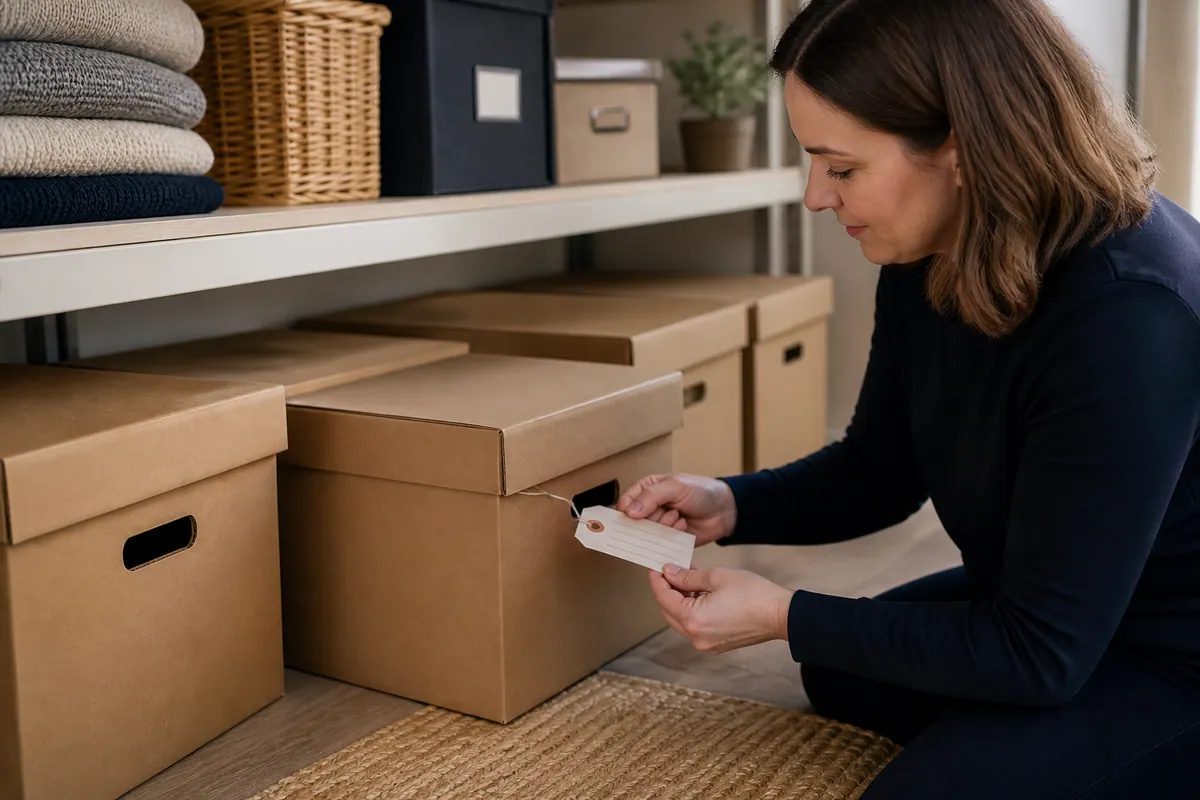
Owner names or agreed references can distinguish otherwise identical cartons. Discuss release authority and the intended receiving address privately, especially when several people will not be returning to the same home.
Need earlier
Need later
Personal essentials and irreplaceable records should remain separately available. Owner labels help identify belongings, but retrieval authority, notice and any separate-release cost still require agreement.
Link each reference to the correct owner rather than relying on the room photograph.
Identify delicate personal pieces and required protection; do not use them beneath other loads.
Separate seasonal possessions by owner so a later request remains unambiguous.
The timetable can change
| Planning point | A shorter gap | A longer arrangement |
|---|---|---|
| Typical purpose | Selected possessions between room arrangements | Personal furniture awaiting a definite destination |
| Preparation | Pack only the agreed owner’s collection | Review the declared pieces against the proposed period |
| Retrieval | Confirm where the owner will receive items | Identify personal cartons requested before furniture |
| Duration | Set terms independently of the room tenancy | Ask how an unsettled housing date is handled |
| Quotation | Owned inventory, entry and transport scope | Retained possessions, duration and release permissions |
The end of a room tenancy does not determine the storage contract. Give the known departure date, explain what remains uncertain and ask how the selected arrangement handles extensions or earlier retrieval.
Scope first. Quote second.
An Angel quotation should follow the actual possessions and handling route. ‘One room’ can mean cartons alone or include heavy furniture, preparation and transport requirements that need individual assessment.
| Service scope | Price approach | Main factors |
|---|---|---|
| Volume & access assessment | Quote for the confirmed personal selection | Measurements and suitability of included possessions |
| Collection & placement | Route and handover assessed first | Selected rooms, carrying needs and preparation |
| Ongoing storage | Agreed personal-storage period priced | Suitable space, term and owner-specific retrieval |
| Final retrieval / delivery | Release instructions confirmed individually | Authorised contact, selected group and receiving address |
The selected possessions, preparation and route determine the practical brief. Check duration, proposed facility charges, insurance and release arrangements rather than assuming a small personal load includes everything.
Collection is part of the storage plan
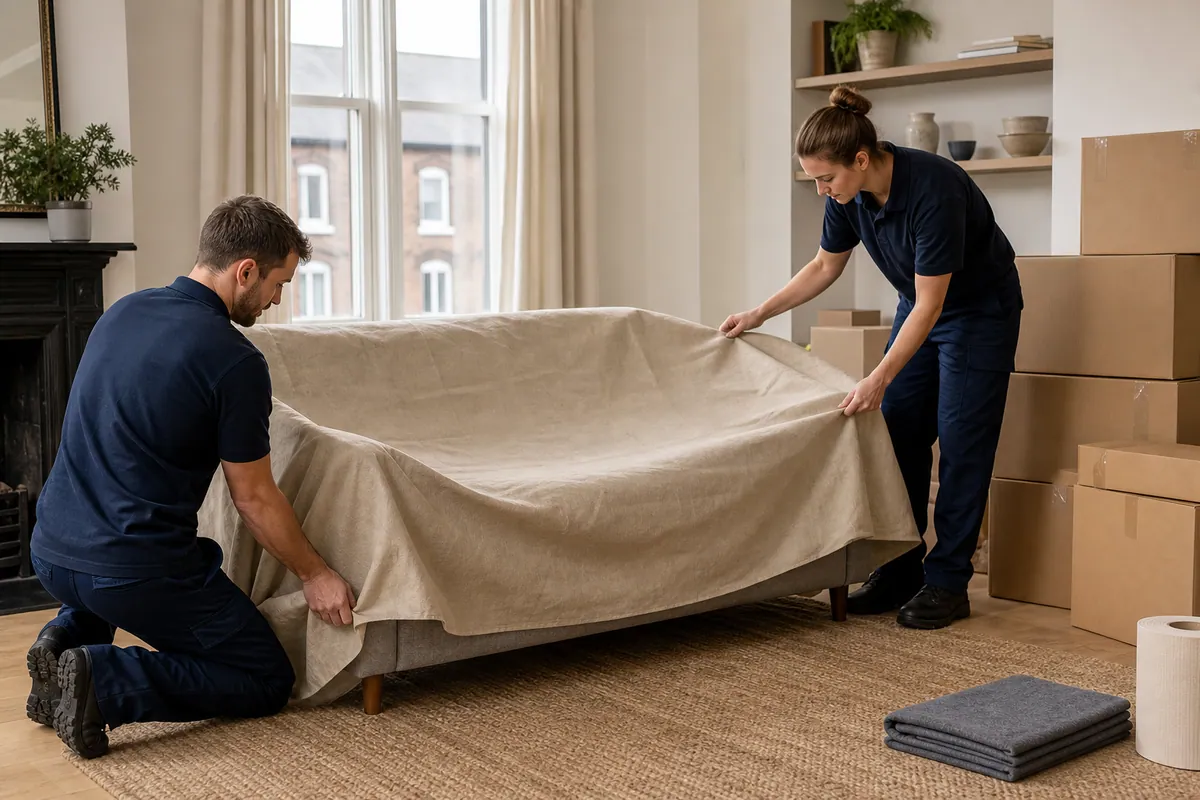
Photograph the selected pieces and explain how they reach the entrance. Include doors that need unlocking and shared spaces that must stay usable; moving access should not rely on piling boxes into a corridor.
Ask where a collection may take place without treating a shared entrance as an authorised loading space.
Show the selected furniture along its actual route; a whole-room photograph can hide both ownership and access boundaries.
Arrange entry with somebody who knows which belongings are included and which stay.
Photograph the selected items together with the route from the room.
Flats and apartments: identify the selected room and the shared route beyond it. Mansion blocks: confirm the applicable entry rules with the responsible contact. Houses: describe only the rooms and carrying paths needed for this load. Rental or managed properties: establish whose possessions may be released and by whom.
Direct answers before you book
Yes, you can enquire about a selected household inventory. Identify your items clearly and agree the scope; shared furniture must not be assumed to belong to that collection.
Keep a written exclusion list where confusion is likely. Item photographs with references are more useful than an unannotated picture of the whole room.
Explain that arrangement in advance and confirm the necessary release instructions. The person present should be able to identify the agreed load.
Separate owner groups even if discussing combined transport. Responsibility, payment and retrieval authority should be agreed rather than inferred from a shared address.
Do not include it without the appropriate agreement. The storage request should distinguish your possessions from supplied furniture and property fixtures.
The assessment needs quantities, measurements and the route. A room name does not describe the handling effort or space occupied by its selected contents.
Keep them in an agreed position that does not obstruct everyday access or escape routes. Describe their starting location to the team.
Ask how separate release works before booking, including identification, notice and charges. Labelling an owner group does not itself guarantee partial access.
Discuss the preparation required for each piece. Packing and protection can be requested, but should be included explicitly in the agreed work.
State that the return address is provisional and ask about duration and change procedures. Avoid giving an uncertain date as a guaranteed delivery instruction.
Enter the selected quantities, add the access contact and describe ownership boundaries in the notes. Review the generated email before sending it.
Keep the move connected
If only a few owned pieces are involved, describe that transport requirement accurately. The linked services help discuss handling and packing, without automatically turning the request into a full-flat removal.
Explain the limited personal transport requirement without calling it a full-flat move.
Request preparation for the identified belongings, with materials agreed.
Discuss owned furniture separately from pieces staying at the property.
Alesta customer feedback / Furniture removal & packing
“I used Alesta Services for furniture removal and packing when I moved houses. The team was incredibly careful with my belongings and made the whole process seamless.”
James W. · Existing Alesta review, not a storage testimonial for Angel.
Angel / Service area
Share your Angel postcode, floor, building entry arrangements and intended collection point. For the full household scope, visit Storage Services.
Add the postcode and entry contact when you enquire. The location identifies collection context; storage suitability, facility terms and the eventual receiving address are separate decisions.
A little space. A clear next step.
A clear list and a few item photographs are a practical starting point. Include the owner or release contact where relevant, together with the dates you already know.
