
Cleaning removes soil, not years of daylight
Sofa Cleaning in Bromley
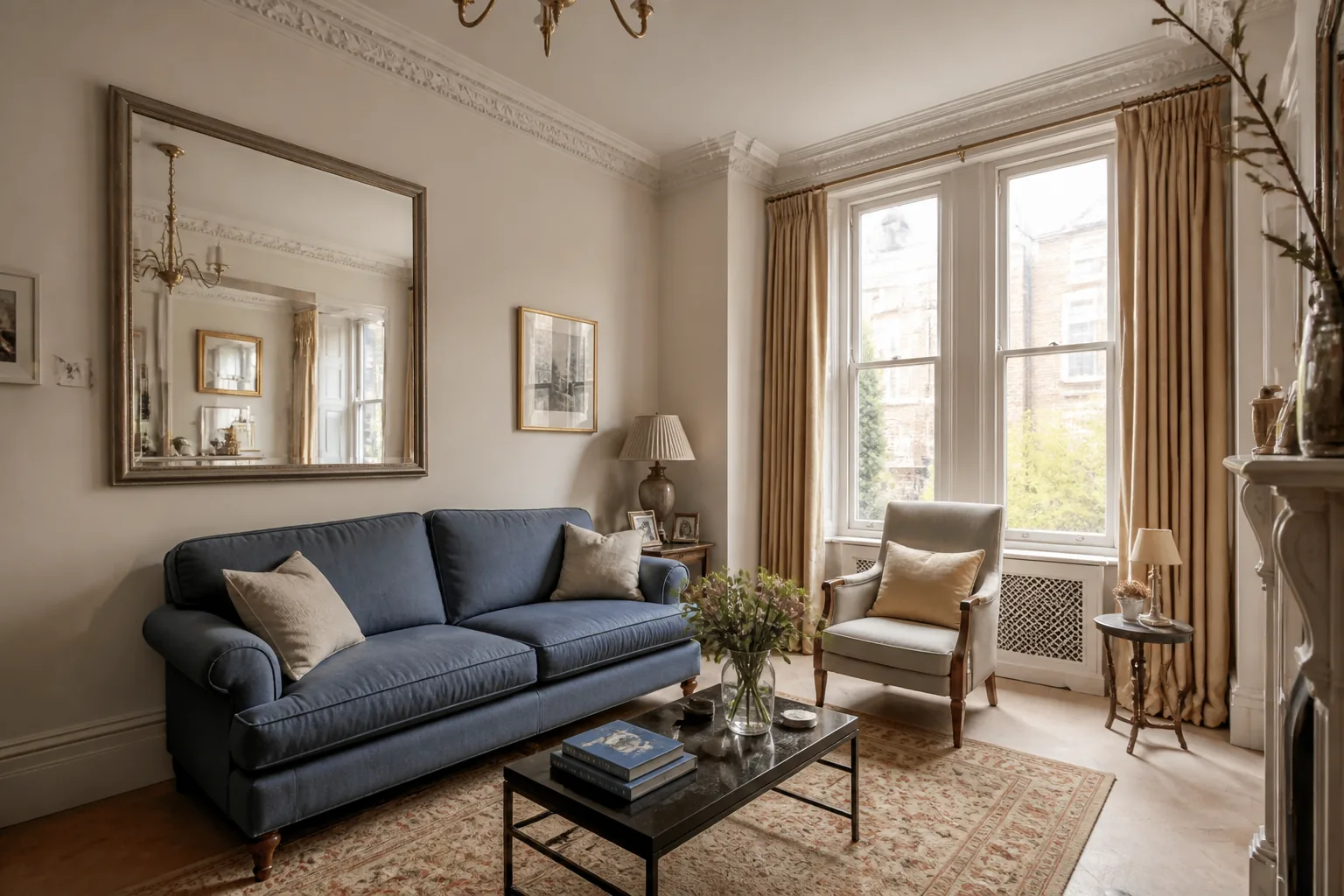
A window-side arm can look pale because colour has changed, while a sheltered seat remains closer to the original shade. Comparing the two helps avoid promising that cleaning will reverse fading.
- Photograph the sofa in even daylight
- Show window-side and sheltered panels together
- Mention past furniture rotation or cover use
- Identify brittle fibres and weak seams
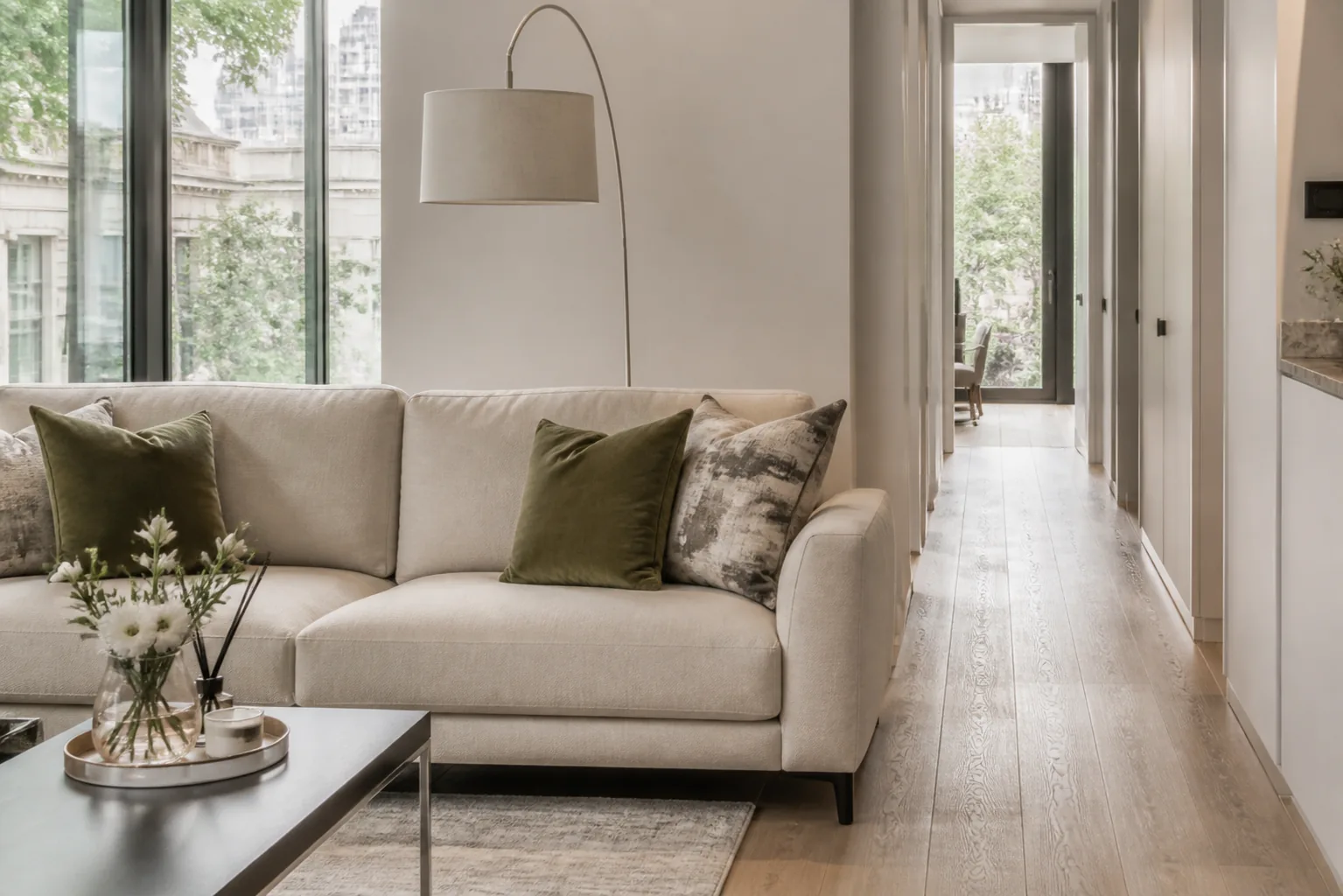
Reading colour change
Compare window-side and sheltered fabric
Soil can partly mask fading, so existing shade differences may look clearer after cleaning. Even-daylight photographs help distinguish removable dulling from permanent dye or fibre change.
- Use even natural light
- Include a sheltered panel
- Point out brittle or weak areas
Colour loss often follows a clear exposure pattern
Ultraviolet light and heat can affect dyes, coatings and fibres over time. The top of a back, one arm or the leading edge of a cushion may change first. General soil can partly mask this difference, so a cleaner surface may make existing fading easier to see rather than create it.
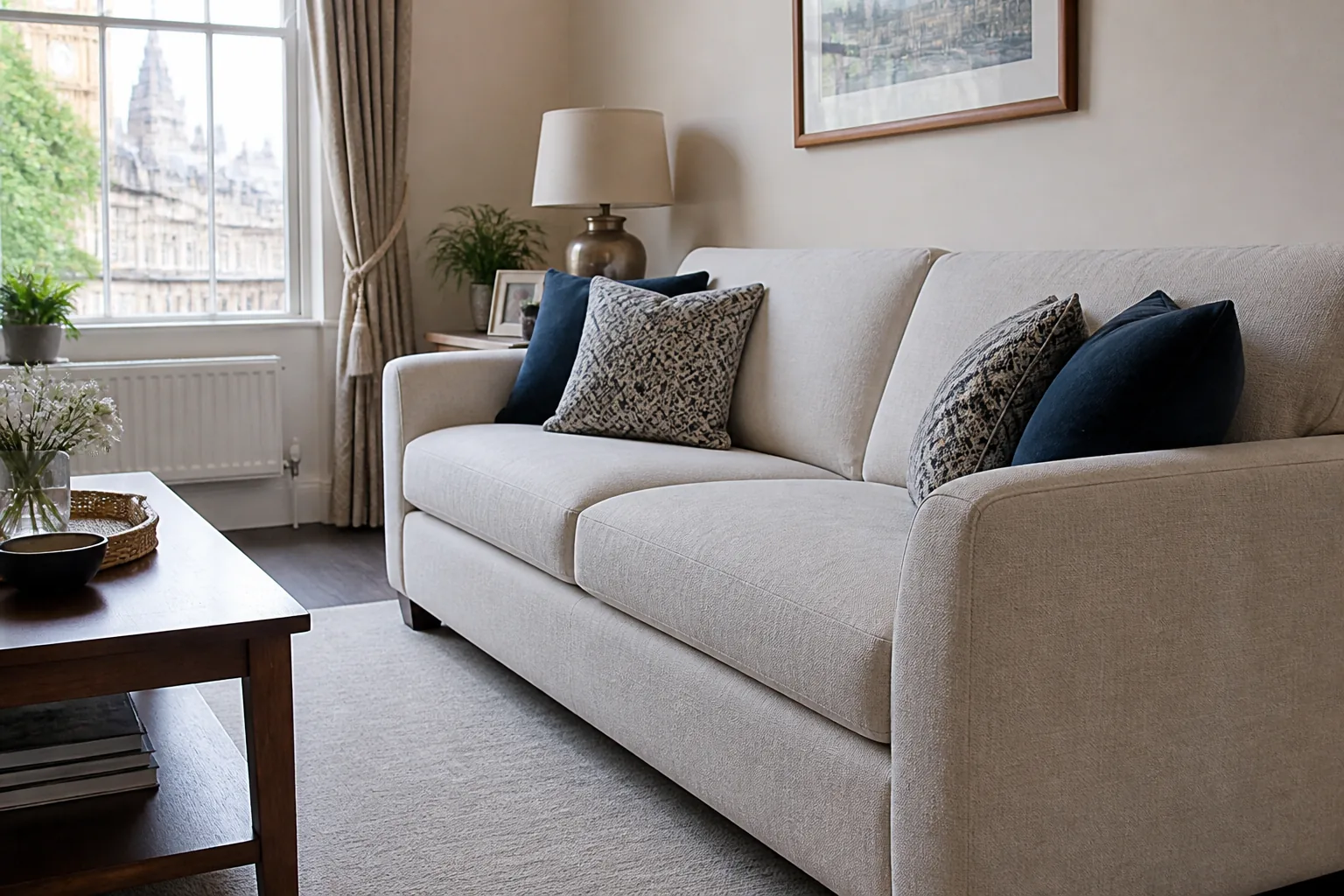
Heat can affect more than shade
Prolonged sun exposure may dry coated surfaces, weaken natural fibres or alter foam beneath the cover. These conditions are recorded before treatment. Blinds and future furniture rotation can reduce further exposure, but cleaning does not recolour cloth or strengthen material already degraded by light.
Pricing reference
Current publication: £45–£75 for a two-seat sofa before any extra pieces.
Cushions, construction and condition are confirmed before the written figure.
What treatment cannot rebuild
Fading, yellowing, fibre weakness and coating failure caused by light or heat are not removable stains. Cleaning can improve compatible soil but cannot restore the original dye or guarantee an even final shade.
Describe the real route to the furniture
For Bromley, show the relation between sofa, glazing and room access. If large doors or conservatory panels create heat, mention the normal conditions. Clear ornaments and small tables while leaving the piece in position for an accurate exposure comparison.
Light-exposure record
Trace fading across the room before cleaning
Ultraviolet exposure often leaves a gradient: the window-side arm lightens first, cushion reverses retain depth, and an ornament or throw creates a protected silhouette. Photograph the sofa at the same time on two dry days if the difference is subtle. Include the window position and the fabric hidden beneath a cushion for comparison.
Surface soil can mute colour, so cleaning may reveal a clearer contrast rather than remove it. Dye molecules altered by light cannot be washed back into place. This distinction should be agreed before work, especially on jewel tones, printed designs and natural fibres where exposure change is conspicuous.
Heat and dryness leave separate evidence
A radiator, conservatory glazing or strong sun may contribute brittleness, cracking, weakened backing or foam change. Feel and construction matter alongside shade. Rotate loose cushions only when their shape and manufacturer guidance allow it; forced swapping can strain zips or place an unfinished face outward.
Plan protection after the visit
Blinds, filtered glazing and periodic rearrangement can reduce future exposure, although no measure reverses existing fading. Avoid throwing a cover over seating until it is fully dry. Keep a neutral-light photograph as the new maintenance record and note which face was treated, which contrast was pre-existing and where wear remains visible.
fading questions
Questions raised by this construction
Can cleaning restore a sun-faded arm?
No, missing or changed dye requires restoration, replacement or acceptance of the colour difference.
Why might fading look clearer afterwards?
Removing grey soil can reveal the true contrast between exposed and sheltered fabric.
Should I close the blinds before photographs?
Use even natural light without harsh glare so colour differences can be recorded accurately.
Can cushions be rotated after cleaning?
Only where their construction permits; rotation can reduce future uneven wear but not reverse fading.
Does sunlight weaken upholstery?
It can affect fibres, finishes and seams, particularly after prolonged heat and ultraviolet exposure.
Will a test identify colour loss?
Comparison and testing help, but they cannot recreate the original manufacturer shade.
How does fading affect the quotation?
It shapes expectations and risk rather than being charged as a removable stain promise.
Can a conservatory sofa be cleaned?
Possibly, after material, heat exposure, access and safe drying conditions are assessed.
Should a faded cover be removed?
Do not remove it unless the maker specifically confirms the cover is designed for laundering.
Can nearby curtain cleaning be included?
Curtains are a separate item and require their own construction and service assessment.
