
Texture can conceal weak loops and pulled yarns
Sofa Cleaning in Beckenham
Chenille and other textured cloths gather soil in their surface while exposed loops can catch, flatten or pull. A condition record separates removable deposit from permanent change in the weave.
- Photograph snags and loose yarns before vacuuming
- Show the fabric in front and side light
- Report pilling, catches and pet claw damage
- Avoid trimming or pulling loose threads
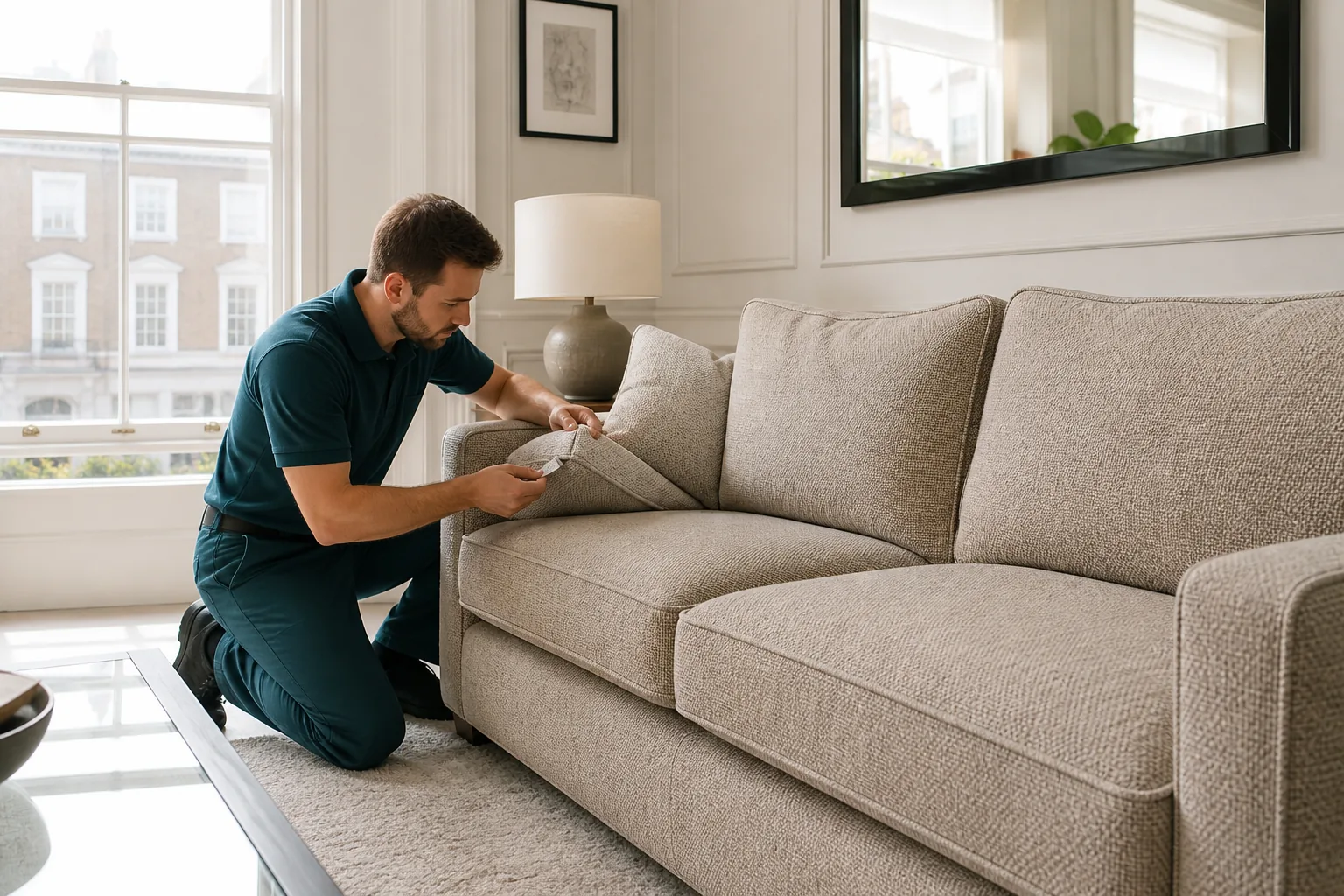
Chenille condition
Leave snags and loose yarns untouched
Raised threads cast shadows and can catch on tools, while flattened texture may resemble a dark mark. Record vulnerable areas before vacuuming so repair needs remain separate from cleaning.
- Photograph every snag
- Do not trim loose threads
- Show piping and seams closely
A dark line may be shadow from the weave
Raised yarns create small valleys that hold dry soil and change with lighting direction. Brushing, pressure and long use can flatten the texture, making an area appear different even when clean. Inspection from several angles helps distinguish deposit, pile change and actual dye difference.
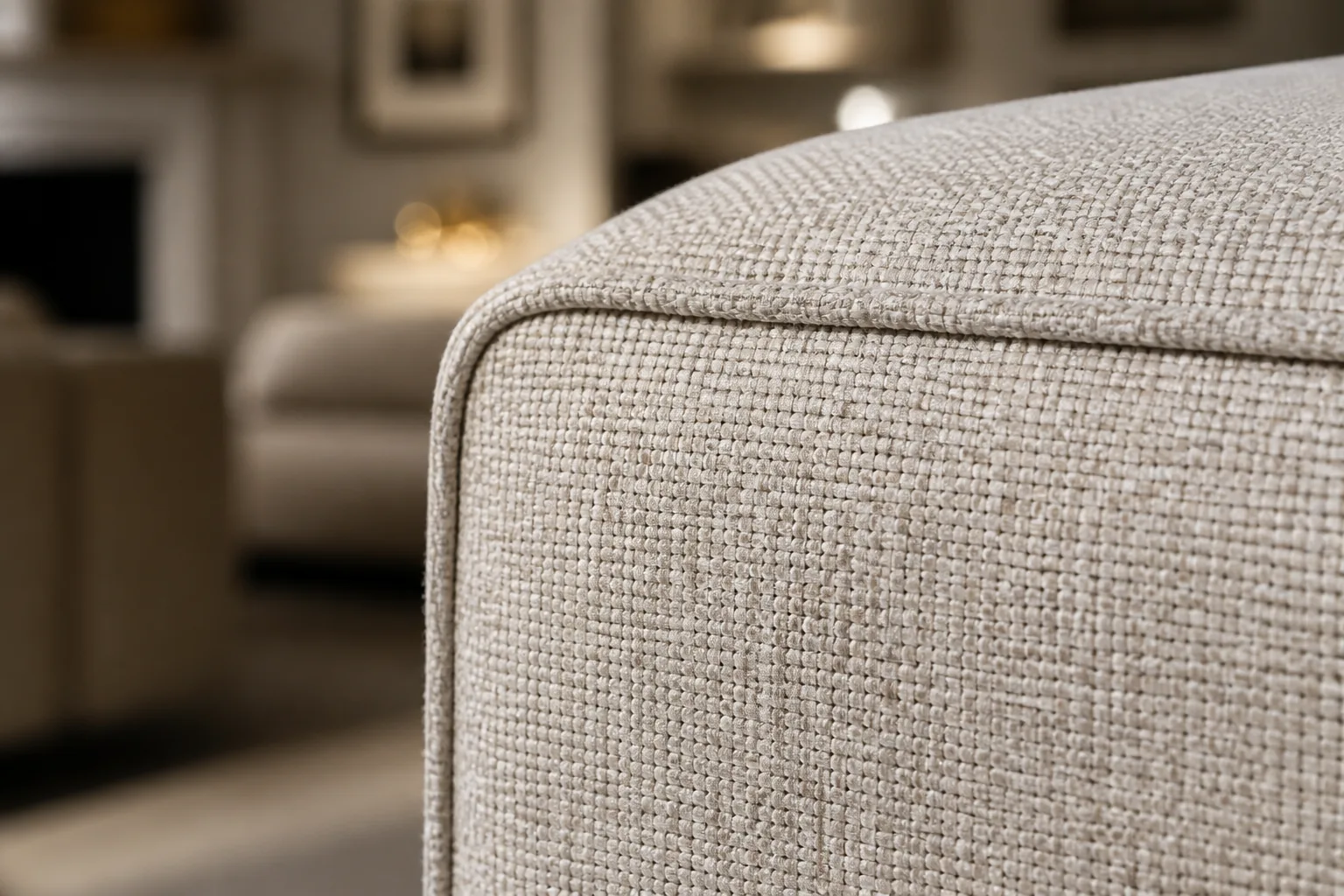
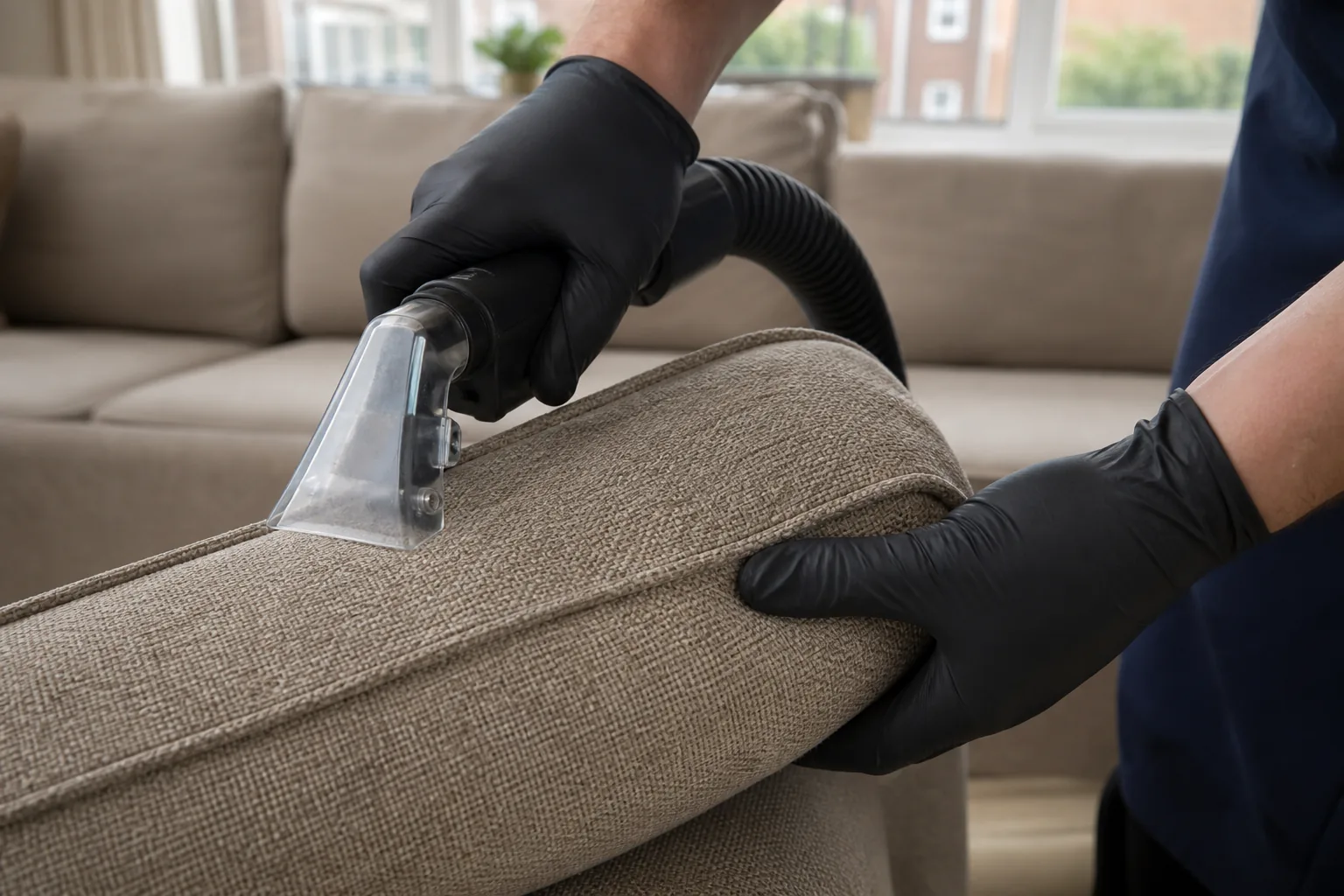
Loose yarns need restraint rather than stronger cleaning
A snag can continue to travel if caught by a brush or tool. It is photographed and avoided or treated with a reduced approach. Cutting, reweaving and securing threads are repair tasks. Piping and seams may use different materials and are checked independently of the main chenille panels.
Pricing reference
The published two-seat bracket is £45–£75; chenille condition still shapes the quotation.
Extra pieces and unusual handling remain separately itemised.
Set the result against existing condition
Cleaning cannot reweave pulled yarns, remove pilling caused by friction or restore permanently flattened texture. Weak or snagged zones may be excluded. Shade differences from wear or light can remain after soil is reduced.
Prepare a workable area, not an empty room
For Beckenham, leave the textured surfaces visible rather than covered with throws. Note the property route, floor and working clearance, and arrange good ambient light for the final review. Do not place treated cushions against rough walls or basket surfaces while drying.
Chenille structure
Distinguish shadow, soil and yarn movement
Chenille is built from soft projecting fibres held along a core yarn. Its direction can create dark and light bands as the viewer moves. Before describing a stripe as a stain, compare it from both ends of the room and use gentle side-light. A true deposit usually keeps its boundary; an optical band changes with viewing angle.
Snags, pulled loops and bald tracks are structural concerns. Cutting a raised yarn can release more of the construction, while brushing hard may strip the pile. Leave loose ends untouched and mark their positions in photographs. The technician can work around vulnerable areas or recommend repair before any cleaning proposal.
Seams and piping carry extra tension
Examine cushion corners, zip lines and the front rail where chenille is stretched over an edge. Soil often accumulates there, but aggressive action can worsen fraying. Contrasting piping may have different fibre and dye behaviour from the main cloth, so it receives a separate compatibility decision rather than being treated as decoration.
Reset appearance carefully
After compatible treatment, pile may need a consistent orientation while it dries. This can improve visual evenness but will not replace missing chenille or mend a pulled track. Keep pets, throws and clothing away until release, because early pressure can set new directional marks on a damp surface.
chenille questions
Useful answers before the appointment
Should I cut a loose chenille thread?
No, cutting can open the weave or make repair harder; leave the snag documented.
Why does chenille change in side light?
Its raised yarns cast shadows and reflect differently according to direction and pressure.
Can pilling be cleaned away?
No, pills are tangled or abraded fibres and may require specialist fabric care.
Will a snag get worse during cleaning?
It is identified so contact can be reduced, but already weakened yarn remains a condition risk.
Can pet claw pulls be repaired?
Repair is outside cleaning and should be discussed with an upholstery specialist.
How should I vacuum textured fabric?
Follow care guidance with gentle suitable tools, stopping immediately if loops begin to pull.
Are piping and seams the same material?
Not always, so their thread, cord and colour stability need separate attention.
What controls the quote?
Furniture size, cushion faces, textile condition, snagged areas, extras and access all matter.
Can texture be made completely even?
No, long-term flattening and wear may remain visible after surface soil improves.
Can carpet cleaning join the appointment?
Yes, provide room dimensions, carpet fibre and condition as a separate service brief.
