
Natural fibres can change as moisture travels and dries
Sofa Cleaning in Orpington
Cotton, linen and viscose-rich textiles may show shrinkage, texture movement, colour migration or brownish drying edges. Fibre blend, backing and previous wetting all influence the safe approach.
- Send every fibre and care label
- Show old tide marks and pale patches
- Report steam, water or home-cleaner use
- Provide strong ventilation without direct heat
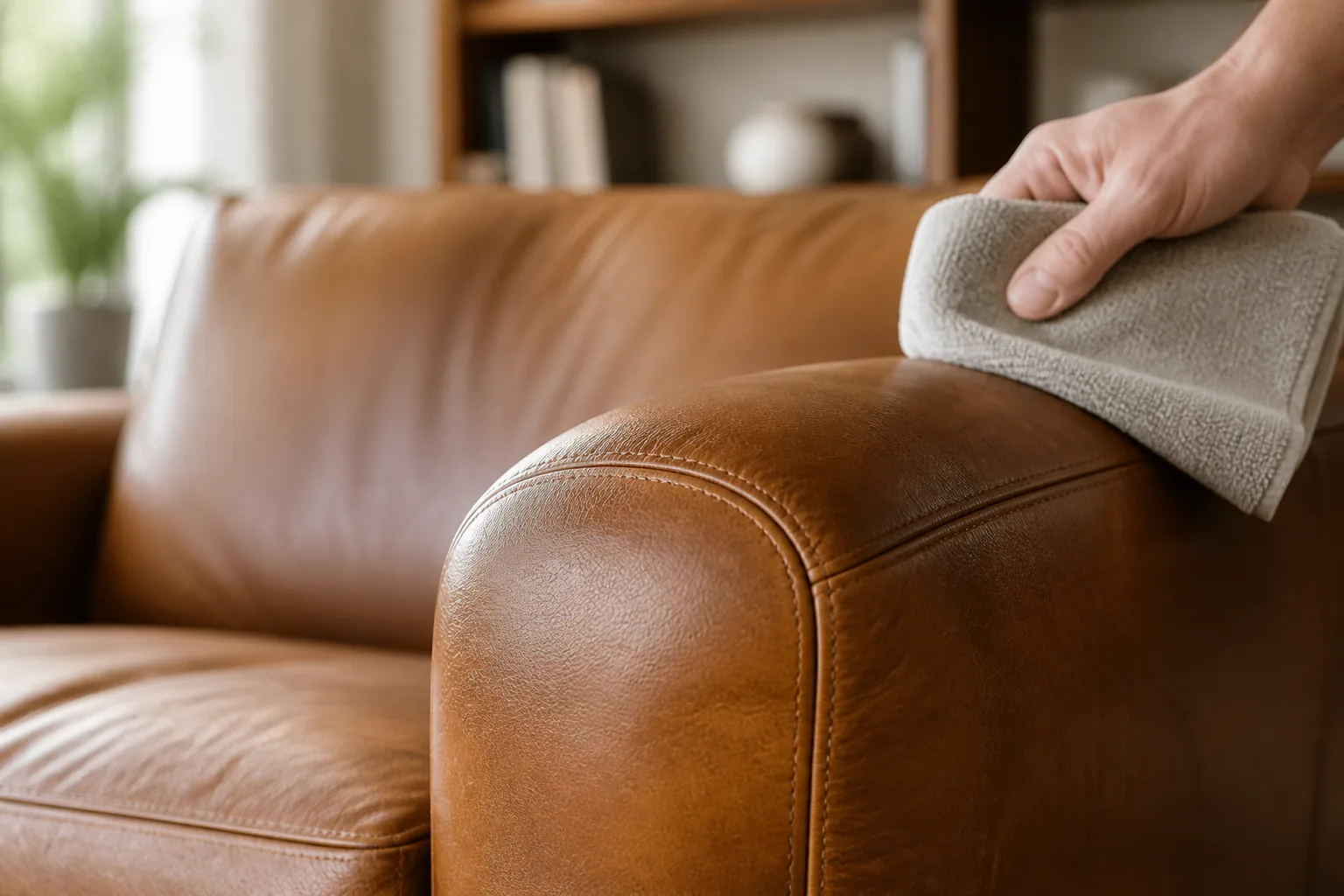
Natural-fibre caution
Drying edges can reveal moisture movement
Cotton, linen and viscose-rich coverings may develop browning, texture change or colour migration. Existing tide marks and earlier wet treatment are important parts of the compatibility check.
- Send fibre and care labels
- Mark previous water rings
- Ventilate without direct heat
Browning is not simply more dirt coming out
Cellulosic material, backing residues and dissolved soil can move toward a drying edge. Excess moisture, slow drying or high alkalinity may increase the risk. An existing beige or brown cast is documented before treatment so that the aim remains improvement within the cloth’s limits, not a guarantee of a perfectly uniform shade.
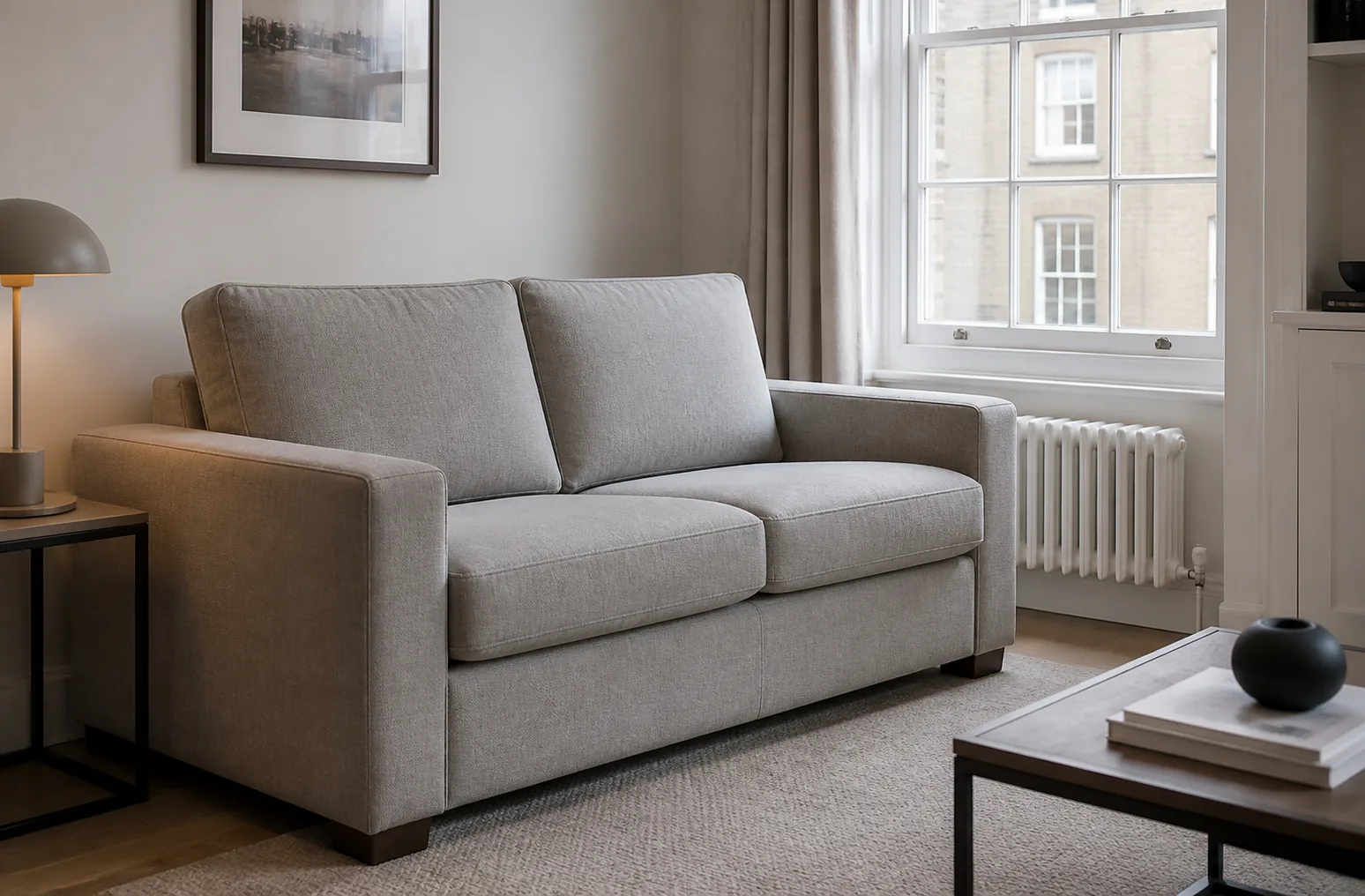

Linen slubs and viscose sheen are part of the textile
Natural irregularities can be mistaken for damage, while genuine abrasion may look like a pale patch. Viscose can lose strength when wet and respond poorly to rubbing. The technician selects contact and moisture conservatively, with testing used to identify immediate concerns rather than to promise every panel.
Pricing reference
A two-seat sofa carries a published £45–£75 guide, pending fibre and browning checks.
The agreed surfaces and practical route decide the quotation.
Permanent change remains part of the sofa
Shrinkage, cellulose browning, texture distortion, sun fade and permanent water marks may not be reversible. Sensitive fibres can require a limited method, and deep or repeated home treatment can rule out aggressive stain work.
Arrival details that prevent guesswork
For Orpington, describe ventilation, heating and the room where cushions will dry, together with normal access details. Avoid placing damp natural-fibre cushions in direct sun or against timber. Leave old rings visible and do not pre-treat them before arrival.
Cellulosic fibre control
Understand why tan edges can appear
Linen, cotton and viscose contain cellulosic material that may show browning when moisture mobilises impurities, old residue or components from backing and filling. A tan line is therefore not proof that more dirt has risen to the top. Its timing, shape, feel and relationship to seams help identify the likely source.
Natural-looking cloth is not necessarily natural fibre, and blended yarns can react unevenly. The care label, a discreet test and construction inspection all matter. Viscose may also show permanent texture change when wet or rubbed; linen slubs are normal features and should not be mistaken for debris needing forceful removal.
Ventilation without concentrated heat
Drying control aims for steady airflow through the room and around separated cushions. A fan heater directed at one edge can create uneven movement or shrinkage risk. Do not replace cushions on the frame, close the room or cover the surface until advised. Note any previous water ring, flood, window leak or home extraction attempt.
A realistic correction boundary
Some browning can be reduced when the source and construction permit, but repeated processing may carry greater risk than accepting a faint residual edge. Weak yarn, migrated dye, distorted viscose and aged backing are not corrected by further moisture. The quotation should state the intended improvement and the point at which treatment stops.
cellulose questions
What owners usually need to clarify
Why can cotton upholstery turn brown?
Cellulosic residues, backing material and soil can migrate as moisture moves and dries.
Is linen safe to wet clean?
That cannot be assumed; blend, backing, dye, finish and construction require assessment.
Why is viscose treated cautiously?
It can lose wet strength, distort in texture and develop persistent water-related appearance changes.
Should I steam the stain first?
No, heat and uncontrolled moisture can set marks, move colour or distort natural fibres.
Can an old tide line disappear?
Some improve, but residue, backing and permanent fibre change can limit the result.
How should natural-fibre cushions dry?
Use steady ventilation and the advised arrangement, avoiding direct heat and contact with timber.
Do slubs mean the linen is damaged?
Not necessarily, as intentional yarn irregularities are common in woven linen-style textiles.
How is sensitive upholstery priced?
The quote reflects item size, construction, testing needs, condition, cushions and access.
Can shrinkage be corrected by cleaning?
No, an already shrunken or distorted cover requires upholstery or replacement advice.
May rug cleaning be added?
Yes, natural-fibre rugs need their own fibre, construction and colourfastness assessment.
