
KEW · READ COLOUR IN THE ROOM WHERE IT LIVES
Rug Cleaning in Kew for Light, Leaves and Lived-In Rooms
In a bright Kew conservatory or garden-facing room, a rug can collect dry leaf fragments, potting dust and sun-led colour change at the same time. The enquiry should separate loose matter from altered dye and yarn before any result is proposed.
- Take the main photograph in even daylight, without a strong sun stripe
- Show the rug’s relationship to doors, planters and glazed areas
- Compare the exposed field with a section normally shaded by furniture
- Say whether soil arrived dry, with watering, or from an outdoor path

A GARDEN-ROOM CASE FILE
Natural light can expose three different stories at once
Consider a low-pile patterned rug between a conservatory door and a reading area. Fine compost sits close to one corner, the window-side border looks lighter, and a plant saucer once overflowed. These observations require three separate records: dry particulate, possible liquid travel and long-term colour exposure.
Photograph for comparison. Take one frame across the exposed and shaded portions, then add close images at the same angle. This helps the assessor see a boundary without mistaking camera exposure for textile change.
Next, lift only a safely accessible corner to show the underside beneath the planter zone. A tide line, transferred colour or dry granules on the back provide different clues, while an unmarked reverse keeps other possibilities open.
Kew’s light-and-moisture worksheet
Orientation: Mark which edge faces the windows and which faces the room.
Scale: Measure the patterned field and any projecting ends separately.
Setting: Show glazed doors, planters and the nearest outdoor threshold.
Contrast: Compare the window band with an area normally covered by furniture.
Water: Report overflowing saucers, watering spills and damp footwear separately.
Particles: Describe compost, leaf fragments, grit or pollen without rubbing them in.
Reverse: Photograph the underside directly below the suspicious corner.
Boundary: Show whether the pale area has a hard line, gradual fade or changed texture.
Palette: List the shades that meet inside the affected zone.
Exposure: Estimate when direct light enters and whether blinds are normally used.
Handling: Leave pots and furniture in place; identify what requires separate assistance.
Airflow: Explain which garden doors can remain safely open during the handover window.
Floor: State what lies below and whether moisture has marked that surface.
Smell: Say whether any earthy odour grows stronger after rain or watering.
Previous action: Name vacuums, powders, sprays or rinsing already attempted.
Expectation: Sun-led loss cannot be washed back into the original colour.

THE WINDOW-SIDE BAND
A lighter area may be cleaner, worn, faded or chemically changed
Turn the rug visually rather than physically: compare yarn direction, touch and shade across the boundary. Loose grey matter can respond very differently from reduced pile density or light-altered dye, so the quotation should not merge them.
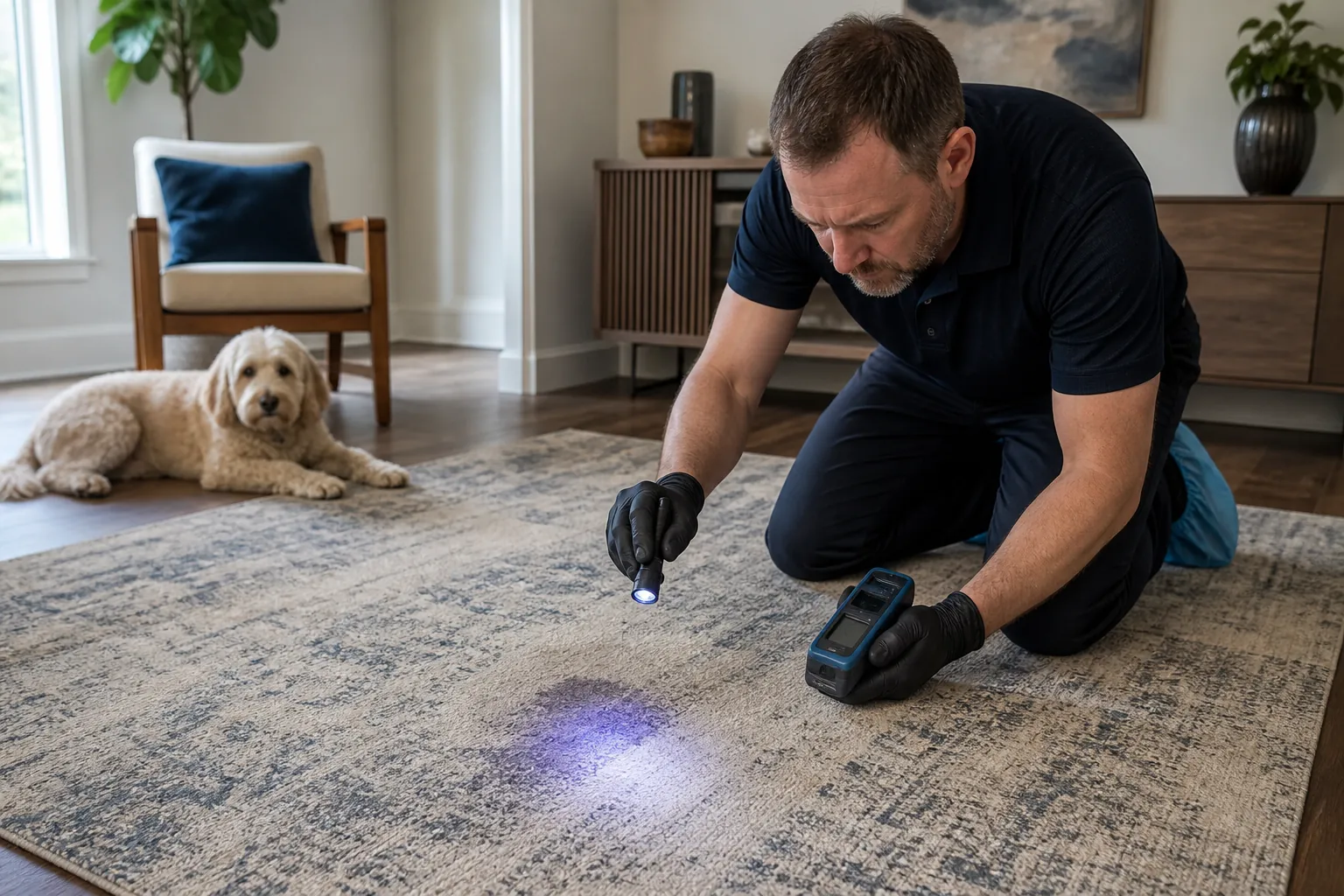
THE PLANTER-SIDE CORNER
Water carries more than moisture into a textile
An overflow can move soil minerals, fertiliser, dyes and residues through the pile. Record the pot position, liquid amount and drying conditions; then leave the area untreated so testing is not confused by another household product.
- Whether the saucer, leaves or floor were also wet
- How the corner looked once it had fully dried
- Any mineral ring, stiffness or earthy smell noticed later
- Why outcome limits remain open until the construction is checked
COMPARE · TEST · INTERPRET
Colour difference needs a reference point
The assessor looks for a protected comparison area, then considers touch, fibre loss and residue. This makes it less likely that faded dye is described as a stain or a clean patch as damage.

A normally shaded section
Furniture cover can preserve a useful sample of earlier colour and pile height.
The transition into the pale band
A crisp ring, gradual fade and directional sheen point toward different explanations.
Stiffness, loss or ordinary pile
Texture adds evidence that a photograph cannot supply by itself.
Earlier fertiliser or spot products
Known residues are declared before colour and compatibility tests begin.
A TWO-ZONE KEW REVIEW
Keep the sunny edge and planter corner distinct
Each zone receives its own observation trail before the findings are combined into one practical care and drying plan.
-
01
Orient
Mark windows, doors, furniture and north-facing edge
-
02
Compare
View exposed colour beside a protected reference
-
03
Trace moisture
Inspect face, underside and floor below the planter
-
04
Test selectively
Choose discreet points relevant to the actual colours
-
05
Treat separately
Do not assume both zones share one cause or limit
-
06
Read in daylight
Recheck tone, texture and boundaries under even light
-
07
Reset the room
Give advice on airflow, plant saucers and sun exposure
PHOTOGRAPH A FAIR COMPARISON
Let one image connect the pale band to the whole room
Keep colour balance consistent, avoid flash and include a shaded reference. Then document the planter corner as a separate line of enquiry.
- Kew postcode and room orientation
- Length, width and distance from glazing
- Wide view including doors, windows and planters
- Matched photographs of exposed and shaded yarn
- Close image of the planter-side granules or ring
- Reverse directly beneath that corner
- Watering event and product timeline
- Floor finish and any mark below
- Safe ventilation available after the appointment
Before photographing the colour
Should I use the phone flash?
No. Even indirect daylight usually gives a more useful comparison between exposed and protected areas.
May I vacuum the loose compost first?
Leave the zone as found if practical, or describe exactly what was removed and avoid pressing particles deeper.
Does a pale window edge mean sun fading?
It may, but pile direction, wear, residue and camera exposure should be excluded before that conclusion is made.
Why mention the garden door?
It can explain incoming grit and available airflow, while also introducing security and weather limits during drying.
KEW GUIDE RATES
The footprint sets the bracket, not the final diagnosis
Area provides an orderly starting point. The number of distinct concern zones, construction, colour risk and any agreed specialist work are then considered in the written scope.
BUILD A VISUAL-CHANGE INDEX
Choose observations, not causes
The index helps label photographs from different parts of the room. Assessment still determines why those differences exist.
KEW QUESTIONS ABOUT LIGHT AND PLANTS
Answers for rooms where indoors meets the garden
What is the best first photograph for this enquiry?
Stand back far enough to include the whole rug, the main window, the planter and a section normally covered by furniture.
Can sunshine make a clean rug look patchy?
Yes. Direct beams, pile direction and phone processing can exaggerate tone differences, which is why even-light comparison images matter.
Will cleaning restore colour lost beside a window?
No cleaning process can replace dye already altered by light. It may remove soil that makes the contrast stronger, but fading remains.
Why show the underside below a plant pot?
It may reveal a moisture boundary, transferred minerals or floor contact even when the face appears only slightly different.
Should I dissolve a dry mineral ring myself?
No. Added liquid or acid may change dye and residue behaviour. Keep the zone dry and identify anything previously applied.
What should I report about an earthy smell?
Say when it appears, whether humidity changes it, and if the pot, rug underside or floor seems to be the strongest source.
Can plants return beside the rug immediately?
Wait for placement advice and use sound saucers or stands so the textile does not receive trapped moisture during its handover period.
Can open garden doors speed drying?
Only when weather, security and outdoor humidity make that airflow useful. The technician will consider the room rather than assume open doors help.
Does treating two separate zones alter the quotation?
It can. The estimator considers area alongside the different tests, boundaries and agreed work required for each observed concern.
How is the £68 minimum used for a Kew booking?
It is the starting minimum for an eligible visit. Related work contributes only when it is compatible and confirmed before attendance.
MAKE THE COLOUR COMPARISON VISIBLE
Send the whole room, then the two concern zones
A consistent daylight set lets the assessor distinguish the sunny border from the planter corner before discussing next steps.
