
HILLSIDE ACCESS AND A TEXTILE WITH A HISTORY
Hampstead Rug Cleaning for an Older Wool Piece
An older rug is a record of use: low pile, old joins, softened colours and repairs can all be part of the object rather than dirt. A Hampstead visit starts by separating those permanent characteristics from soil that may respond to care.
- Take a square-on image that includes the complete border
- Mark previous repairs and any section that feels thinner underfoot
- List earlier cleaning, moth treatment or household products if known
- Describe every level change from the street to the room

AN OLD RUG IN A HILLSIDE HOUSE
Read wear, repair and accumulated use as different evidence
The central field has become lower over many years. That change may hold dry particles more visibly, yet missing pile remains missing pile. The oak beneath and the climb from the street are recorded for handling rather than used to infer anything about the yarn.
Make an archive before movement. Photograph the whole border, then capture every darn, inserted patch and reworked fringe. Place a ruler beside damage only when it can be done without stressing the foundation.
Describe history without filling gaps. An approximate purchase date is useful; an unsupported claim of age or origin is not. Known moth work, storage, washing and inherited repairs are more practical facts.
The Hampstead condition ledger
Field sketch: Draw the worn centre in relation to the outer motifs. A repeatable map is better than an adjective such as tired.
Repair chronology: Different thread colours and stitch styles may indicate more than one intervention. Photograph them individually and avoid testing their strength by hand.
Foundation view: The reverse can reveal joins, exposed warps, insect loss and older patches that are barely visible from above.
Fringe status: Distinguish decorative fringe from structural warp ends. Shortening, knot loss and previous overcasting require separate notes.
Surface direction: Take two photographs from opposing sides. A wool pile can look lighter or darker solely because its angle changes.
Dry deposit: State where grit returns after ordinary vacuuming and whether the low field feels harsh, brittle or merely compacted.
Household routine: Mention shoes, pets, open fires and frequency of rotation. These details explain use without promising a particular result.
Storage episodes: Rolled storage in a loft, cellar or garage may matter more than the present room; include duration and any damp smell.
Insect evidence: Casings, loose yarn and irregular missing pile belong in a condition report, not under the heading stain.
Light exposure: Window-facing colour change should be compared with a protected area. Cleaning cannot restore dye altered by daylight.
Oak interface: Identify wax, oil or lacquer if known and show any existing pale outline around the rug before it is moved.
Street approach: The gradient, gate width and steps determine how people can carry the piece without using its fringe as a handle.
Interior route: Photograph tight landings and changes of level. A safe plan may require rolling direction to be agreed before lifting.
Air plan: Identify the room where the rug can remain undisturbed with controlled ventilation after the selected work.
Assessment language: Ask whether soil reduction, odour investigation or general presentation is the priority; these are not interchangeable promises.
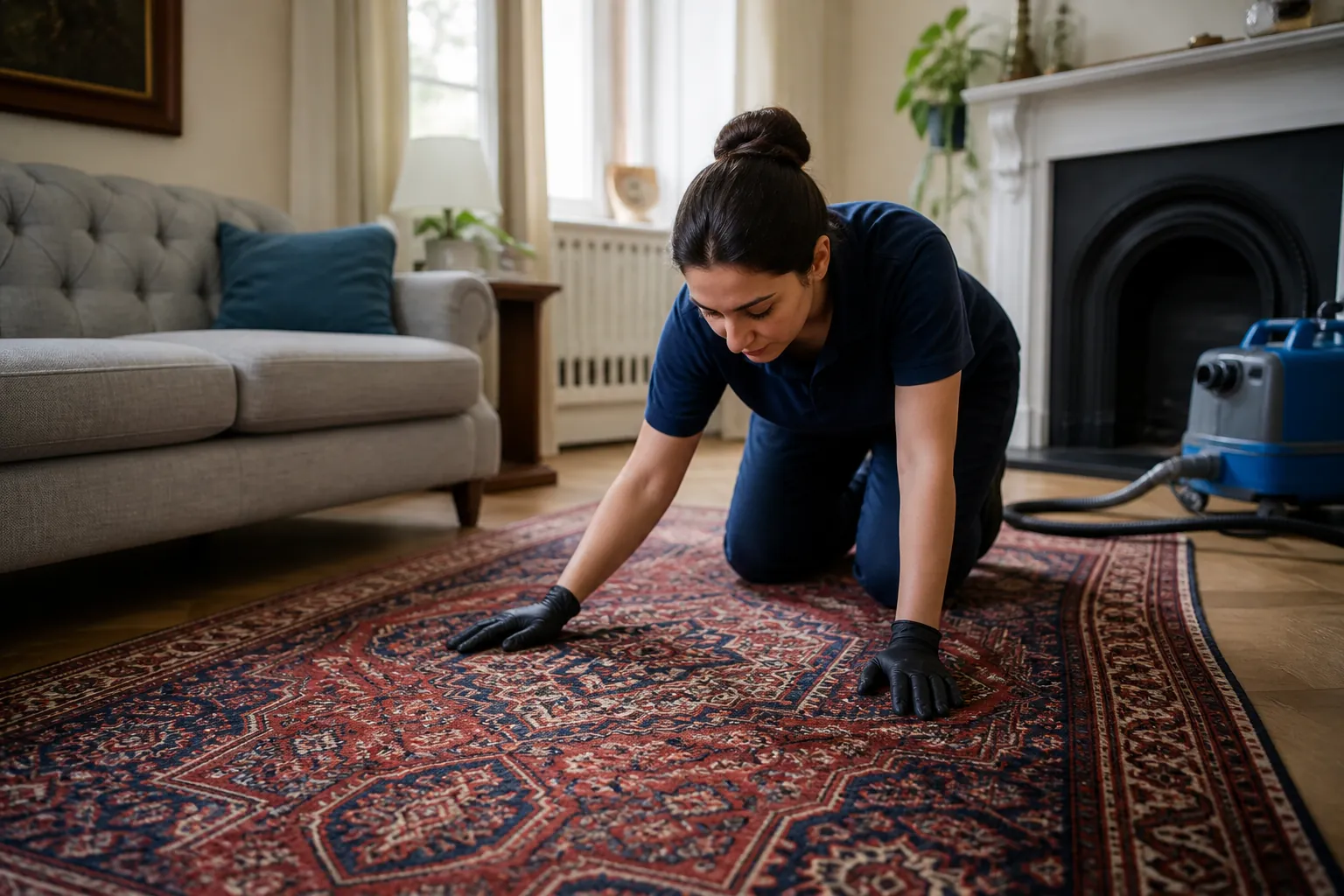
A TEXTILE PALIMPSEST
Original making and later repair must be read together
An older wool face may sit above a foundation altered by generations of use. The assessor looks for relationships between knots, warps, replacement yarn and low areas instead of relying on a single label.

Remaining height
Low sections change appearance and resilience even after loose particles are removed.
Structural continuity
Exposed or broken foundation threads can narrow safe handling choices.
Later intervention
Replacement yarn may differ in strength, colour response and attachment.
Age-related character
Softened colour and use marks are documented rather than treated as defects to erase.
COMPOSE A CONDITION LEDGER
Classify what is observed without diagnosing from a screen
These choices help organise the Hampstead conversation. The physical rug remains the authority.
A SEQUENCE FOR HAMPSTEAD
Pause points are part of the work
embedded dry matter where the pile has become low is followed through the sequence without pretending that every visual change is removable.
- 01
Archive
Record repairs, low pile and the rug’s orientation.
- 02
Trace
Compare labels, reverse, fringe and foundation.
- 03
Probe
Check selected colours or residues where justified.
- 04
Separate
Distinguish loose soil from permanent wear.
- 05
Proceed
Use only the route supported by findings.
- 06
Observe
Review old joins and the priority field.
- 07
Handover
Give advice for oak, airflow and safe return.
AREA BANDS FOR AN INITIAL CONVERSATION
Measurement is simple; an older rug rarely is
Use the widest length and width to locate the starting band. Repairs, vulnerable foundation, difficult carrying and additional agreed tasks are considered when the Hampstead quotation is settled.
LOW PILE IS A MATERIAL LOSS
Cleaning can reveal wear more clearly
Grit lodged around short yarn may reduce, but a thinned path can then look more defined. The aim and permanent condition are discussed before work so clarity is not mistaken for new damage.
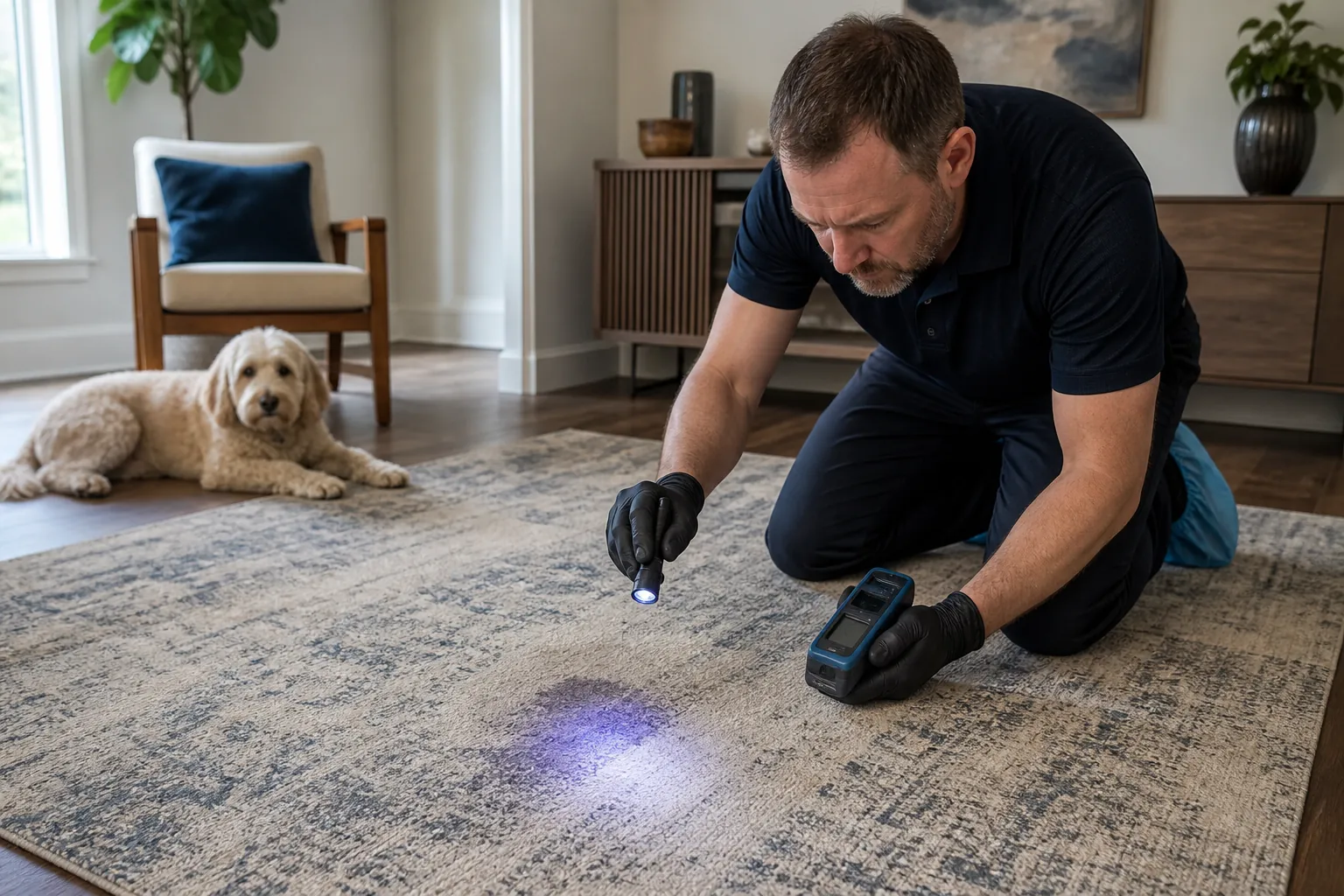
OLD HOUSES HOLD COMPLEX SMELLS
Assign odour to an item only after checking
Timber, fireplaces, storage and textiles can overlap. Note when the smell appears, which side is strongest and whether it follows the rug when moved. Investigation precedes any optional odour scope.
- Compare face and reverse
- Check protected and exposed zones
- Record storage and damp episodes
- Avoid masking sprays before assessment
ASSEMBLE THE HAMPSTEAD FILE
Useful evidence is specific, dated and easy to compare
- Postcode plus preferred appointment window
- Width and length at the furthest points
- One overhead or square-on overall image
- Opposing views to demonstrate pile direction
- Individual photographs of every repair
- Reverse, foundation and fringe where safe
- Purchase, storage and cleaning history
- Current finish of the oak underneath
- Outdoor gradient and all indoor level changes
Short answers for an older piece
Can a photograph establish age?
No. Images document observable features but do not authenticate provenance.
Why does the field change shade?
Pile direction, wear and light exposure can alter appearance independently of dirt.
May the rug be rolled either way?
Rolling direction depends on construction, stiffness, repairs and the safe route.
Is every musty note in the rug?
No. Compare the room, floor, face and reverse before assigning a source.
QUESTIONS FROM A HAMPSTEAD BRIEF
Ten points to settle before expectations harden
Why record older repairs?
They reveal previous weakness and may respond differently from the original foundation during movement or treatment.
Can cleaning restore a low central pile?
No. Soil may be reduced, but yarn lost through long use cannot be rebuilt by cleaning.
Does antique-looking mean antique?
Appearance is not provenance. We describe observable construction and leave age claims unsupported.
How should the sloping approach be shown?
A few photographs from street to room help expose gradients, turns and safe resting points.
Why mention oak beneath the rug?
Floor condition influences barriers, lifting and return even though it does not determine textile chemistry.
Are old colours always unstable?
Not always, but contrasting or uncertain dyes deserve observation and, where suitable, testing.
Should moth damage be called a stain?
No. Missing pile and insect evidence are condition issues and may need a different specialist conversation.
Can earlier shampoo residue matter?
Yes. Unknown products can affect feel, appearance and later choices, so any history is useful.
When is the room usable again?
That depends on the rug, treatment and airflow; the handover gives item-specific guidance.
How is the final price settled?
Dimensions establish the guide, then construction, repair risk, access and optional scope are considered.
PRESERVE THE RECORD BEFORE THE VISIT
