
MAIDA VALE · A PRECISE RUG PROFILE PREVENTS GENERIC ASSUMPTIONS.
Hallway Runner Cleaning in Maida Vale
Long runners in Maida Vale often cross several doorways before reaching a usable inspection area. We begin with the weave, worn traffic lane and fringe, then plan how the piece can pass the building’s steps without dragging or folding against the wall.
- Send one photograph showing the entire wool hallway runner in place
- Add close views of darkened walking line and loose fringe knots, the border and the corners
- Include the label, reverse, fringe and any repair if accessible
- Tell us about communal entrance steps and a long landing and confirm that the floor below is mosaic tile

MAIDA VALE · ROOM AND ROUTE
A corridor runner is also a route-planning exercise
Our Maida Vale example lies across a mosaic hallway in a mansion flat. The central lane is visibly darker, two fringe knots have opened, and the only exit runs along a shared landing. Those facts are recorded separately because soil release, edge security and carrying space create different decisions.
What the photographs establish. A view from each end shows whether the runner can be rolled in place. A low-angle image reveals pile direction, while a reverse-side detail records the foundation beside the loose knots. Pictures describe the starting point; they cannot certify a result.
The owner also confirms the clear landing width and whether a quiet inspection area can be kept free. This lets us decide whether the runner can be assessed at the flat or whether collection needs discussion, without inventing a treatment or return date.
Notes for a Maida Vale hallway runner
Position: Mark where each end meets the threshold and whether any door catches the pile.
Traffic lane: Photograph the dark strip in daylight and from the side so crushing is not confused with deposited soil.
Shared access: Count the entrance steps, measure the tight turn and note any time restriction on the communal landing.
Dimensions: Give the full length plus fringe and the widest point rather than relying on a retailer’s nominal size.
Foundation: A lifted corner can reveal weave, backing residue or an earlier patch without asking the owner to identify the fibre.
Palette: Identify dark borders beside pale fields because contrasting yarns may need separate colour checks.
Fringe: Count open knots and photograph both ends before the runner is rolled.
Past work: Mention powder, spotter or previous washing even when the application happened years ago.
Mosaic contact: Record loose tiles, waxed surfaces or vulnerable grout before discussing where inspection can happen.
Obstructions: Console legs, umbrella stands and door stops are listed so the full runner can be seen safely.
Smell: Note whether it is strongest at one threshold, one edge or across the whole central lane.
Wear map: Flattened pile at doorways is recorded independently from fresh spots or loose grit.
Aftercare space: Confirm where the runner can remain undisturbed and whether hallway ventilation is practical.
Estimate basis: Area establishes the band; fringe work, difficult handling and condition may alter the written scope.
Return: Threshold alignment and furniture placement are addressed only when the assessed runner is ready.
Open decision: On-site work, collection and achievable improvement remain undecided until the textile and route are checked.

FIBRE + DYE + CONSTRUCTION
Four clues shape the runner’s workable range
A label may suggest wool, yet the foundation, repaired fringe and colour contrast can be more important to handling. Each clue narrows the options; none selects a process by itself.

Yarn character
Touch, twist and absorbency help frame cautious handling limits.
Border contrast
Dark outlining beside a pale field is checked before moisture is introduced.
Runner anatomy
Weave density and foundation tension influence rolling, wetting and finishing.
Ends, patches and open knots
Existing weaknesses are mapped before movement so their starting condition stays clear.
A MARK IS NOT ALWAYS SOIL
Read a dark lane from more than one angle
A traffic strip may contain dry soil, but pile compression, abrasion and lighting can deepen its appearance. Side-light photographs and physical inspection separate those possibilities before an outcome is discussed.
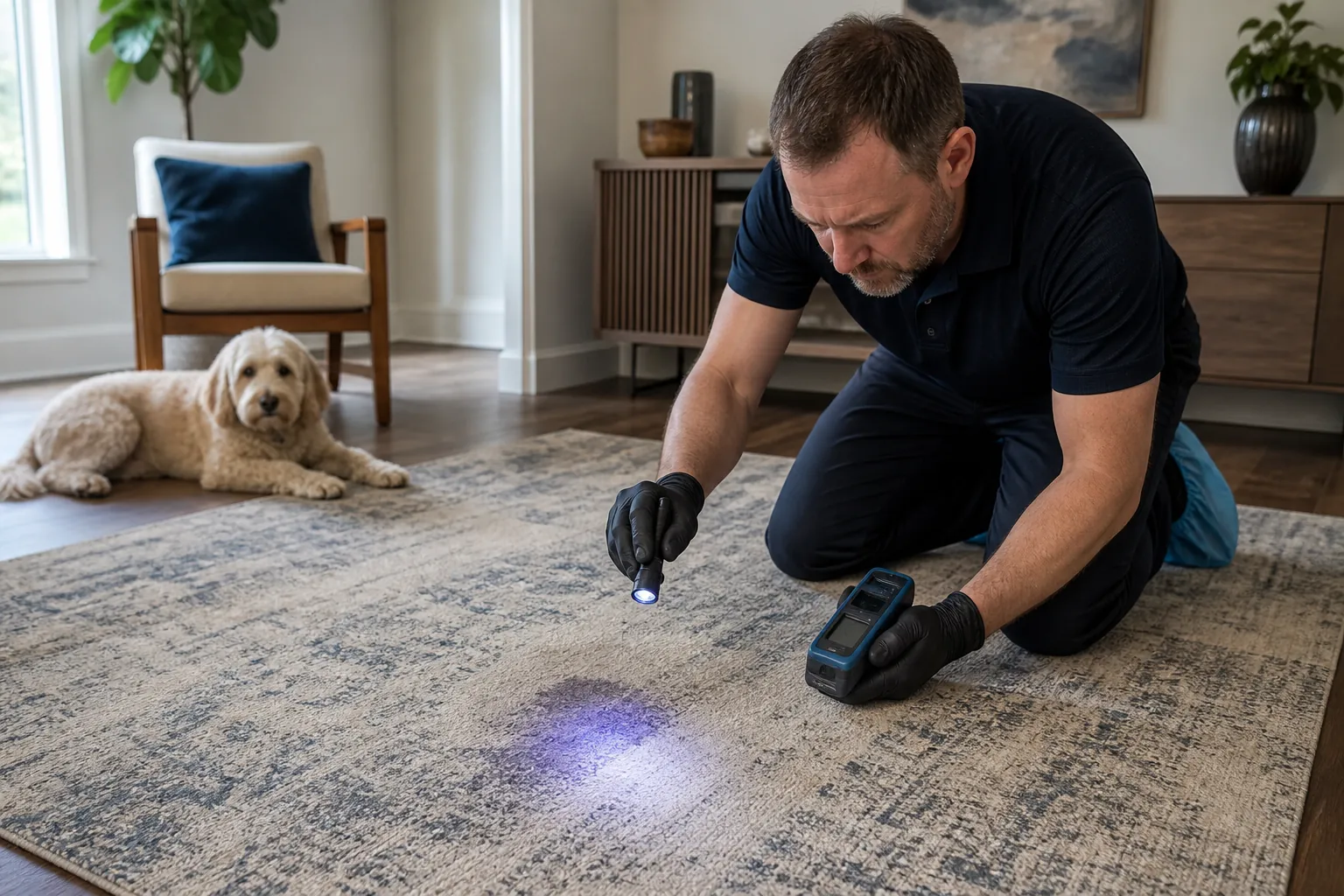
ODOUR + PREVIOUS PRODUCTS
Locate the source instead of masking it
Describe where an odour begins, what happened there and which product has already been used. The fringe, foundation and mosaic contact are considered independently because each can hold a different residue.
- Mark the strongest point on a simple room sketch
- Give the date and nature of any incident
- Name powders, sprays or home mixtures already applied
- Leave deodorising outside the scope until the source is understood
MAIDA VALE TREATMENT ROUTE
The cleaning technical route follows the evidence
Drying for this wool hallway runner is based on absorbency, pile density, backing, airflow and the selected treatment. If darkened walking line and loose fringe knots includes an odour concern, the affected area and any known source are recorded rather than covered by a standard deodorising promise.
-
01
Record
Measure the wool hallway runner; map wear, marks and repairs
-
02
Verify
Check material clues and colour response where suitable
-
03
Release soil
Remove accessible dry particles without assuming all dullness is soil
-
04
Work
Apply only the route supported by the assessment
-
05
Control
Manage recovered moisture, pile and edges
-
06
Compare
Review the field, borders and the priority area in Maida Vale
-
07
Explain
Provide condition-specific drying and furniture guidance over mosaic tile
TELL US ABOUT YOUR RUG
Build a runner record without diagnosing it
Use the choices to flag known features and visible changes. They prepare the Maida Vale conversation but cannot turn photographs into a treatment instruction.
QUOTE PREPARATION
Bring the hallway, textile and access into one brief
- Maida Vale postcode and preferred timing
- Approximate length and width
- One complete-rug photograph
- Close-up of darkened walking line and loose fringe knots
- Label and reverse if reachable
- Border, fringe and corner images
- Known fibre or construction
- Earlier products or cleaning history
- Notes about communal entrance steps and a long landing
Practical answers for Maida Vale
Can you name the method from a photo?
No. Images improve the brief, but handling and treatment still depend on physical assessment of the wool hallway runner.
Does a dark patch always mean dirt?
No. In Maida Vale, shading, fibre wear, dye change and residue must be distinguished from removable soil.
When can furniture go back?
Only after the handover guidance for this rug, its drying condition and the mosaic tile beneath it.
Is an odour treatment automatically included?
No. The location, likely source and depth of an odour concern need separate discussion and scope.
CURRENT MAIDA VALE GUIDE
Length opens the estimate; condition completes it
Measured area places the runner in a published band. The written Maida Vale quotation then reflects secure handling, open fringe knots, the shared route and any separate work accepted after inspection.
MAIDA VALE RUG QUESTIONS
Hallway-runner questions from Maida Vale homes
What should I photograph before a Maida Vale rug-cleaning quote?
Photograph the full wool hallway runner, then add the label, reverse, borders and a close view of darkened walking line and loose fringe knots. Include enough of the canalside mansion flat to show scale.
Why does the floor under this rug matter?
The mosaic tile affects lifting, contact protection and the return plan. It does not determine how the rug textile itself should be cleaned.
Can you guarantee that the main visible area will disappear?
No. Darkened walking line and loose fringe knots may combine removable matter with wear, colour change or fibre damage, which must be assessed separately.
How is access handled for this Maida Vale property?
The booking records communal entrance steps and a long landing. Clear dimensions and obstacles help define safe staffing and handling before the appointment.
Does the label settle the fibre and cleaning decision?
A label is valuable evidence, but the rug’s construction, dye behaviour, repairs and current condition still need checking.
Should I apply another spot product first?
Avoid adding unverified chemistry. Instead, share what was already used, when it was applied and whether the appearance changed.
What changes if there is fringe or edge wear?
Loose fringe, binding failure or weak corners are documented before movement and may narrow the workable scope.
How is a smell in one part of the rug assessed?
Map the precise area and explain any known spill, pet event or damp exposure. Surface odour does not reveal how deeply a source has travelled.
Can you give an exact drying time for Maida Vale?
Not responsibly before assessment. Fibre absorbency, pile, backing, treatment, temperature and airflow all influence the handover advice.
How do the guide prices apply to my rug?
Dimensions place the rug in a guide band. The final scope may also account for construction, condition, access and separately agreed optional work, subject to the visit minimum.
