
KENTISH TOWN · THE PLAYROOM HAS A HISTORY
Rug Cleaning in Kentish Town for Busy Family Rooms
Modelling clay, biscuit crumbs and one pet incident are different events. On a wool-blend rug over sealed pine, we record them separately and plan around the steep maisonette stair.
- Date each event rather than calling everything a stain
- Photograph the complete border before shifting toys
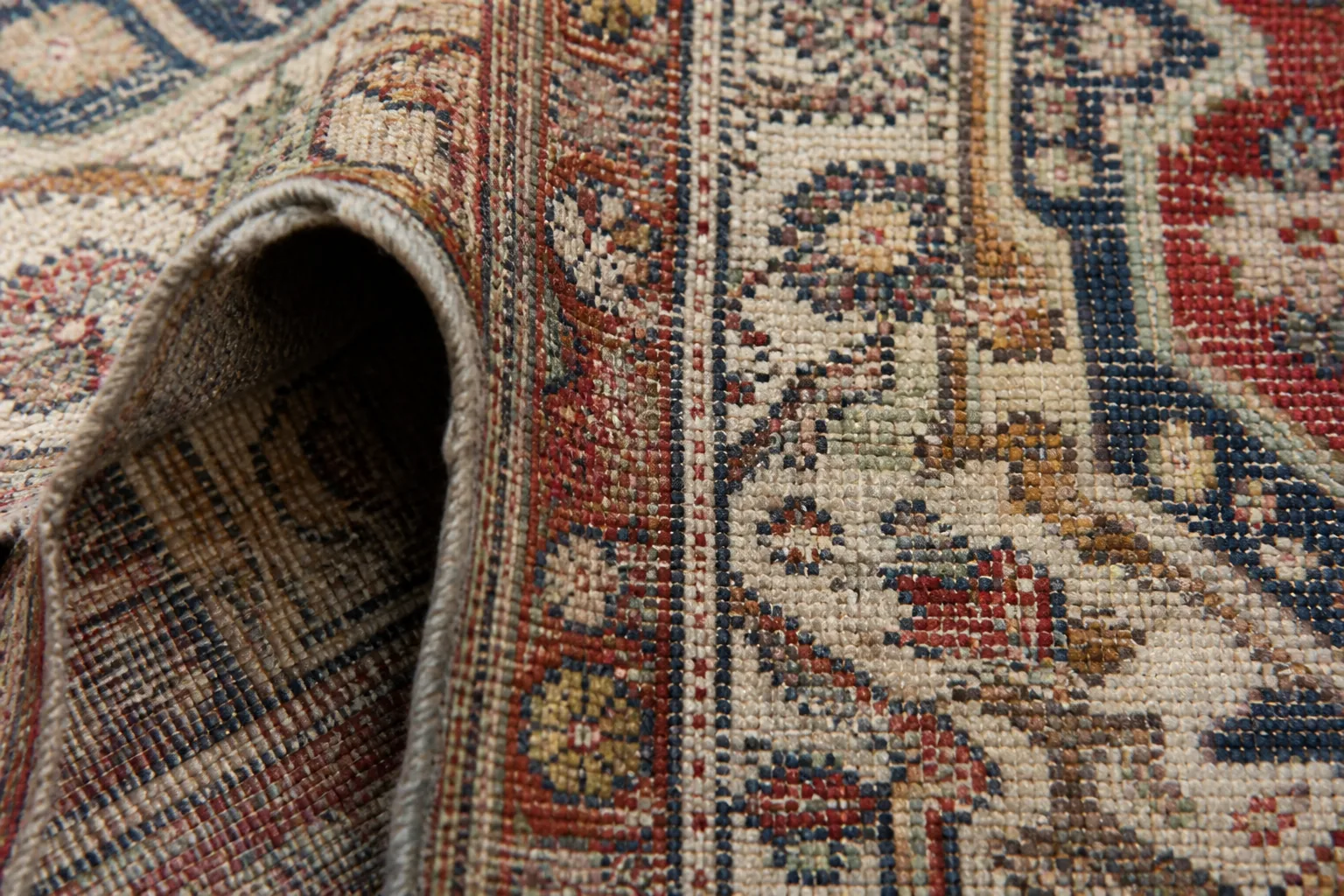
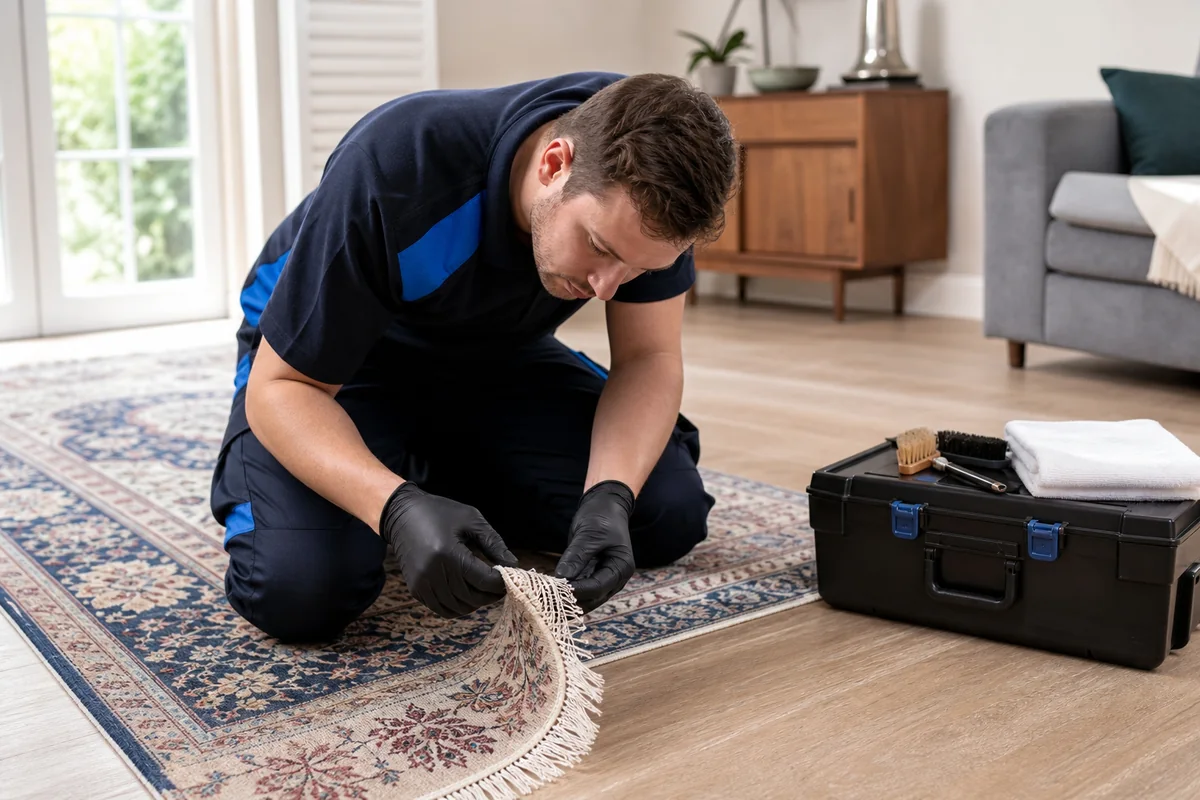
- Lift one safe corner to show the timber contact
- Measure the narrow landing and final stair turn
CREATE AN EVENT LOG
Tell the story in the order it happened
A short chronology prevents dried craft material, loose food and liquid penetration from being treated as one mystery patch.
- Approximate time of each incident
- Material or food involved
- Action taken immediately
- Product name, if anything was applied
- Change after drying
- Current smell and exact position
- View of the face in daylight
- Matching reverse-side view
- Clear width through the staircase
Family-room decisions
Should clay be scraped first?
Do not force dried material deeper or pull yarn; send a close photograph before acting.
Do crumbs require wet treatment?
Loose dry matter and adhered residue are assessed as separate conditions.
Why show the pine floor?
It reveals the contact surface and any transferred evidence at the accessible corner.
Can the rug be folded on the stairs?
Its build decides whether folding risks permanent distortion.
WOOL BLEND · PLAY · PRESSURE
A resilient room still needs textile limits
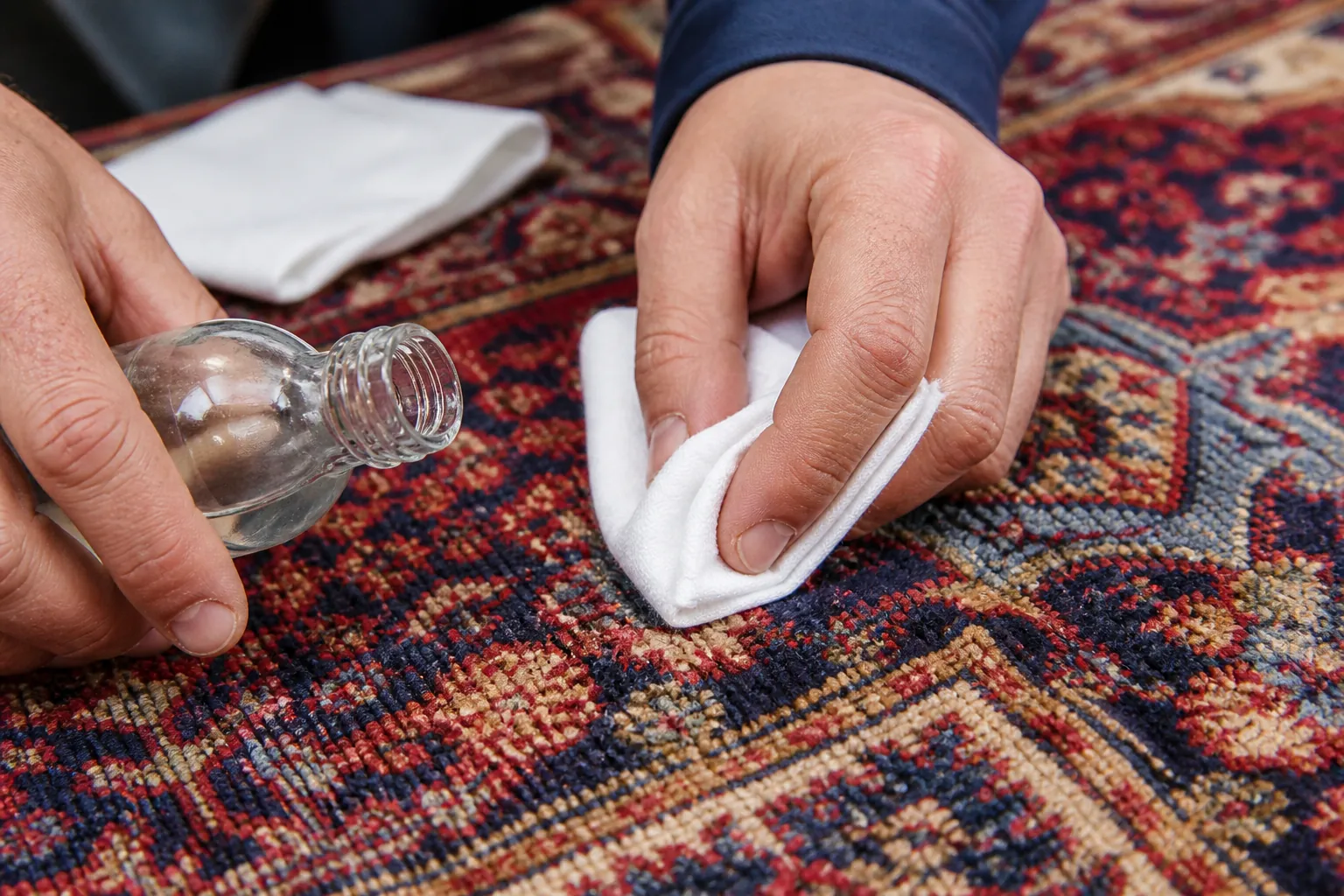
Family use does not make every yarn or colour equally tolerant. The fabric and its construction remain the starting point.
Mixed response
Different fibres can absorb and release matter unevenly.
Transfer risk
Strong contrasts may justify a cautious stability check.
Flattened lanes
Compressed yarn is distinguished from removable debris.
Protected support
The sealed boards stay part of movement and return planning.
CRAFT MATERIAL
Dried modelling compound has edges
Show its thickness, cracking and relationship to the yarn. A side-lit photograph can reveal whether it sits above the pile or has entered between tufts.
ANIMAL INCIDENT
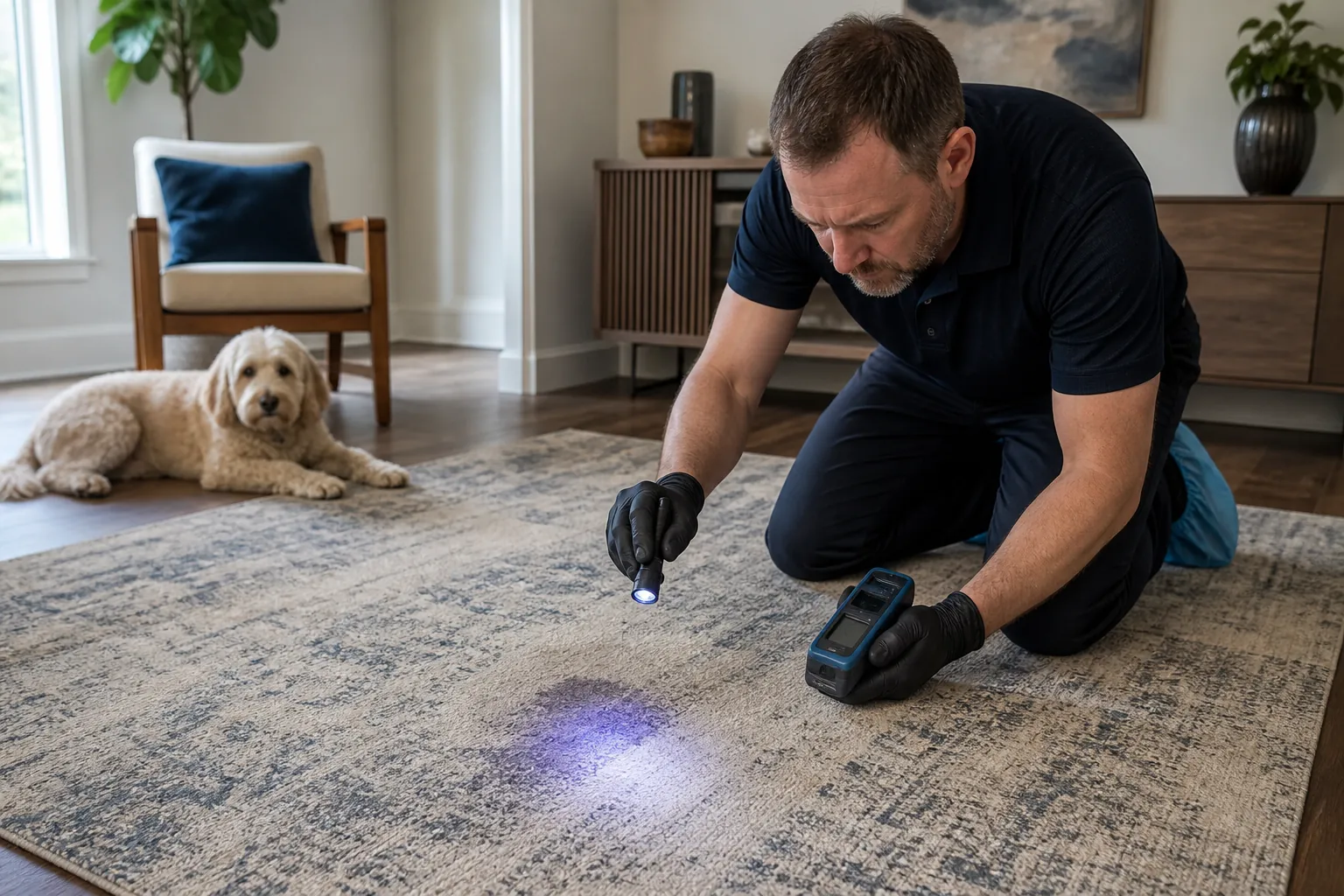
Map liquid travel without masking it
Note the first wet boundary, present odour and whether the reverse differs. Avoid fragrance that makes comparison harder.
- Keep the original outline on the overview
- Name absorbent powders already used
- Check the accessible board beneath
- Report repeat events as separate dates
SORT THE PLAYROOM CLUES
What happened, where, and when?
These choices organise the family record; they do not prescribe a process.
THE MAISONETTE TEST CASE
Plan for children, neighbours and a narrow turn
The example room sits one steep flight above a shared hallway. Before work, toys go into closed boxes, the stair gate is removed by the household and neighbours retain a clear route.
Scene one: the overview shows a low activity table, a compressed central lane and clay near the bookcase.
Scene two: a numbered close-up records crumbs by the sofa and the older animal event near the radiator. Nothing is merged into a single “dirty rug” description.
Kentish Town family-room ledger
Clay: Record colour, hardness and thickness.
Food: Separate loose particles from oily residue.
Pet event: Mark date, boundary and present odour.
Traffic: Identify the route between door and toy shelf.
Yarn: Photograph pulled or fuzzy sections.
Blend: Retain the complete label wording.
Reverse: Compare below each priority point.
Pine: Show the accessible contact patch.
Table: Give dimensions and movement limits.
Toys: Clear them before the appointment.
Gate: Confirm who removes and replaces it.
Hallway: Preserve neighbour access.
Flight: Measure narrowest clear width.
Landing: Photograph the upper turn.
Air: Identify a child-free drying position.
Return: Wait for the stated use guidance.
A FAMILY-ROOM SEQUENCE
Work from loose matter toward deeper questions
The order can change when testing or condition requires it.
- 01
Clear
Make the room and stairs safe
- 02
Number
Give each event its own reference
- 03
Compare
Inspect face, reverse and pine
- 04
Test
Check relevant material behaviour
- 05
Address
Follow the agreed priorities
- 06
Review
Revisit every numbered point
- 07
Reopen
Explain safe family use
MEASURED FAMILY-RUG BANDS
Dimensions establish the first bracket
The confirmed figure also considers event complexity, wool-blend construction and staircase handling.
KENTISH TOWN FAMILY QUESTIONS
Answers for this room, not generic slogans
What photograph comes first?
Start with the entire playroom rug and all four edges visible.
Should toys remain for scale?
Take the context image, then clear loose items for safe access.
Can modelling clay be guaranteed removable?
No; composition, age, prior action and fibre change set limits.
Are biscuit crumbs a stain?
Dry crumbs, oily transfer and colour change are different observations.
Why identify sealed pine?
It informs contact protection, lifting and furniture return.
Must I remove the stair gate?
Agree responsibility before arrival; do not leave it to be improvised.
Can pet odour remain?
Yes, particularly when the source has moved through the foundation.
Is flattened pile dirty?
Not necessarily; pressure and abrasion can change light reflection.
How long before children return?
Use the handover based on the actual rug and room conditions.
What does the £68 minimum mean?
It is the starting minimum for an eligible confirmed visit.
TURN THE PLAYROOM HISTORY INTO A BRIEF
Send three events, one textile and the real staircase
Ordered evidence makes a calmer starting point.
