
ISLINGTON · A FLATWEAVE, A TEA MARK AND A TIGHT FRONT HALL
Flatweave Rug Cleaning in Islington
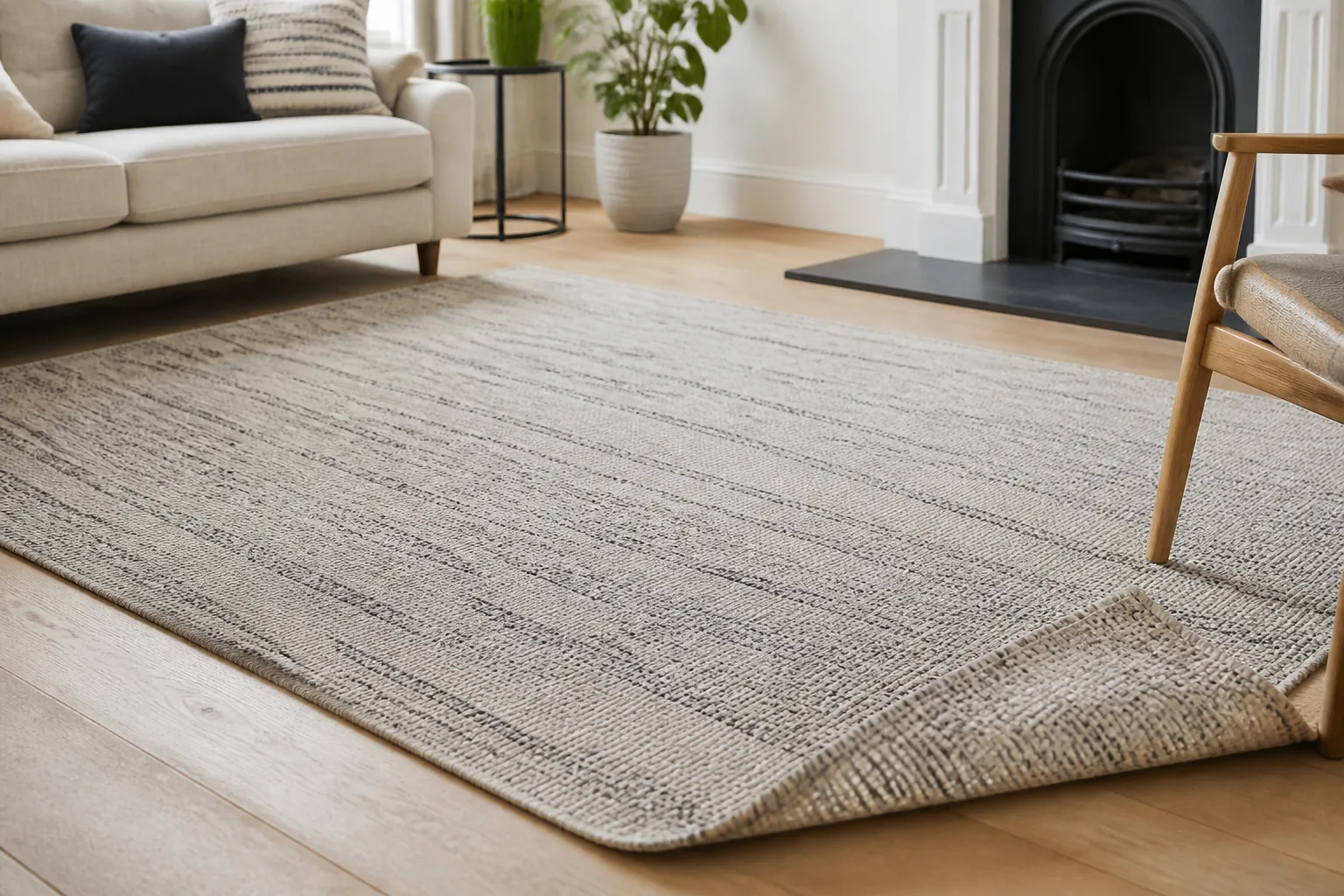
A dhurrie is thin enough to reveal every crease, edge and worn pathway. For this Islington terrace, the enquiry joins textile evidence with a practical question: how will a broad, flexible rug pass the railings and turn inside the vestibule?
- Photograph the dhurrie square-on so its geometry and waves remain visible
- Show the tea mark beside an unaffected section of the same border
- Capture both faces, end finishes and any split or earlier stitched repair
- Measure the vestibule turn and note the railings, steps and exposed pine boards
DESCRIBE THE WEAVE WITHOUT GUESSING
Turn visible clues into an assessment note
Select only what you can see or verify. The resulting note helps frame questions; it cannot certify fibre or prescribe treatment.
THE TERRACE DRAWING ROOM
Plan for a flexible rug over old pine
The example room has exposed boards, a woven wool dhurrie and a tea mark set close to one border. A full view records how the rug sits before lifting; a simple sketch records the turn from drawing room to front door.
A realistic Islington case. The full-room image establishes scale and furniture position. Separate close-ups then distinguish uneven traffic soil with a tea mark near the border from ordinary loose soil, shading or wear. None of those photographs is treated as proof that a mark can be removed.
The household also identifies loose board edges, furniture that cannot be moved and the product used when the drink was spilled. That preparation protects context which can disappear once the rug is rolled or folded.
The Islington terrace record
Starting position: A doorway-facing photograph fixes the dhurrie’s orientation, the pine-board seams and the legs resting on it.
Tea incident: The household gives the drink type, approximate date, amount and first response in chronological order.
Front approach: Step count, railing clearance and the tightest internal turn are measured rather than described as “narrow”.
Outline: Both axes and diagonals are useful where the rectangle already appears skewed or wavy.
Weave evidence: Close photographs show yarn intersections, colour boundaries and the reverse of the patterned field.
Palette: Dark red, blue or other saturated bands are flagged because neighbouring dyes may behave independently.
Finished ends: Loose warp ends, selvedge abrasion and replacement stitches are photographed at useful scale.
Aftercare history: Blotting cloths, powders and liquids are named, including any colour picked up during use.
Board interface: The floor directly under the mark is checked for damp, transferred colour and pre-existing finish damage.
Room clearance: The owner identifies which chair and table legs can be cleared without dragging them across the weave.
Smell check: If present, its boundary is compared on the face, reverse and exposed board instead of being generalised.
Permanent features: Sun fading, yarn wear and old ripples are placed on a sketch separate from spill evidence.
Room climate: Window opening, heating and safe floor space are considered once the actual method is known.
Estimate basis: Area establishes a band; border work and difficult movement are then discussed transparently.
Return reference: The first room photograph helps restore orientation without placing weight too early.
Unresolved point: Method, achievable change and completion timing remain open until hands-on examination.
READ THE TEA MARK IN CONTEXT
A brown outline can tell several stories
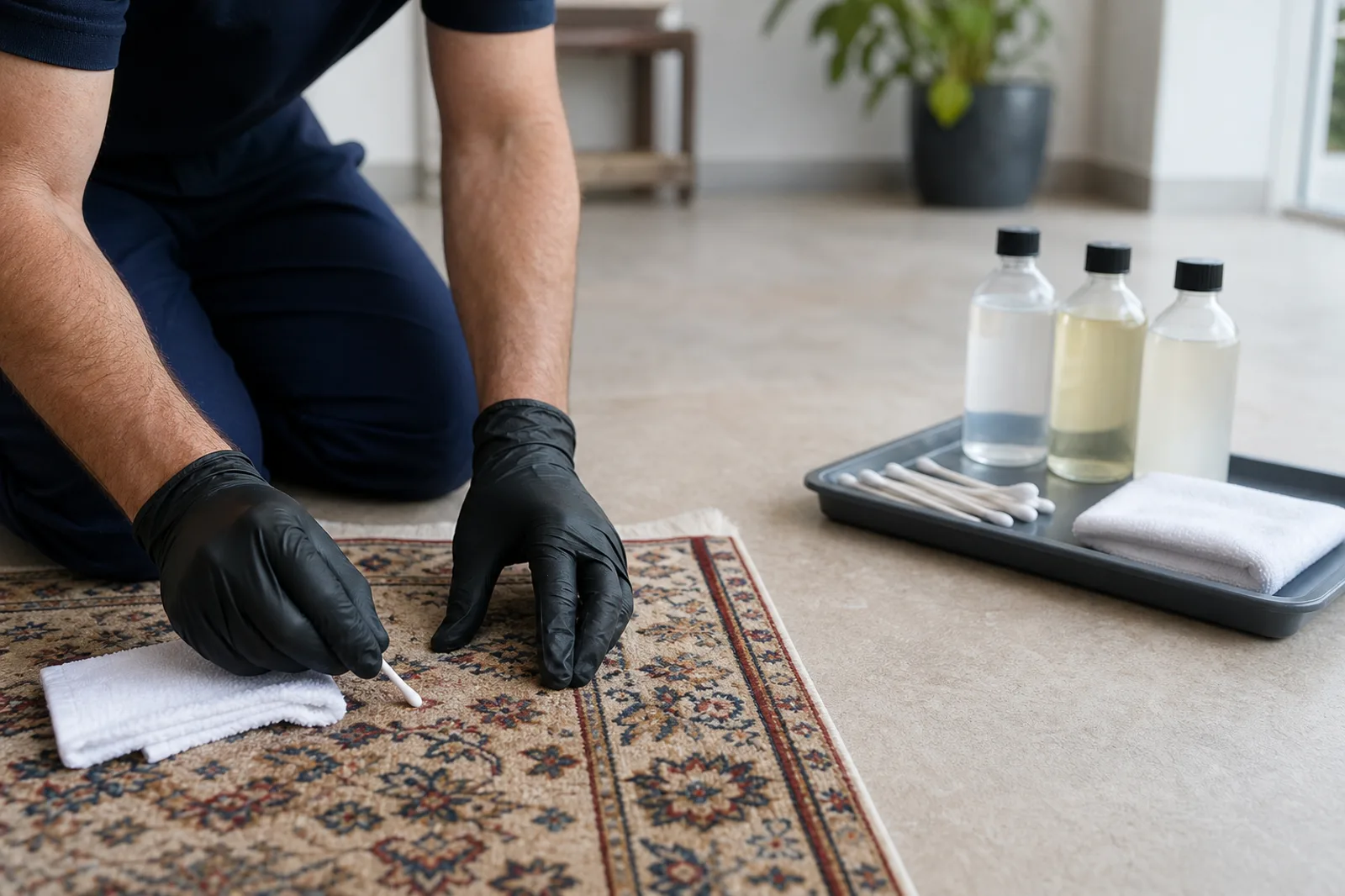
Tea residue, a cleaning halo, dye movement and abrasion can overlap near a border. Photographs taken from above and along the weave help preserve the evidence, but inspection decides what is changeable.
WHAT HAPPENED AFTER THE SPILL?
Product history matters on a flat weave
Blotting, rubbing and proprietary spotters leave different evidence. State the sequence in plain language, including how much liquid reached the rug and whether the pine beneath became damp.
- Mark which border and corner are closest
- Name each product rather than describing its fragrance
- Compare the front, reverse and board directly below
- Keep appearance expectations open until dye checks are complete
WARP, WEFT AND FINISHED ENDS
Flat construction makes every thread structural
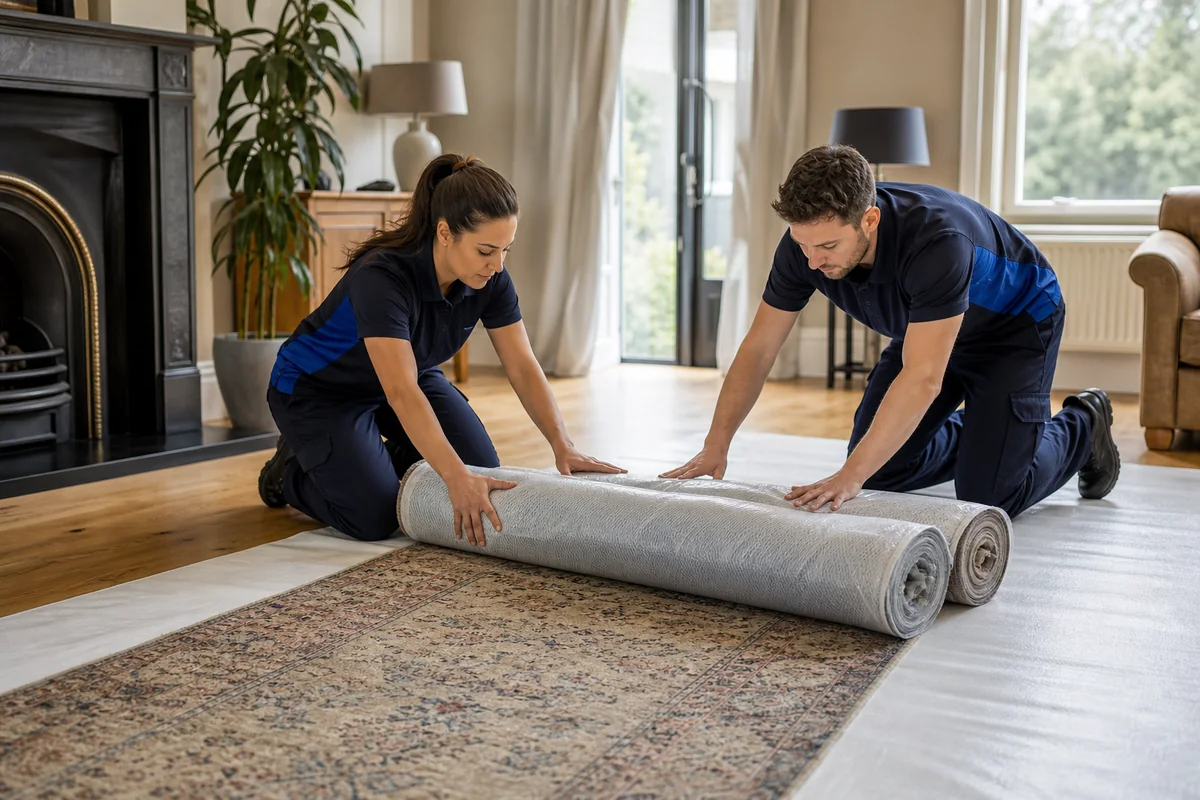
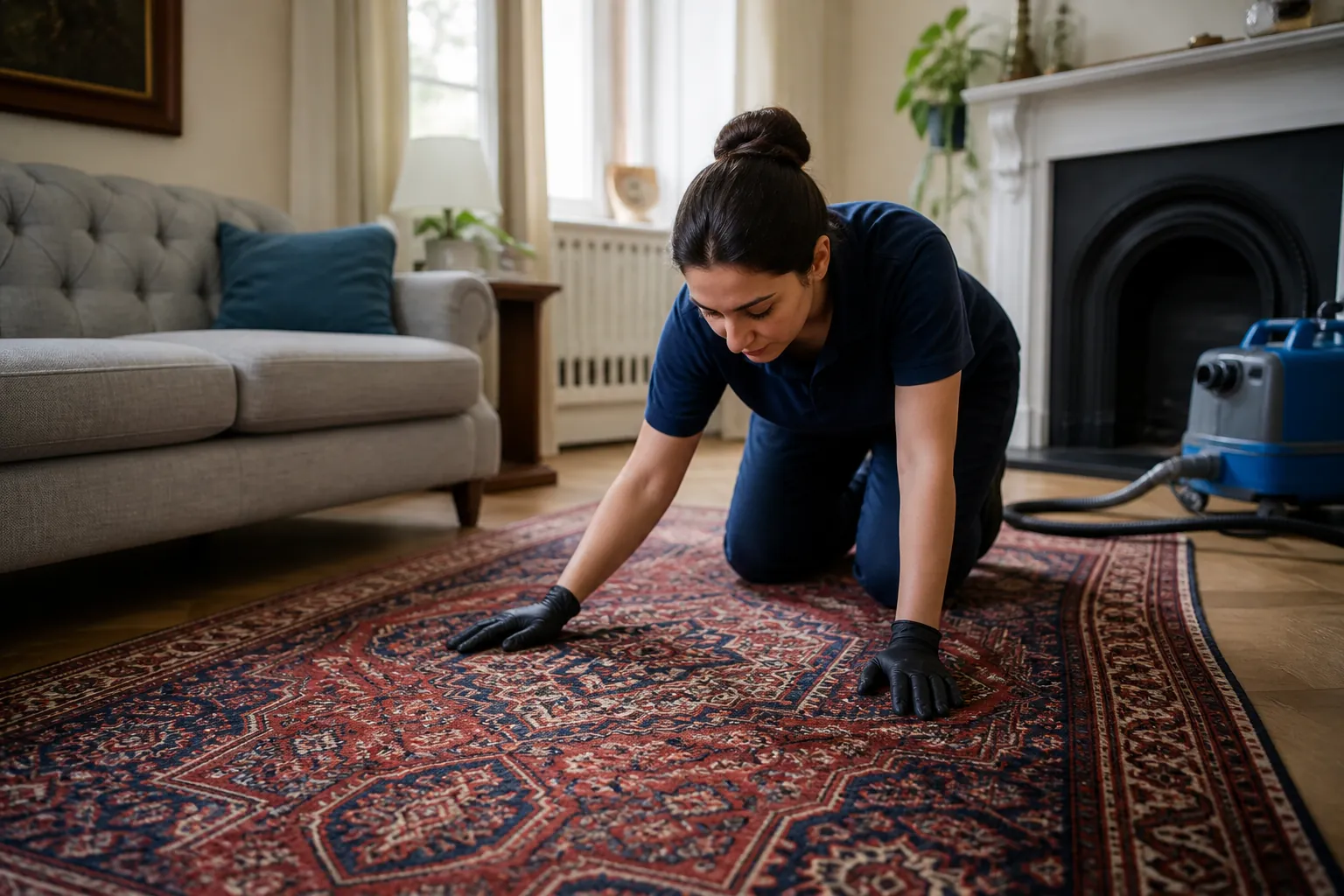
Unlike a pile surface, a dhurrie’s pattern and body are created by interlaced yarns. Colour behaviour, end finish, distortion and old repairs therefore influence both cleaning limits and physical handling.
Wool yarn
Fibre condition informs chemistry, temperature and mechanical restraint.
Pattern colours
Strong adjacent shades may require testing before a broad working route.
Interlaced body
Skew, ripples and weakened yarns are recorded before any manipulation.
Ends and repairs
Stitching and worn selvedges may require support during lifting and finishing.
A FLATWEAVE WORKING SEQUENCE
Seven decisions from room record to return
This sequence keeps the border incident separate from general traffic dulling. It also treats dimensional stability and colour as live checks, with return to the pine floor delayed until the textile is ready.
-
01
Fix the geometry
Measure both axes and photograph waves, skew and corner positions
-
02
Read the yarns
Examine weave, colour changes, ends and old stitching
-
03
Reduce dry load
Remove accessible particles from both faces within structural limits
-
04
Address the border
Treat the agreed tea-mark area according to test results
-
05
Hold the shape
Monitor flatness, colour and end tension through finishing
-
06
Compare the field
View the worked border beside the traffic lanes and untouched references
-
07
Plan the return
Confirm readiness, board protection and furniture placement
ISLINGTON SIZE GUIDE
Measure the rectangle, then describe the exception
Length and width place the dhurrie in an initial band. The confirmed amount can then account for the border mark, colour testing, fragile ends, vestibule handling and any additional work explicitly accepted.
A USEFUL TERRACE ENQUIRY
Send one coherent record, not isolated close-ups
- Postcode, contact details and timing constraints
- Maximum length and width of the dhurrie
- Overhead image showing its full outline
- Tea-mark views across and along the woven rows
- Front and reverse of the nearest affected border
- Pictures of end finishes, loose yarns and repairs
- Label wording or known purchase information
- A chronological account of blotting and spot products
- Vestibule width, turning space and front-step count
Four points to settle before the visit
Should the dhurrie be rolled before arrival?
Leave it in its usual position unless instructed otherwise. The room view and current shape are valuable evidence.
Can a tea halo be judged on screen?
Photographs locate it, but they cannot reliably separate residue, colour movement and fibre wear.
Do the pine boards need special preparation?
Clear loose objects and report delicate finishes or existing marks. The appropriate isolation plan follows from their condition.
Will the narrow vestibule change the price?
It may affect handling or staffing if off-site movement is agreed, so accurate dimensions belong in the quotation evidence.
ISLINGTON FLATWEAVE QUESTIONS
What households ask about thin woven rugs
How should I photograph a flatweave without hiding distortion?
Shoot directly above where safe, keeping every edge visible. Add low-angle views of ripples and a room photograph for scale.
Why record the pine floor beneath it?
The board finish and gaps influence temporary protection, lifting and when the rug can return, although textile tests remain separate.
Can you promise to erase the tea outline?
No. The visible line may include tannin, detergent residue, migrated dye or altered wool. Inspection establishes a realistic boundary.
Which entrance detail is most useful?
Measure the tight turn inside the vestibule, then note railings, steps and whether the front door can open fully.
Does “wool dhurrie” identify every material?
Not always. Mixed yarns, repairs and end finishes may be present, while the individual dyes still require their own consideration.
Should I rinse the place where tea was spilled?
Do not add water or another product without advice. Write down what has happened so far and leave the area undisturbed.
Why are the woven ends inspected closely?
They can loosen when the rug is lifted or manipulated. Existing weakness may call for support and a narrower working plan.
What if the board under the mark also smells?
Mention it explicitly. The rug and floor are distinct materials, and contamination beyond the textile may require separate advice.
Will a thin rug dry immediately?
Thin construction alone is not a timetable. Yarn, treatment, room airflow, season and the handling route all affect readiness.
What moves the estimate beyond the size band?
Testing needs, fragile ends, stain history, access handling and optional agreed tasks can all qualify the starting figure.
SHOW THE WEAVE AND THE WAY OUT
