
BARNES · FROM RIVERSIDE ROOM TO WORKABLE CLEANING PLAN
Rug Cleaning in Barnes, Planned Around the Home
Barnes rooms often pair valuable textiles with timber floors, narrow passages and furniture that cannot simply be shifted aside. We start by understanding how the rug lives in the space, then decide what can be assessed, moved and cleaned responsibly.
- Send one photograph showing the rug in its whole room
- Tell us whether boards, stone or underlay sit beneath it
- Flag fading near windows, fragile ends and previous repairs
- Describe the path from the street or riverside entrance
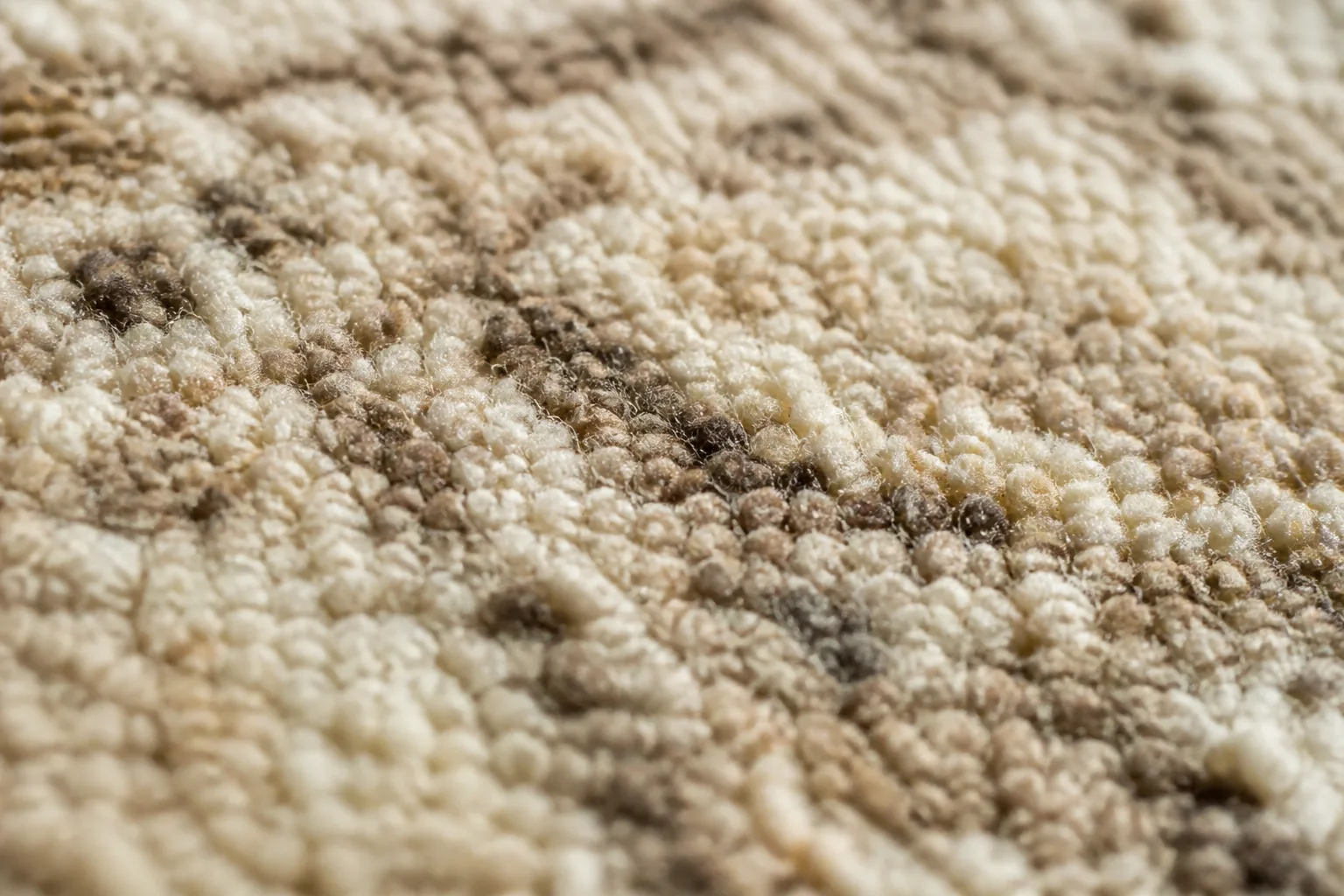
MAKE A ROOM-LED RECORD
Start with what can be seen without disturbing the rug
Choose observations, not conclusions. Uncertain fibres and old treatments can remain unclassified until inspected.
A BARNES HOUSEHOLD SCENARIO
Protecting the floor begins before the rug is lifted
A large patterned rug beneath a dining table may have clean-looking edges but compacted traffic lanes through the centre. Its greatest practical risk can be the surface below: grit trapped between rug and boards, an ageing underlay, or damp residue from an earlier spill.
First record the relationship. Photograph furniture feet, nearby glazing and the rug boundary. These views help identify pressure marks and colour differences that may have developed gradually.
Then plan the lift. Chairs may move easily; a cabinet or table may need a separate arrangement. Nobody should drag weight across a weakened edge merely to obtain a photograph.
Barnes room survey
Placement: Say whether the rug anchors dining, seating or hallway furniture.
Footfall: Mark the route used most often.
Daylight: Identify the edge closest to windows or glazed doors.
Floor finish: Mention oiled, sealed or unknown timber.
Underlay: Photograph a corner only when it lifts freely.
Ends: Keep loose fringe away from vacuum rollers.
Repairs: Show stitching from both sides where accessible.
Scale: Measure the textile, not the room.
Past care: List professional work and household products separately.
Spills: State liquid type and whether it reached the boards.
Smell: Indicate the smallest area where it is noticed.
Animals: Mention repeat incidents without masking them first.
Access: Include controlled parking or estate entry times.
Handling: Identify pieces too heavy for household moving.
Aftercare: Keep the return area ventilated and undisturbed.
Limits: Existing sun fade and worn yarn cannot be washed back.
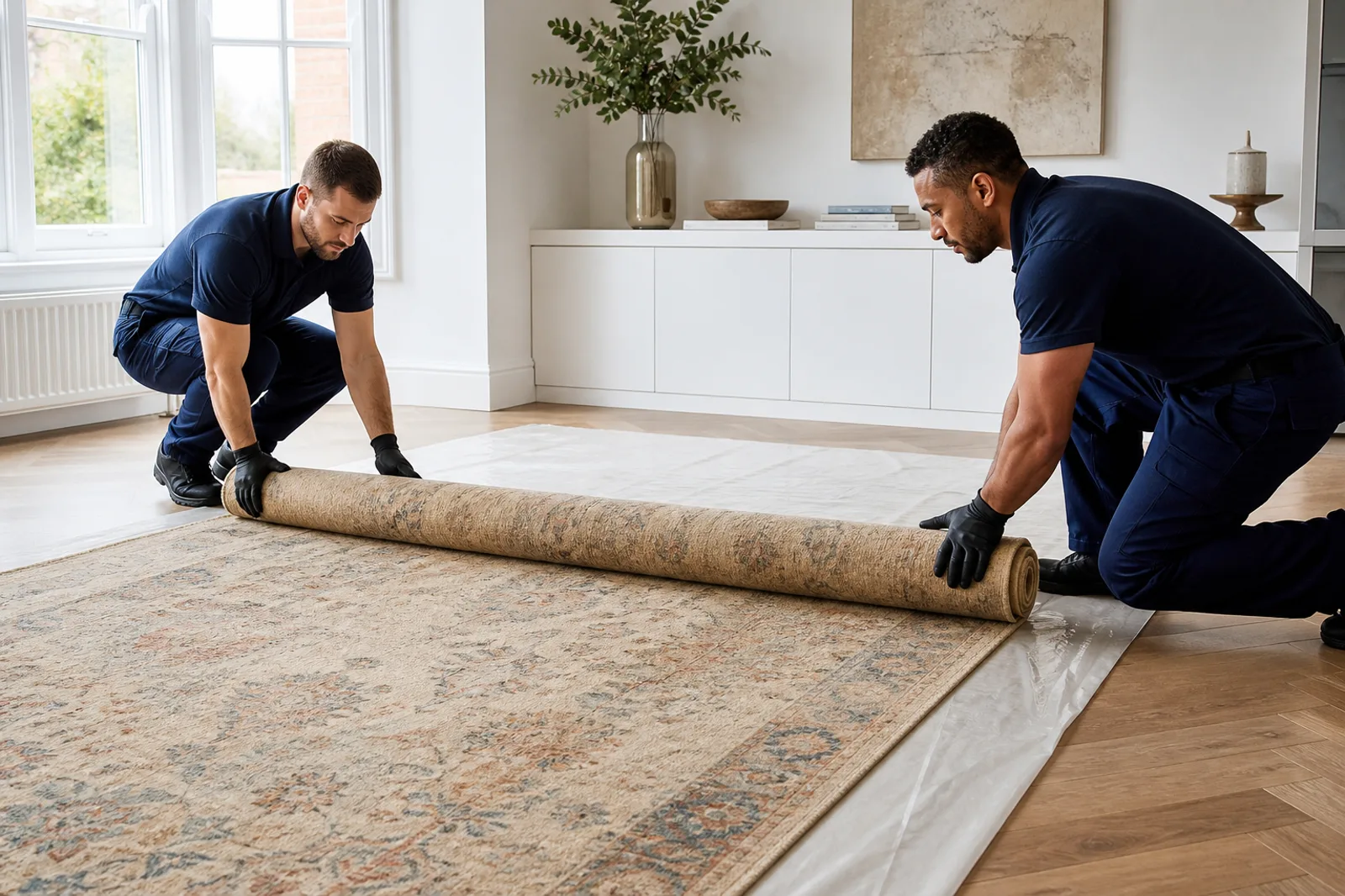
LIGHT AND USE
A brighter border may be exposure, not dirt
Furniture shadows, sunlight and reversed pile direction can divide a rug into distinct shades. Comparing several angles prevents a permanent colour difference from being mistaken for removable soil.
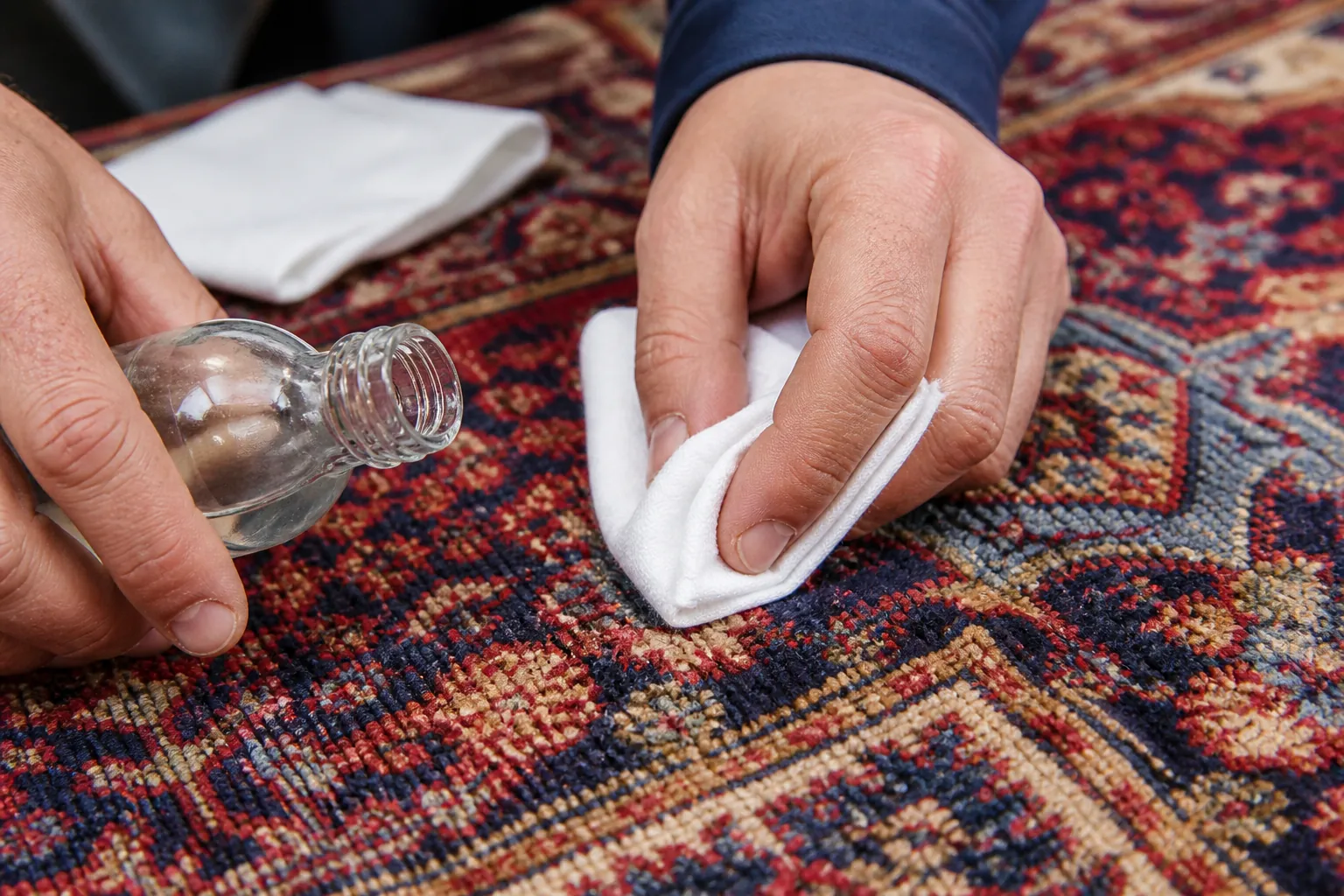
WHEN LIQUID REACHES THE FLOOR
The supporting surface becomes part of the enquiry
If a drink, pet accident or cleaning solution passed through, tell us what lies underneath. The top can feel dry while residue remains in the foundation, pad or gaps between boards.
- What was spilled and roughly when
- Whether the rug was lifted afterwards
- What was used to blot or rinse
- Any change noticed on the floor below
BUILD THE BARNES ENQUIRY
Nine details replace a vague request with a usable brief
Send facts in any order; photographs need not look polished.
- Full Barnes address or postcode
- Length and width excluding tassels
- Room-wide view from the entrance
- Close-up of the main concern
- Window-facing and shaded edges
- Reverse, label and repair photographs
- Floor finish and any separate pad
- Furniture that must be worked around
- Street-to-room carrying restrictions
Useful checks before you lift anything
Must the room be emptied?
No. Tell us what moves safely and what needs to remain; the scope can be planned around it.
Can sunshine damage be corrected?
Cleaning cannot restore dye already altered by light, although soil removal may change the overall balance.
Should I roll the rug now?
Wait if edges, backing or repairs look weak. We can discuss a suitable direction and method.
Does a dry surface mean the floor is safe?
Not necessarily. Liquid can travel through layers and should be reported.
FROM RECEPTION ROOM TO RETURN
The Barnes workflow follows the textile and its setting
No generic timetable overrides what inspection, construction and drying conditions show.
- 01
Survey the room
Locate furniture, light, floor and travel lines
- 02
Record the rug
Measure, photograph and mark vulnerable points
- 03
Check behaviour
Review yarn, dyes, backing and old repairs
- 04
Remove loose grit
Use only methods compatible with the build
- 05
Clean to scope
Address agreed soil without chasing permanent change
- 06
Dry and inspect
Recheck edges, shade and foundation
- 07
Guide the return
Protect boards and delay furniture where required
SIZE GUIDES FOR BARNES
Measurements open the conversation; complexity completes it
Guide bands assume an eligible rug. Delicate construction, access, contamination and specialist requests are confirmed separately.
FOUR BARNES VARIABLES
Room risks and textile risks meet at the rug edge
The same yarn can behave differently when its dyes, foundation, repair history or supporting floor changes.
Daylight history
Shade comparisons reveal gradual colour alteration.
Internal structure
Density and joins set handling limits.
Floor and pad
Contact surfaces need their own protection.
Ends and mends
Fragile areas are mapped before movement.
BARNES QUESTIONS
Answers for rooms where the rug cannot be considered alone
What should my first photograph include?
The complete rug, nearby furniture, windows and enough floor to understand its placement.
Do you need exact fibre information?
Share labels or receipts, but uncertainty is acceptable and can be checked rather than guessed.
Why ask about timber boards?
Finish, trapped grit and transferred moisture affect lifting, protection and return planning.
Can a faded area become even again?
Cleaning removes compatible soil; it does not recreate dye changed by prolonged exposure.
What if a table covers most of the rug?
Describe its weight and construction so safe access can be agreed before attendance.
Is fringe included in the measurements?
Measure the woven body for area, then provide tassel length as a separate detail.
Should old repairs be mentioned if they look secure?
Yes. Previous stitching or adhesive can alter how the rug is moved and treated.
How soon can it return to the room?
The answer depends on its build, the selected method, airflow and the condition of the receiving surface.
Is the final price based only on size?
No. Size provides a starting band while construction, condition, access and agreed work shape the quote.
What does the £68 minimum mean?
It is the starting minimum for an eligible visit; confirmed compatible services may be grouped.
BEGIN WITH THE ROOM
Send the Barnes view that shows how your rug is really used
We will turn the practical details into the next questions.
