
A ceiling mark changes after bathroom use
Note whether bathing, showering, flushing or basin use produces the change; avoid repeated tests if the surface is becoming wetter.
CAMDEN · PLUMBING HELP
Help with everyday plumbing faults and planned fixture work, with careful preparation for converted houses, upper-floor flats and busy shared entrances.

START WITH WHAT HAPPENS
A room name is not a diagnosis. Timing, isolation and a clear view of the accessible connections provide a better starting point.
Note whether bathing, showering, flushing or basin use produces the change; avoid repeated tests if the surface is becoming wetter.
Compare hot and cold flow at another tap before assuming there is a property-wide pressure problem.
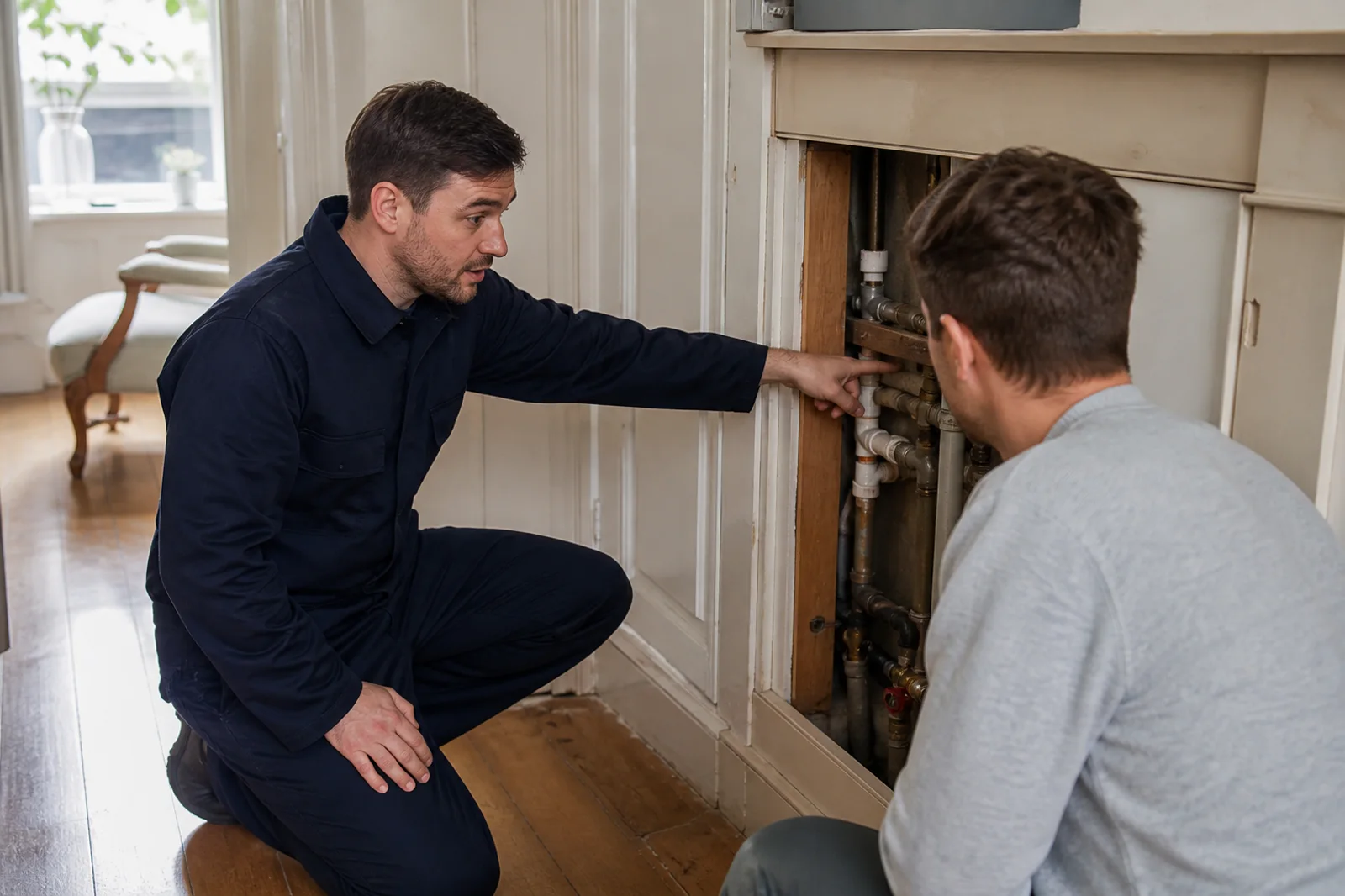
Do not force it. Photograph its position and tell us whether a managing agent controls another isolation point.
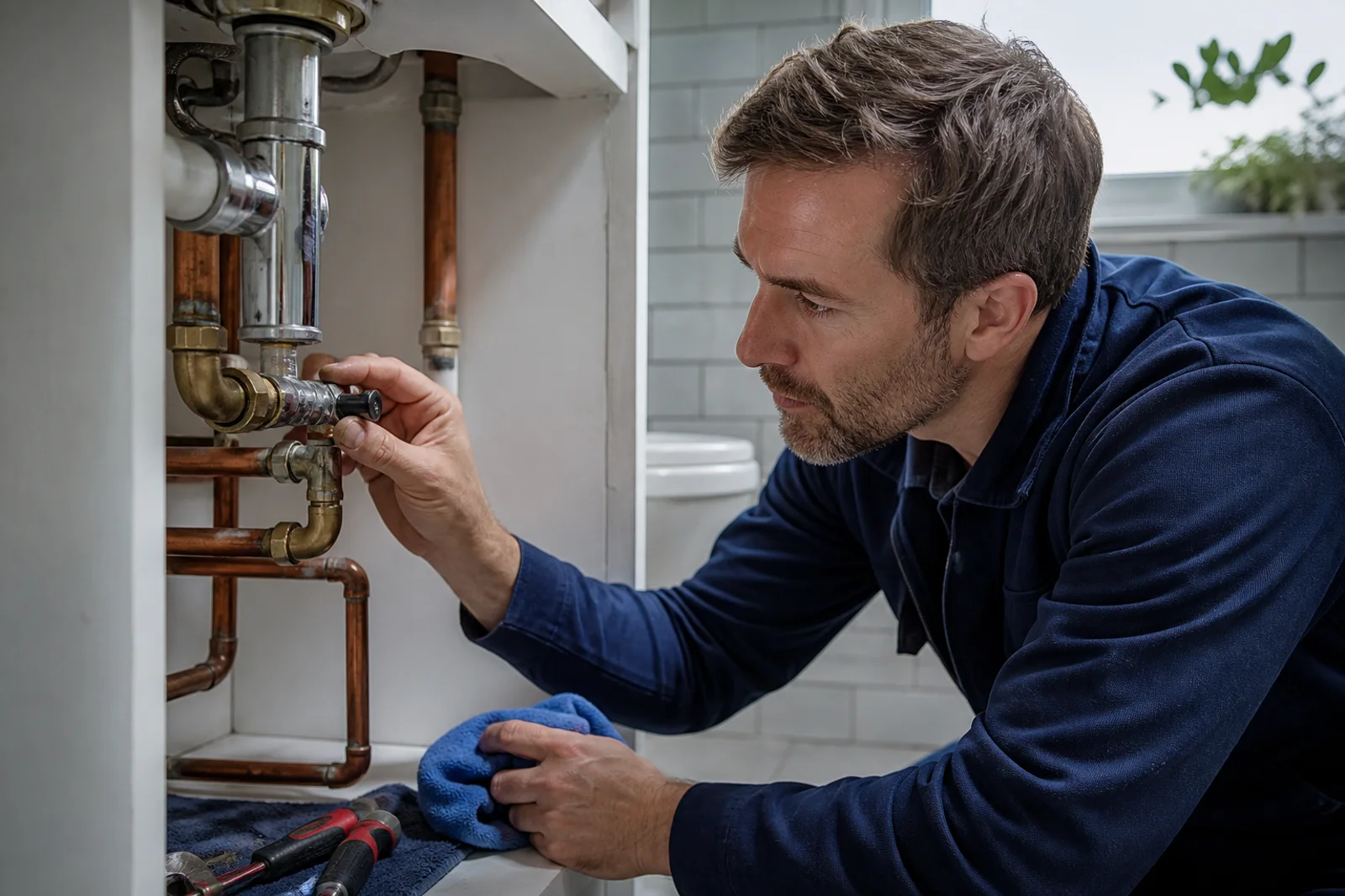
Send product details and clear measurements of the existing connections before anything is ordered.
SYMPTOM → POSSIBLE ISSUE → NEXT STEP
These examples help describe the problem without assuming which part has failed.
| What you notice | What may need checking | What to do next |
|---|---|---|
| A mark darkens after a shower but not after basin use | A shower fitting, seal, tray edge or waste route may need checking | Stop using the shower if the mark is spreading and photograph both rooms where access is available. |
| Cold flow is normal but hot flow is weak at one tap | The tap, local connection or supply arrangement may be restricting flow | Compare another hot outlet and provide the tap make or photographs. |
| A cistern continues filling after the flush | The inlet valve, float or flush mechanism may be worn or obstructed | Use the local isolation valve only if it turns normally; do not force a seized control. |
| Water appears inside a kitchen cupboard | A tap tail, valve, appliance hose, trap or waste joint may be involved | Empty the cupboard, dry the base and observe which use causes fresh moisture. |
CAMDEN PROPERTY NOTES
Camden homes can present more than one possible route for the same plumbing symptom. If the concern is ceiling marks linked to an upstairs bathroom, note when it appears and what was being used at the time. Mention older stopcocks and valves that may not isolate one flat separately so the plumber can assess it without assuming the two are connected.
Before the visit, clear access to the affected room and any cupboard or panel that may contain a valve. Where the job also involves tap or toilet parts that need identifying before ordering, say which other taps, toilets or appliances need to remain available while checks are carried out.
Access through communal halls, basements or service cupboards may involve areas controlled by a landlord, managing agent or neighbour. Confirm who can approve entry or a water shutdown, but leave unfamiliar valves and concealed fittings untouched. A few wide photographs are usually more useful than dismantled parts.
GENERAL PLUMBING SCOPE
Boilers, gas work, underground drainage, electrical faults and specialist concealed-leak detection are separate services.
Accessible supplies, wastes and fixtures are checked against the reported timing. Opening ceilings or tiled panels needs separate agreement.
Repairs or replacements are based on the fitting type, water control and condition of adjoining pipework.
Accessible fill, flush and seal faults can often be dealt with without changing the full sanitary fixture.
New positions must work with the existing supplies, waste fall, clearances and future access.
REPAIR OR REPLACE?
Age alone does not decide the answer. Condition, part availability, isolation and the chance of a dependable result matter more.
Useful when the tap body is sound and the correct cartridge or seal can be identified.
Considered when the body is damaged, parts are obsolete or access makes repeated repair poor value.
Often possible where the ceramic fixture is sound and compatible components are available.
Appropriate when the symptom is concealed, intermittent or shared between flats.
FROM FIRST REPORT TO HANDOVER
Keep the description factual.
Do not force a seized control.
Use the least disruptive useful check.
Separate certainty from possibility.
Keep other trades and finishes visible.
Explain what was tested and what was not.
PRICING AND SCOPE
A price should follow the known fault or investigation step, not a generic promise for an unseen problem.
| Question | Why it matters | Possible effect |
|---|---|---|
| Can the water be isolated locally? | A working valve can limit disruption and make a safe repair more direct. | A failed or shared control may need separate planning. |
| Is the connection visible? | Accessible pipework can be inspected before parts are removed. | Opening a panel or cabinet should be agreed separately. |
| Is the required part identifiable? | Brands, dimensions and pipe materials affect compatibility. | An ordered component may require a return visit. |
| Has water damaged the surroundings? | Wet timber, plaster or flooring may need drying and another trade. | Making good is not hidden inside the plumbing price. |
CLEAR WORK BOUNDARIES
The written quote should identify the part being checked or changed and any access, drying or reinstatement that sits outside it.
PHOTOGRAPHS BEFORE THE VISIT
Do not disconnect a hose, remove a fixed panel or disturb a leaking joint simply to obtain a photograph.
CUSTOMER QUESTIONS
The exact result still depends on the accessible condition found at the property.
A photograph helps with planning but rarely proves the source. Timing, layout and accessible checks are needed.
No. Start with the use most closely linked to the mark and stop if moisture increases.
No. A seized or painted valve can fail when forced and may need separate replacement planning.
No. A single tap can be restricted even when other outlets have normal flow.
Send dimensions and product details first. Hole size, pressure and connection space all matter.
Only if stated. Plumbing work and plastering, drying or decorating should be listed separately.
The landlord, freeholder or managing agent may need to arrange access or instruct work on that section.
Yes. A safe first visit may narrow the source and define the next access step rather than complete a repair.
RELATED SERVICES
These links help separate a fixture repair from drainage, heating, electrical safety or later property work.
PLUMBING IN NEARBY DISTRICTS
Select the page for the actual work address so its property, access and booking notes remain relevant.
CAMDEN MAP
Use room relationships and timing to prepare a ceiling-mark enquiry: route context only. Access through communal halls, basements or service cupboards: property inspection required.
READY TO DESCRIBE THE PROBLEM?
Send photographs of the affected area, explain when the symptom occurs and mention any access or isolation issue before requesting a quotation.
