
Furniture
Freestanding sofas, tables, wardrobes and other bulky household pieces.
Collection planning · Golders Green
Describe the material, show the full load and explain the route from item to vehicle. Those facts are checked before collection scope or timing is agreed.
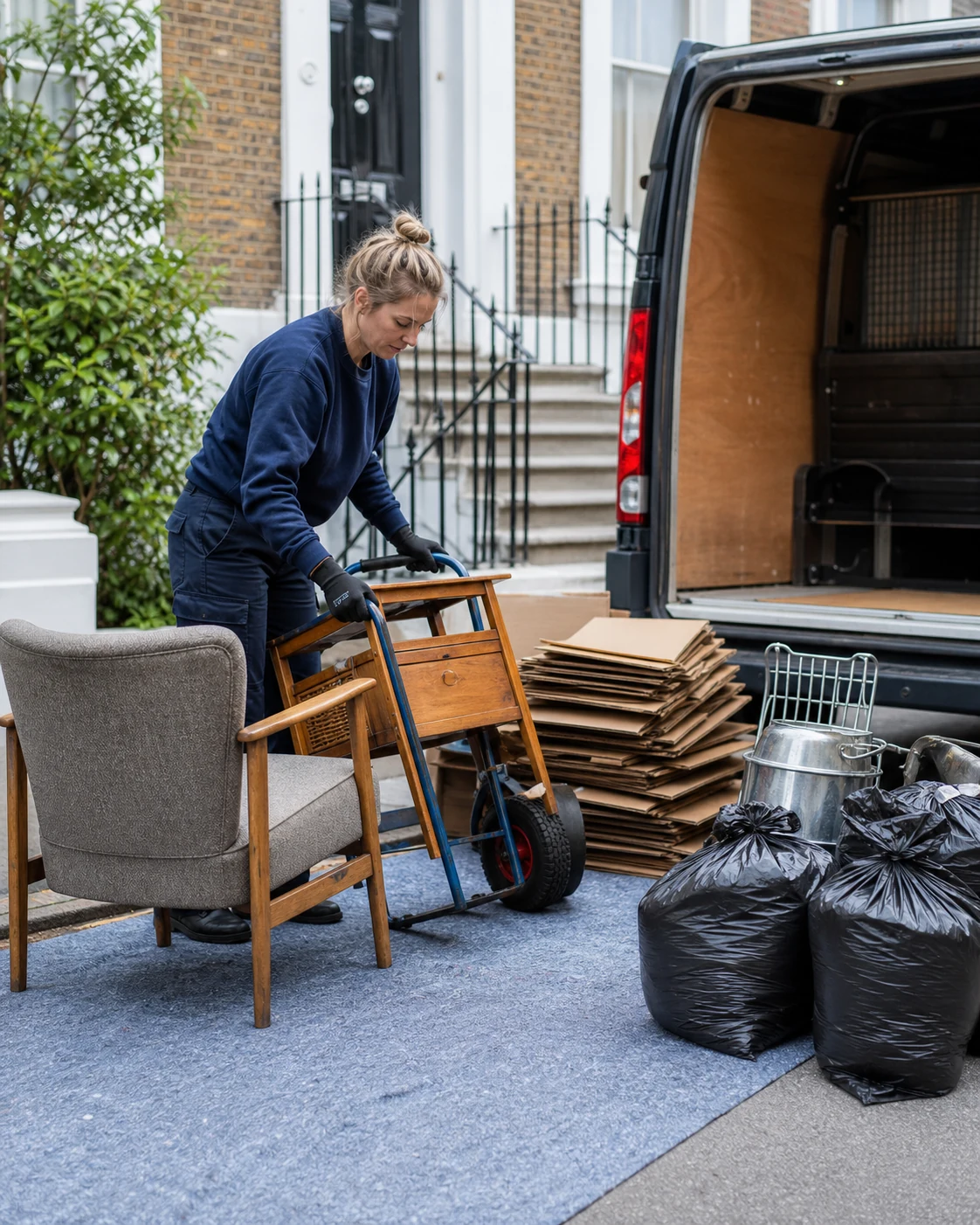
Collection sequence For the wider booking boundaries, review Alesta's waste collection service.
Send photographs and identify material.
Explain restricted residential roads, floors and vehicle position.
Confirm the expected work and quotation basis.
The presented load is checked before loading.
Suitable material follows the appropriate disposal route.
Identify the material Bulky household pieces can be assessed separately through the separate furniture disposal service.
Describe every group that is present. Do not place uncertain liquids or unlabelled containers inside an ordinary mixed load.
Freestanding sofas, tables, wardrobes and other bulky household pieces.
Closed bags with their general contents described and unusual weight highlighted.
Cuttings and garden material kept visible and separate where accepted.
Compatible non-hazardous project debris, declared before the quotation.
Make the load visible Declared renovation material should follow the separate project waste removal rather than an ordinary mixed load.
Start with a wide photograph that includes the complete quantity, then add closer views for heavy, sharp or fragile-looking pieces. Count sacks by collection area and describe what they contain; ten light bags are not equivalent to ten bags of dense project debris. Measure bulky furniture in its current form and mention removable shelves or legs, while leaving dismantling to an agreed and safe plan. Green cuttings should remain distinct from household contents. If the same object appears in several images, identify it so the inventory is not accidentally enlarged. Clear grouping supports decisions about lifting, loading stability, usable vehicle space and the appropriate onward route.
Access changes the work
Show steps, gates and the distance from door to vehicle.
State the floor, stair turns and shared areas.
Confirm the working size and any booking rule.
Photograph gates, alleys and surface changes.
Use current signs or authority information.
Supply dimensions before dismantling is considered.
Property context in Golders Green
Golders Green homes can combine generous rooms with surprisingly awkward exits. Begin by photographing each collection group where it stands, then follow the intended carrying route towards the street. Record garden steps, narrow side passages, shared lobbies and any change of level. If a wardrobe, sofa or table dominates the job, provide its dimensions and the tightest doorway measurement rather than assuming it will pass assembled.
The outside approach needs the same attention. Explain where a vehicle could lawfully stop on the day and estimate the carry from that point to the entrance. A nearby space seen previously may not be available when the crew arrives. Keep bagged household contents, furniture, green material and declared renovation debris in identifiable groups. Batteries, chemicals, gas cylinders, fuel, unknown liquids and other restricted materials must be declared separately. These details allow the collection to be assessed from the actual property conditions, without turning a Golders Green postcode into a fixed price or a guarantee about vehicle capacity.
Material route and limits
Reusable and recyclable material is separated where practical. The actual route depends on what is presented, so no fixed recycling percentage is promised.
Batteries, specialist electrical items and hazardous substances need to be identified rather than hidden inside bags or boxes. If the contents or material are uncertain, keep them separate and send a close photograph or label information before booking.
Quotation basis
A quotation reflects the declared material, its volume and weight, the labour needed to reach it, and relevant disposal charges. Stairs, long paths, controlled stopping arrangements and agreed safe dismantling may affect the work even when the photographed pile seems compact. There is no automatic neighbourhood tariff. The figure remains connected to the submitted evidence, so another room, extra sacks, heavier debris or a changed loading position should be reported before collection day. Updated photographs let capacity and crew requirements be reviewed before anyone travels.
Before the team arrives
Remove personal belongings from drawers and clearly mark anything that must stay. Confirm keys, gates and shared-entry arrangements, then check that the stated vehicle approach is still realistic. Leave collection groups recognisable from the photographs instead of combining them into unstable stacks. Send new images if additional material appears. Restricted substances should remain isolated and identified, while plumbing or electrical disconnection and removal of fixed fittings must be arranged separately through an appropriate trade.
Questions for this collection
Provide one view of every included area, followed by close images of bulky, dense or uncertain material. Add the entrance and outside carrying route so the assessment covers movement as well as quantity.
Keep branches, cuttings and other green material together and show whether they are loose, bundled or bagged. A familiar object or measured container can help communicate scale without guessing vehicle volume.
Dismantling should be discussed beforehand and is undertaken only when agreed and safe. Supply assembled dimensions, photographs of the item and measurements at the narrowest doorway or turn.
Every metre between the stored material and the usable loading point adds carrying work. Include paths, outside steps, gates and shared sections instead of describing access only as ground floor.
Send a fresh overview and revised count before the appointment. Extra volume or unexpected weight can alter labour, capacity, disposal requirements and possibly the number of journeys needed.
No assumption should be made about paints, solvents or unidentified liquids. Keep them separate, photograph any labels and declare them so an appropriate specialist route can be considered.
Electrical and plumbing disconnection are separate tasks and should not be expected from the clearance crew. Arrange the relevant trade first, then describe the disconnected item and its route out.
No fixed percentage can be promised for an individual collection. Reusable or recyclable material may be separated where practical, depending on condition and the suitable routes available for the declared contents.
Collection area
Use the map to identify the collection address and describe the actual vehicle approach. Current access restrictions still need to be checked for the proposed date.
Return to the Waste Removal Services hub for the service scope.
