
Furniture
Freestanding sofas, tables, wardrobes and other bulky household pieces.
Collection planning · Camden
Describe the material, show the full load and explain the route from item to vehicle. Those facts are checked before collection scope or timing is agreed.
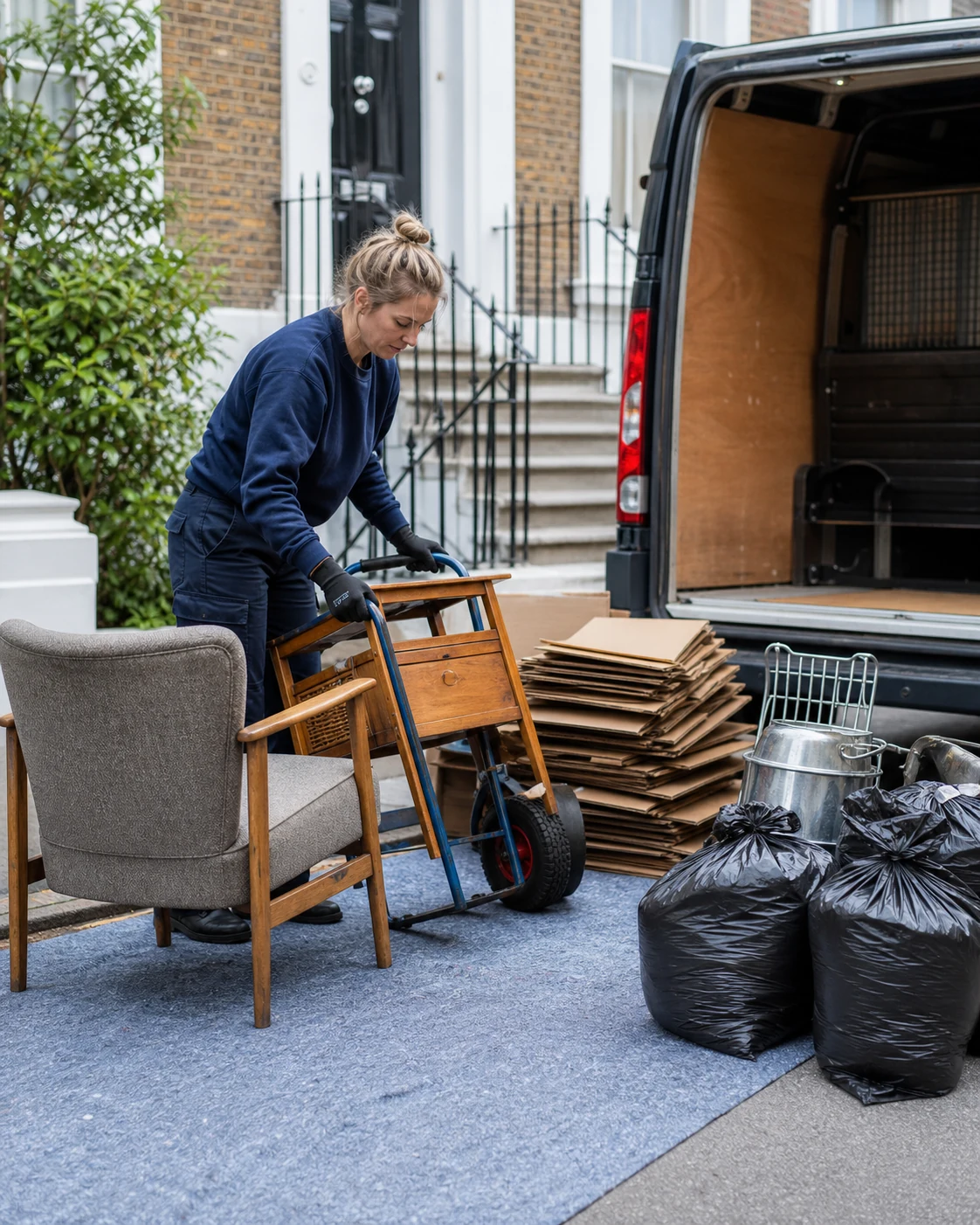
Identify the material For the wider booking boundaries, review Alesta's waste removal service.
Describe every group that is present. Do not place uncertain liquids or unlabelled containers inside an ordinary mixed load.
Freestanding sofas, tables, wardrobes and other bulky household pieces.
Closed bags with their general contents described and unusual weight highlighted.
Cuttings and garden material kept visible and separate where accepted.
Compatible non-hazardous project debris, declared before the quotation.
Material route and limits If several rooms or stored areas are involved, the house clearance service may be the more useful scope.
Reusable and recyclable material is separated where practical. The actual route depends on what is presented, so no fixed recycling percentage is promised.
Unknown liquids, paints, solvents, fuel and refrigerants must be declared before any collection is discussed. Batteries, specialist electrical items and hazardous substances need to be identified rather than hidden inside bags or boxes.
Property context in Camden Declared renovation material should follow the separate building waste disposal service rather than an ordinary mixed load.
Begin by listing what leaves from each part of the property. Use separate categories for household bags, movable furniture, garden material and declared renovation debris rather than choosing a vehicle size from sight. Wide photographs reveal the depth of a pile; counts, measurements and closer views explain weight, condition and awkward shapes. Identify anything sharp, damaged, leaking or not readily recognisable. The result should let another person understand the collection without relying on shorthand.
Camden access can involve flats above street level, shared entrances, courtyards and restricted roadside loading. Trace the carry from the most distant object, recording stairs, lift use, narrow thresholds, security doors and communal passages. State any building procedure needed for entry. At the street, identify the currently feasible loading location and measure the walking distance where it is not close. Observed signs and present arrangements are stronger evidence than a general assumption about the district.
Make the load visible
Photograph ordinary contents and dense building material independently, even if both sit in one pile. A shallow container of tiles may demand more care than several light sacks. Count bags, name their broad contents and show furniture from angles that reveal its full dimensions. Include every loft, basement, yard or cupboard in scope. Unidentified tins and liquids should stay upright and separate where safe, never hidden for convenience. Explain whether fragile panels or dismantled sections require controlled handling. Disassembly that has not been assessed should not be improvised when the collection begins.
Access changes the work
Show steps, gates and the distance from door to vehicle.
State the floor, stair turns and shared areas.
Confirm the working size and any booking rule.
Photograph gates, alleys and surface changes.
Use current signs or authority information.
Supply dimensions before dismantling is considered.
Quotation basis
The quoted scope reflects material, volume, weight, disposal charges and vehicle capacity, together with the labour created by the route. Floors, stairs, restricted lift use, long carries and loading constraints can make equal-looking volumes different jobs. Camden is not priced through a blanket neighbourhood surcharge. The evidence supplied for the property drives the assessment. Extra areas, changed access or significantly heavier contents can therefore require revision. Clear explanations separate disposal considerations from crew time and show why a particular fact affects the collection plan.
Before the team arrives
Walk the route once more and remove ordinary obstructions, but leave unsafe lifting and fixed services alone. Arrange keys, building permission and the person meeting the crew. Clearly isolate belongings that must stay. Keep hazardous or unknown material outside routine sacks and retain visible labels. If rain has increased the weight of project debris, another room has joined the clearance or loading access has altered, send updated evidence. Shared routes must remain usable for residents throughout preparation.
Collection sequence
Send photographs and identify material.
Explain restricted residential roads, floors and vehicle position.
Confirm the expected work and quotation basis.
The presented load is checked before loading.
Suitable material follows the appropriate disposal route.
Questions for this collection
A main-room photograph cannot represent material in a loft, cellar, cupboard or yard. Naming each location makes both the total quantity and the complete carrying route visible.
Restricted working hours, booked lifts or concierge procedures can reduce when shared areas are usable. Provide the confirmed arrangement early so attendance is not planned around unrestricted access.
Yes. Rubble, tiles and other dense debris can carry considerable weight in little space. Describe the material and container size rather than relying on its apparent footprint.
Keep the container separate and upright where safe, then provide clear images of it and any label. Unknown liquids cannot be accepted as ordinary mixed household waste.
Send measurements for the sofa, doorway and tightest turn. Safe dismantling may be discussed when appropriate, but it is not automatically included and fixed alterations require separate expertise.
Avoid creating a blockage or unstable pile in shared space. Keep resident and emergency access usable, and follow any building rules governing where items may wait.
Do not assume deep cleaning, repairs or reinstatement. A basic practical sweep of the immediate work area may be possible, but broader requirements need their own arrangement.
They could. Additional quantity or weight may exceed planned capacity or change disposal requirements. Report additions before attendance so the quotation and collection arrangement can be reconsidered.
Collection area
Use the map to identify the collection address and describe the actual vehicle approach. Current access restrictions still need to be checked for the proposed date.
Return to the Waste Removal Services hub for the service scope.
