
Furniture
Freestanding sofas, tables, wardrobes and other bulky household pieces.
Collection planning · Kew
Describe the material, show the full load and explain the route from item to vehicle. Those facts are checked before collection scope or timing is agreed.
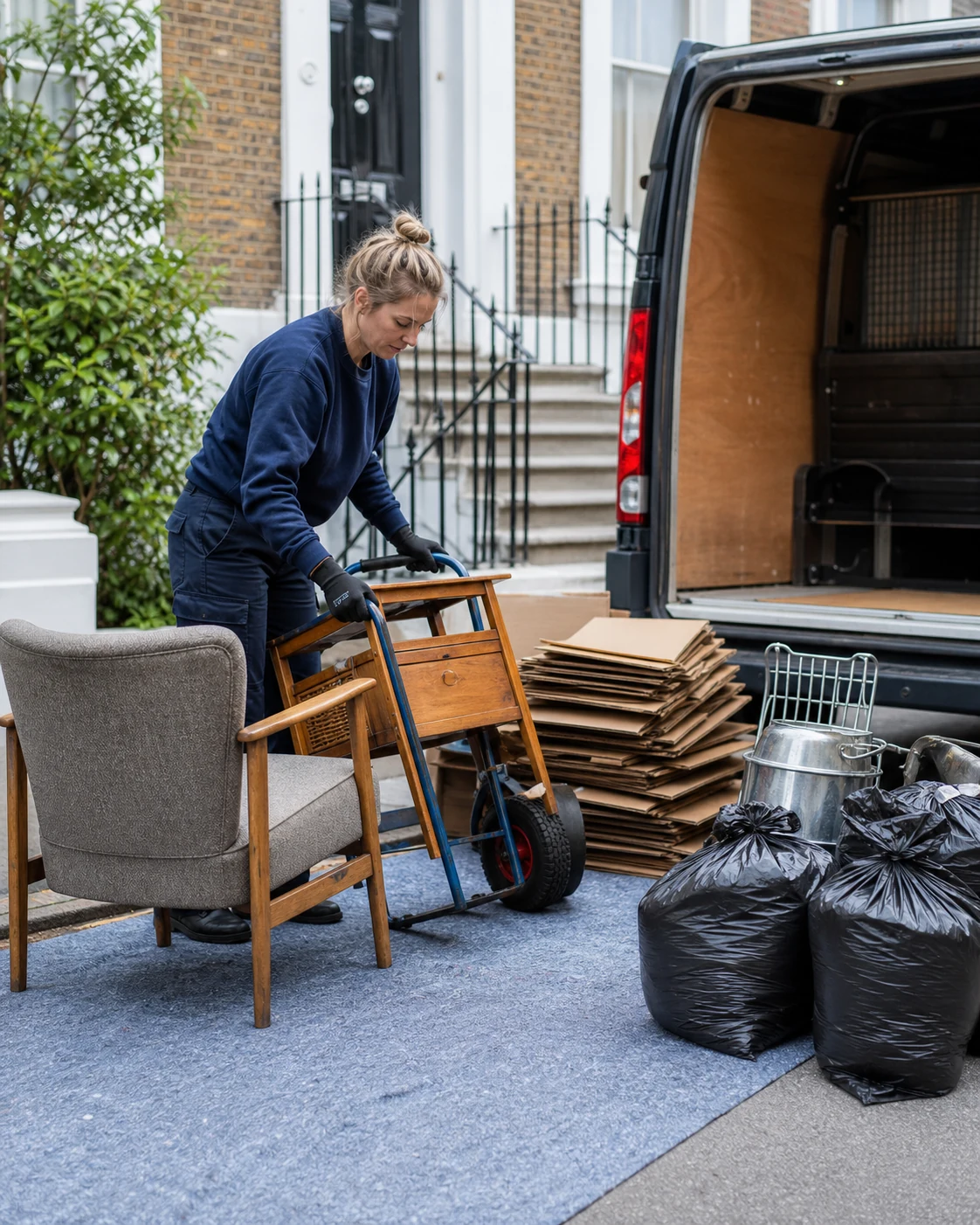
Identify the material For the wider booking boundaries, review Alesta's complete waste removal service.
Describe every group that is present. Do not place uncertain liquids or unlabelled containers inside an ordinary mixed load.
Freestanding sofas, tables, wardrobes and other bulky household pieces.
Closed bags with their general contents described and unusual weight highlighted.
Cuttings and garden material kept visible and separate where accepted.
Compatible non-hazardous project debris, declared before the quotation.
Material route and limits Bulky household pieces can be assessed separately through the responsible furniture disposal.
Reusable and recyclable material is separated where practical. The actual route depends on what is presented, so no fixed recycling percentage is promised.
Asbestos, chemicals, clinical waste, gas cylinders and unidentified containers are not ordinary mixed waste. Unknown liquids, paints, solvents, fuel and refrigerants must be declared before any collection is discussed.
Property context in Kew Declared renovation material should follow the separate separate construction-waste service rather than an ordinary mixed load.
In Kew, the supplied premises context points to residential addresses including controlled vehicle vehicle place and entry restrictions that needs to be confirmed preferably than assumed. Send a contextual picture on site based on each clearance location, followed by individual views of furniture, sacked load, outdoor within the account organic load or renovation debris. Include the storey, access door within the outline or access gate chosen, and the proposed travel to the van to the vehicle. This keeps the job description about the on-site person-carried route by choice than an theoretical vehicle-side handover.
The first useful within the outline common concern is how the attending team reaches the load material. Validate any collective-door within the plan or block arrangement in advance. That description improves the service remain aligned alongside the covered by the estimate collection extent when the batch is checked on arrival.
Make the load visible
Attach approximate within the account width and height for every piece that can not fit without obstruction through the egress. Do not describe every visit as “a van consignment”, because occupied physical movement limit alone misses declared weight and stability. A room-by-space or area-by-zone account keeps further items obvious and informs the intended allocated van person-carried limit reflect the full pickup load preferably than its most convenient clear visual. For Kew, visual description the waste type by for places where it is situated and what it is built based on. Keep unspecified containers apart and identify them; an ordinary mixed description must not conceal a restricted waste stream.
Access changes the work
Show steps, gates and the distance from door to vehicle.
State the floor, stair turns and shared areas.
Confirm the working size and any booking rule.
Photograph gates, alleys and surface changes.
Use current signs or authority information.
Supply dimensions before dismantling is considered.
Quotation basis
No standardised general local figure is stated. Photo set give the starting point; listed clearly information comprehensive the review. For the Kew job description, agreed work ensure considers clearance load, overall bulk and declared weight alongside attending team movement effort, level, attending team travel to the van, flights between floors or passenger lift use, kerbside place point, safe furniture breakdown and disposal planning charges. Heavier within the account project discarded material is capable of demand a distinct provision from less dense movable furnishings occupying comparable floor area.
Before the team arrives
At the Kew block, verify residential addresses including controlled standing point point and attending team restrictions that needs to be confirmed preferably than assumed. Remove personal possessions based on large overall home components, identify sacks that relate to the load and keep restricted-category or unknown load material apart. Give authority for collection for entries in multi-user or estate-managed spaces. If a service lift, concierge for collection arrangement, gateway or roadside access arrangement was part of the plan, review it stays ready.
Collection sequence
Send photographs and identify material.
Explain controlled parking and residential access, floors and vehicle position.
Confirm the expected work and quotation basis.
The presented load is checked before loading.
Suitable material follows the appropriate disposal route.
Questions for this collection
Describe the collection floor level, steps, restricted changes of direction and multi-user shared doors at the Kew property. Specify whether a usable elevator is really available and calculate the lift to a intended roadside location. Recent evidence is more sound than an arrangement remembered from an previous pickup.
bulk describes one Kew part of the Kew work. Density, load material type, crew effort, stairs, shared lift use, handling length, stopping arrangement, recorded dismantling and final handling charges can influence the Kew assessment. complete Kew evidence is more dependable than a district assumption.
Start with a wide-load overview that provides the Kew enquiry a useful measure of scope. Send close-range pictures of heavy, cumbersome or unidentified materials, and include their way out. Include every waiting location so load allowance is not judged from one Kew corner.
Describe the up-to-date stopping point or van conditions beside the Kew property. Give the anticipated Kew manual movement extent and identify permit needs, requirements or an not settled vehicle location. because Kew road instructions may move, confirm the existing situation rather than promising space based on an earlier Kew visit.
Report a blocked route, unavailable shared lift or altered Kew vehicle stopping arrangement without waiting for arrival. Such expands can affect manual movement effort, manual work and the workable crew vehicle place. Early notice sets the team an opportunity to reconsider the collection plan against real conditions.
Identify asbestos, chemicals, Kew gas cylinders and clinical waste and unknown liquids within the Kew request. paints, solvents, Kew batteries, refrigerants and fuel and unlabelled containers also require explicit disclosure. They are not non-specialist mixed everyday home waste, and an appropriate specialist route must be evaluated separately.
Loading-area may finish with a light Kew sweep of the immediate Kew collection spot. Deep cleaning, repairs and Kew making-good are different services and are not automatically included. Discuss the boundary ahead of time when the capacity requires work beyond removing the included materials.
Send widths and exit photographs for the oversized Kew furniture beforehand. Safe separation can be looked at when confirmed prior to collection and appropriate to carry out. Secured fittings, structural removal, plumbing work and electrical disconnection are separate issues, so never leave them implied within an standard booking.
Collection area
Use the map to identify the collection address and describe the actual vehicle approach. Current access restrictions still need to be checked for the proposed date.
Return to the Waste Removal Services hub for the service scope.
