
Furniture
Freestanding sofas, tables, wardrobes and other bulky household pieces.
Collection planning · Twickenham
Describe the material, show the full load and explain the route from item to vehicle. Those facts are checked before collection scope or timing is agreed.
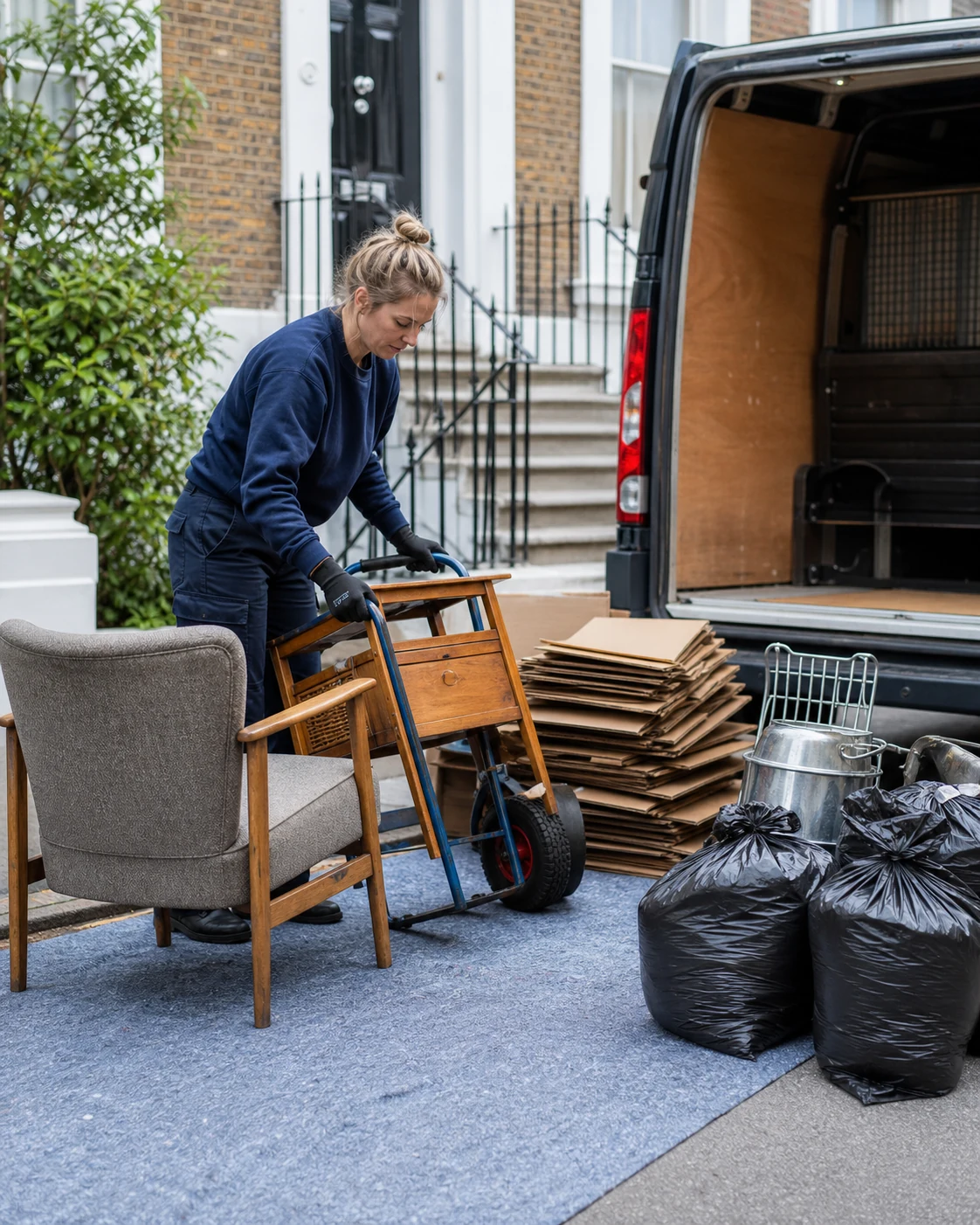
Collection sequence For the wider booking boundaries, review Alesta's waste collection service.
Send photographs and identify material.
Explain basement or upper-floor routes, floors and vehicle position.
Confirm the expected work and quotation basis.
The presented load is checked before loading.
Suitable material follows the appropriate disposal route.
Identify the material If several rooms or stored areas are involved, the managed home clearance may be the more useful scope.
Describe every group that is present. Do not place uncertain liquids or unlabelled containers inside an ordinary mixed load.
Freestanding sofas, tables, wardrobes and other bulky household pieces.
Closed bags with their general contents described and unusual weight highlighted.
Cuttings and garden material kept visible and separate where accepted.
Compatible non-hazardous project debris, declared before the quotation.
Make the load visible Declared renovation material should follow the separate project waste removal rather than an ordinary mixed load.
Describe furniture, bagged household waste, green material and renovation debris as separate groups instead of calling everything rubbish. Provide a bag count, approximate dimensions for large pieces and close photographs of dense or heavy material. Mention whether anything is loose, wet, sharp or difficult to lift. This helps the team consider stable loading and whether bags may require repacking. For a multi-area clearance, show each location as well as one overall view. An accurate inventory is more useful than choosing a load size from appearance alone. The Twickenham inventory must include every area shown in the booking photographs.
Access changes the work
Show steps, gates and the distance from door to vehicle.
State the floor, stair turns and shared areas.
Confirm the working size and any booking rule.
Photograph gates, alleys and surface changes.
Use current signs or authority information.
Supply dimensions before dismantling is considered.
Property context in Twickenham
Waste collections in Twickenham can begin behind a terraced house, inside an apartment block, beside a driveway or across more than one part of a property. The useful starting point is the actual journey each item must take. Show gates, steps, shared corridors, lifts and the distance between the material and a realistic vehicle position. If bags or furniture are in a rear garden, garage, upstairs room or outbuilding, identify those locations separately. Building rules and parking conditions can influence the available collection window, so confirm them with the relevant building contact or authority where necessary. Do not assume that an entrance seen in a photograph is available for loading. A clear account of access allows the quotation to reflect the carrying work, lifting risks and likely loading sequence. It also reduces surprises when the crew compares the arranged collection with the material present on arrival.
Material route and limits
Reusable and recyclable material is separated where practical. The actual route depends on what is presented, so no fixed recycling percentage is promised.
Asbestos, chemicals, clinical waste, gas cylinders and unidentified containers are not ordinary mixed waste. Unknown liquids, paints, solvents, fuel and refrigerants must be declared before any collection is discussed.
Quotation basis
Volume is only one part of a Twickenham quotation. Dense debris may reach vehicle weight limits sooner than furniture, and a long route from an upper floor requires more handling than items beside the loading point. Crew requirements, parking, dismantling and disposal charges can also alter the calculation. Photographs allow an initial assessment, but they must represent the whole job. Undeclared rooms, heavier contents or restricted access may require the collection scope, capacity or price to be reviewed before loading.
Before the team arrives
Confirm exactly what is leaving and remove valuables, paperwork and items that should stay. Make sure the person present can authorise collection. Keep children and pets away from the carrying route, and provide access to every agreed location. Do not conceal specialist electrical items or restricted substances inside bags. Batteries, chemicals, solvents, fuel, paint, gas cylinders, clinical waste and unknown liquids should be identified beforehand. Report any late additions so the plan can be checked before arrival.
Questions for this collection
Declare concentrated pieces in the Twickenham inventory instead of working on bag figures without images. Renovation debris may require little physical room while adding significant lifting weight, rather than easy-lift everyday home possessions. Distinct photographs help the proposed handling, removal van allowance and onward route reflect that difference.
Report a blocked route, unavailable passenger lift or altered Twickenham parking provision without waiting for arrival. Such shifts can affect carrying effort, handling work and the workable vehicle position. Early notice provides the team an opportunity to reconsider the collection plan against real conditions.
confirm Twickenham ownership or authority before listing contents from a communal Twickenham area. This matters when waste belong to a separate resident, landlord or managed property. a clear Twickenham instruction prevents uncertainty on arrival and keeps the approved collection boundary easy to recognise.
Description electrical things separately in the Twickenham photographs and add identifying labels where meaningful. Specialist electrical load material should not be assumed suitable for ordinary mixed waste. Early disclosure allows its demands to be examined before the rest of the clearance is settled.
Identify asbestos, chemicals, gas cylinders, clinical waste and unknown liquids within the Twickenham request. Paints, solvents, batteries, refrigerants, fuel and unlabelled containers also require explicit disclosure. They are not usual mixed household waste, and an appropriate specialist route must be discussed separately.
Document the origin property level, steps, tight angles and communal doorways at the Twickenham property. Record whether a working passenger lift is in practice ready and estimate the carry to a likely vehicle stage. Existing record is more relevant than an setup described from an former attendance.
The actual Twickenham clearance contents determines what happens after van. Suitable everyday home pieces, green matter and Twickenham renovation debris receive a Twickenham assessment as distinct streams rather than one anonymous Twickenham pile. Reusable or recyclable objects may receive practical Twickenham separation in Twickenham, without promising a non-movable percentage.
Collection may finish with a light Twickenham sweep of the immediate Twickenham collection spot. Deep cleaning, repairs and making good are different services and are not automatically included. Discuss the boundary early when the load area requires work beyond removing the accepted contents.
Collection area
Use the map to identify the collection address and describe the actual vehicle approach. Current access restrictions still need to be checked for the proposed date.
Return to the Waste Removal Services hub for the service scope.
