
Spilt Something on a Carpet? The First Steps Depend on the Fibre
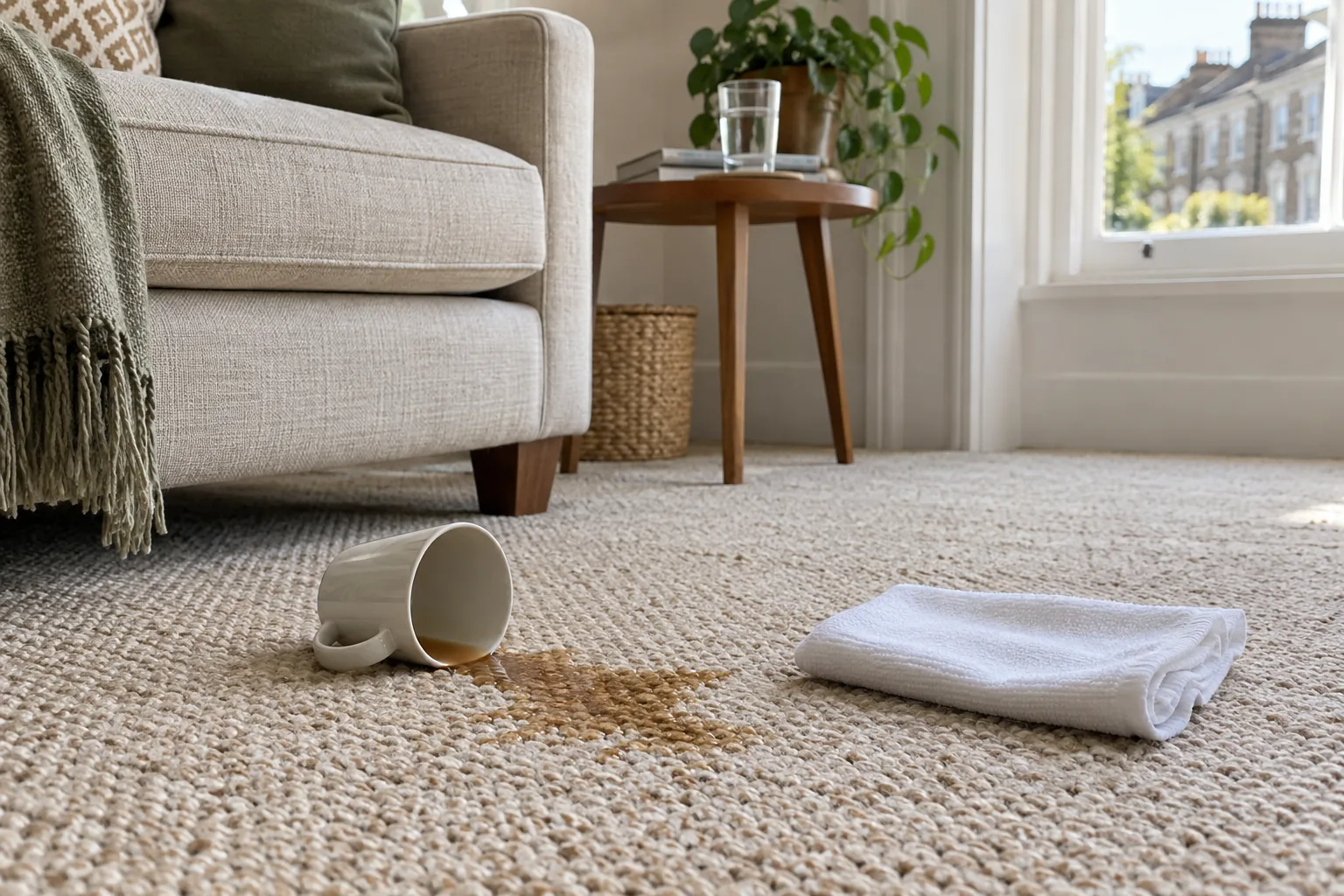
A mug tips over on the living-room carpet. The instinct is to grab a damp sponge and scrub before the colour sets. That can spread the liquid, roughen the pile and push it into the backing. A calm first minute is usually more useful than a powerful cleaning product.
The safest immediate response is simple: keep people off the spill, lift any solids carefully, and absorb liquid with a clean white cloth or plain kitchen roll. After that, the carpet’s fibre, backing and care instructions should decide what happens next. The advice below is for a fresh, small household spill. If the liquid is hazardous, or has soaked a large area, leave treatment to a suitable professional.
Quick decision guide
Use the table to choose the next safe step after a fresh spill. The fibre and care label still govern any treatment.
| What you notice | What it may mean | Next step |
|---|---|---|
| Liquid is still on the surface | It may spread into the pile | Blot with a clean white cloth |
| Fibre or dye is uncertain | Home treatment may cause damage | Check the label and stop before applying products |
| Backing is wet | Moisture may remain below the visible stain | Arrange a professional assessment |
| Spill is large or hazardous | Home treatment may be unsafe | Keep the area clear and seek specialist help |
In the first minute: contain, lift, blot
Start at the outside edge and work inwards so the spill does not grow. For a drink, press a dry white cloth onto the wet area, lift it, turn to a clean section and repeat. Do not rub. For sauce or food, lift the excess with a spoon or blunt edge first, without grinding it into the pile.
Use white material so dye from a coloured towel cannot transfer onto the carpet. Keep children and pets off the area, especially if glass has broken or the substance is unknown. If a large amount has reached an electrical fitting or socket nearby, isolate the hazard safely and seek qualified help.
Blotting removes what is still mobile. It will not necessarily remove the stain, and that is all right. The first aim is to avoid making a small problem bigger.
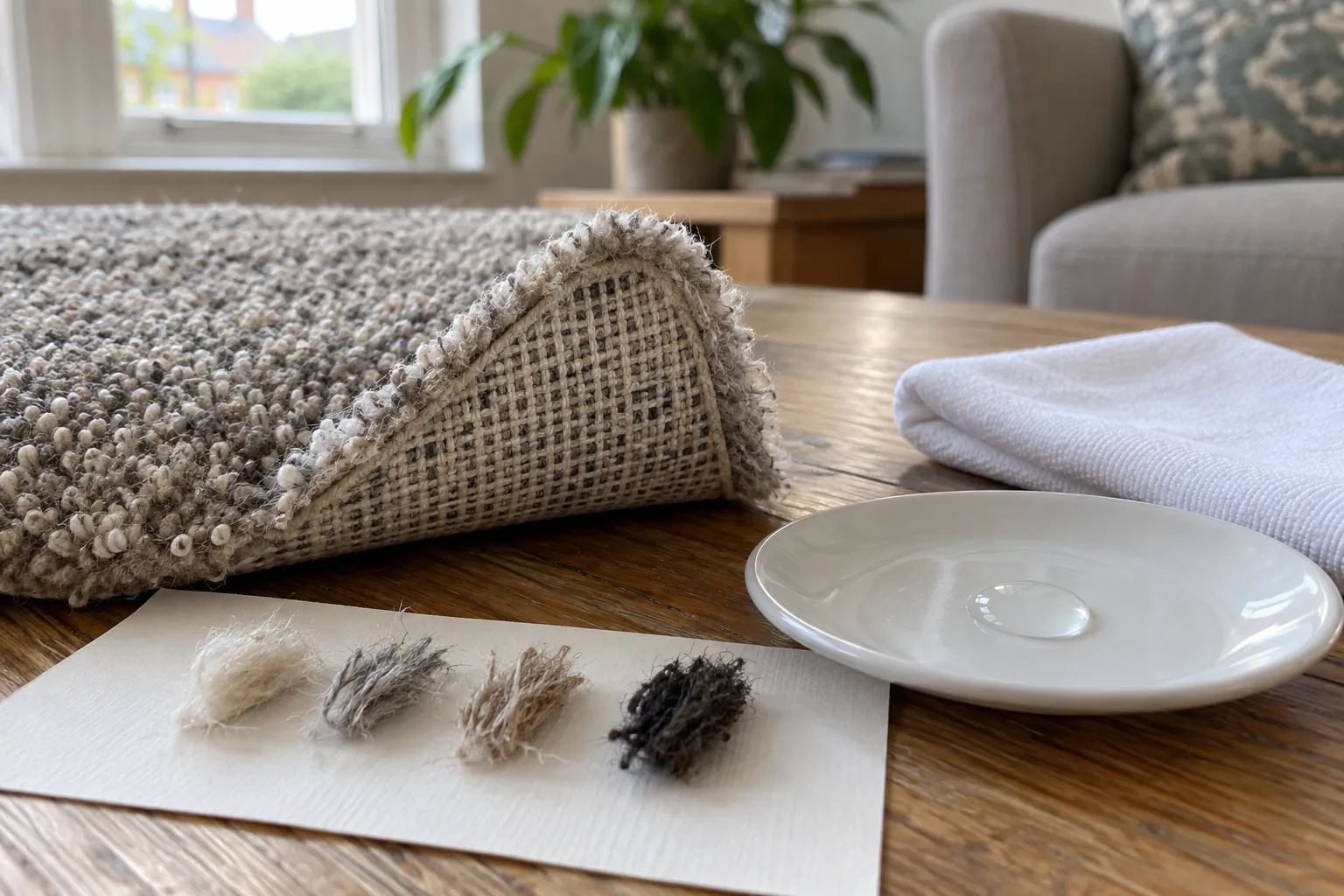
Find out what the carpet is made of
Check purchase paperwork, a remnant, a label or the supplier’s care guidance. Many carpets mix fibres, so appearance alone is a poor guide. Wool and other natural fibres can react differently from polypropylene, nylon or polyester. The backing and underlay matter too: even a fibre that tolerates a little water may be attached to materials that do not like soaking.
If you know the fibre, follow the maker’s instructions for that carpet and the kind of spill. If you do not know, stay with dry blotting and ask a carpet cleaner before applying a detergent, solvent or stain remover. A hidden patch test is sensible where the care guidance permits a treatment, but a successful test on one part does not guarantee that a concentrated stain will respond the same way.
Wool, viscose and delicate finishes
Wool can be damaged by unsuitable alkaline products and by over-wetting. Viscose and some other delicate or blended fibres can mark, distort or change texture when wet. Older rugs and carpets may also have unstable dyes. With these materials, blot gently and stop early. Do not assume that a household spray marked “carpet” is right for every carpet. If colour comes away on the cloth, stop immediately.
Common synthetic carpets
Some synthetic carpets are more tolerant of moisture, but the spill can still reach the backing or underlay. Avoid pouring water over it to “rinse” the stain. Use only a product and method allowed by the manufacturer, and use as little moisture as the instructions require. A strong chemical can leave residue that attracts dirt later, even if the visible mark fades today.
The liquid changes the decision
Plain water calls mainly for prompt drying and a check that it has not soaked through. Tea and coffee can leave colour even after the liquid is lifted. Milk, food, pet accidents and other organic spills may leave an odour if they reach the backing. Paint, oil, ink and adhesives each have their own risks; a generic mixture of washing-up liquid and water is rarely a reliable answer.
Do not add heat to “set” the drying process. Hot water, a hairdryer held close to the pile or vigorous steam can change a stain or damage some fibres. Likewise, avoid mixing cleaning chemicals, using bleach, or applying a product just because it worked on a sofa. Alesta’s guide to red wine on a sofa explains the importance of the upholstery care code; a carpet needs its own fibre and backing assessment.
If you are unsure what has been spilt, keep the packaging or take a photograph. A professional will find the substance, the time since the spill and any products already applied more useful than a description such as “a dark mark”.
Know when the problem is below the surface
Pressing dry cloths onto the pile tells you only part of the story. The backing and underlay may still be damp. Clues include a patch that stays cool, a returning ring after it dries, a musty smell or a stain that reappears after an apparently successful clean. A large spill near a wall may also affect the skirting and floor beneath.
Lift a loose edge only if you can do so without damaging the fitting; do not pull up a fixed carpet just to inspect it. If water came from a leaking pipe or appliance, deal with the source first. A stain treatment cannot solve continuing moisture. For widespread or contaminated water, get appropriate specialist advice promptly rather than waiting for an odour to appear.
Air movement helps a lightly damp, safely treated area dry. Open a window when conditions allow and keep furniture off the wet patch. Do not trap moisture beneath plastic or place a heavy object over it. After professional treatment, Alesta’s carpet drying guide explains why airflow, fibre and the amount of water used affect drying time.
When to call a carpet cleaner
Seek help if the carpet is wool, viscose, valuable or unlabelled; if dye transfers; if the spill is large; if it has reached the underlay; or if a previous product has changed the colour or texture. The same applies when a stain returns after drying. A professional cannot promise every mark will disappear, but an honest assessment can prevent further damage.
When contacting Alesta about carpet cleaning, send a clear photograph in daylight and mention the fibre if known, the spill, its age and every product used. If the spill also affected fabric furniture, describe that separately so sofa cleaning can be assessed on its own materials and care needs.
The simplest rule is to do less until you know more. Blot the fresh liquid, identify the carpet if you can, and treat any later cleaning as a choice based on the actual fibre and depth of the spill.
