
How to Remove Red Wine from a Sofa Without Setting the Stain
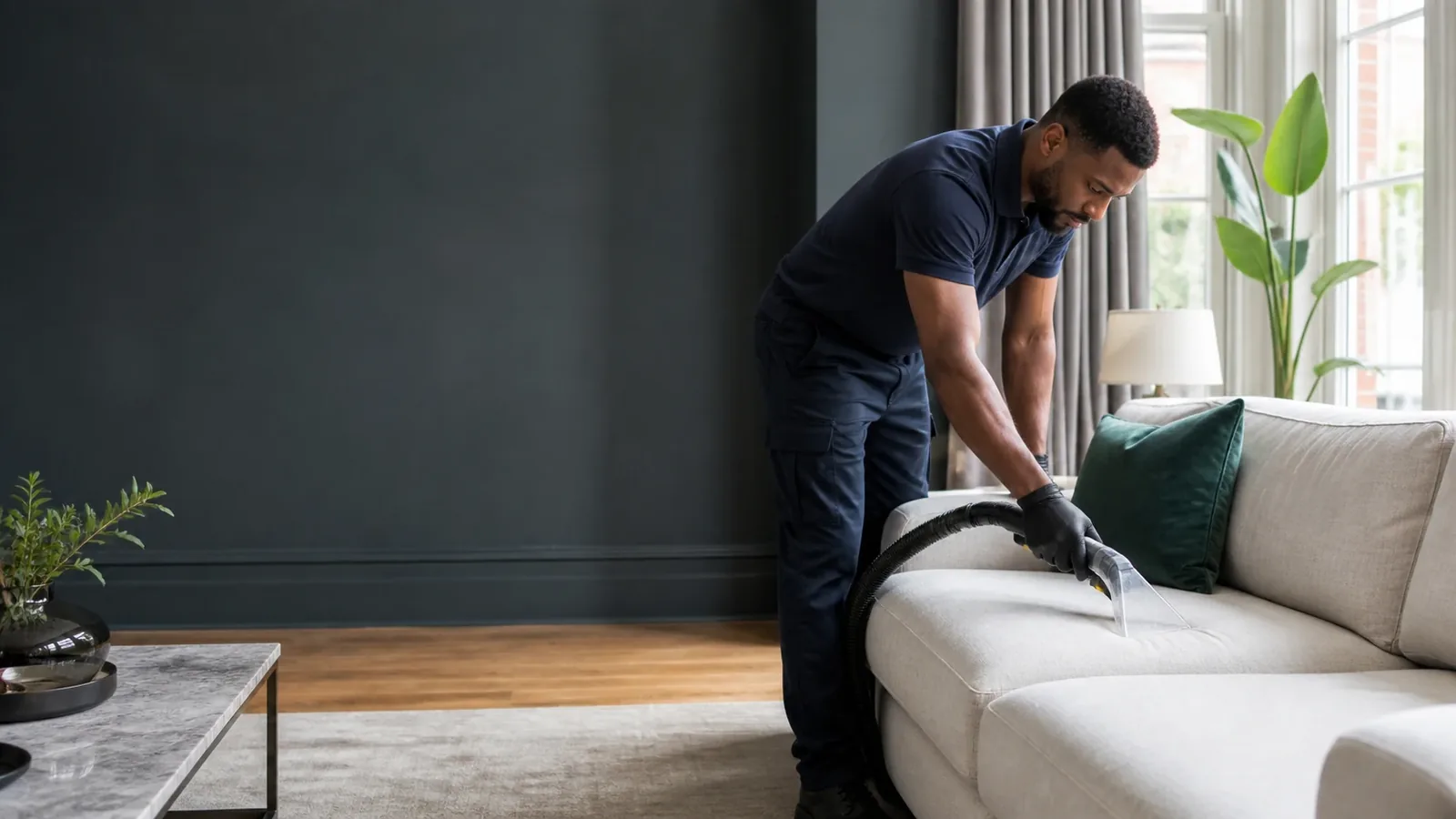
Blot red wine from a sofa immediately with clean white cloths, working from the edge towards the centre. Do not scrub, soak the cushion or apply heat. Once the free liquid is removed, check the upholstery care label and test any permitted cleaning solution on a hidden area. If the label says professional clean only, the fabric is velvet, silk, viscose or an unstable dye, stop after blotting.
The first five minutes decide how far the stain travels
Lift loose solids, then press rather than rub. Rotate the cloth so a clean section meets the wine each time. Rubbing drives colour sideways and abrades fibres; pouring water pushes liquid into foam where it can spread beyond the visible mark. Remove a loose cover only if the manufacturer says it is washable and you can avoid transferring wine to other surfaces.
Read the cleaning code before choosing a product
Upholstery labels may specify water-based cleaning, solvent cleaning, either method or vacuum-only care, but codes and wording vary. The manufacturer’s instructions take priority. A water-safe synthetic fabric offers more scope for careful DIY treatment than a natural fibre, pile fabric, fixed feather cushion or fabric with unknown dye stability.
If the sofa has no label, treat it as uncertain. A small pale patch caused by the wrong cleaner can be harder to correct than the original stain. Alesta’s professional sofa-cleaning service can test fibres and colour before full treatment.
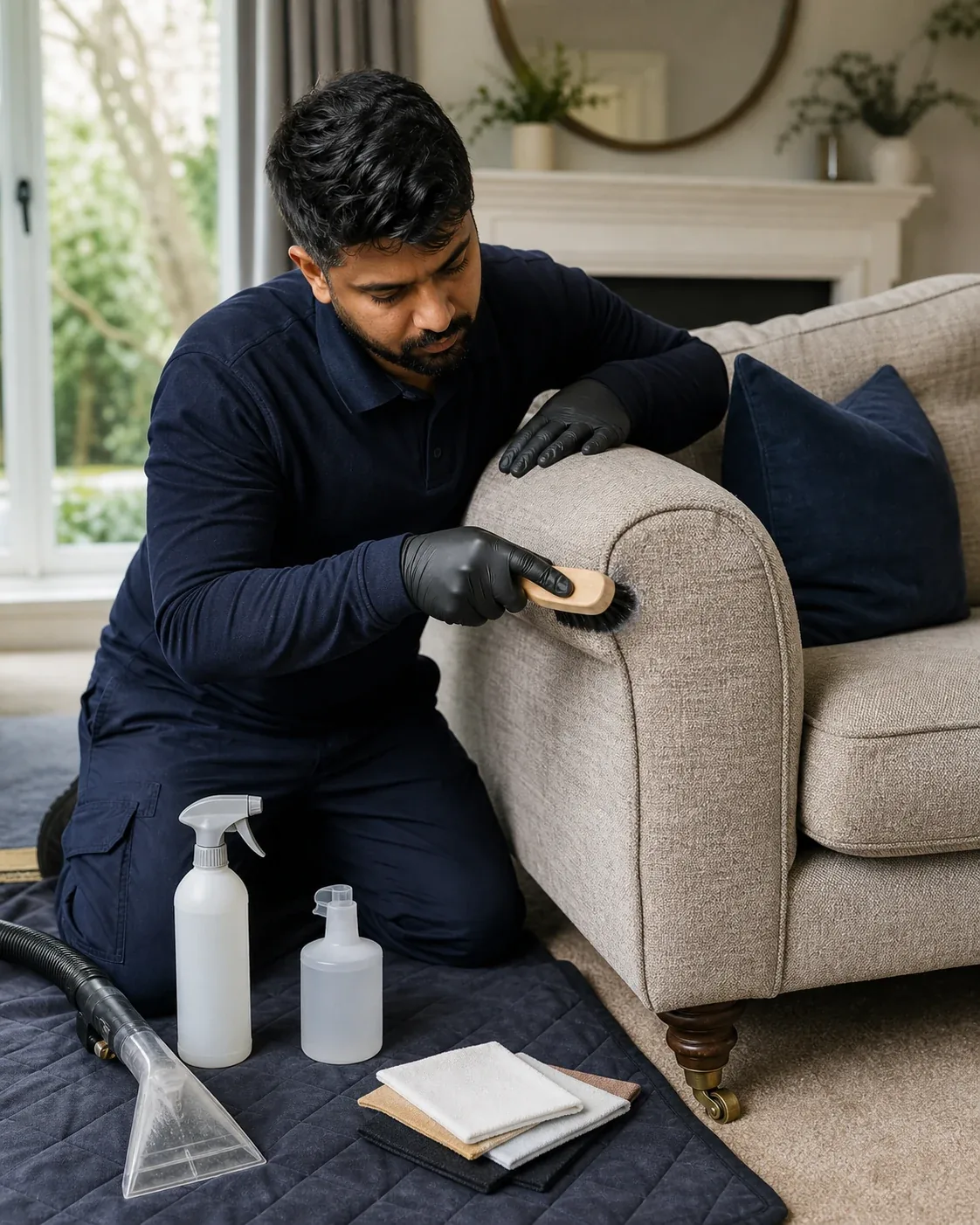
A controlled method for water-safe upholstery
- Blot until the cloth picks up very little colour.
- Put a tiny amount of the label-approved upholstery solution on a white cloth, not directly on the sofa.
- Test an inconspicuous area and let it dry.
- Dab the stain from its outside edge inward.
- Use a second barely damp cloth to lift residue if the product instructions require rinsing.
- Blot dry and provide ventilation without direct heat.
Keep the treated boundary feathered rather than saturating a hard circle. Over-wetting can create a tide mark, damage adhesive or leave the cushion filling slow to dry.
Why salt, bicarbonate and white wine are unreliable shortcuts
Salt may absorb surface liquid but can become abrasive and difficult to remove from textured fabric. Bicarbonate does not magically neutralise every pigment and may leave alkaline residue. Pouring white wine adds more liquid, alcohol and acidity without guaranteeing removal. Household washing-up liquid can foam heavily and attract soil if not extracted.
Do not mix products. In particular, never combine bleach with acids or ammonia. Avoid chlorine bleach unless the upholstery manufacturer explicitly permits it; most coloured sofa fabrics do not.
Old red-wine stains need a different decision
Once dry, the stain has interacted with fibre, finish and previous products. Photograph it in daylight and tell the technician everything already used. Repeated home treatments can set residues or spread the mark. A professional may use staged spotting and controlled extraction, but no honest provider can promise that every old stain will disappear without affecting the fabric.
If wine reached a removable rug beneath the sofa, treat that separately. Fibre construction and backing change the method; use the specialist rug-cleaning guidance rather than copying the sofa treatment.
Drying is part of stain removal
Leave air space around the cushion, keep it away from radiators and do not replace a damp cushion against a wall. Fans can move room air, but hot hairdryers risk rings, shrinkage and pile distortion. Check the filling as well as the face fabric before sitting on it.
When to hand the job over
- The label restricts wet cleaning.
- Colour transfers during the hidden test.
- The stain covers a seam, piping or two fabric panels.
- Wine soaked into foam or feather filling.
- The sofa is antique, high-value or has a delicate pile.
- A previous product left bleaching, stickiness or a tide mark.
If other soft furnishings were affected, carpet extraction is a separate process from upholstery cleaning. Ask for each material to be assessed rather than accepting one chemical for every surface.
What to tell the cleaner
Give the fibre label, colour, approximate age of the stain, products applied and whether the cushion is removable. Mention stain protection treatments. Ask how colourfastness is tested, what drying conditions are needed and what result is realistic. “Stain removal” should mean an informed attempt, not a guaranteed restoration claim.
Restraint protects the sofa: lift free wine quickly, use only a tested fabric-compatible method and stop before the stain becomes a large wet patch. Fast blotting helps; aggressive improvisation does not.
Protect the cushion construction as well as the fabric
A reversible cushion may have a zipped cover that looks removable, yet the cover may not be designed for domestic washing. Shrinkage of even a few percent can make refitting impossible. Feather fillings can clump and foam can retain wine deep inside. If liquid reached the insert, tell the cleaner; treating only the face may leave odour and a migrating stain.
Seams, buttons and piping concentrate liquid. Blot from both accessible sides where the construction permits, but do not unzip a wet cover and drag the stain across pale filling. Keep photographs of the initial spill and the dry result.
Judge the stain only when fully dry
Wet fabric looks darker, so repeated treatment while it is damp encourages over-cleaning. Let the tested area dry, view it in diffuse daylight and brush pile only in the direction recommended for the textile. A remaining coloured mark differs from a water ring or flattened pile and needs a different response.
Ask a professional to explain the risk hierarchy: colour removal, texture change and watermarking may matter more than complete stain disappearance on an expensive sofa. The safest successful outcome is often a substantial reduction without fibre damage.
Record products before disposing of bottles
Keep the label or photograph ingredients and directions. A technician needs to know whether an oxidiser, detergent or solvent was applied and whether it was rinsed. This prevents incompatible follow-up treatment. If anyone feels unwell after chemical use, ventilate, leave the area and seek product-specific medical advice rather than attempting to neutralise it with another chemical.
Aftercare for the next day
Once fully dry, vacuum only if the fabric care instructions permit and the pile is stable. Check for stiffness, odour and a returning outline. Do not apply stain protector over residue or dampness. If professional cleaning is booked, leave the area untreated and send the care-label photograph in advance. That gives the technician a better chance of arriving with the correct method and prevents a harmless-looking household spray from changing the chemistry of the job.
