
Hedge Trimming Calendar for UK Gardens
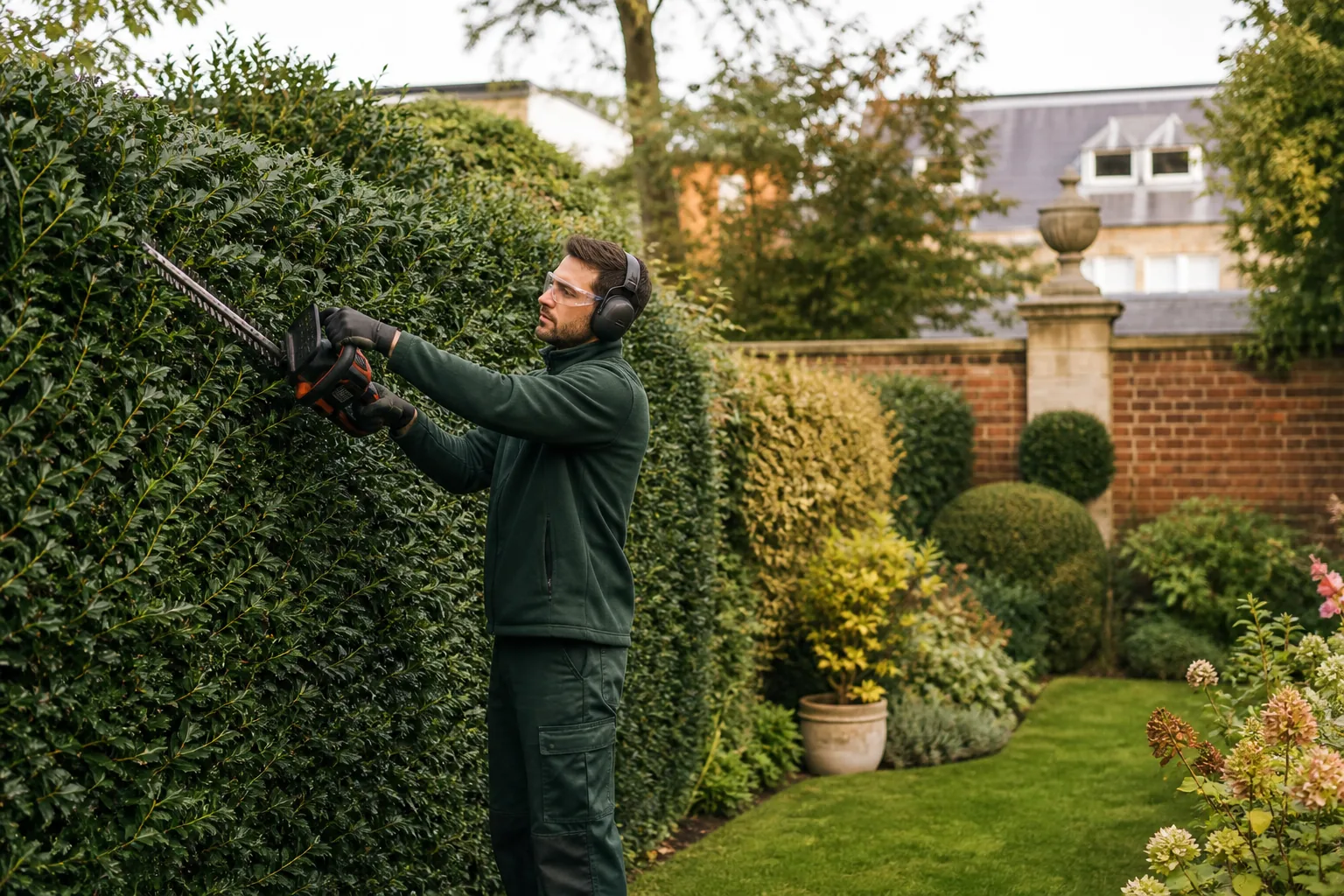
Most established deciduous hedges are trimmed once in late summer, with vigorous formal hedges sometimes needing a lighter cut earlier in the growing season. Evergreen conifers are usually trimmed once or twice between spring and late summer, but never cut back into old brown wood unless the species is known to regenerate. Before any cut, inspect carefully for active bird nests: damaging or destroying an active wild-bird nest is an offence in the UK.
The calendar at a glance
| Period | Suitable work | Main caution |
|---|---|---|
| January–February | Structural planning and some deciduous renovation | Frost, species limits and wildlife shelter |
| March–July | Only light, necessary work after a thorough nest check | Peak nesting activity; active nests must be left alone |
| August–September | Main trim for many established hedges | Check nests and avoid heat or drought stress |
| October–November | Light tidy where species and weather permit | Late soft growth and wildlife use |
| December | Plan, inspect structure and maintain tools | Frozen wood and heavy renovation without species advice |
This is a planning framework, not a universal date rule. Species, age, desired shape, local climate and current wildlife decide the exact day.
January and February: see the framework
Without leaves, a deciduous hedge reveals crossing branches, dead wood and an over-wide base. Some renovation pruning is possible during dormancy, but not every plant tolerates a hard cut. Check the species before reducing height or width substantially.
Do not cut frozen wood or work from unstable ground. Leave berries and dense cover where they support wildlife unless safety or access requires action.
March to July: nesting changes the job
There is no single statutory “nesting season” during which every cut is automatically banned. The legal issue is the active nest. In practice, spring and early summer carry a high likelihood, so inspect from several angles, listen and watch adult birds. A quick glance at the outer face is not enough.
If you find an active nest, postpone work around it until it is no longer in use. Do not move the nest, expose it by trimming nearby branches or rely on a noisy machine to make birds leave. Seek specialist wildlife advice if safety work cannot wait.
August and September: the main shaping window
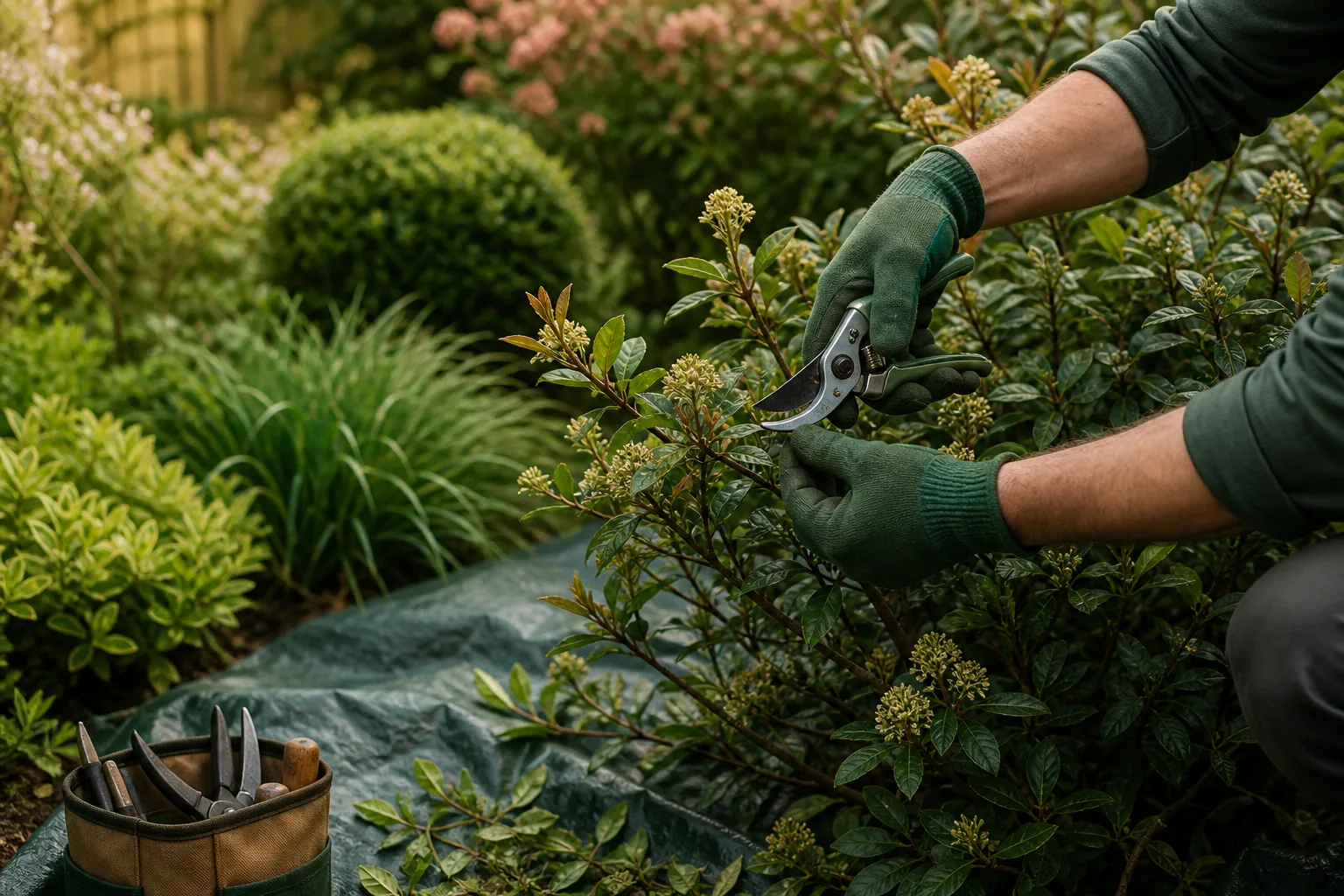
For many established hedges, late summer is the practical time to restore a clean outline after the main growth flush. Start with the sides, keeping the base slightly wider than the top so lower leaves receive light. Use guide strings for a formal line and take small passes; removing too much is difficult to disguise.
Avoid trimming during extreme heat or drought. Water-stressed plants recover poorly, and newly exposed foliage can scorch. Check nests even late in the season.
October and November: tidy, do not provoke soft growth
A light correction may be suitable in mild conditions, particularly where growth obstructs a path. Avoid heavy feeding or repeated cutting that encourages tender new growth before frost. Clear clippings from the hedge base so they do not smother small plants or hide debris.
December: make next year easier
Clean, sharpen and store tools. Photograph the hedge from both ends and note bulges, gaps, access problems and overhead cables. Agree neighbour access before the busy season. A clear winter plan prevents a rushed cut when birds are nesting.
Privet and other fast deciduous hedges
Formal privet may need several light trims during active growth. Each cut should follow a nest check. A neglected privet often tolerates renovation better than a conifer, but hard work is best phased and species-confirmed rather than assumed.
Beech and hornbeam
These are often trimmed in late summer so retained brown leaves provide winter screening. Young hedges may need formative pruning to build density. Avoid cutting every shoot to the same line before the hedge has developed a strong framework.
Yew
Yew can respond to renovation from older wood, but large reductions still need planning. Dense growth may hide nests and internal dead material. Wear appropriate protection and keep toxic clippings away from livestock and pets.
Leylandii and most conifers
Trim green growth regularly enough that the hedge never outgrows the intended line. Cutting into old brown wood commonly leaves permanent bare patches because many conifers do not regenerate there. Check the top width before lowering it; a tall hedge can be wider and heavier than it appears from the ground.
Laurel
Powered trimmers can leave large leaves cut in half and brown at the edges. Hand pruning selected shoots produces a cleaner result where appearance matters. Laurel can make thick, heavy arisings; plan safe handling before starting.
Young hedge versus established hedge
A new hedge needs formative pruning to encourage branches low down, not simply height as fast as possible. An established hedge needs maintenance cuts that preserve density and legal boundaries. Ask a professional hedge-trimming service to identify the species and safe reduction point if the structure is unclear.
Height, neighbours and protected hedgerows
Domestic high-hedge disputes have a formal council route, but trimming first and arguing later can damage property and relationships. Confirm the boundary and ownership. Rural or protected hedgerows can be subject to additional rules; check with the local authority before removal or major alteration.
Recovering a hedge that has become too wide
Do not take equal deep cuts from both faces in one afternoon. First identify the species and find where live buds or green shoots remain inside the canopy. A deciduous hedge that tolerates renovation may be reduced on one side, allowed a growing season to recover, then addressed on the other. That staged approach preserves more screening and leaf area. It is not suitable advice for every evergreen.
With conifers, the desired boundary may sit behind the last green growth. Cutting to the line can therefore exchange an oversized hedge for a permanent brown face. Measure the current width at the base, middle and top, then discuss the achievable finished line before machinery starts. Where the safe, living line still obstructs a path, replacement may be the more honest long-term option than repeated severe trimming.
Tool choice changes the finish
Sharp hand shears suit small formal work. Powered trimmers speed up long faces but can tear thick stems and large leaves. Pole tools add reach but also leverage and overhead risk. Never work near overhead electrical cables, and do not improvise height with a chair or stacked platform.
Plan for the clippings before the first cut
Lay sheets where appropriate, keep paths open and separate contaminated or woody material as required. Compost only suitable healthy clippings. A large reduction produces more volume than expected; arrange green-waste clearance rather than leaving bags to block a shared path.
Aftercare makes the calendar work
Check for torn branches and remove trapped clippings. Water only where soil conditions and species require it, and mulch without piling material against stems. Record the cut date and response. Ongoing garden maintenance can then schedule the next trim from actual growth rather than an arbitrary annual reminder.
The calendar should narrow your options, not overrule the hedge in front of you. Confirm the species, inspect for active nests, check weather and stress, then choose the lightest cut that achieves the purpose.
