Lawn and edge care
Suitable mowing and defined edging planned around ground condition, access and seasonal growth.
Alesta · Garden maintenance in London
Regular or seasonal garden care organised around the plants, lawn, access and priorities of your outdoor space—not a generic visit with an assumed checklist.
☎ Call 020 3608 3976A plan for the living space outside
Lawns, hedges, planted borders and paved areas do not need the same attention on every visit. Growth rate, weather, plant type, garden use and the time since the last visit all affect what can be completed properly within an appointment.
We begin with photographs and the outcome you want, then separate routine care from specialist work. Large tree surgery, landscaping, irrigation repair, chemical treatment and heavy clearance need their own assessment rather than being hidden inside a maintenance booking.
Suitable mowing and defined edging planned around ground condition, access and seasonal growth.
Visible weeds, spent growth and surface debris addressed within the agreed beds and visit time.
Suitable plants reduced or shaped at an appropriate time without treating every species alike.
Leaves, light cuttings and routine green debris gathered to the agreed disposal arrangement.
Common reasons customers call
Routine visits keep lawns, edges and beds manageable before each job becomes a clearance.
Spring growth, autumn leaves and winter dieback require different priorities and timing.
Landlords and managed properties need a clear, repeatable scope with access coordinated.
Lawns, beds, shrubs, containers and paths need visit time allocated deliberately.
Why Alesta for garden maintenance
The most important areas are identified so available time is not spent on low-value tasks.
Pruning and lawn work are adjusted to conditions rather than performed automatically.
Gates, tools, parking and the route for cuttings are confirmed before the appointment.
New damage, plant concerns or work outside the routine scope is explained for approval.
A repeatable outdoor routine

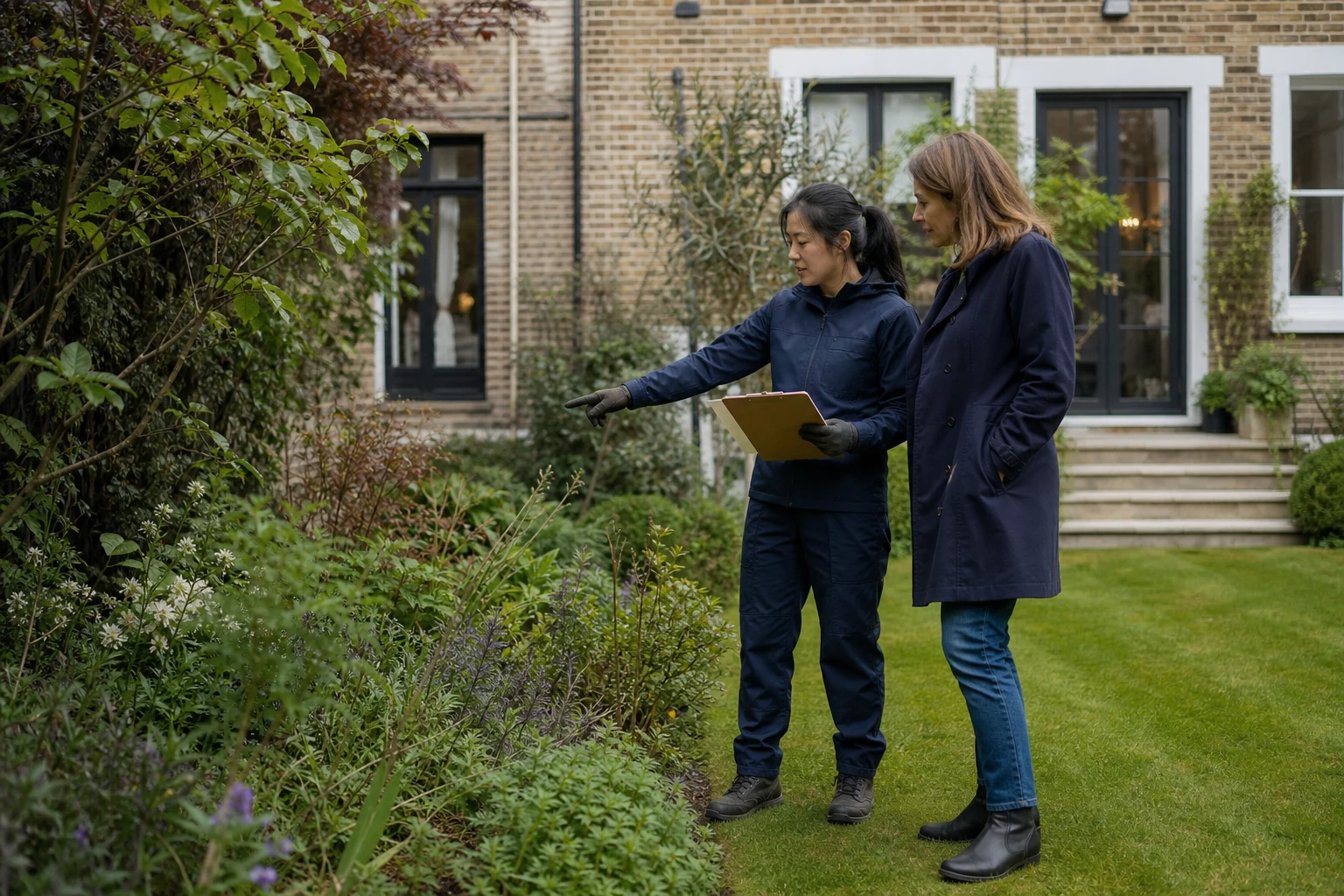
The first step is to understand the garden rather than assume a fixed list. We ask for current photographs, approximate size, access width, parking, lawn condition, planted areas and any plants or features that need particular care. You identify the outcome and rank priorities such as mowing, edging, beds, shrubs or leaf collection. We also confirm whether green waste can remain in an onsite bin or compost area, or whether removal needs to be included.
At the start of a visit, the gardener walks through the agreed areas and checks weather, ground condition and active wildlife. Wet or frozen lawns may be unsuitable for mowing, while a plant in flower, an active nest or recent frost can change prudent pruning. The visit plan is adjusted within the agreed priorities rather than causing avoidable damage simply to complete every nominal task. Any material scope change is explained before additional time is used.
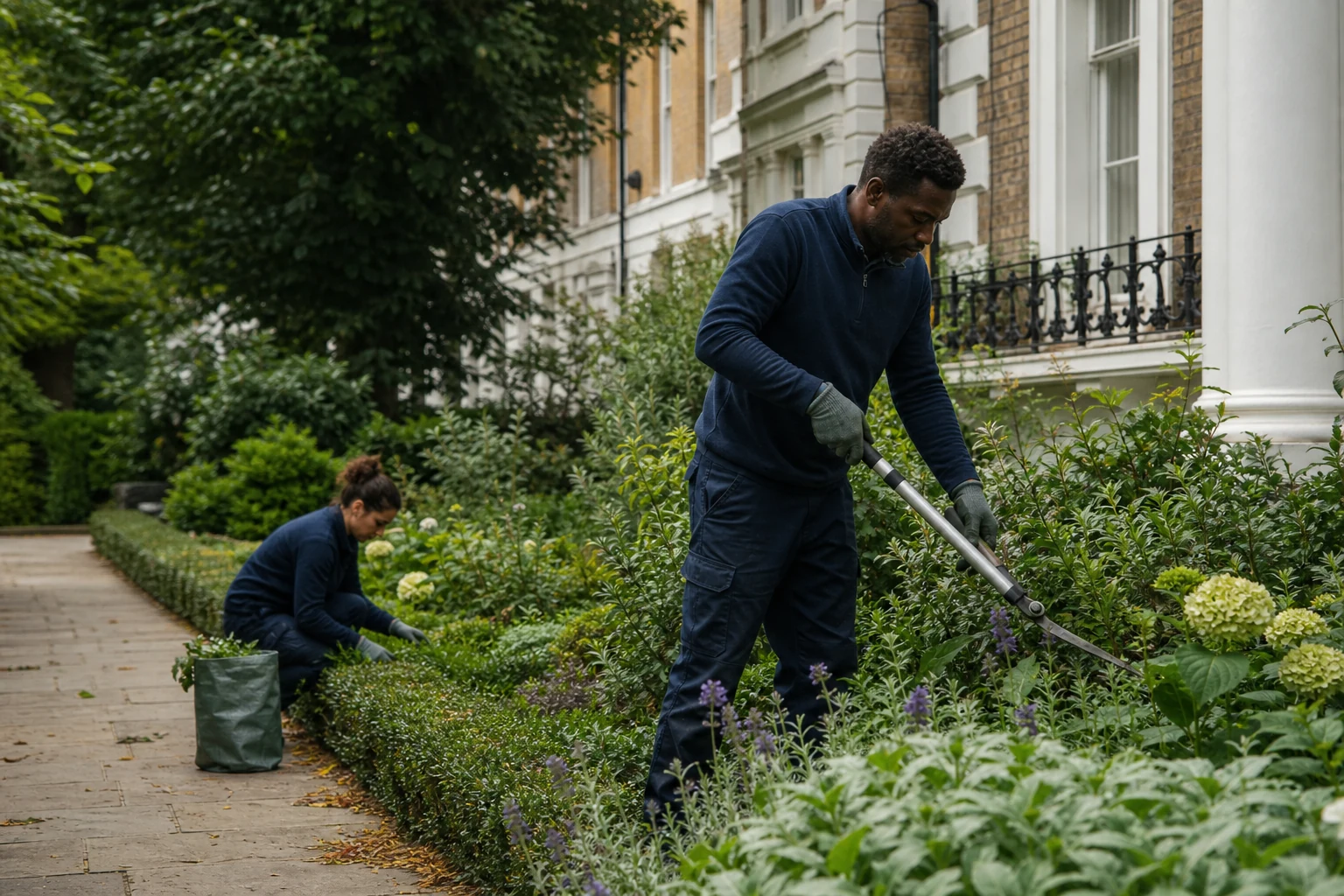
Work proceeds in a practical sequence so cuttings and footprints do not undo completed areas. Suitable lawns are mown to a condition-appropriate height, edges are refined where included, and visible weeds or spent growth are removed from defined beds. Shrubs receive only the light pruning or shaping agreed for their species and season. The gardener protects retained plants and surfaces, keeps paths usable and does not apply pesticides, herbicides or fertilisers unless the product and treatment were specifically assessed.
At completion, routine cuttings and surface debris are gathered according to the agreed waste route, and accessible working areas receive a practical tidy. The gardener notes plant damage, failed fixtures, heavy overgrowth or specialist tree work that falls outside the appointment. For recurring visits, the next priorities can then respond to actual growth rather than repeat an identical checklist. This creates a garden that remains usable and cared for while keeping clearance, landscaping and specialist arboriculture as clearly separate scopes.
Clear pricing
Cost depends on garden size, visit frequency, priority list, growth, access, equipment, green-waste handling and the time required.
| Service scope | Price | What affects the final price |
|---|---|---|
| Initial garden assessment and maintenance visit | Quoted after assessment | Garden size, current condition, access, priorities and visit duration |
| Recurring maintenance schedule | Quoted after assessment | Frequency, seasonal workload, garden zones and waste arrangement |
| Seasonal maintenance visit | Quoted after assessment | Leaf volume, pruning, lawn condition, labour and removal needs |
Pricing context: A reliable maintenance price requires current photographs and an agreed priority list. Heavy clearance, tree work, landscaping materials and specialist treatments are quoted separately.
How the service works
Send current views, access details and the areas that matter most.
We define what fits, how waste is handled and what remains separate.
The gardener completes the priorities and identifies sensible next actions.
Garden maintenance FAQ
Useful answers about scheduling, preparation, weather, waste, tools and specialist work.
☎ Call 020 3608 3976Depending on the agreed scope, visits can cover lawn mowing, edging, visible weeding, light seasonal pruning, leaf collection and a practical tidy of maintained areas.
Frequency depends on season, growth, garden size and the finish you expect. Photographs and an initial visit help establish a realistic schedule rather than one fixed interval for every garden.
Unlock access, remove toys and personal items, identify plants that must not be cut, disclose hazards and arrange parking where possible.
Light work may continue safely, but heavy rain, frost, high winds or waterlogged ground can make mowing, pruning or ladder work unsuitable. We prioritise the garden and team rather than force damaging work.
Only when agreed. Cuttings may use an available garden-waste bin or compost area; collection and disposal require sufficient vehicle capacity and a separate allowance.
Not as routine maintenance. Large or high tree work, structural landscaping, major excavation, new planting schemes and specialist treatments require separate assessment.
Garden size, condition, visit duration, frequency, growth, access, parking, equipment, number of priorities and green-waste handling all affect the quote.