Hedge face and top trimming
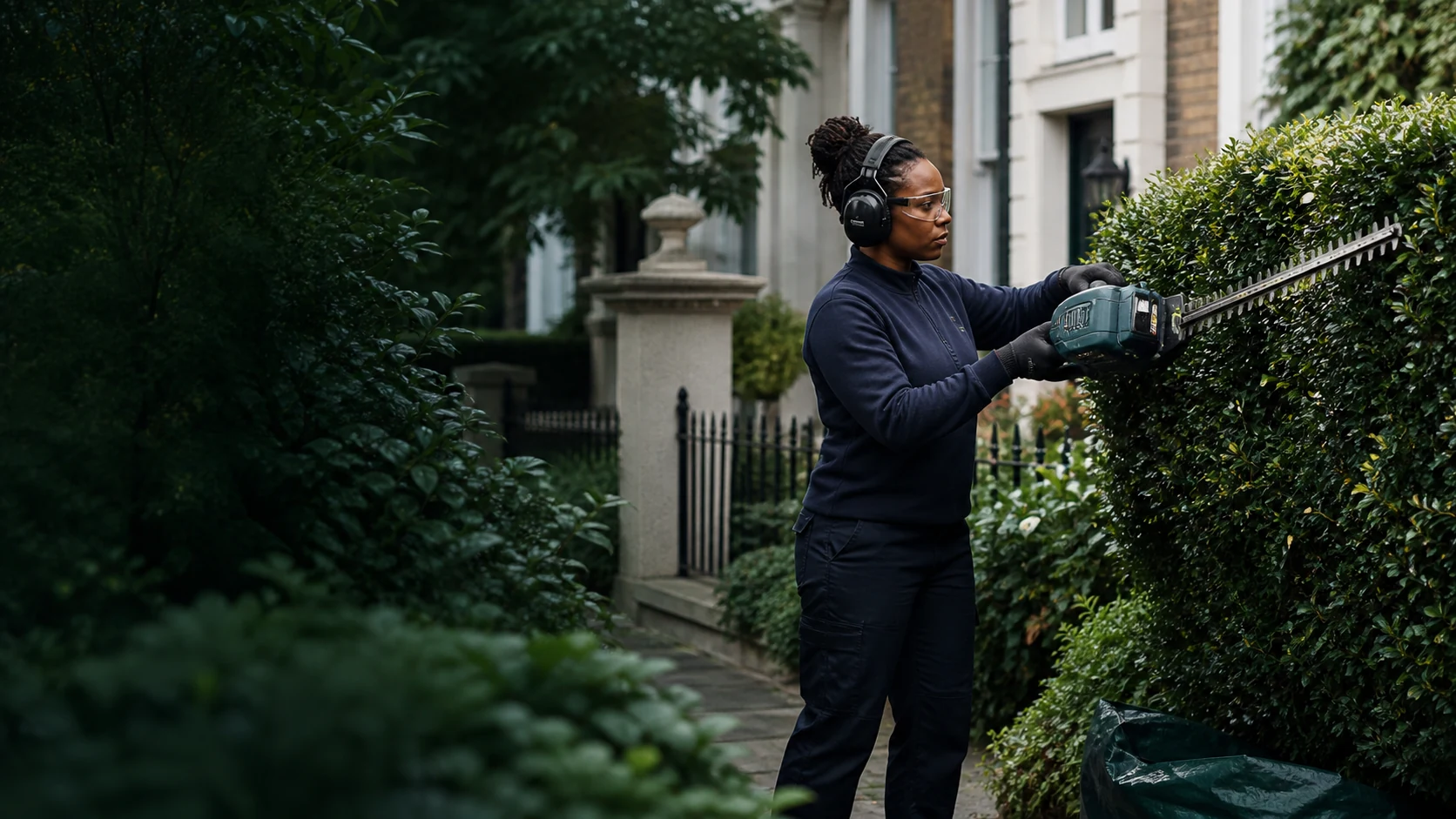
Suitable current growth reduced to an agreed line where safe access and plant condition allow.
Alesta · Hedge, bush and shrub trimming in London
Careful trimming for suitable hedges, bushes and shrubs, with height, access, plant condition, nesting wildlife and green-waste removal considered before cutting begins.
☎ Call 020 3608 3976Plant and season before shape
Hedges and shrubs respond differently to hard cutting. Species, age, flowering cycle, previous maintenance and the amount of live growth determine whether a light trim, selective prune or staged reduction is appropriate. A request to cut everything back severely can leave bare wood, remove this season’s flowers or permanently weaken some plants.
We assess photographs, approximate height and length, access and the required finish first. Tree surgery, protected trees, very high work, diseased planting, root removal and large-scale clearance are separate services, while active bird nests must be left undisturbed.
Suitable current growth reduced to an agreed line where safe access and plant condition allow.
Selected bushes refined around their natural habit rather than forced into one generic form.
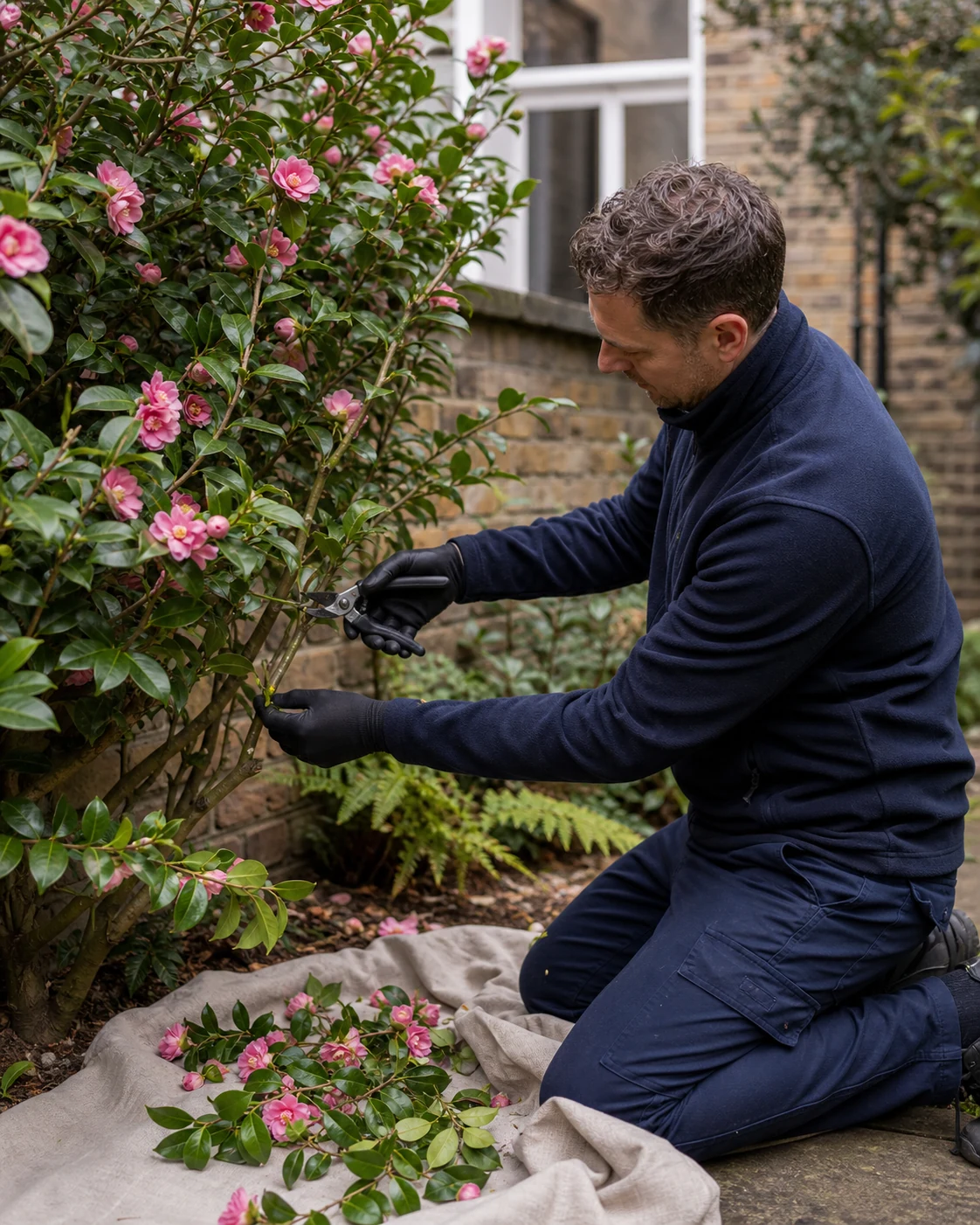
Crossing, damaged or poorly placed stems considered where the species and season support it.
Cuttings gathered and removed only to the volume and disposal scope confirmed in advance.
Common reasons customers call
Seasonal growth obstructs a gate, pavement, window or practical garden route.
Regular maintenance has slipped and the boundary needs a controlled visual line.
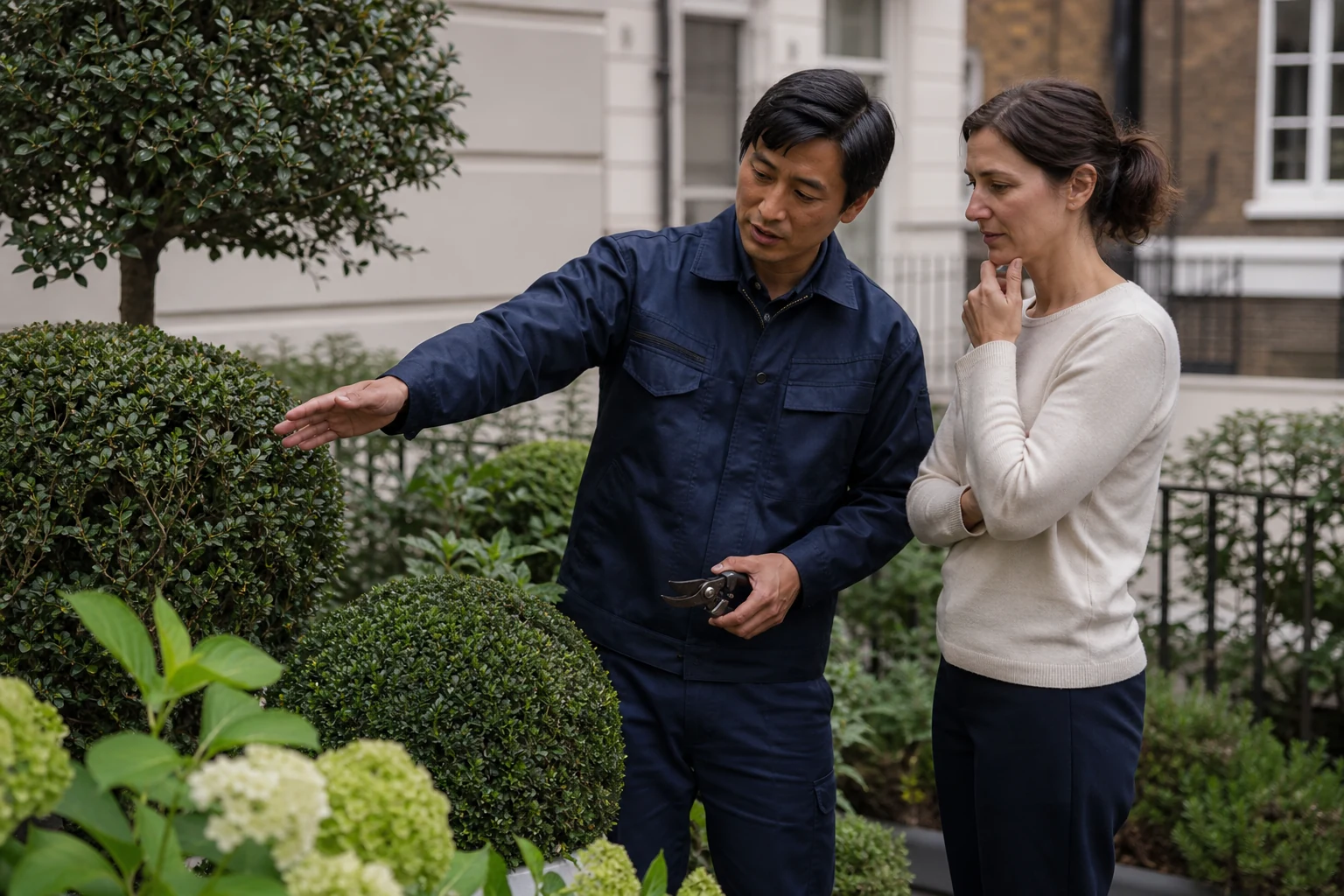
Selective reduction can restore spacing without treating every plant identically.
Visible growth needs a realistic maintenance finish before photographs or handover.
Why Alesta for trimming
Photos and reference points define height, faces and plants that must remain untouched.
Active nests stop work in the affected area rather than being treated as an inconvenience.
Slopes, walls, neighbouring land and safe working height are assessed before booking.
Cutting work and green-waste volume are scoped together so disposal is not assumed.
A plant-aware approach
The booking starts with clear views of each plant and the surrounding access. We ask for approximate hedge length and height, the desired reduction, species where known, previous trimming history and whether cuttings should be removed. Gates, steps, slopes, boundary walls, conservatories and access through the home all affect the equipment and cleanup plan. A photograph taken only from close range is rarely enough to judge working height or waste volume.
Before cutting, the gardener confirms the agreed line and inspects for active nests, unstable branches, hidden wire, lighting cables and objects inside dense growth. Plant condition and season are considered against the requested reduction. Some conifers do not recover from cuts into old brown wood, while flowering shrubs may need pruning after bloom. Where a severe reduction would create foreseeable damage, a lighter or staged approach is explained.
Work proceeds in a controlled sequence, preserving safe access and checking the profile from more than one position. Mechanical trimming may suit broad current growth, while hand tools allow more selective cuts around ornamental shrubs and thicker stems. Cut faces, top lines and clearance around paths are kept within the confirmed scope. High branches, substantial limbs, trees and work requiring climbing or specialist rigging are not treated as ordinary hedge maintenance.
Cuttings are gathered as work progresses so hidden hazards and retained plants remain visible. Green waste is bagged or loaded according to the quoted volume; soil, pots, timber and general rubbish follow different disposal routes. At completion, accessible hard surfaces receive a practical sweep and the gardener reviews the achieved shape, any plant limitation and sensible future timing. Trimming manages growth, but it cannot guarantee regeneration, flowering or recovery from pre-existing disease.
Clear pricing
The quote depends on plant length and height, desired reduction, density, access, safe working position, team time and green-waste volume.
| Service scope | Price | What affects the final price |
|---|---|---|
| Small shrubs or short low hedge | Quoted from photographs | Plant count, light shaping, access and cutting volume |
| Established boundary hedge | Quoted after assessment | Length, height, faces, density, equipment and waste |
| Large reduction or difficult access | Site-specific quotation | Working height, slope, neighbouring access, team and disposal loads |
Pricing context: Current photographs and approximate dimensions are required for an honest quote. Tree work, specialist access and mixed-waste removal are assessed separately.
How the service works
Send full views, dimensions, boundary conditions and the reduction you want.
We consider species, wildlife, safe access and disposal before booking.
Growth is cut to the agreed scope and practical aftercare is explained.
Hedge and shrub trimming FAQ
Useful answers about nesting birds, hard cutting, access, waste and seasonal timing.
☎ Call 020 3608 3976Send each hedge or shrub from a distance, both ends where possible, the access route and an approximate length and height. Mark the desired finished line.
No work should disturb an active nest. The affected plant or section must be postponed or left untouched until it can legally and safely be worked on.
No. Species and plant condition matter, and some hedges will not regrow from old wood. A staged or lighter reduction may be the responsible option.
Only when listed in the quote. Cutting volume can expand significantly once loose, so removal is assessed from dimensions and photographs.
Only with confirmed permission and safe access. Boundary ownership and access arrangements remain the customer’s responsibility.
No. Large limbs, trees, protected specimens, climbing and rigging require a separate tree-surgery assessment and suitable specialists.
Length, height, density, reduction amount, species, access, slope, equipment, team size and green-waste volume all affect the quote.