Key and lock assessment
The visible fragment, key condition, cylinder movement and door alignment are reviewed first.
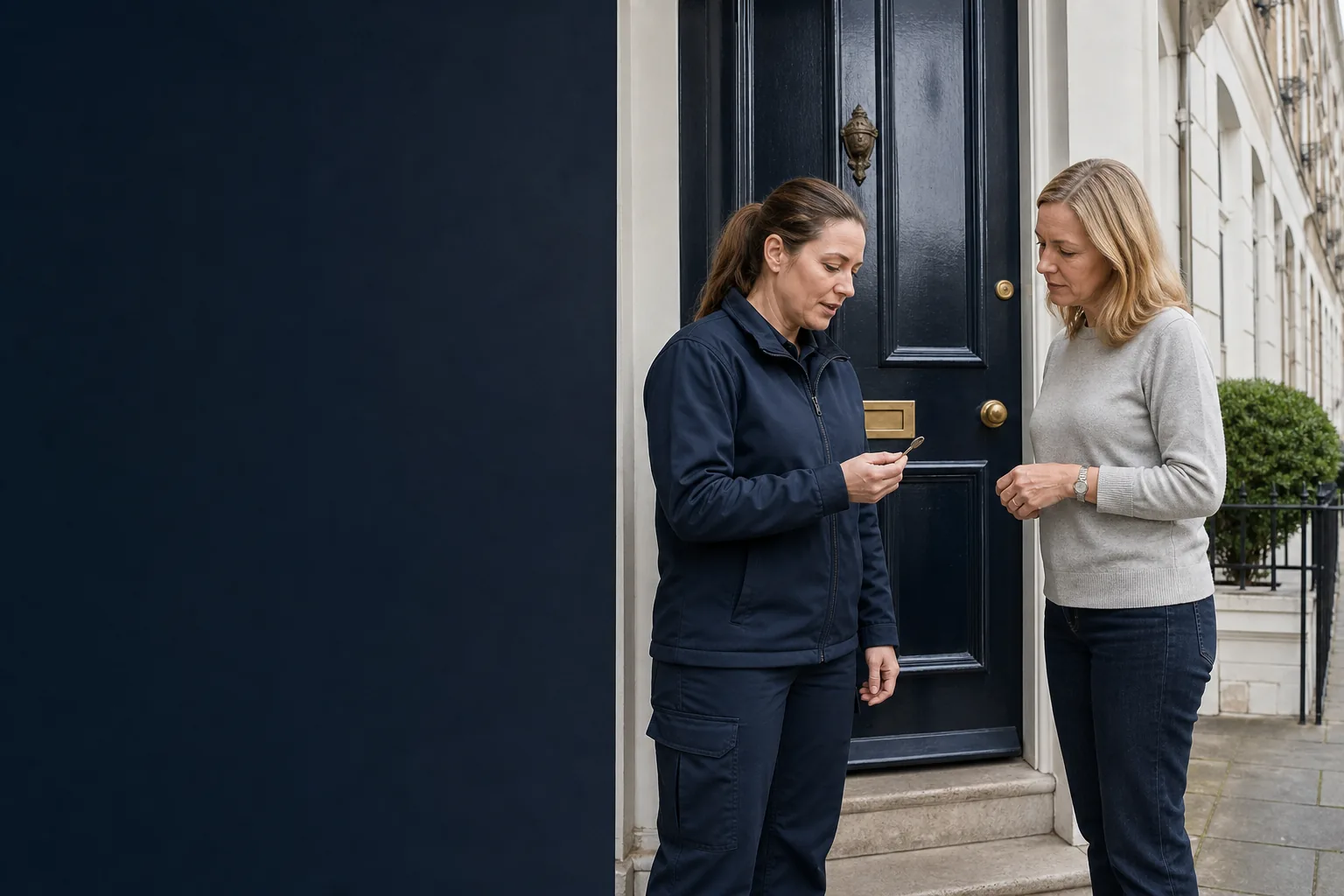
Alesta · Broken key extraction in London
Authorised help when part of a household key remains in the lock. We assess the door and cylinder, remove the fragment where practical and explain any repair or replacement needed.
☎ Call 020 3608 3976Protect the lock before forcing it
When a key snaps, pulling at the visible edge with unsuitable tools can push it further into the cylinder or damage pins and the keyway. Stop turning the remaining piece, keep both halves if possible and tell us whether the door is open or closed, which side you are on and what type of door and lock is involved.
The visit is an authorised property service. We may ask for identification or evidence that you occupy or manage the address. Once access and ownership are clear, the technician assesses the key position, lock condition and why the key failed before recommending extraction, cylinder repair or replacement.
The visible fragment, key condition, cylinder movement and door alignment are reviewed first.
Where practical, the broken piece is removed without unnecessary damage to usable hardware.
The technician checks whether the cylinder, latch and door alignment contributed to the failure.
If the key or cylinder is no longer reliable, the appropriate repair and new-key route is explained.
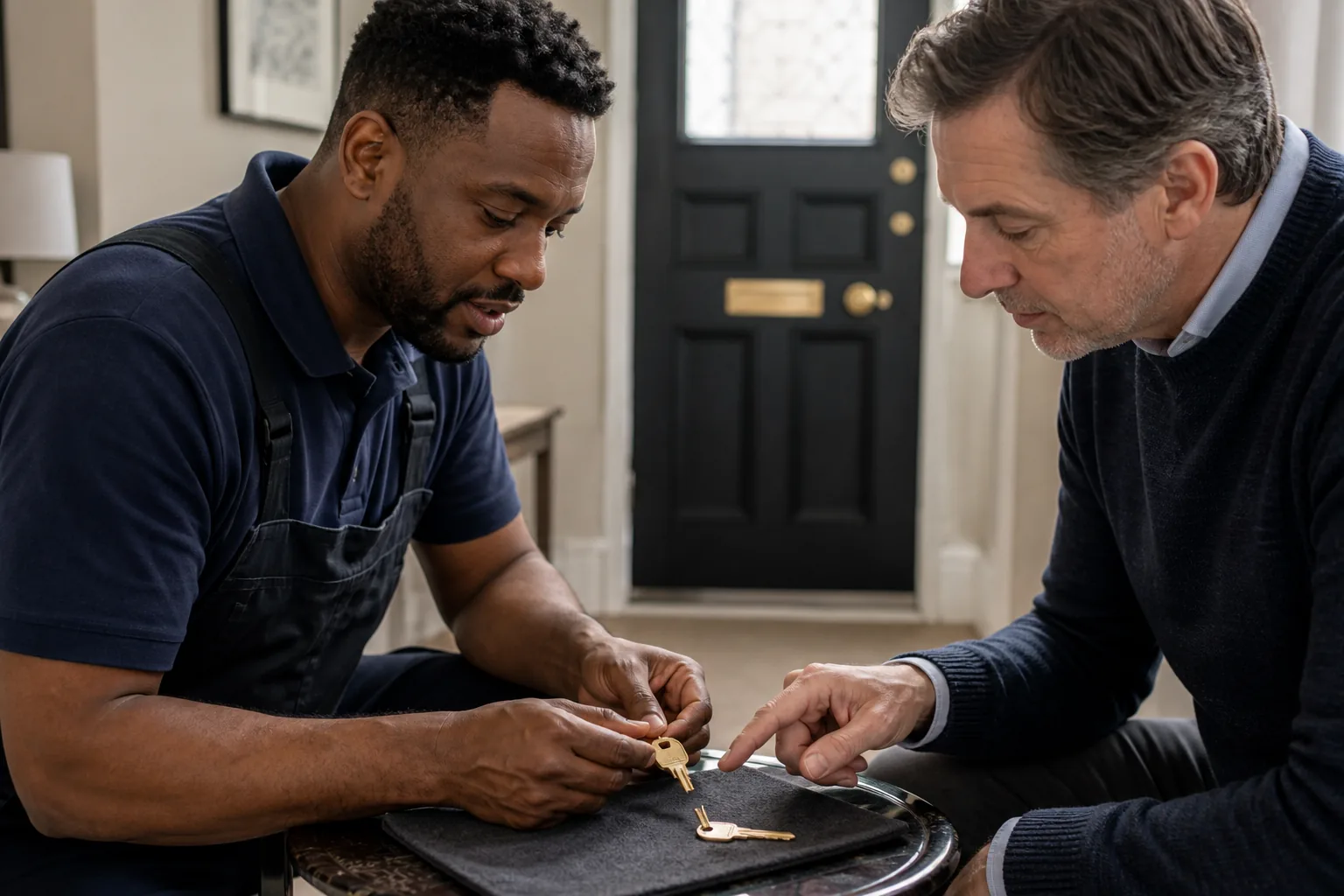
Common reasons customers call
Part of the blade remains in the cylinder and the door may be open but cannot be secured normally.
The door remains closed and authorised access must be assessed without unnecessary damage.
Wear, a poor duplicate or metal fatigue leaves the key unreliable even if the fragment is removed.
Door movement, cylinder wear or another hardware issue may have placed excessive force on the key.
Why Alesta for broken key extraction
The work is organised for the verified occupier, owner or authorised property representative.
Extraction and repair options are considered before a cylinder is replaced unnecessarily.
A stiff lock, door alignment or worn key is addressed rather than simply returning the fragment.
The repaired lock is checked with the door open and closed, and new-key requirements are explained.
A considered extraction
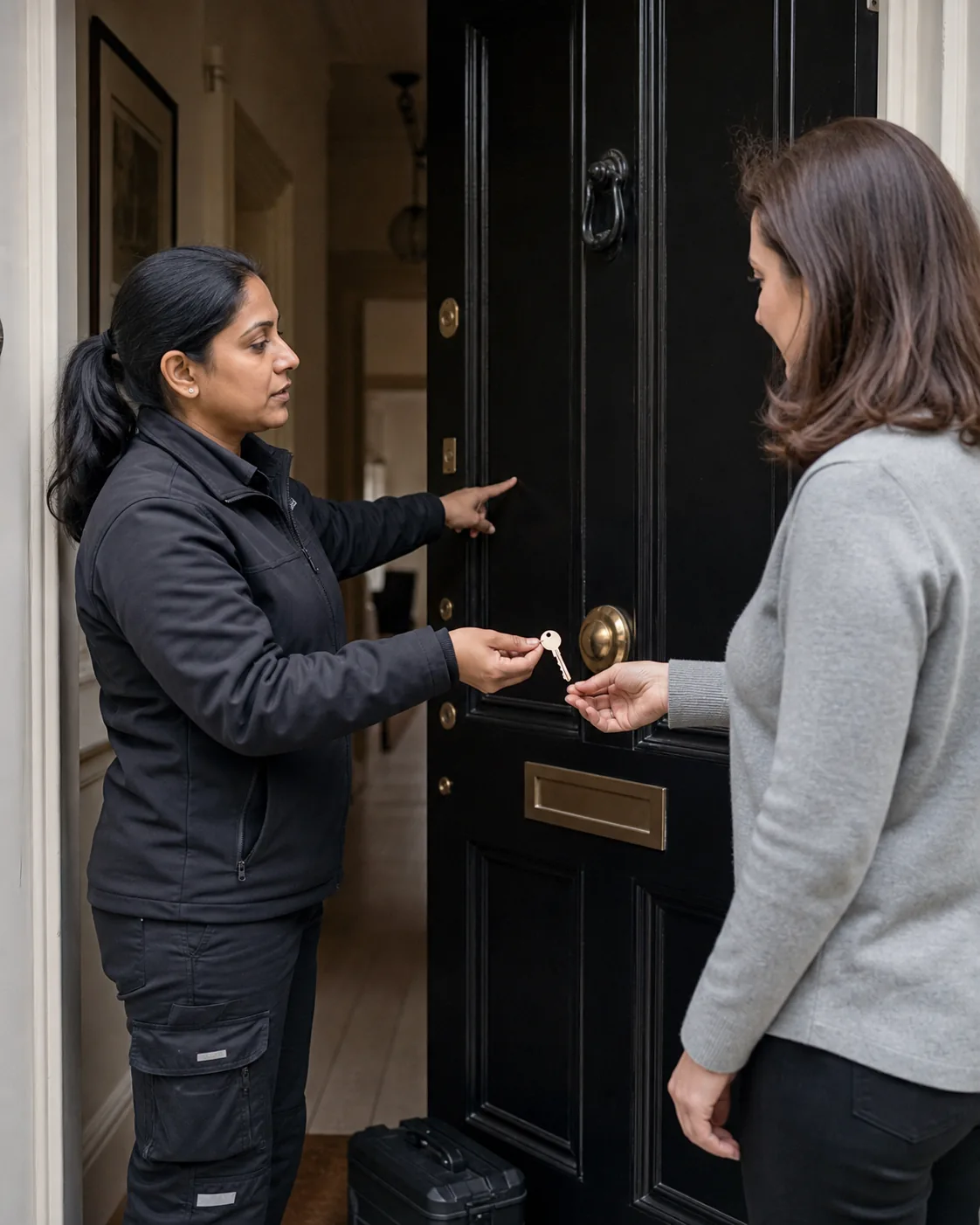
When you call, explain whether the key broke while the door was being locked or unlocked, whether the door is currently open or closed, and how much of the fragment is visible. Keep the remaining key half and avoid inserting another key, glue, oil or improvised object into the keyway. Those attempts can move the fragment, contaminate the cylinder or create additional damage. For an occupied or managed property, we also confirm who is authorising the work and what identification can be shown.
At the property, the technician first checks the door position, visible fragment and condition of the key. A worn, twisted or poorly cut key can fail independently, but stiffness may also come from the cylinder, latch, multipoint mechanism or door alignment. This matters because removing the metal without addressing excessive resistance can leave the next key under the same load. The extraction approach depends on the fragment position and the type and condition of the lock.
Where the fragment can be removed without sacrificing serviceable hardware, the technician works carefully and then checks the keyway and cylinder movement. If the lock has been damaged, is heavily worn or cannot operate reliably, repair or replacement is discussed before additional parts are fitted. A replacement key can only be organised from a suitable original, code or compatible cylinder arrangement; a badly worn broken half is not always sufficient for an accurate duplicate.
After the agreed work, the door is tested in a controlled way with the door open first, then closed when safe. The latch, lock engagement and key movement should feel consistent rather than forced. The homeowner receives the usable keys and an explanation of any alignment, hardware or maintenance issue observed. If the door itself is binding, a separate door adjustment may be the real long-term fix. The aim is not simply to retrieve a fragment, but to leave an authorised entrance that operates predictably.
Clear pricing
The cost depends on the lock type, fragment position, door status, timing and whether repair or replacement hardware is needed.
| Service scope | Price | What affects the final price |
|---|---|---|
| Key broken or stuck in a lock | From £79 | Lock type, visible fragment, door open or closed, access and appointment timing |
| Lock assessment and extraction | Confirmed on arrival | Condition, complexity and whether the existing cylinder remains serviceable |
| Replacement key or lock hardware | Quoted separately | Security level, cylinder type, parts, fitting and any door adjustment |
Pricing context: A current standard London benchmark starts at £79 for a key broken or stuck in a lock. Materials, replacement hardware, urgent timing, parking and congestion can change the final Alesta quote.
How the service works
Tell us whether the door is open, where the fragment sits and who authorises the work.
The technician checks the fragment, cylinder, key wear and any door resistance before work.
The agreed solution is completed and the key and door are tested before handover.
Broken key extraction FAQ
Useful answers about safe preparation, authorisation, extraction, replacement and door checks.
☎ Call 020 3608 3976Avoid improvised tools, glue and forcing the visible fragment. These can push it deeper or damage the cylinder, making the repair more difficult.
Tell us whether the door is open or closed, which side you are on, the door and lock type, how much of the key is visible and when you need help.
Yes. Be ready to show identification and reasonable evidence that you occupy, own or manage the address before access-related work is carried out.
Often it can, but the fragment position and cylinder condition matter. If the keyway or mechanism is damaged, repair or replacement may be more reliable.
Sometimes a suitable original, key code or compatible cylinder allows replacement. A heavily worn or distorted broken half may not provide an accurate pattern.
Metal fatigue, a bent or poor duplicate, a stiff cylinder, multipoint-mechanism resistance or door misalignment can all increase stress on the key.
Yes, within the agreed scope. The repaired lock and key are function-checked, and any door alignment or additional hardware issue is explained.