Alignment and clearance
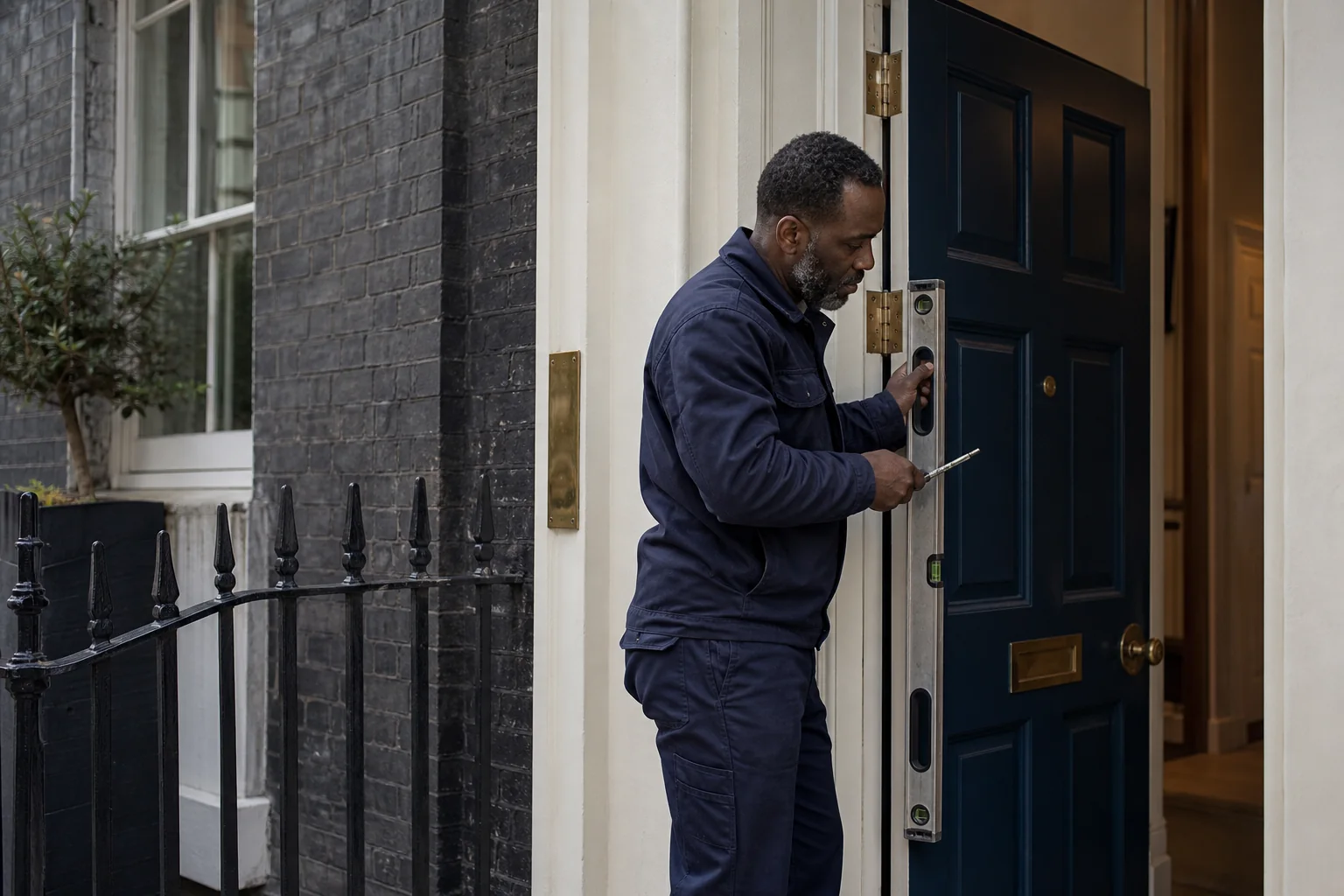
Sticking, sagging and uneven gaps assessed across the leaf, hinges and frame.
Alesta · Door repairs in London
Careful repair for timber doors that stick, sag, rattle or no longer latch cleanly, with the door, frame and hardware assessed before material is removed.
☎ Call 020 3608 3976Cause before adjustment
A door can catch because hinges have loosened, the frame has moved, the leaf has swollen or a new floor has reduced the clearance. We inspect the pattern of contact and the condition of the timber before trimming, because removing material without finding the cause can create a larger gap later.
Internal, external and fire-rated doors have different hardware, security and compliance considerations. Photographs help us plan, but significant damage, rot, movement or specialist certification may need an on-site assessment before the final scope is confirmed.
Sticking, sagging and uneven gaps assessed across the leaf, hinges and frame.
Loose, worn or unsuitable hinges and fixings repaired or replaced where the timber remains sound.
Compatible latches, keeps and handles aligned so the door closes and operates consistently.
Suitable splits, worn fixing points and damaged edges assessed for a practical repair.
Common reasons customers call
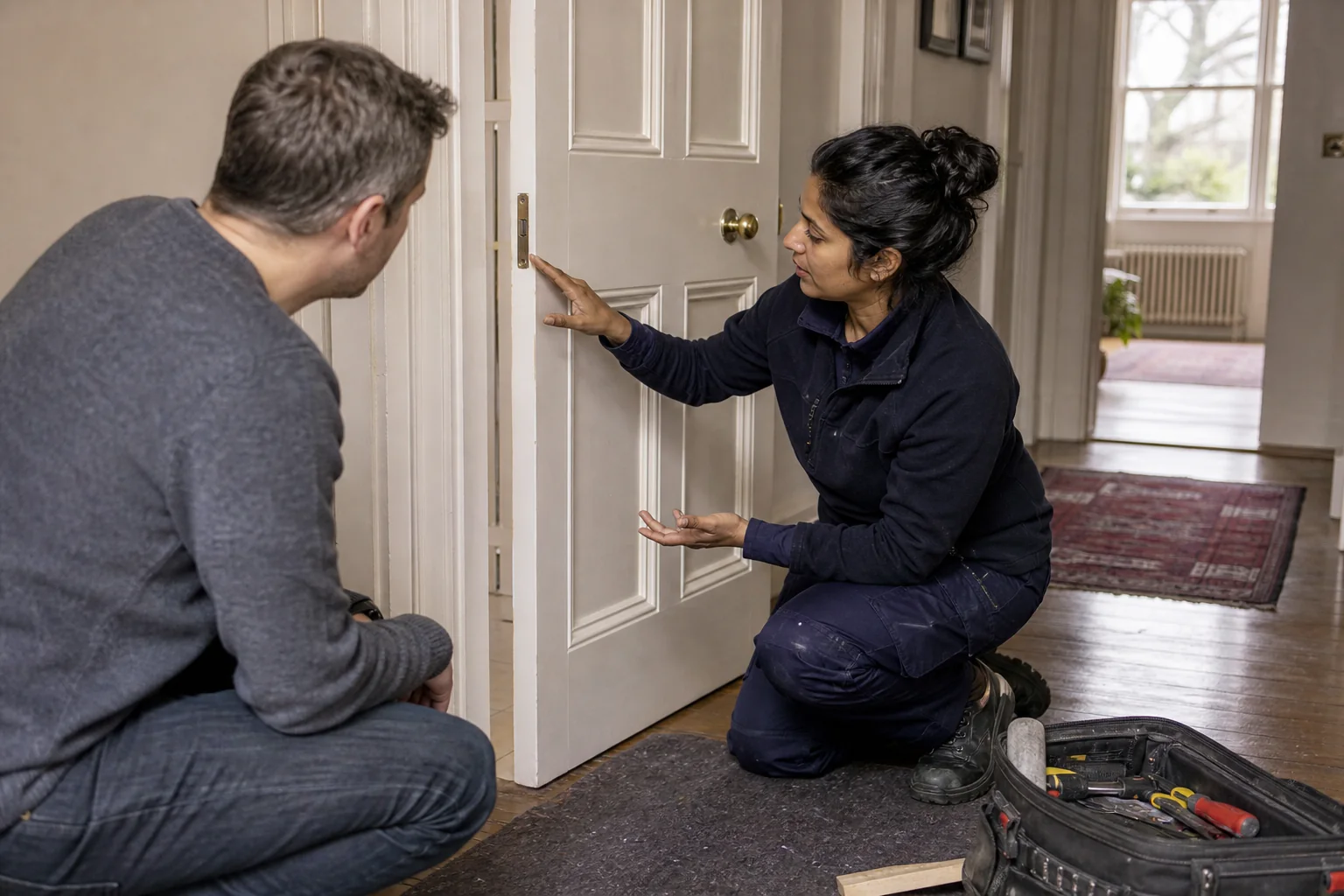
The door needs lifting, hinge correction or careful clearance work after the cause is identified.
Movement has left the handle working but the door unable to close or stay securely shut.
Fixing points, hinge condition and the weight of the door need assessment before refitting.
Splits, impact damage or worn hardware positions need a repair that respects the surrounding timber.
Why Alesta for door repair
Gaps, hinges, frame and floor clearance are checked before the door is cut or planed.
Hinges, latches and fixings are selected for the door weight, timber and intended use.
The floor, nearby decoration and access route are protected for cutting or fitting work.
The door is opened, closed and latched repeatedly, with any decorating or security follow-up identified.
A considered process
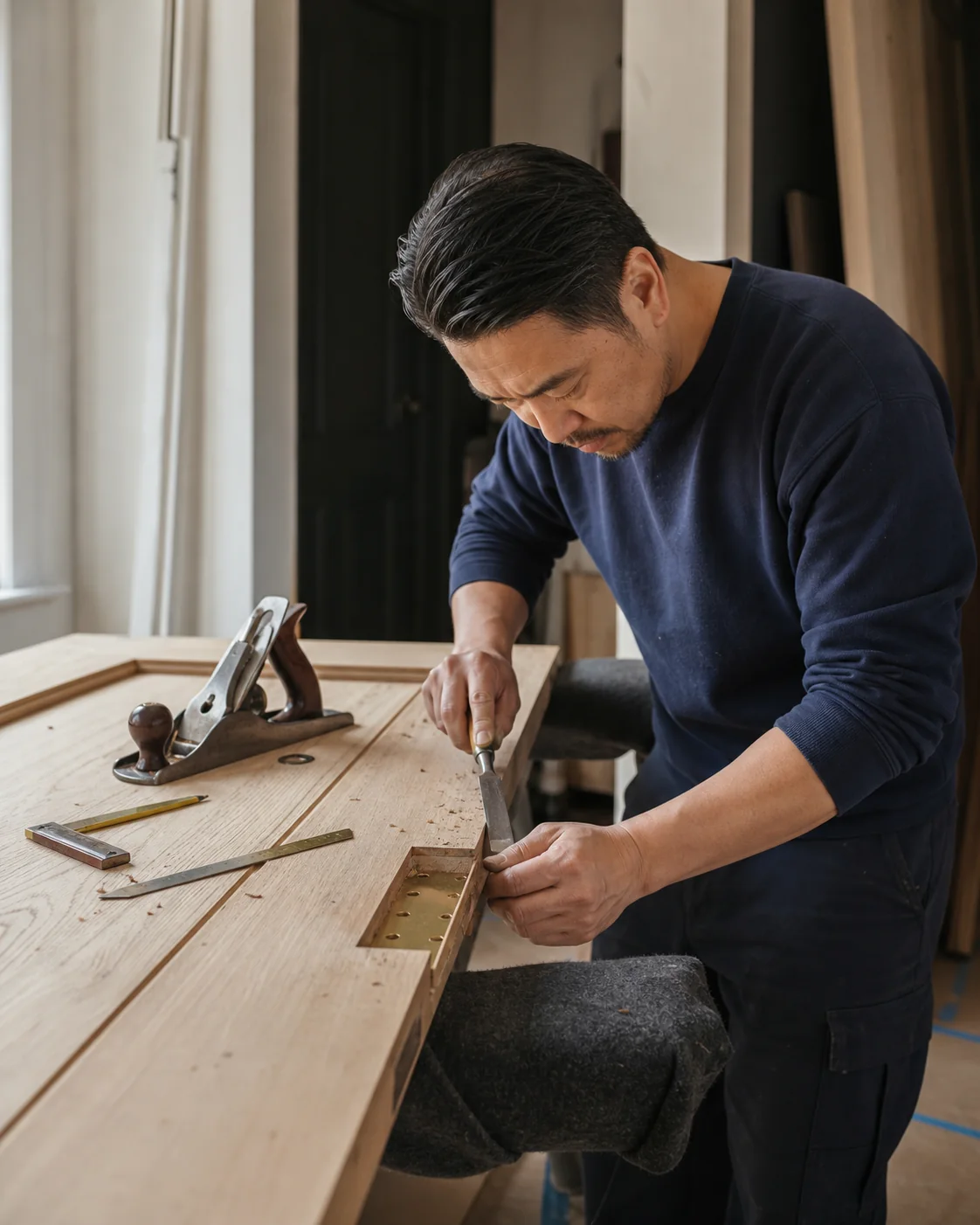
Every door repair starts with the symptom and the type of door. We ask whether it is internal or external, timber or composite, glazed or fire-rated, and whether the problem changes with weather. Photographs of the full opening, hinges, latch and damaged area help us plan. A door that has suddenly dropped may need different attention from one that has gradually swollen, and a front door with a security problem may require locksmith input alongside carpentry.
At the property, the carpenter checks the gaps around the leaf, hinge movement, frame condition, floor clearance and the way the latch meets the keep. Loose screws are not simply replaced with larger ones unless the timber can hold them safely. The cause might be worn hinges, damaged fixing points, frame movement, moisture expansion or previous trimming. Fire doors, closers and intumescent components are treated carefully because alteration can affect their intended performance.
Once the cause is understood, the repair is agreed. Work may involve securing or replacing suitable hinges, repairing fixing points, adjusting the keep, easing a local contact point or making a compatible timber repair. If material must be removed, reference marks are checked and the change is kept to what is necessary. Floors and nearby decoration are protected, dust is controlled and the door is supported safely. Rot, major frame movement, broken glazing or extensive external deterioration may require a broader replacement scope.
At handover, the door is opened and closed repeatedly from its normal operating position. Clearances, latch engagement, handles and visible hardware are checked, and any weather seal or closer is reviewed where included. Freshly cut timber may need sealing or decoration, which is identified rather than assumed. We explain what caused the problem, what was repaired and any sign of building movement or moisture that should be monitored. The aim is a door that works consistently without creating unnecessary gaps or hiding a larger defect.
Clear pricing
The final cost depends on the door, cause of the fault, hardware, timber condition, access and finishing requirement.
| Service scope | Price | What affects the final price |
|---|---|---|
| Minor adjustment or latch alignment | From £50 | Door type, access, fixings and whether material removal is required |
| Hinge or local timber repair | Typically £70–£150 | Hardware, damaged fixing points, door weight and labour |
| Major frame or external door repair | Quoted to scope | Condition, security hardware, timber, weathering, access and finishing |
Pricing context: Existing audited door-repair data includes minor work from around £50 and more involved repairs commonly between £70 and £150. Parts, security hardware and major frame damage are quoted separately.
How the service works
Send photographs of the full opening, hinges, latch and damaged or catching area.
The carpenter checks clearances, frame, hardware and timber before agreeing the repair.
The area is protected, the agreed work completed and the door tested through repeated operation.
Door repair FAQ
Useful answers about sticking doors, hinges, hardware, preparation and pricing.
☎ Call 020 3608 3976Loose hinges, frame movement, timber swelling, worn fixings or a changed floor level can all reduce clearance. The contact pattern should be checked before the door is trimmed.
Many timber internal and external doors can be assessed. Security, weather damage, glazing and fire-rating requirements may change the trade or scope needed.
Often they can if sound timber remains or a suitable local repair is possible. The door weight, hinge condition and damaged fixing point need inspection first.
Latch and keep adjustment, worn hardware, seals and uneven gaps can contribute. The door and frame are checked so the solution does not make the latch unsafe or too tight.
Only when specified. Newly exposed timber should be sealed or decorated, particularly on external doors, and the required follow-on finish is identified in the scope.
Fire-rated doors and their hardware require particular care. Any work must preserve the intended assembly, clearances and certification; unsuitable alterations will not be undertaken.
Door type, weight, hardware, timber condition, frame movement, access, security requirements and finishing all influence the confirmed cost.