Lockout triage
Key location, lock state, door behaviour and alternative lawful access established first.
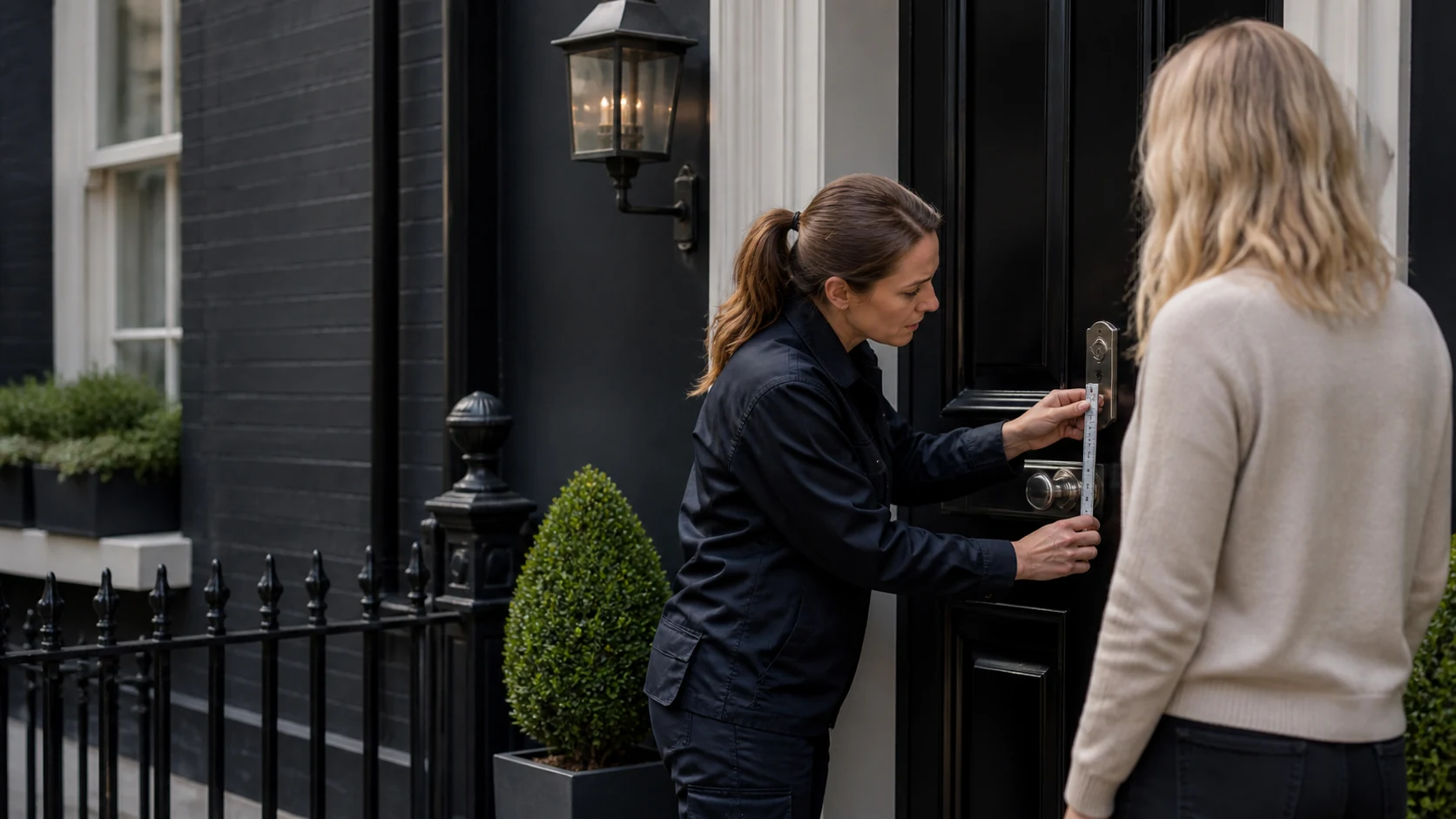
Alesta · Locked-out assistance in London
Residential locksmith attendance organised around the door, lock, key situation and proof of authority, with non-destructive options considered before drilling or replacement.
☎ Call 020 3608 3976Information before attendance
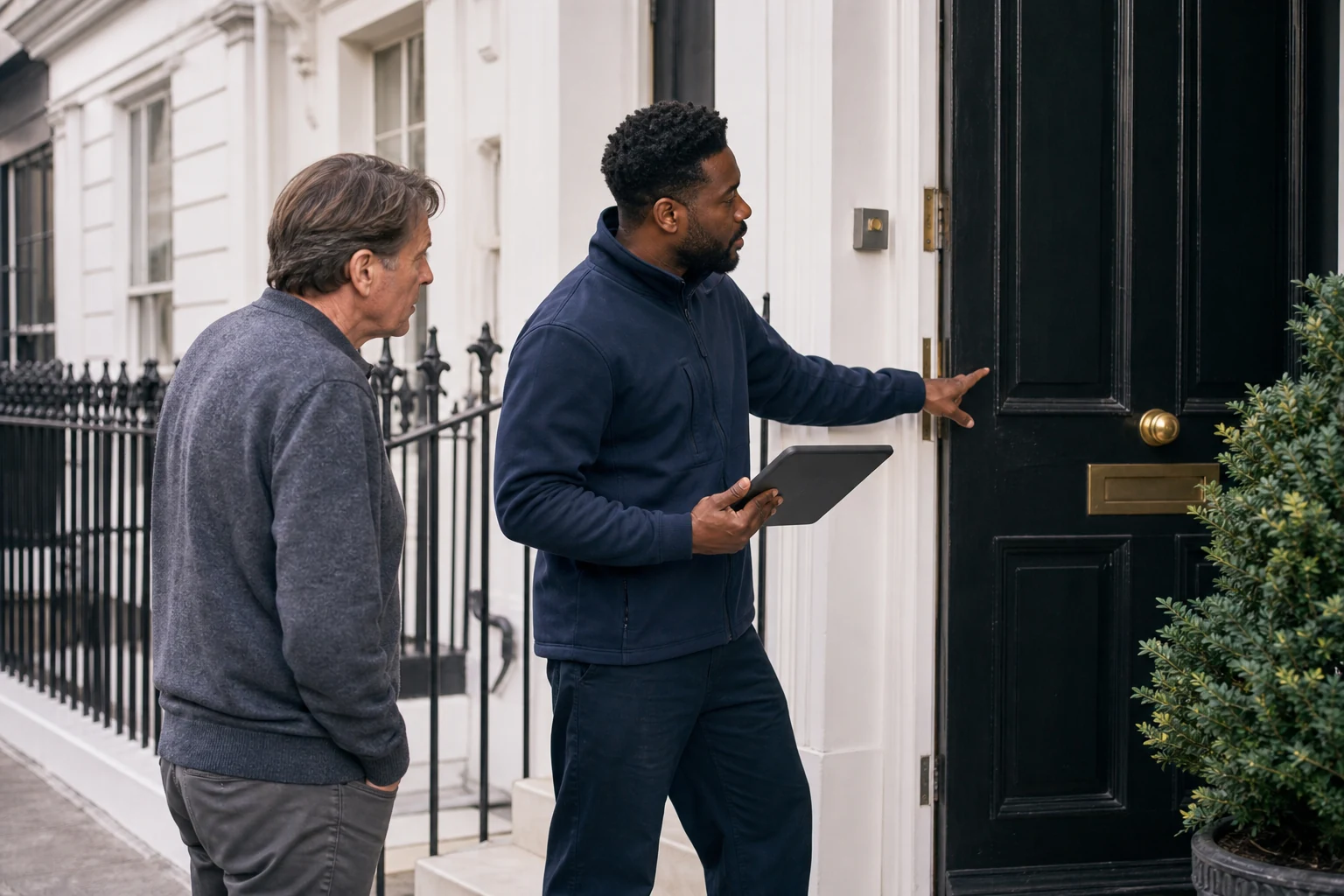
Keys may be inside, lost, broken in the cylinder or turning without releasing the mechanism. A slammed latch differs from a deadlocked door, and a failed multipoint gearbox differs again. The correct visit depends on identifying that situation as closely as possible.
We confirm the address, entrance, door type, visible hardware and your authority to enter before dispatch. Life-threatening emergencies, fire, immediate danger and vulnerable people at risk should be directed to the appropriate emergency service rather than treated as a routine locksmith booking.
Key location, lock state, door behaviour and alternative lawful access established first.
Identity, occupancy, ownership or managing authority confirmed before entry work proceeds.
Suitable non-destructive options considered before drilling or component replacement.
Door operation checked and any compromised lock addressed through an agreed next step.
Common reasons customers call
A closed or latched entrance needs assessment based on how the door was secured.
Access and subsequent key security need to be considered as separate but connected outcomes.
The fragment, cylinder and lock state determine whether extraction and opening are possible.
A failed case, gearbox, cam or multipoint mechanism may require more than cylinder work.
Why Alesta for a lockout
Photos and symptoms help avoid sending an appointment based on the wrong lock assumption.
The locksmith does not open property without reasonable evidence of lawful access rights.
Appropriate non-destructive methods are considered before destructive entry is authorised.
Opening and the condition of the lock are reviewed together before handover.
A controlled access process
The call begins with location and safety. We ask whether anyone vulnerable is inside, whether an appliance, fire or medical issue creates immediate danger, and whether another lawful entrance is available. Emergency-risk situations may require emergency services. For routine access, we gather the door material, lock appearance, how it was closed, whether the key is lost, inside or broken, and what happens when another key is tried. Safe ground-level photographs can improve triage.
Before entry work, the attending locksmith verifies authority. Suitable evidence can depend on the situation and may include identification matching the address, tenancy or ownership evidence, confirmation from an authorised manager, or documents retrieved immediately after supervised entry. Refusal or inability to establish a reasonable right to enter can stop the work. Shared entrances, communal doors and managed buildings may also require consent from the responsible party.
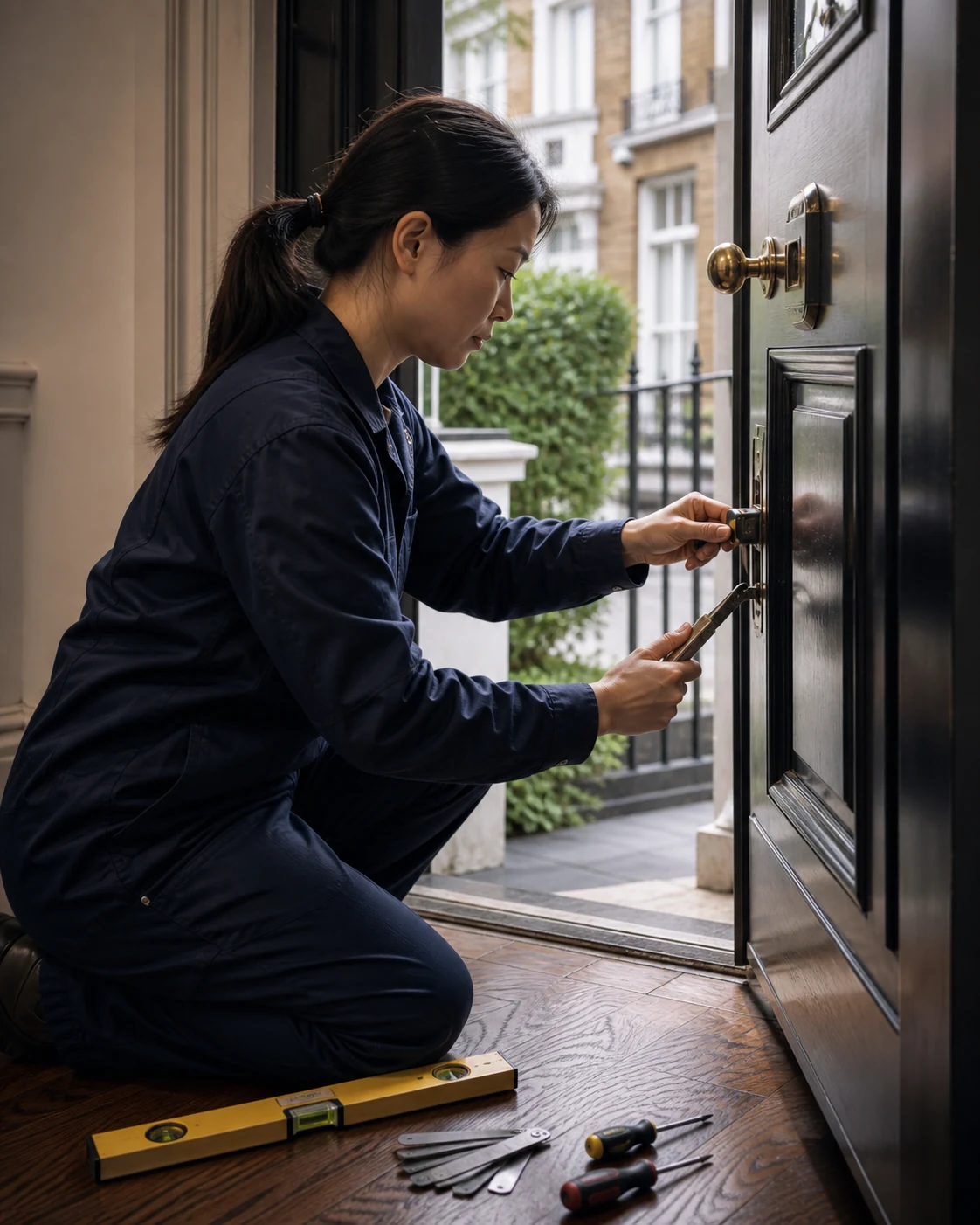
The locksmith inspects the door and chooses a method appropriate to the actual lock state. Where viable, non-destructive techniques are considered first. A deadlocked, damaged, anti-manipulation or internally failed mechanism may require controlled drilling or component removal, but that step is explained before irreversible work begins. The customer authorises the revised scope and understands whether a replacement part is available immediately or the door may need a temporary securing arrangement.
Once access is gained, the locksmith checks whether the entrance can close, lock and reopen normally. If keys are missing or the hardware was damaged during necessary entry, repair or replacement may be recommended to restore security. Supplied keys and any temporary limitation are explained before departure. The result is not only an open door: it is lawful access with the post-entry security condition made explicit rather than leaving the customer with an entrance that cannot be secured.
Clear pricing
Cost depends on location, attendance time, door and lock type, lock state, opening method, required parts and post-entry security work.
| Service scope | Price | What affects the final price |
|---|---|---|
| Residential lockout assessment and opening | Quoted after assessment | Door, lock state, method, location, access and visit timing |
| Lockout involving broken or failed hardware | Quoted after assessment | Extraction, mechanism failure, drilling, labour and parts |
| Post-entry lock repair or replacement | Quoted from findings | Security condition, compatible hardware, keys and installation |
Pricing context: A reliable quote requires photographs, lock symptoms, location and visit timing. Parking, specialist locks, destructive entry and replacement hardware can change the price and are agreed before proceeding.
How the service works
Share address, safe photos, lock state and any immediate risk.
The locksmith confirms lawful access and explains the least-damaging viable approach.
Access is regained and the door’s ability to secure is checked before handover.
Locked-out service FAQ
Useful answers about proof, timing, damage, lost keys, preparation and price.
☎ Call 020 3608 3976Give the exact address, door and lock photographs if safely possible, how the door closed, where the keys are, what the lock does and whether anyone is at immediate risk.
The locksmith needs reasonable evidence that you may enter, such as matching identification, tenancy or ownership evidence, or confirmation from an authorised property manager. The exact route depends on circumstances.
No. Non-destructive options are considered first, but deadlocked, damaged or internally failed high-security hardware can require controlled drilling or replacement.
If there is immediate danger, fire, a medical emergency or another serious risk, contact the appropriate emergency service first rather than waiting for routine locksmith attendance.
Often it is sensible when keys cannot be accounted for, but the security decision depends on lock type, other copies, building control and your authority to alter the door.
Stay in a safe place, avoid forcing the door or climbing, gather proof of address and authority, contact building management if relevant and keep your phone available.
Attendance time, distance, door and lock type, opening method, damage, parking and any repair or replacement parts all influence the quote.