System assessment
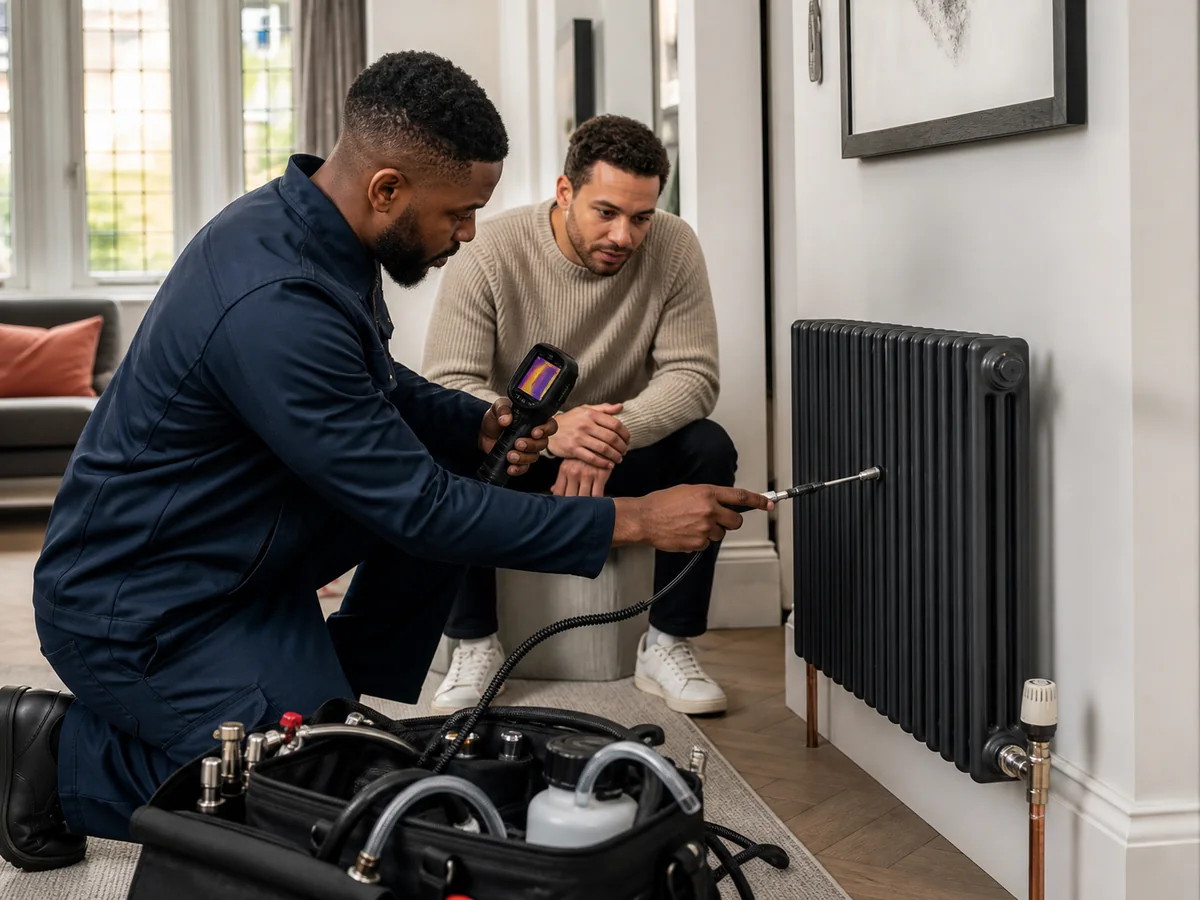
Symptoms, radiator temperatures, water condition, valves and accessible components are checked first.
Alesta · Central heating power flush in London
A controlled power flush for suitable wet central-heating systems, with symptoms, condition, access and limitations assessed before equipment is connected.
☎ Call 020 3608 3976Diagnose before circulation
Uneven heat, noisy pipes, slow warm-up and repeated dirty bleed water can indicate corrosion debris, but similar symptoms may come from trapped air, closed valves, poor balancing, a weak pump or another fault. We assess the system layout, age, boiler, radiators and known history before recommending a power flush.
A flush cannot repair a perforated radiator, blocked component, failed pump or unsuitable pipework. Existing corrosion may reveal weak points once debris is disturbed, so condition and practical limitations are explained before work starts.
Symptoms, radiator temperatures, water condition, valves and accessible components are checked first.
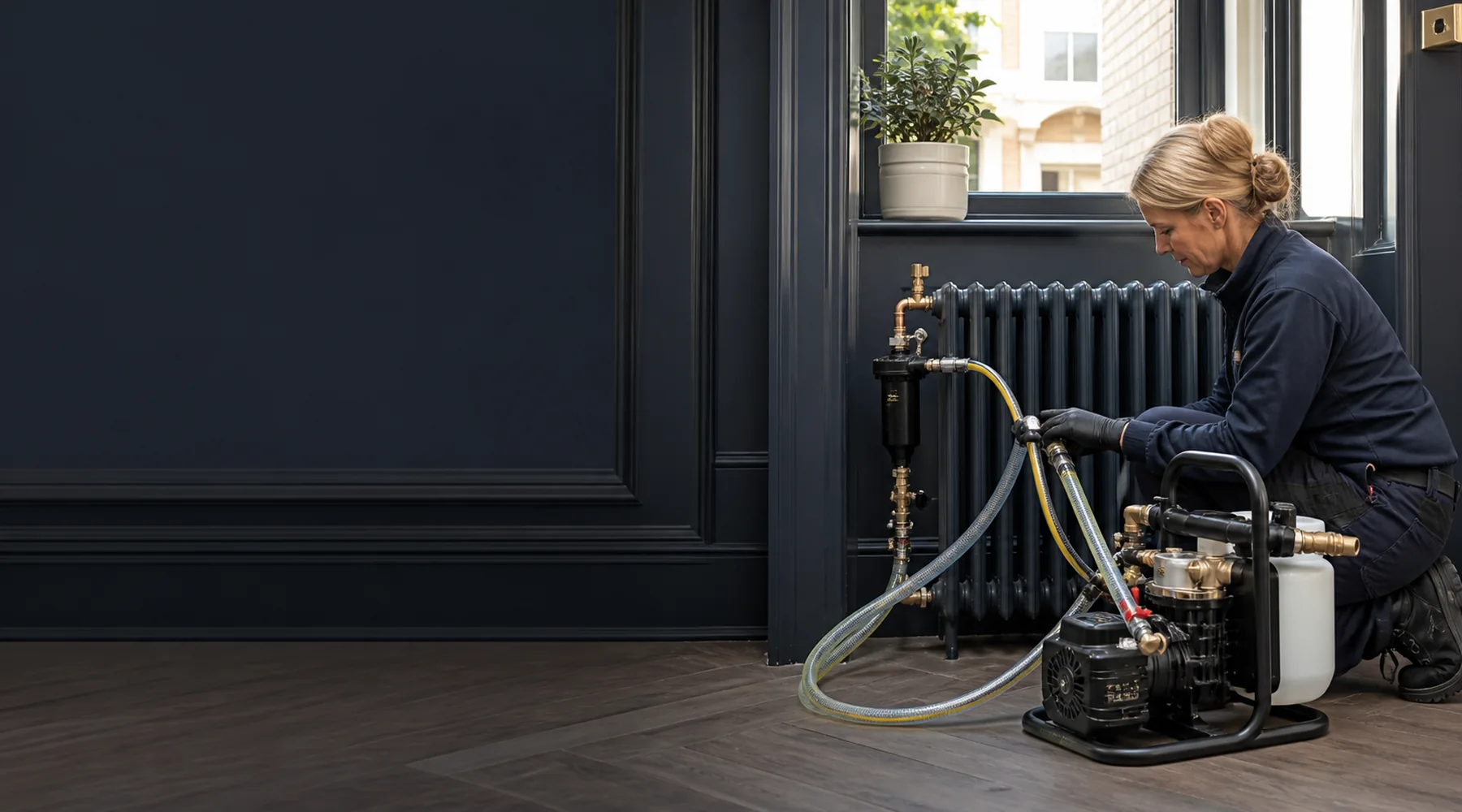
Professional equipment circulates suitable cleaning solution through manageable sections of the system.
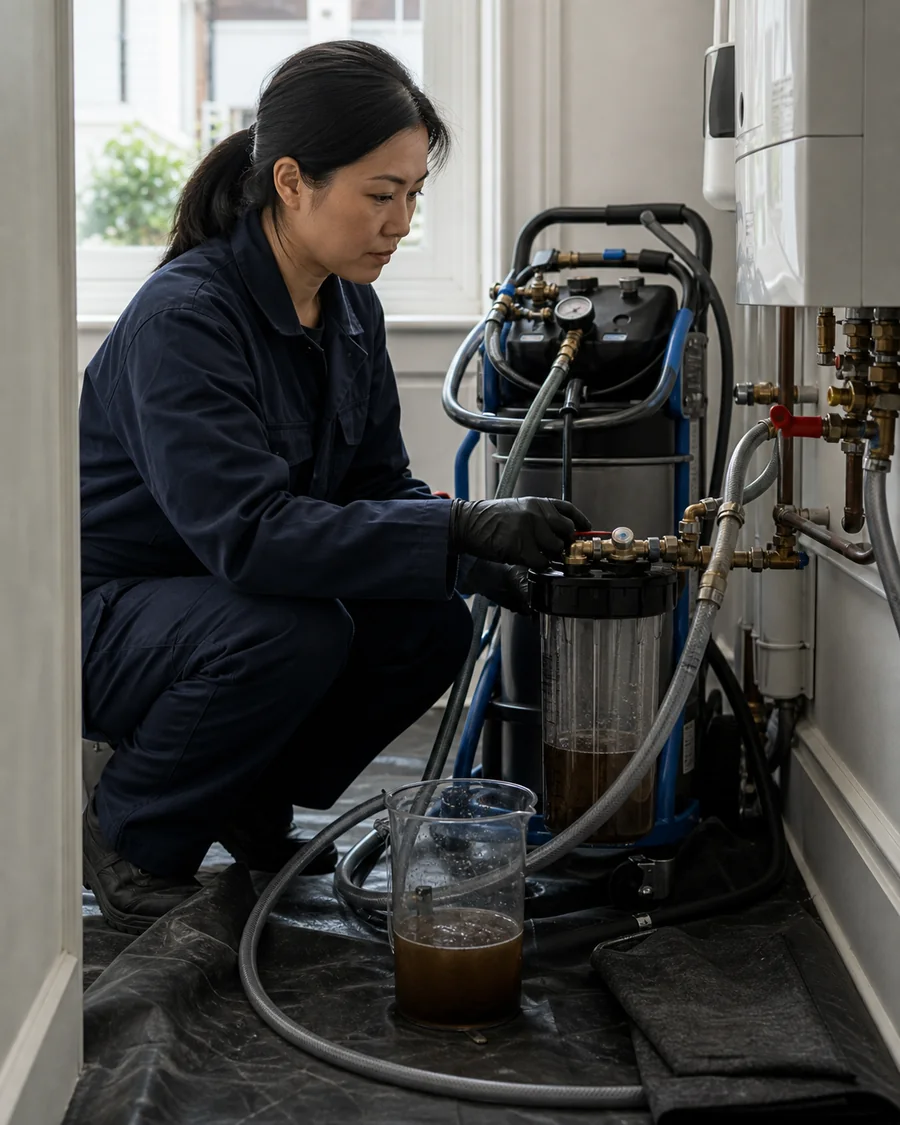
Released ferrous debris is captured and discharge water monitored as the system is worked through.
The system is refilled with suitable inhibitor and radiators are checked and balanced within scope.
Common reasons customers call
Sections remain cool after bleeding and basic valve checks, suggesting restricted circulation needs assessment.
Circulation sounds and extended warm-up may be linked to debris, air, balancing or component condition.
Dark bleed water or repeated filter contamination indicates active corrosion products within the circuit.
The existing circuit may need condition checks and cleaning before new equipment is connected and protected.
Why Alesta for power flushing
Symptoms and accessible components are assessed so a flush is not used as a substitute for fault finding.
Flow direction, radiator isolation and agitation are controlled rather than relying on one general circulation.
Connections, hoses, discharge, floors and nearby finishes are planned before the machine is operated.
Temperatures, pressure, balancing and remaining component concerns are explained when work is complete.
A considered process
Every power flush begins with checks that the process is appropriate. We discuss the heating symptoms, system age, recent work, leaks, pressure loss and any radiator or boiler concerns. The engineer compares radiator temperatures, inspects accessible valves and water condition, and considers whether air, balancing, controls, pump performance or a component fault could explain the problem. A flush is not automatically recommended simply because one radiator is cold, and visibly weak or leaking components may need repair before circulation equipment is connected.
The property and system are then prepared. The connection point, discharge route, water supply and electrical supply for the flushing machine are agreed. Floors and nearby finishes are protected, valves are checked and the boiler or sensitive components are isolated as the equipment and manufacturer guidance require. The machine is connected with secure hoses, and circulation begins at a controlled pressure appropriate for the system. The objective is flow, not excessive pressure that could damage old pipework.
Suitable cleaning chemical is circulated and radiators are worked through methodically. Flow direction can be reversed and individual sections isolated to disturb deposits more effectively. External agitation may be used carefully on suitable radiators. A magnetic filter captures ferrous debris, while water clarity, temperature and flow response are monitored throughout. Heavily restricted sections, failed valves or physical blockages may not respond to flushing alone; these are identified rather than hidden by extending the process indefinitely.
Once discharge water and system response meet the agreed completion point, the cleaning solution is removed and the circuit is rinsed. The system is refilled with a suitable inhibitor at the correct concentration, vented and brought to operating pressure. Radiators are checked for warming pattern and balanced within the service scope, and accessible connections are inspected for leaks. At handover, we explain what improved, any remaining weak component or restriction, and how future water quality and inhibitor maintenance help protect the boiler, pump and radiators.
Clear pricing
The final cost depends on radiator count, system layout and condition, access, debris level, valves and the time required to circulate and balance each section.
| Service scope | Price | What affects the final price |
|---|---|---|
| Small heating system power flush | From £300 | Radiator count, connection point, access, water condition and system response |
| Typical larger household system | From £500 | Number of circuits, radiator count, debris, valves, labour time and balancing |
| Repairs or replacement components | Quoted separately | Failed valves, leaking radiators, pump or boiler faults and inaccessible blockages |
Pricing context: Existing Alesta pricing indicates power flushing from about £300, with larger household systems around £500. Any repair revealed during assessment is outside the flush unless added to the written scope.
How the service works
Tell us about cold areas, noise, pressure, dirty water, radiator count and recent system work.
The engineer checks the circuit and agrees the connection, protection and practical limitations.
Sections are worked through, the system is rinsed, inhibited, vented and checked at handover.
Power flush FAQ
Useful answers about suitability, preparation, risk, timing, inhibitor and final pricing.
☎ Call 020 3608 3976Persistent cold radiator areas, noisy circulation and dirty water can support the recommendation, but valves, air, balancing, controls and component faults should be considered first.
The process uses controlled flow rather than excessive pressure, but corrosion can leave components weak. Existing defects may become apparent when debris is disturbed, so condition is assessed first.
Timing depends on radiator count, circuit layout, access and contamination. A household system commonly requires most of a working day, but difficult systems may take longer.
Yes, for relevant stages of connection, circulation and refilling. The engineer will explain when the boiler can operate and when hot water may be affected.
No. A failed valve, damaged radiator, blocked pipe, weak pump, poor balancing or boiler fault may need a separate repair even after the water is cleaned.
Suitable corrosion inhibitor is normally added after the circuit has been rinsed and refilled, subject to the system and product requirements agreed in the scope.
Radiator count, system size and layout, debris level, access, connection difficulty, labour time and any failed component or repair all influence the quote.