Home and heat-loss review
Property size, insulation, emitters, occupancy and hot-water demand inform the specification.
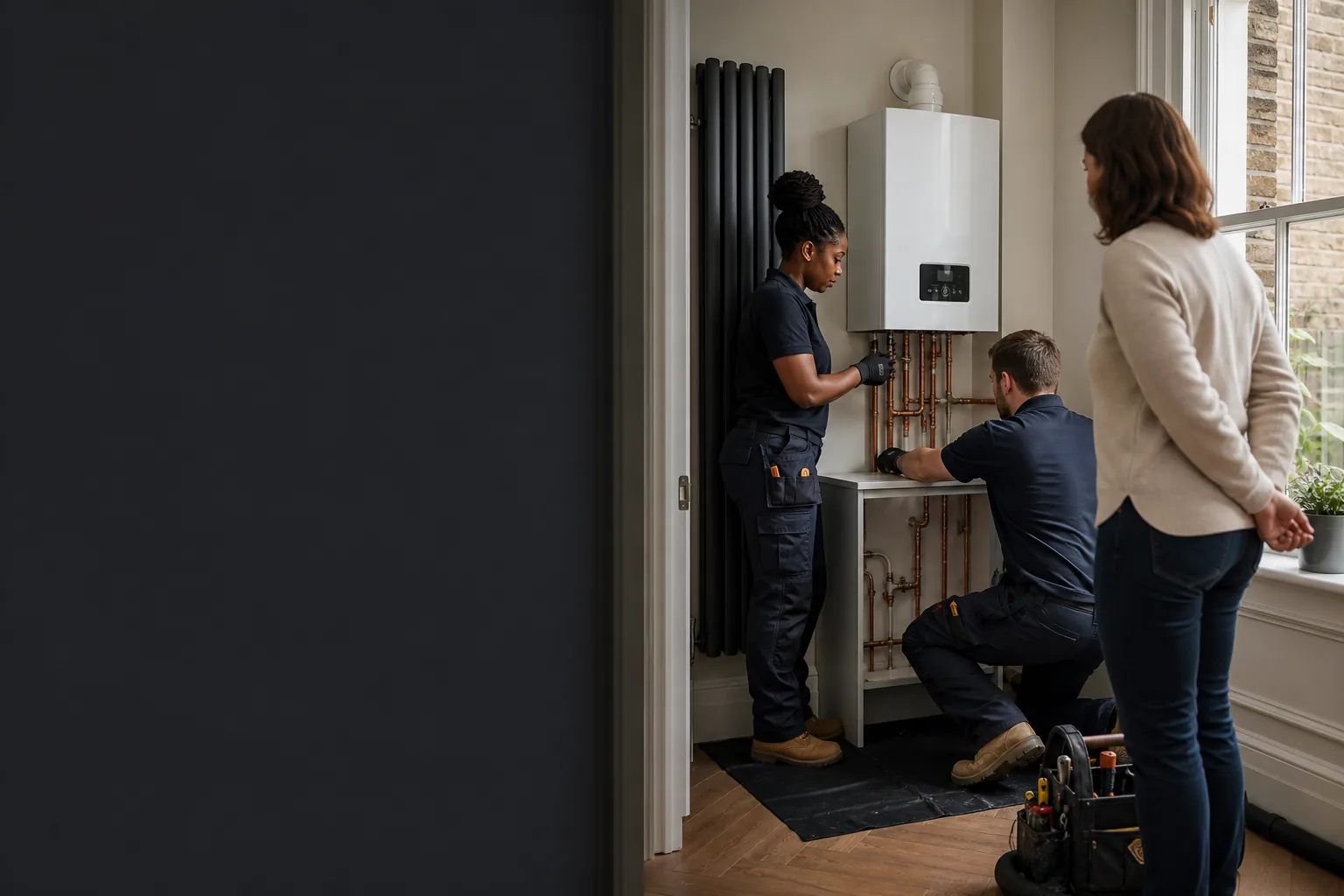
Alesta · Boiler installation in London
Survey-led boiler replacement and installation, with the output, controls, location and wider heating system considered before equipment is selected.
☎ Call 020 3608 3976Survey before specification
A replacement boiler should be selected for the actual heat and hot-water demand, available gas supply, flue route, condensate drainage, system condition and the way the household uses the property. Choosing only by the output shown on the old casing can preserve an earlier sizing mistake.
We gather the relevant property and system details before the installation scope is agreed. The resulting proposal identifies the boiler type, intended location, controls, system preparation and any building work or upgrades that sit outside the core installation.
Property size, insulation, emitters, occupancy and hot-water demand inform the specification.
Safe access, clearances, termination position and condensate route are considered before work starts.
Existing pipework, controls, water quality and any required cleaning or protection are assessed.
The completed boiler is checked, controls are explained and relevant records are supplied.
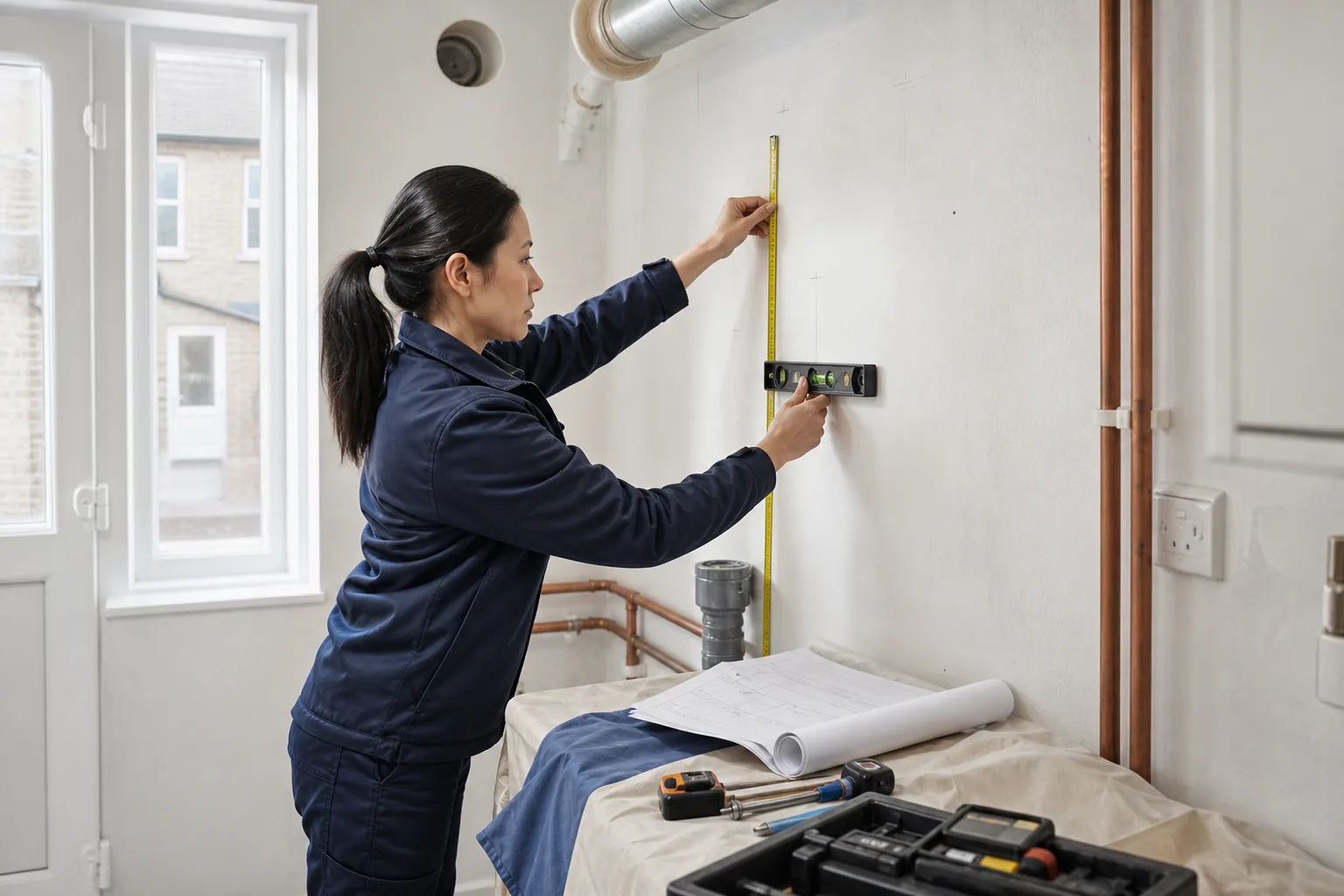
Common reasons customers call
Repeated faults, obsolete parts or poor condition make replacement more sensible than another temporary repair.
The household, bathrooms or usage pattern has changed and the current arrangement is undersized or unsuitable.
A renovation or new layout requires careful review of flue, condensate, gas, pipework and access.
An old on-off setup lacks the zoning, modulation or scheduling expected from a modern installation.
Why Alesta for boiler installation
Output, boiler type and controls are considered against the building and household demand.
Equipment, location, enabling work and exclusions are identified before the programme is agreed.
The relevant registered heating professional completes safety checks and commissioning records.
You are shown the controls, operating pressure and maintenance points instead of receiving only a manual.
A considered installation
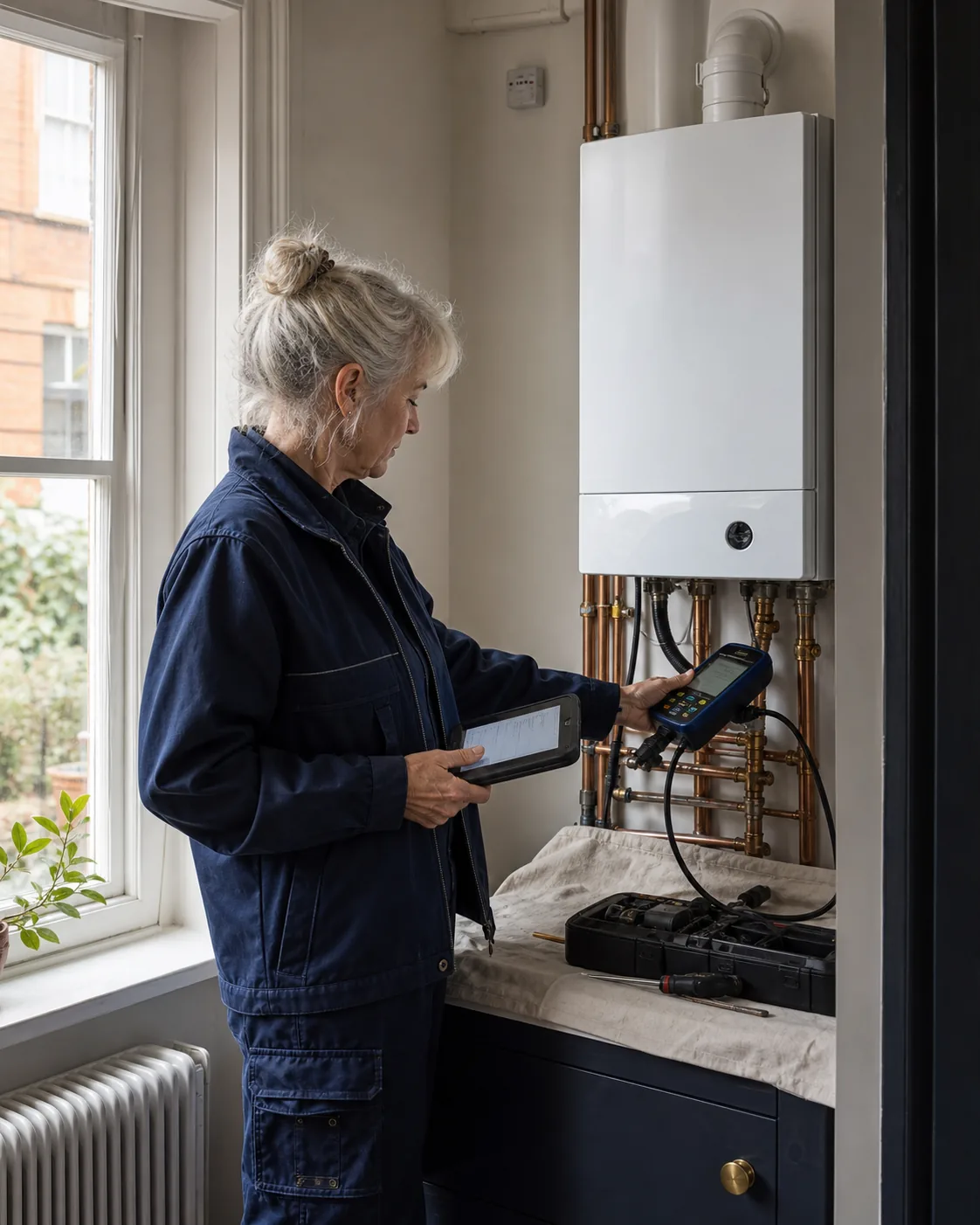
Every installation begins with a survey of the property and existing system. We record the boiler type and location, heat emitters, hot-water arrangement, controls, gas supply, visible pipework, flue route and condensate options. Household demand matters as much as the old appliance: the number of bathrooms, simultaneous hot-water use, occupancy and planned extensions can change whether a combi, system or regular boiler is appropriate. The survey also identifies access restrictions, fragile finishes and any building work that must be agreed separately.
The specification then brings those findings together. Boiler output should reflect calculated demand rather than a simple like-for-like label. Controls are selected to work with the appliance and the way the home is zoned. Existing system water may need cleaning, and suitable magnetic protection or treatment can help protect the new heat exchanger. Where the boiler moves, the route for gas, heating flow and return, hot and cold services, discharge, flue and condensate must be technically practical and visually agreed.
Before installation day, the equipment, programme, access and protection plan are confirmed. The relevant services are isolated safely and the old boiler is removed for appropriate disposal. New components are installed by the qualified heating professional in accordance with the manufacturer’s instructions and current requirements. Pipework is kept orderly, penetrations are finished sensibly and the work area is protected. Any unexpected defect in the existing system is discussed before it changes the agreed scope.
Commissioning is part of the installation, not an optional final glance. The engineer checks tightness and operation, fills and vents the system, sets the appliance and compatible controls, and records the required combustion and safety information. Heat and hot water are tested under available conditions. At handover, we explain pressure, controls, basic user actions and the maintenance route, and provide the applicable commissioning and manufacturer documentation. The result should be a boiler the homeowner understands, not just a new casing on the wall.
Clear pricing
A survey is needed because the boiler, location, controls, system preparation and building work can change the total substantially.
| Service scope | Price | What affects the final price |
|---|---|---|
| Domestic boiler installation | Typically £1,600–£6,000 | Boiler type and output, same-location replacement or relocation, controls and system condition |
| Survey and fixed scope | Confirmed before booking | Property, demand, flue and condensate routes, gas supply, access and required preparation |
| Additional system or building work | Quoted separately | Pipework changes, radiators, cylinders, electrical work, making good and access equipment |
Pricing context: A current public UK benchmark places boiler supply and installation broadly between £1,600 and £6,000. This is not a quote; the property survey determines the equipment and complete Alesta scope.
How the service works
We review demand, boiler type, location, controls, system condition and practical routes.
The equipment, enabling work, programme, exclusions and total installation scope are confirmed.
The qualified engineer completes the work, tests operation and explains controls and records.
Boiler installation FAQ
Useful answers about surveys, boiler selection, timing, controls and handover.
☎ Call 020 3608 3976Yes. Property demand, boiler type, location, flue, condensate, gas supply, controls and system condition all affect the safe and suitable specification.
Sometimes, but relocation can require new service routes, a compliant flue and condensate position, access changes and additional making good. It must be surveyed and priced explicitly.
A straightforward same-location replacement may be completed in about a day, while relocation or wider system work can take several days. The agreed programme follows the survey.
Often yes if they are correctly sized and in suitable condition, but output, valves, water quality and circulation should be considered before the new boiler is commissioned.
Only when listed in the specification. Compatibility, zoning, electrical supply and how the household uses the heating influence the appropriate control choice.
Removal and appropriate disposal can form part of the agreed installation scope. Any unusual access, asbestos concern or separate tank work must be identified beforehand.
The applicable commissioning, registration and manufacturer information is provided, together with control guidance and any maintenance or warranty steps relevant to the selected boiler.