Fault-code investigation
The code is considered alongside symptoms, operating conditions and diagnostic readings.
Alesta · Boiler repair in London
Practical support when heat or hot water fails, pressure drops or a boiler reports a fault. We organise the right heating engineer and agree the repair after diagnosis.
☎ Call 020 3608 3976Evidence before replacement
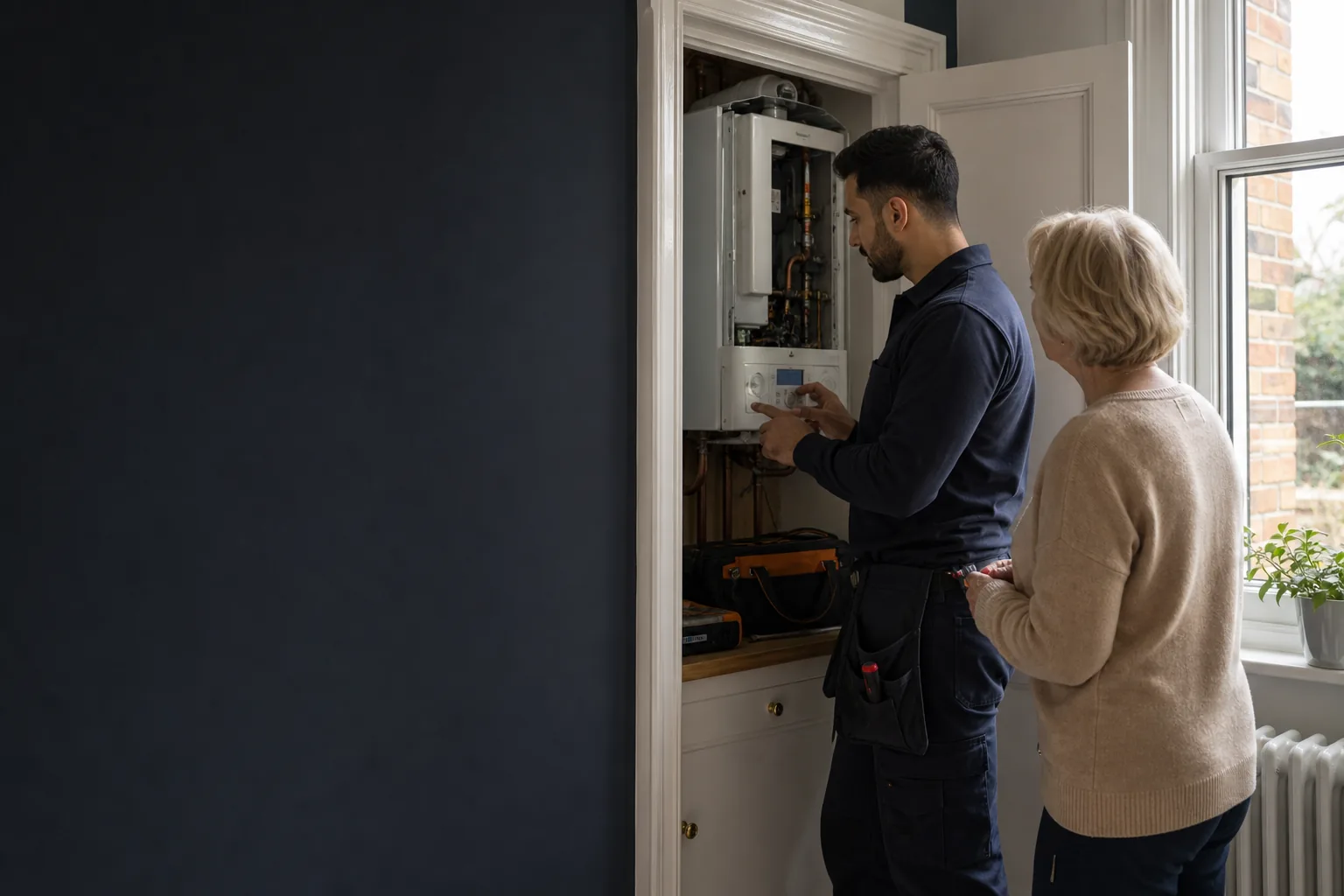
A boiler can stop for many reasons: loss of pressure, failed ignition, circulation problems, control faults, condensate issues, sensor readings or a component that no longer operates correctly. The same symptom can have different causes, so the visit starts with the history of the fault and methodical checks.
Tell us the boiler make and model, current pressure, any display code, when the problem began and whether heat or hot water works intermittently. If you smell gas or suspect carbon monoxide, do not wait for a standard repair appointment—leave the area and follow the official emergency procedure.
The code is considered alongside symptoms, operating conditions and diagnostic readings.
Accessible valves, expansion behaviour, pumps and visible signs of leakage can be assessed.
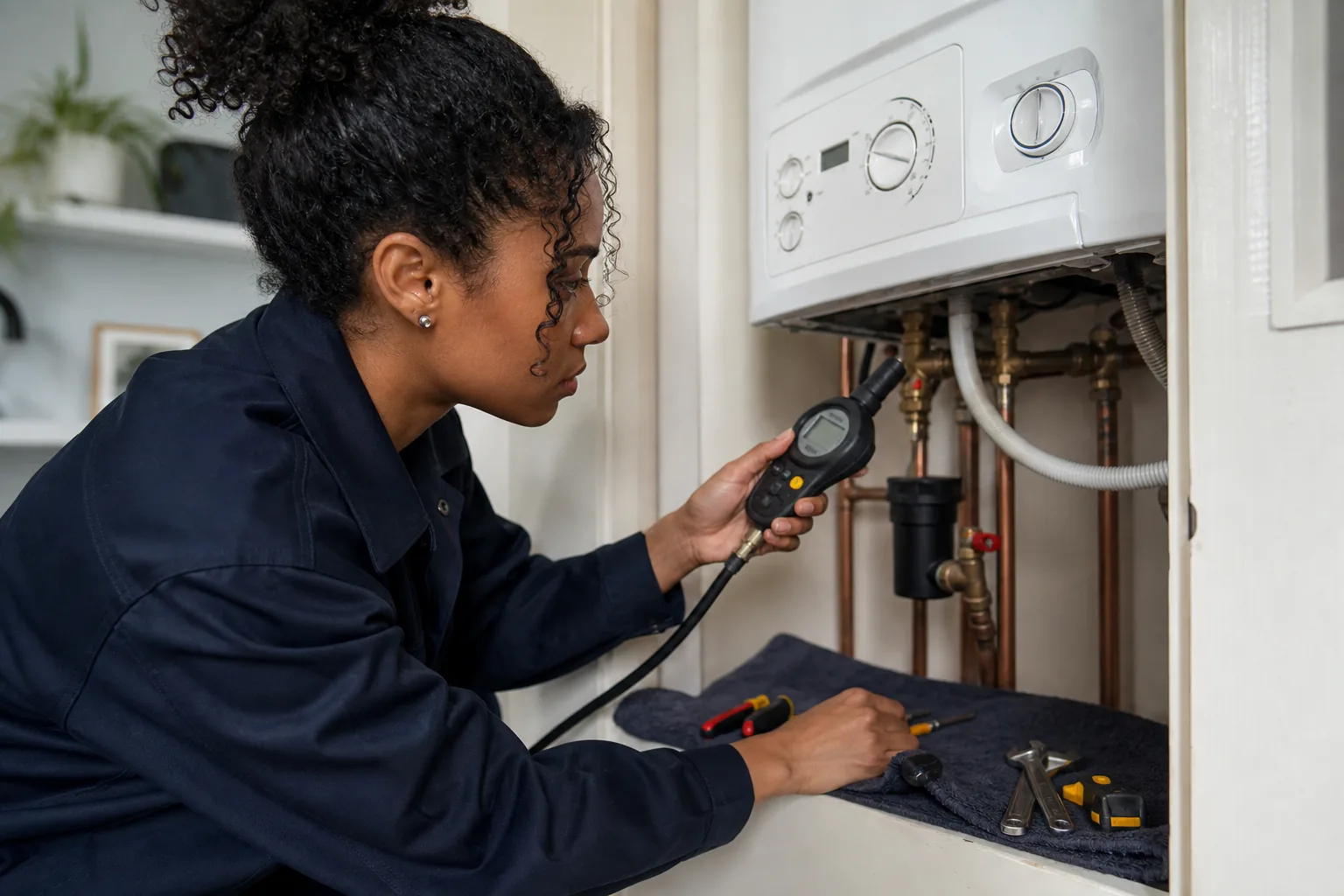
Relevant safety sequence, controls, sensors and components are checked by the qualified engineer.
Practical work is explained before parts are fitted, then operation is checked where conditions allow.
Common reasons customers call
The boiler powers up but does not deliver one or both services, or repeatedly locks out.
The gauge drops after topping up, suggesting a leak, expansion issue or another fault requiring investigation.
Banging, kettling, cycling or inconsistent ignition should be assessed before continued use.
The display identifies a condition, but professional checks are needed before the correct repair is known.
Why Alesta for boiler repair
Model, code, pressure and behaviour help us organise the visit with better context.
Components are not proposed solely because a similar symptom once had a familiar cause.
Boiler diagnosis and gas-related repair are handled by the appropriately registered professional.
Parts availability, age, condition and replacement economics are discussed when they affect the sensible route.
A considered repair
The process starts before the casing is opened. We ask what the boiler was doing when the fault appeared, whether heat and hot water are both affected, which code is displayed, how the pressure has changed and what resets or topping-up have already been attempted. Model and service history are useful because diagnostic sequences and parts differ. Stop repeated resets if the boiler will not recover, and never remove the casing yourself. Gas smells and suspected carbon monoxide require the official emergency response, not an ordinary booking.
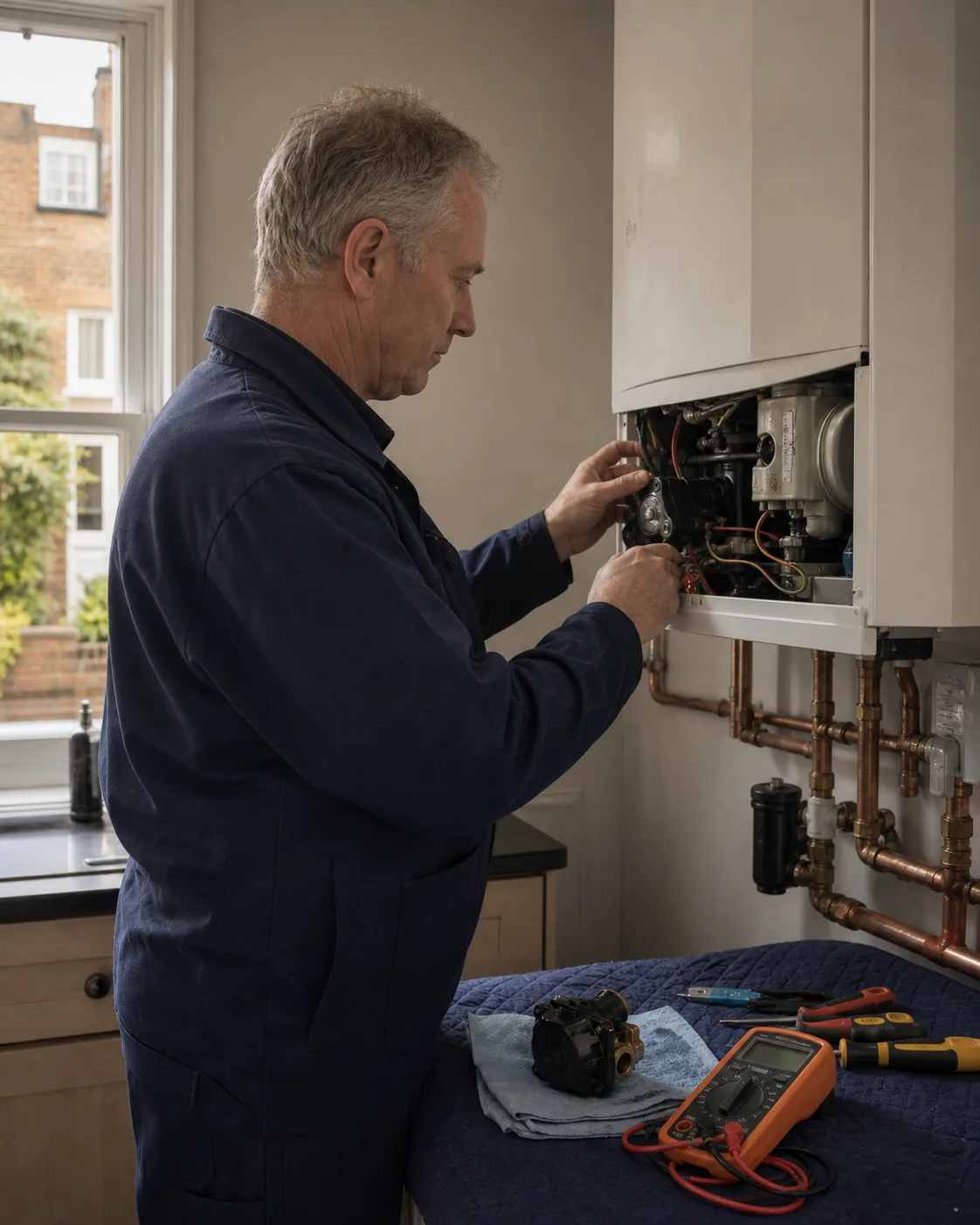
At the property, the engineer confirms the reported symptom and carries out the checks relevant to that appliance and fault sequence. These may include operating pressure, visible leaks, circulation, controls, sensors, ignition behaviour, condensate route, electrical supply and combustion-related readings where appropriate. A fault code is interpreted as part of this evidence rather than used as a parts list. The aim is to identify the failed component or system condition and distinguish it from a secondary symptom.
Once the cause is understood, the repair route is explained. A small accessible component may be replaceable during the visit, while manufacturer-specific parts can require sourcing and a return appointment. Water-quality problems, blocked system components, damaged controls or wider pipework faults may need additional work beyond the boiler itself. We do not promise that every old boiler is economical to repair; repeated failures, corrosion, obsolete parts or an unsafe installation can make replacement the more responsible recommendation.
Agreed repair work is completed with the appliance isolated as required and the surrounding area protected. The engineer reassembles the boiler and checks operation under available conditions, including the relevant heat or hot-water demand, pressure behaviour and safety sequence. Findings, fitted parts and limitations are explained at handover. You are told what to monitor and whether further work is required. A successful repair addresses the diagnosed cause and leaves a clear record, rather than simply clearing a display code until the next cycle.
Clear pricing
The cost depends on diagnosis, boiler make and model, required labour, parts and whether the visit is standard or urgent.
| Service scope | Price | What affects the final price |
|---|---|---|
| Domestic boiler repair | Typically £120–£750 | Fault, boiler model, labour, access, parts and standard or urgent attendance |
| Diagnostic visit | Confirmed before booking | Boiler, symptoms, postcode, timing and the checks required |
| Replacement components | Quoted after diagnosis | Manufacturer, model, availability, part cost and any return visit |
Pricing context: A current public UK benchmark places boiler repairs broadly between £120 and £750, with emergency work often higher. This is not a quote; Alesta confirms the visit structure and agrees parts after diagnosis.
How the service works
Share the boiler model, pressure, display, timing and what happens with heat and hot water.
The engineer follows the relevant fault sequence and explains the practical repair route.
Approved work is completed, operation is checked and any limitation or next step is recorded.
Boiler repair FAQ
Useful answers about fault codes, pressure, safe actions, parts and repair limits.
☎ Call 020 3608 3976The boiler make and model, displayed code, current pressure, when the fault began and whether heating or hot water works at all help us organise the visit.
No. One manufacturer-approved reset may be reasonable, but repeated resets can hide a persistent fault and should not replace diagnosis. Never remove the casing.
Possible causes include a visible or hidden leak, expansion-vessel issue, pressure-relief discharge or another system fault. Repeated topping up without investigation is not a repair.
Sometimes, but model-specific parts or wider system work can require a return visit. The engineer explains the next step after diagnosis rather than promising every component is carried.
Parts are normally identified and priced after diagnosis. The manufacturer, exact model, component availability and additional labour can change the total.
Do not operate switches or use a normal repair booking. Leave the property, call the National Gas Emergency Service on 0800 111 999 from a safe place and follow their instructions.
Age, repeated failures, corrosion, obsolete parts, unsafe condition and likely repair cost all matter. The engineer can explain when another repair is no longer the responsible option.