Fault identification
Key movement, cylinder, latch, case, handles and connected mechanism checked in a logical sequence.
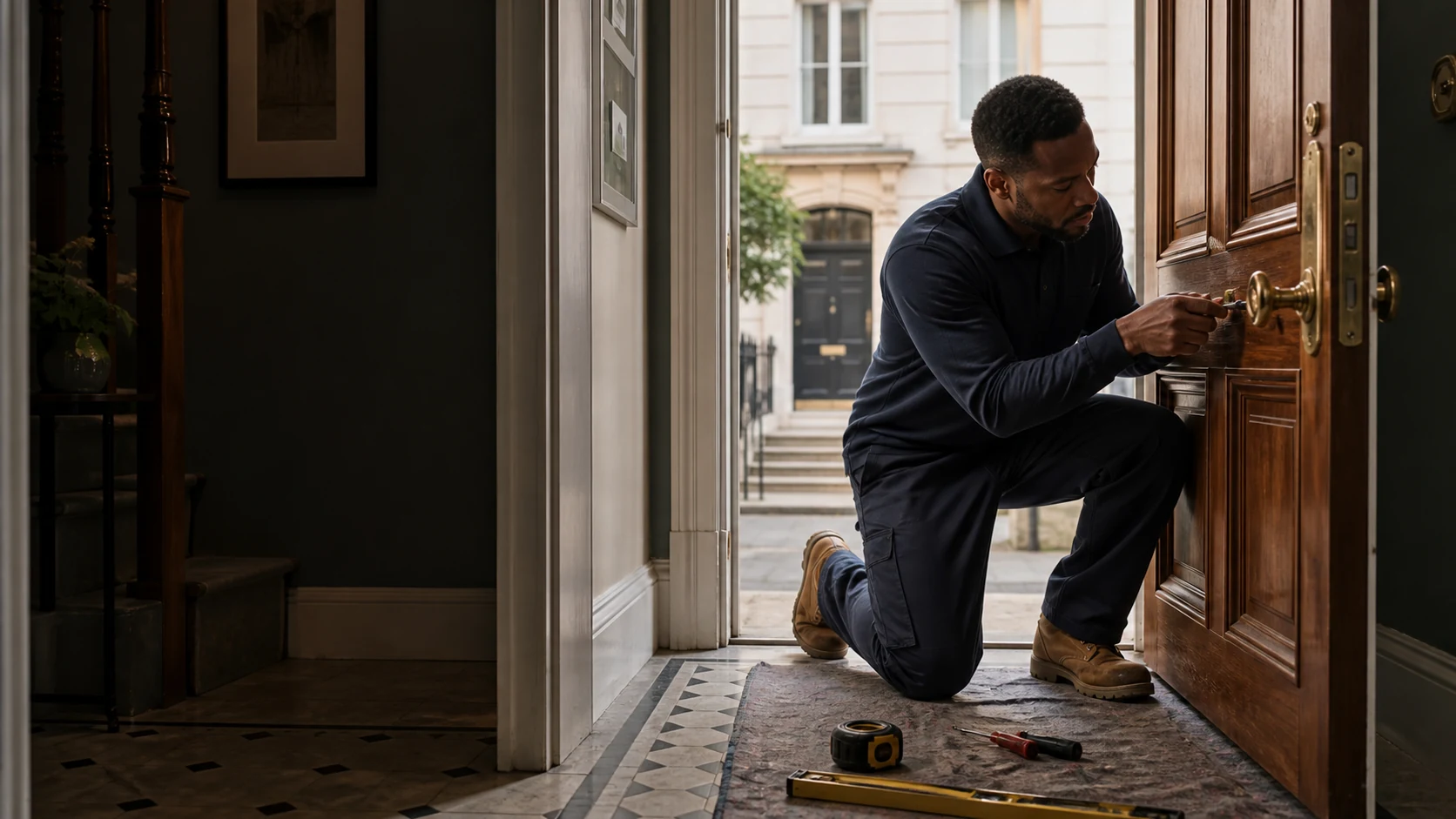
Alesta · Lock repair in London
Careful assessment of stiff keys, failed mechanisms and unreliable locking, with the door, alignment, lock type and security outcome considered together.
☎ Call 020 3608 3976The door and mechanism work together
A key that becomes stiff can point to wear inside the lock, a damaged key, seasonal door movement, loose hardware or a multipoint mechanism under pressure. Forcing the key may turn a manageable adjustment into a broken component or a complete lockout.
We ask for photographs of both sides of the door, the edge hardware and any markings, then assess the symptom in context. Repair remains distinct from forced entry, whole-lock replacement, door-structure work and access-control systems unless those are separately agreed.
Key movement, cylinder, latch, case, handles and connected mechanism checked in a logical sequence.
Door position, keeps and closing pressure considered before internal parts are blamed.
Adjustment or serviceable components addressed where this provides a dependable result.
Normal locking, unlocking and key operation tested from the appropriate sides after work.
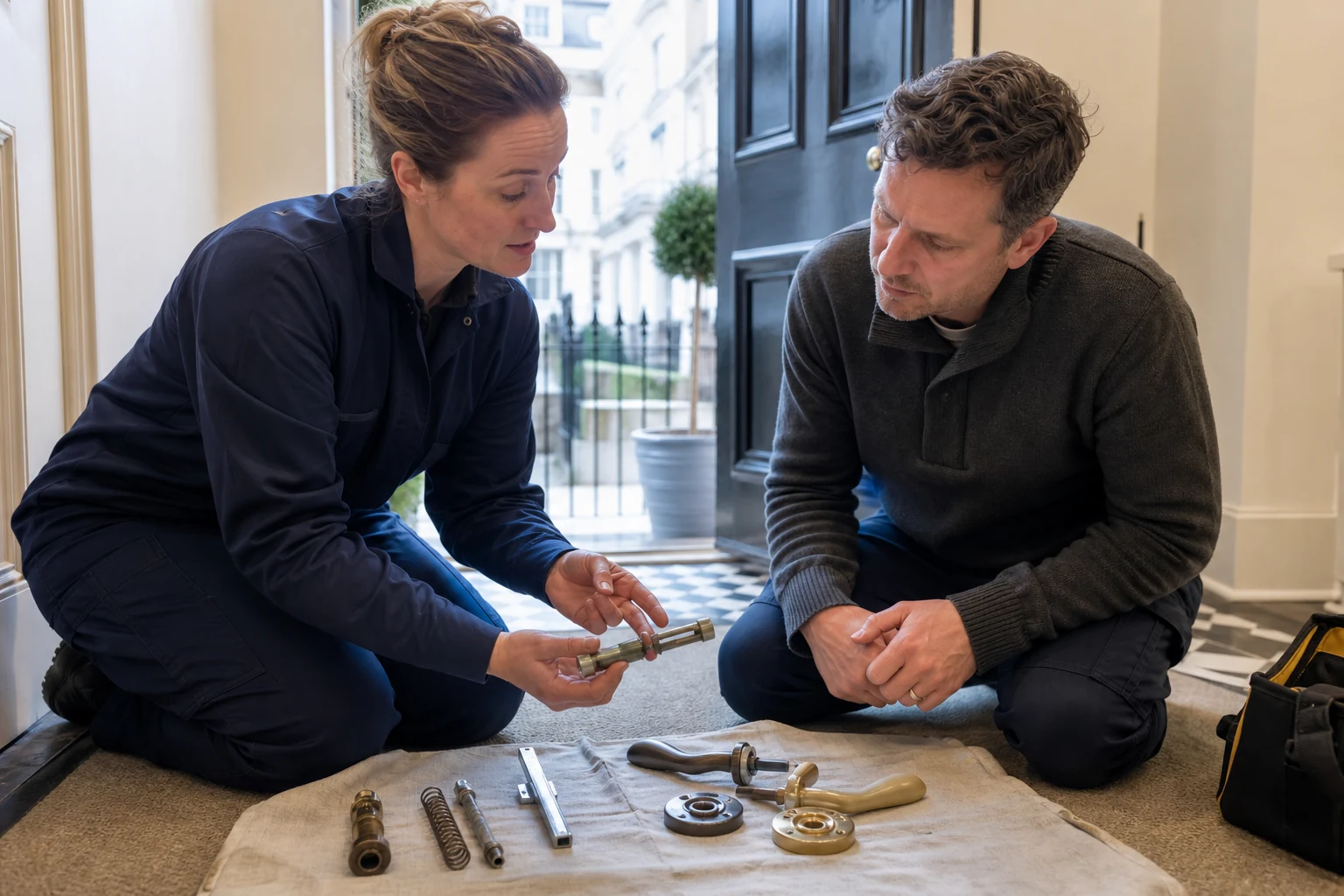
Common reasons customers call
Turning becomes inconsistent even though the correct key has not visibly changed.
A latch, spindle, gearbox or connected mechanism may no longer transfer movement.
Alignment and multipoint engagement need checking before repeated force causes damage.
Fixings, handles or internal wear need assessment before security deteriorates further.
Why Alesta for lock repair
Door type, edge strip, handles and visible lock markings help assign suitable expertise.
The lock is not repeatedly adjusted while a dropped or distorted door remains the cause.
Obsolete, fractured or insecure parts are identified when replacement is the sound option.
The repaired lock is checked with the available keys and normal door movement.
A diagnostic repair process
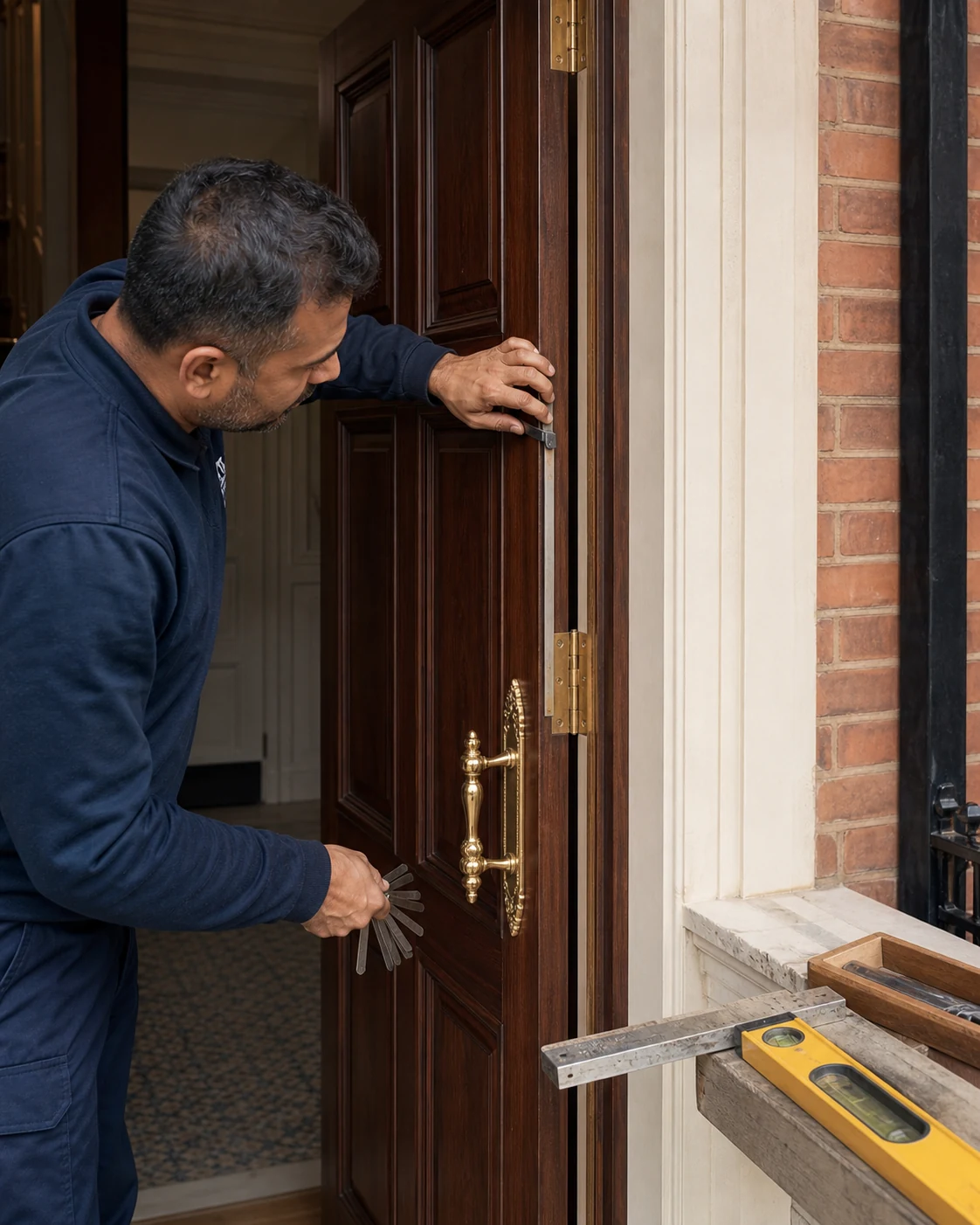
The booking begins with the exact behaviour of the lock. We ask whether the key enters fully, which direction becomes stiff, whether the symptom changes with the door open, and whether handles, bolts or hooks move normally. Photographs of the inside, outside and door edge help identify a rim lock, mortice lock, euro cylinder or multipoint strip. Recent impact, swelling, attempted entry, a snapped key or previous adjustment should be disclosed because it changes both urgency and likely parts.
At the property, the locksmith confirms authority to work on the door and reproduces the fault without using unnecessary force. Operation is compared with the door open and closed so pressure from hinges, keeps or frame alignment can be separated from an internal lock failure. Handles, spindle, cylinder, latch, case and accessible multipoint components are checked as relevant. Lubricant is not treated as a universal repair, especially where contamination, fracture or severe wear is present.
The agreed repair may involve correcting suitable fixings, adjusting reachable keeps, servicing an appropriate mechanism or replacing a defined failed component. Parts are matched to dimensions, handing, backset and compatibility rather than appearance alone. If the door itself has dropped, split or distorted, the locksmith explains whether door repair must happen before reliable lock operation can be restored. Obsolete, extensively damaged or security-compromised hardware may require replacement rather than a temporary patch.
After repair, the door is locked and unlocked through its normal sequence using the available keys. Latch return, handle movement, bolt or hook engagement and opening from the relevant sides are checked without excessive force. The customer is shown any operating technique that remains inherent to the door and told about worn related parts or alignment limits. The purpose is not merely to make the key turn once, but to leave a repeatable locking action and an honest account of what was repaired.
Clear pricing
Cost depends on lock type, fault, access, door alignment, parts availability, visit timing and whether a safe repair is possible.
| Service scope | Price | What affects the final price |
|---|---|---|
| Lock fault assessment and minor adjustment | Quoted after assessment | Lock type, symptom, door condition, access and labour |
| Repair with replacement component | Quoted after assessment | Cylinder, case, gearbox, handle, compatibility and fitting time |
| Obsolete or extensively damaged mechanism | Quoted from findings | Part sourcing, conversion, security requirement and door work |
Pricing context: Clear photographs and the exact symptom are required before price confirmation. Emergency access, full lock replacement and structural door repair are separate scopes unless stated.
How the service works
Send door, edge and hardware photos and explain when the fault appears.
The locksmith checks the mechanism and how the door meets the frame.
Agreed work is completed and the full locking sequence is verified.
Lock repair FAQ
Useful answers about stiff keys, alignment, parts, preparation, repairability and price.
☎ Call 020 3608 3976Send both faces of the door, handles and lock, the full metal strip or lock face on the door edge, any visible markings and the frame keeps.
Avoid forcing it. A key can snap or a stressed mechanism can fail completely. Use another entrance if available and arrange assessment before the door becomes locked shut.
Yes. Misalignment can load latches, bolts or multipoint hooks. The locksmith compares operation open and closed to help distinguish door position from internal failure.
No. Fractured, obsolete, heavily worn or security-compromised locks may need replacement, particularly when compatible components are unavailable.
They normally remain usable when the original cylinder is retained. Replacing a cylinder or complete lock generally changes the keys unless a compatible keyed arrangement is specifically sourced.
Keep all available keys ready, clear access around both sides of the door, disclose previous repairs or attempted entry and provide proof of authority to the property.
Lock type, fault complexity, door alignment, parts, access, visit timing and whether related door work is needed all influence the quote.