Supply assessment
Available capacity, earthing, protective devices and consumer-unit arrangements are reviewed.
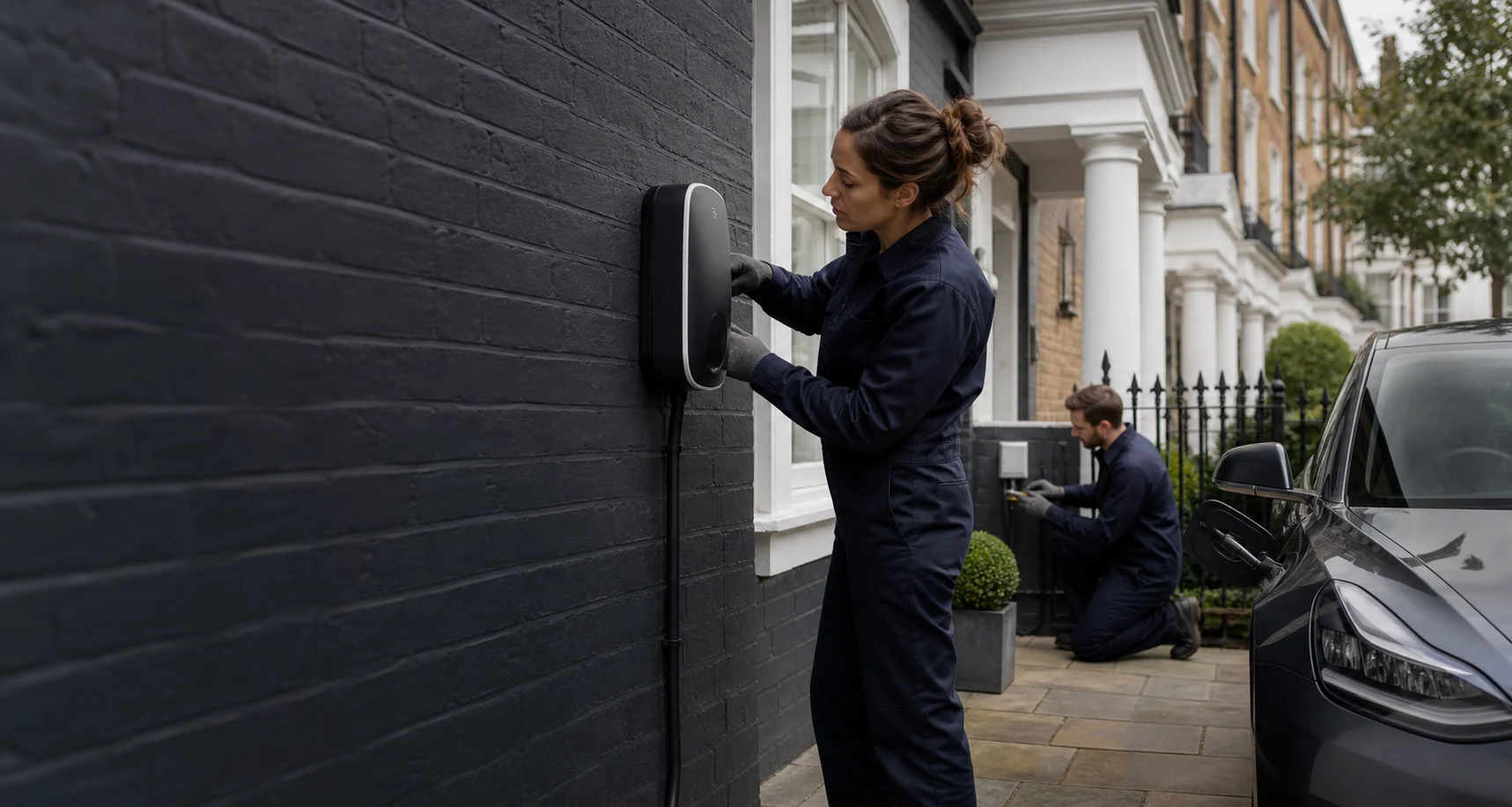
Alesta · EV charger installation in London
A properly surveyed EV charging point with the cable route, earthing, protection, charger position and network requirements confirmed before installation.
☎ Call 020 3608 3976Survey before installation
A home charger adds a sustained electrical load and must suit the incoming supply, consumer unit, earthing arrangement, parking position and cable route. The preferred wall location also needs practical reach, weather protection and safe management of the charging lead.
We gather the vehicle, charger preference, parking ownership, supply details and route constraints before quoting. Flats, shared freeholds, rented homes and street-facing properties may also need written permission or a separate network and civil-work discussion.
Available capacity, earthing, protective devices and consumer-unit arrangements are reviewed.
Power rating, connector, cable reach, mounting and network features are matched to use.
Internal, external and underground routes are defined with access and making good.
The completed circuit and charger are tested, commissioned and explained at handover.
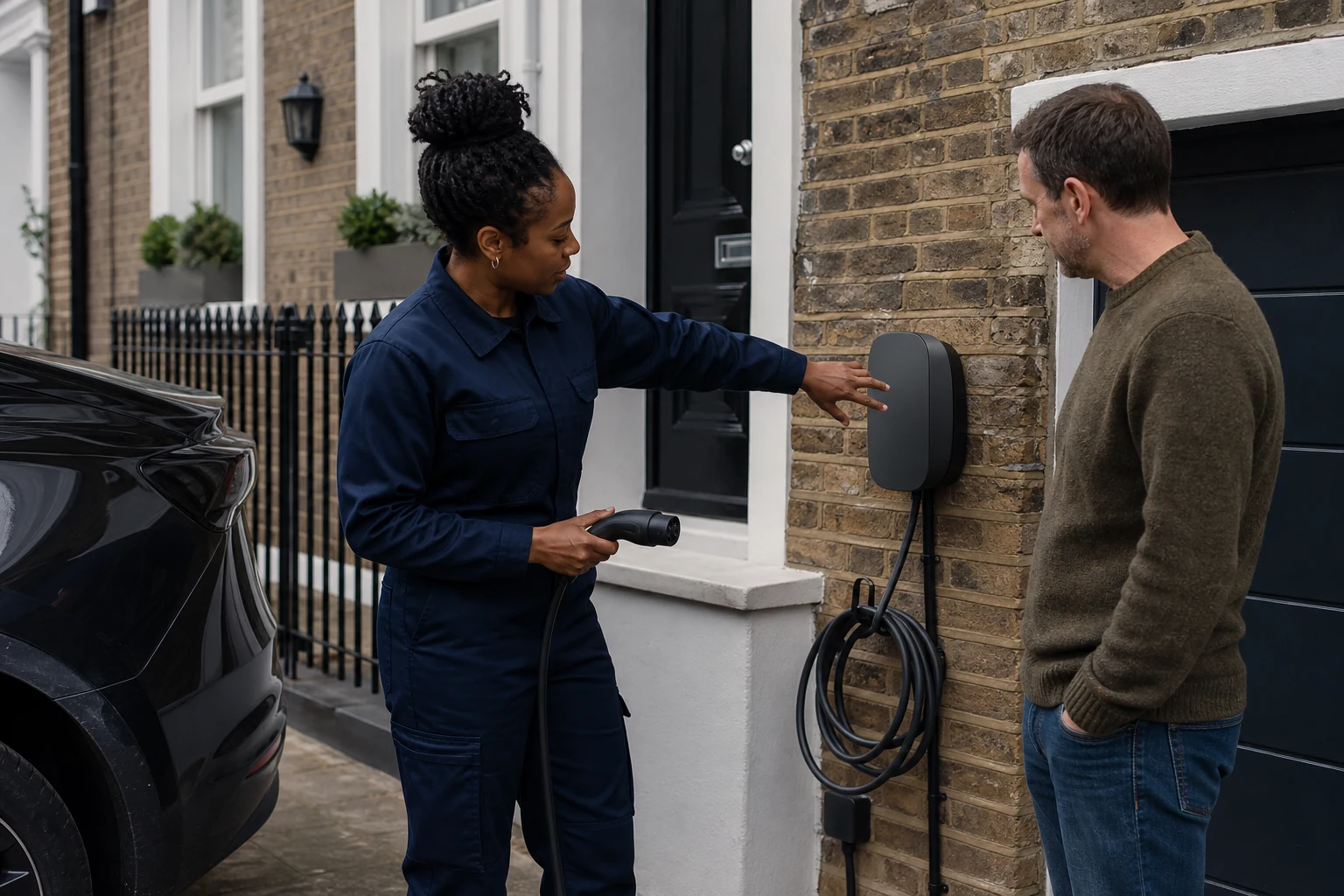
Common reasons customers call
The household needs a charger installed before relying on regular overnight charging.
A dedicated point would provide safer cable management and planned charging control.
The route needs assessment through rooms, external walls, gardens or outbuildings.
Wi-Fi, mobile signal, scheduling and vehicle compatibility need checking before selection.
Why Alesta for EV charging
The charger load is considered with the existing installation before a circuit is designed.
Cable position, penetrations, containment and reinstatement are discussed before work.
Charger rating, protection and communication features are selected for the site and vehicle.
Testing, app setup and operating guidance close the installation rather than ending at mounting.
A designed charging circuit
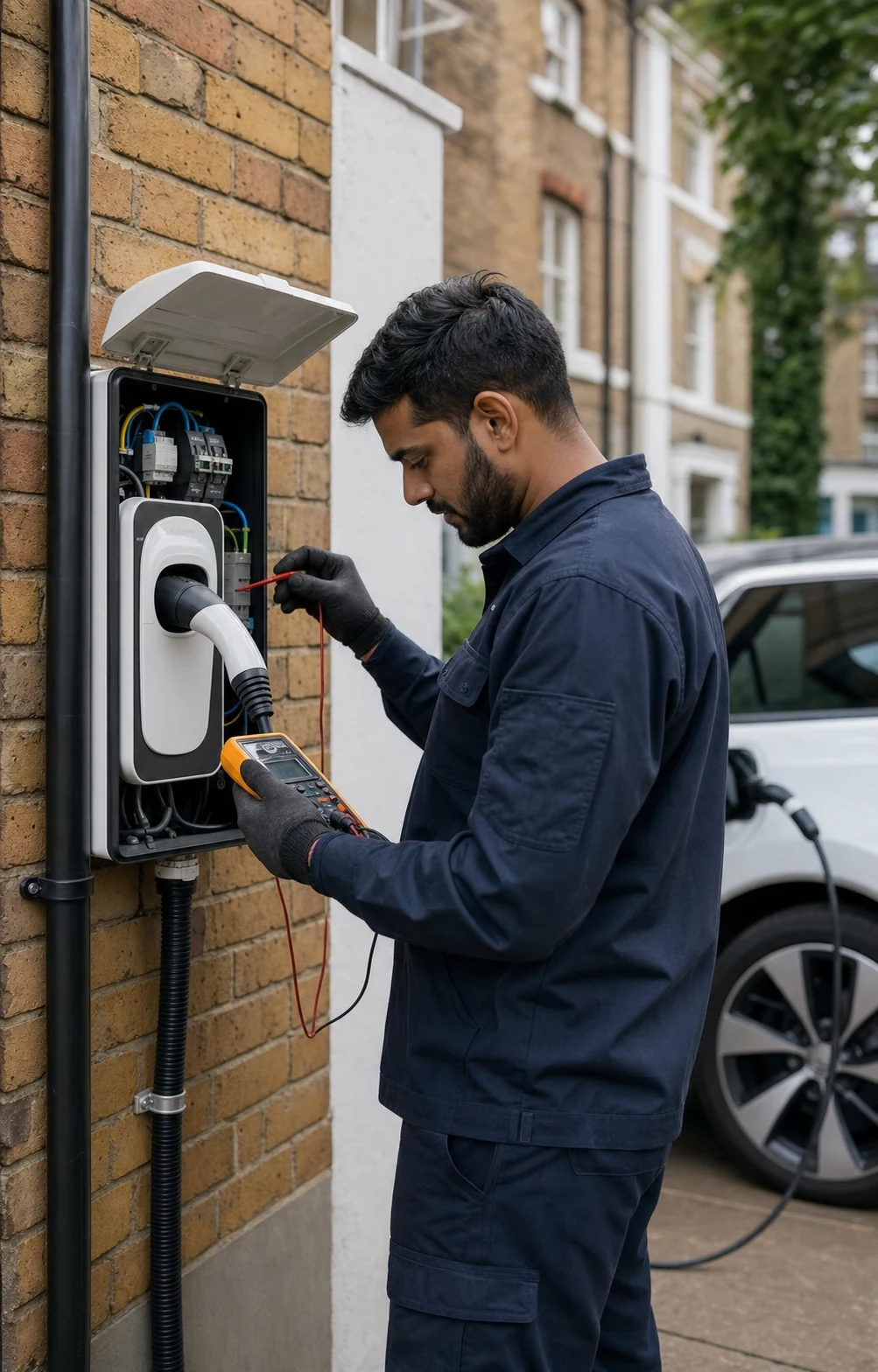
The process starts with the vehicle, parking arrangement and electrical supply. We ask for photographs of the meter, service head, consumer unit, proposed charger position and route between them. The electrician reviews available capacity, earthing, existing protective devices and whether load management may be required. Permission from a landlord, freeholder or parking-space owner remains the customer’s responsibility and should be secured before work begins.
A survey confirms cable length, wall construction, external exposure and any ground or communal area that the route would cross. The charger is positioned so the lead reaches the vehicle without creating a regular trip hazard or obstructing doors and paths. Wi-Fi or mobile connectivity is checked if smart control is important. Groundworks, trenching, specialist fire stopping and decorative reinstatement are listed separately where needed.
During installation, the relevant supply is isolated and the new circuit is run using suitable cable, support, containment and protection for the environment. The charger and associated protective equipment are fitted to the agreed design. Penetrations are sealed appropriately and the route is kept consistent with the survey unless a concealed obstruction is discovered. Any change with cost or visual impact is explained before proceeding.
The completed circuit is inspected and tested before the charger is energised. The unit is commissioned, connected to its app or network where included, and a charging check is completed with compatible equipment when possible. The electrician explains isolation, normal indicators, cable care and what to do if a fault appears. Applicable certification and notification are handled for the completed scope, leaving the customer with a usable system rather than an unexplained box on the wall.
Clear pricing
The total depends on charger model, supply capacity, cable length, route, groundworks, protective equipment and connectivity.
| Service scope | Price | What affects the final price |
|---|---|---|
| Standard installation labour and circuit | From £500 | Short route, suitable consumer unit, standard mounting and access |
| Charger supply and installation | Typically £800–£1,500 | Unit, cable length, protection, commissioning and network setup |
| Complex route or supply upgrade | Quoted after survey | Groundworks, outbuilding, load management, board or supply changes |
Pricing context: Audited Alesta data includes installation elements from several hundred pounds and complete charger projects commonly from about £800. A supply and route survey is required before confirming the total.
How the service works
Send the vehicle, charger preference, electrical intake and proposed location.
The electrician confirms protection, cable route, access and any enabling work.
The circuit and charger are completed, configured and handed over with records.
EV charger installation FAQ
Useful answers about supply capacity, routes, permissions, smart features and pricing.
☎ Call 020 3608 3976Yes. The supply, earthing, consumer unit, charger position and cable route must be assessed before the design and price can be confirmed.
Not automatically. Available supply capacity, other loads and network arrangements determine whether that rating is suitable or load management is required.
Often, but route length, ground protection, ownership, access and any trenching or fire stopping must be included in the survey.
If you do not own the relevant wall, parking space or route outright, obtain written permission before installation. Communal areas may involve further approvals.
Many smart units support schedules, but tariff, charger, app and vehicle compatibility should be checked before the unit is selected.
Applicable electrical testing, certification and notification for the completed installation are provided as required by the agreed scope.
Charger model, supply upgrades, cable length, route, groundworks, protective equipment, connectivity and access all influence the quote.