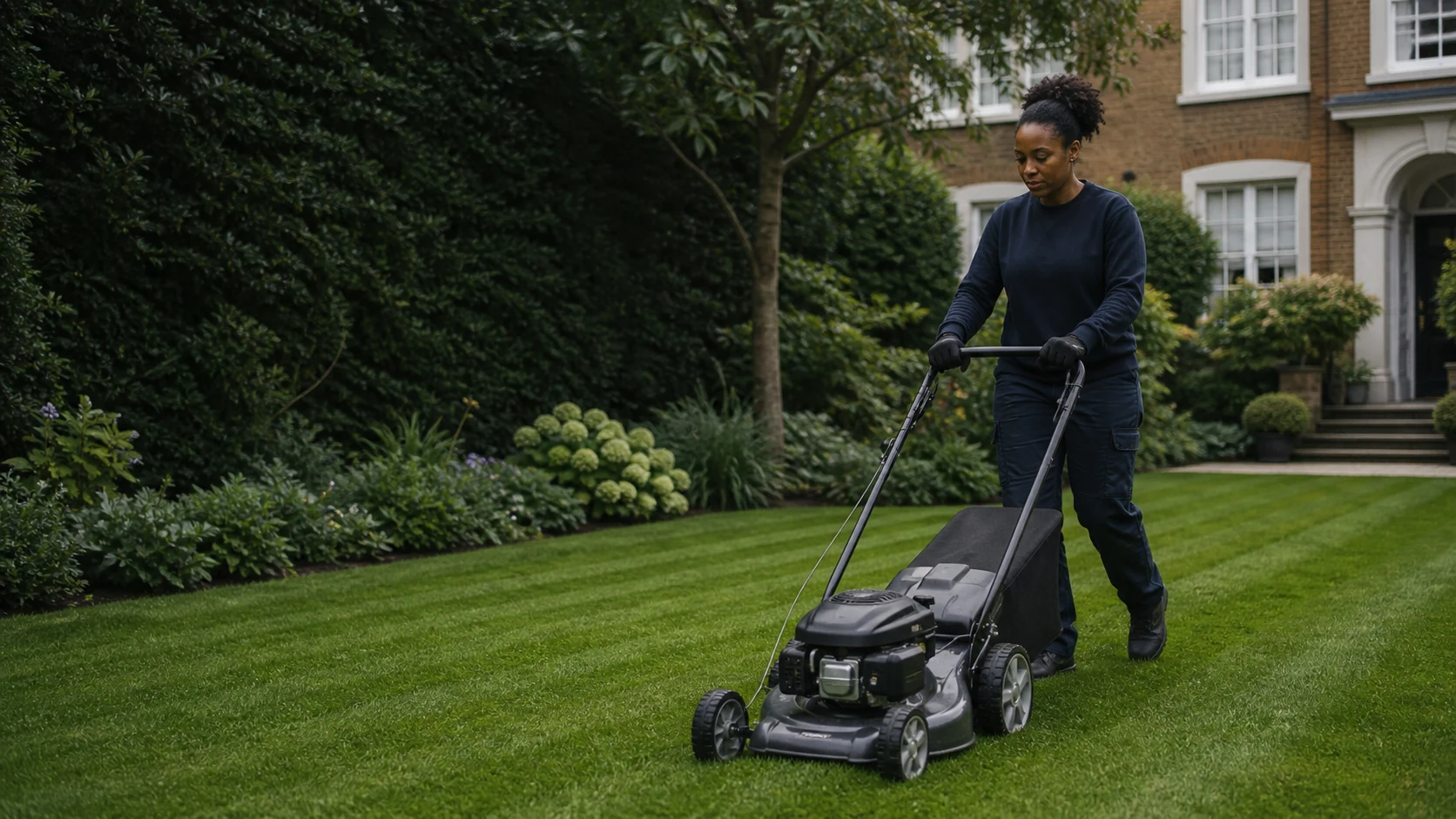
Mowing and edging
Cut height and frequency are adjusted to growth, weather and the agreed finish.
Alesta · Lawn care in London
Practical lawn care shaped by current condition, grass growth, shade, soil, access and the level of finish you want—not a one-treatment promise.
☎ Call 020 3608 3976Condition before treatment
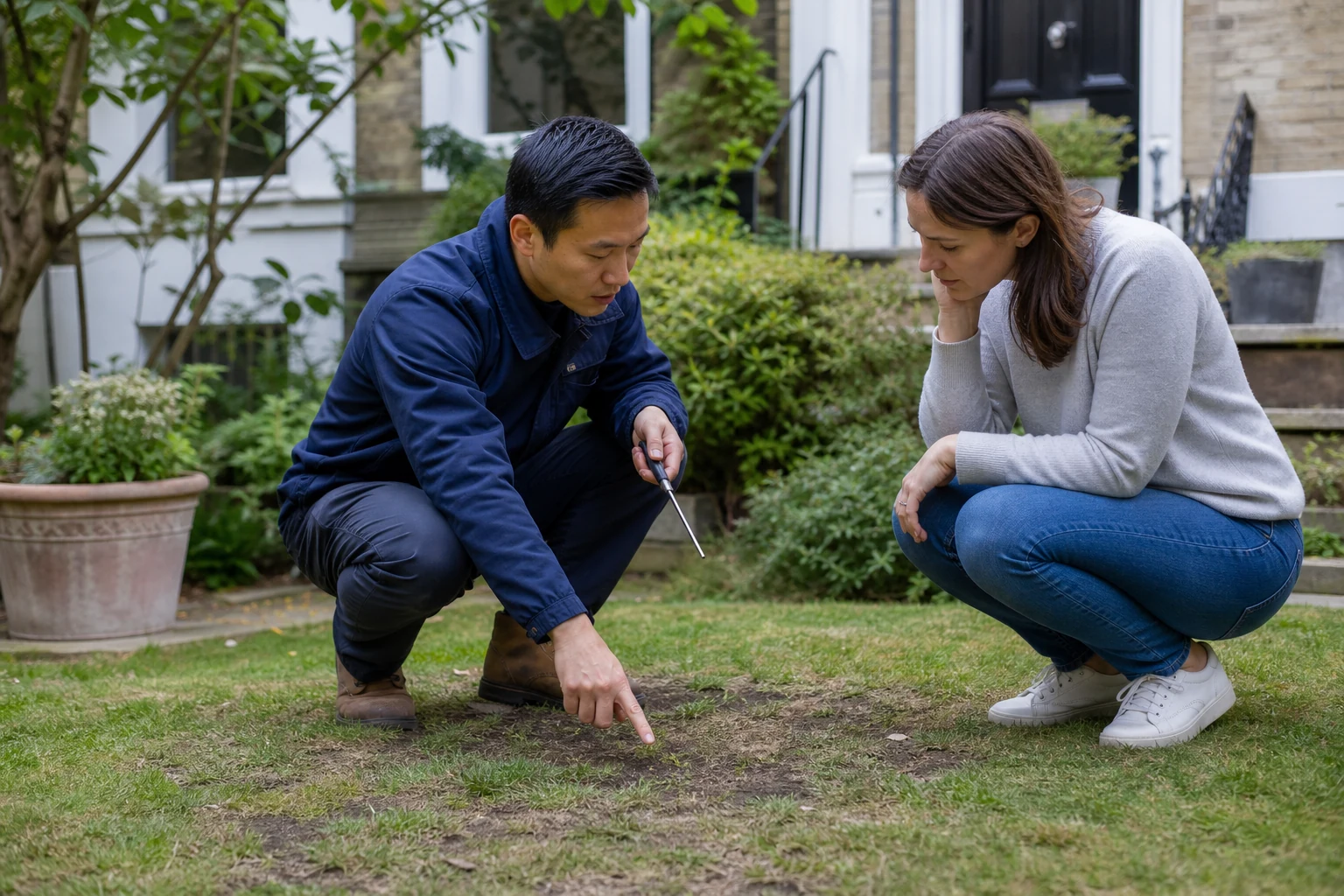
Uneven colour, moss, weeds and bare patches can have different causes. Heavy shade, compaction, poor drainage, close mowing, pets and drought need different responses, so applying a generic product may offer little lasting improvement.
We establish the lawn area, current condition, access, mowing frequency and desired result. Routine cutting is separated from scarifying, aeration, overseeding, feeding, turf replacement and drainage work so the visit matches the real need.
Cut height and frequency are adjusted to growth, weather and the agreed finish.
Shade, compaction, moss, weeds and worn routes are considered before treatment.
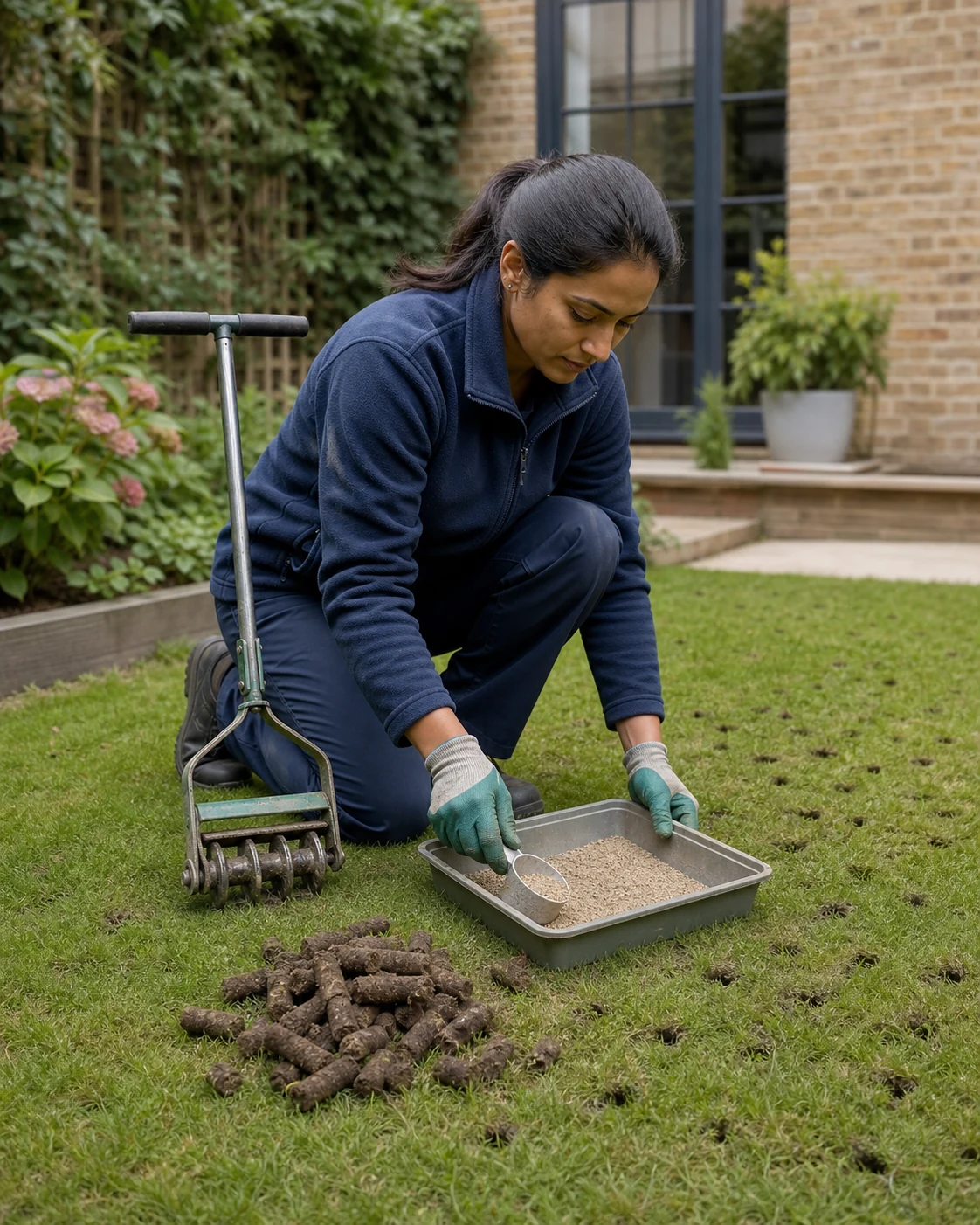
Aeration, scarifying, feeding or overseeding is recommended only where appropriate.
Watering, access and follow-up expectations are explained for treated or newly seeded areas.
Common reasons customers call
Shaded, compacted or heavily used areas are thin while other sections grow quickly.
The surface feels spongy and healthy grass struggles to reach soil, air and nutrients.
Wear, pets, drought or poor seed contact prevents consistent establishment.
The lawn needs a realistic recovery plan rather than an aggressive one-off treatment.
Why Alesta for lawn care
Treatment follows visible conditions, use and site factors rather than appearance alone.
Seeding, feeding and invasive work are scheduled for suitable weather and growth.
Routine mowing, renovation, turfing and drainage are treated as distinct levels of work.
Watering and temporary access restrictions are set out before improvement work begins.
A seasonal approach
We begin with the lawn as it is now. Photographs and measurements help establish size, slopes, gates, steps and obstacles, while a visit can assess shade, moisture, compaction, mowing height, thatch, moss, weeds and wear patterns more reliably. We ask about pets, children, irrigation and previous treatments because these influence both the cause and the safe programme. The intended result matters too: a robust family lawn needs a different plan from a fine ornamental surface.
For routine maintenance, debris and hidden objects are checked before machinery starts. Grass is cut at a height appropriate to season and current growth rather than reduced drastically in one visit. Edges and accessible boundaries are finished to the agreed scope, and clippings are collected or managed as specified. Wet, frozen, scorched or excessively long grass may require a changed method or return visit because forcing machinery through unsuitable conditions can damage the surface.
Improvement work is selected from evidence. Scarifying can reduce excess thatch and moss but temporarily leaves the lawn looking open. Aeration relieves certain types of compaction and supports air and water movement. Overseeding requires suitable seed, soil contact, temperature and dependable watering. Feed or weed treatment must be appropriate for the grass, season, pets, nearby planting and legal product instructions. Severe waterlogging, failed levels or poor soil construction may require landscaping or drainage rather than repeated lawn products.
At completion, the gardener explains what was done and what the lawn needs next. Newly seeded areas may need restricted use and frequent gentle watering; treated grass can have mowing or access guidance. Improvement is biological and therefore develops over time, subject to weather and aftercare. We do not promise an instant uniform lawn where shade, roots, drainage or heavy use remain unchanged. A sensible plan measures progress across suitable visits and adjusts treatment rather than repeating it automatically.
Clear pricing
Cost depends on lawn area, grass length, slope, access, obstacles, condition, treatment and whether green waste is removed.
| Service scope | Price | What affects the final price |
|---|---|---|
| Routine mowing and edging | Quoted after assessment | Area, growth, frequency, access, obstacles and clippings |
| Scarifying or aeration visit | Quoted after assessment | Lawn size, machinery access, passes and waste volume |
| Overseeding or lawn renovation | Detailed quotation | Preparation, seed, soil, treatment, watering and follow-up |
Pricing context: Photographs and approximate dimensions are needed for an initial estimate. Turf replacement, levelling, irrigation and drainage are separate landscaping scopes unless specifically included.
How the service works
Share size, access, shade, pets, current issues and the finish you want.
We define mowing, renovation or treatment according to condition and timing.
The lawn is worked to scope and watering, access and follow-up are explained.
Lawn care FAQ
Useful answers about mowing, moss, seeding, weather, pets, preparation and pricing.
☎ Call 020 3608 3976Frequency depends on season, rainfall, grass type and the desired height. Regular moderate cuts are generally better than removing a large proportion of growth occasionally.
Scarifying can remove substantial moss and thatch, but the underlying shade, moisture, acidity, compaction or mowing practice must also be addressed to reduce recurrence.
Seed needs suitable soil temperature, moisture and preparation. Spring and early autumn are often useful, but weather, shade and the ability to water are more important than a calendar date alone.
Light conditions may be manageable, but saturated ground, heavy rain, frost or extreme heat can damage the lawn or make treatment ineffective. The visit may be adjusted or rescheduled.
Tell us about household use before booking. Any product must be applied to its instructions, with stated drying or exclusion periods followed exactly.
Remove toys, furniture, pet waste, hoses and small objects, unlock access and identify irrigation heads, cables or hidden obstacles. Avoid watering immediately before mowing unless advised.
Area, grass height, slope, gates, obstacles, condition, machinery needed, waste, treatment materials, parking and visit frequency affect the quote.