
Leaves
Wet leaves can settle into layers and slow water moving towards an outlet.
Rainwater routes · access · clear scope
When leaves and sediment reduce the open space in a gutter, rainfall may pool or spill where it should not. Gutter cleaning in Borehamwood covers the accessible channels named in your agreement, together with reachable outlets where included. It removes ordinary debris rather than repairing fittings, tracing hidden downpipe restrictions or dealing with underground drains.
Seasonal context
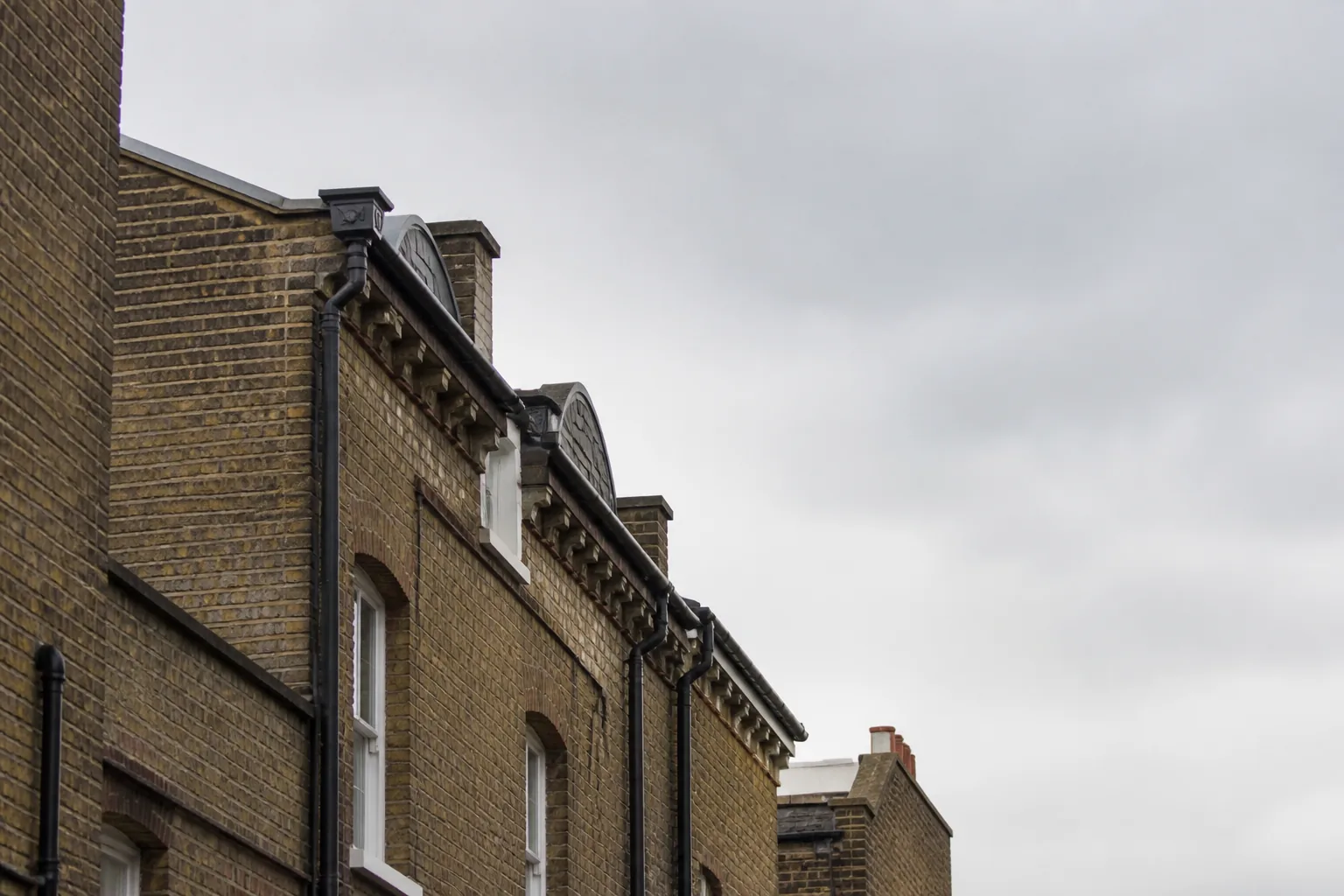
Leaf fall can make autumn an obvious time to look, yet roof moss and fine wind-blown material build up throughout the year. A sheltered side might retain damp debris longer than an exposed one. Let the condition of each channel guide the timing.
Nearby trees, roof moss, gutter shape and exposure can all affect how quickly material accumulates. A visible symptom is more useful than applying one fixed timetable to every address.
Common causes
A few leaves can trap smaller fragments, which then retain moisture and collect silt. Over time, this layered material narrows the channel and may cover an outlet entrance. Clearing the accessible area gives rainwater more room, without making claims about hidden pipework below it.
Wet leaves can settle into layers and slow water moving towards an outlet.
Loose roof moss can collect in the channel and hold other material in place.
Small twigs can bridge narrow points and trap lighter debris behind them.
Loose surface material may wash down from the roof during wet weather.
Older material can become dense and reduce the channel available for runoff.
Fine deposits can gather beneath larger debris and close to an outlet.
Local property context
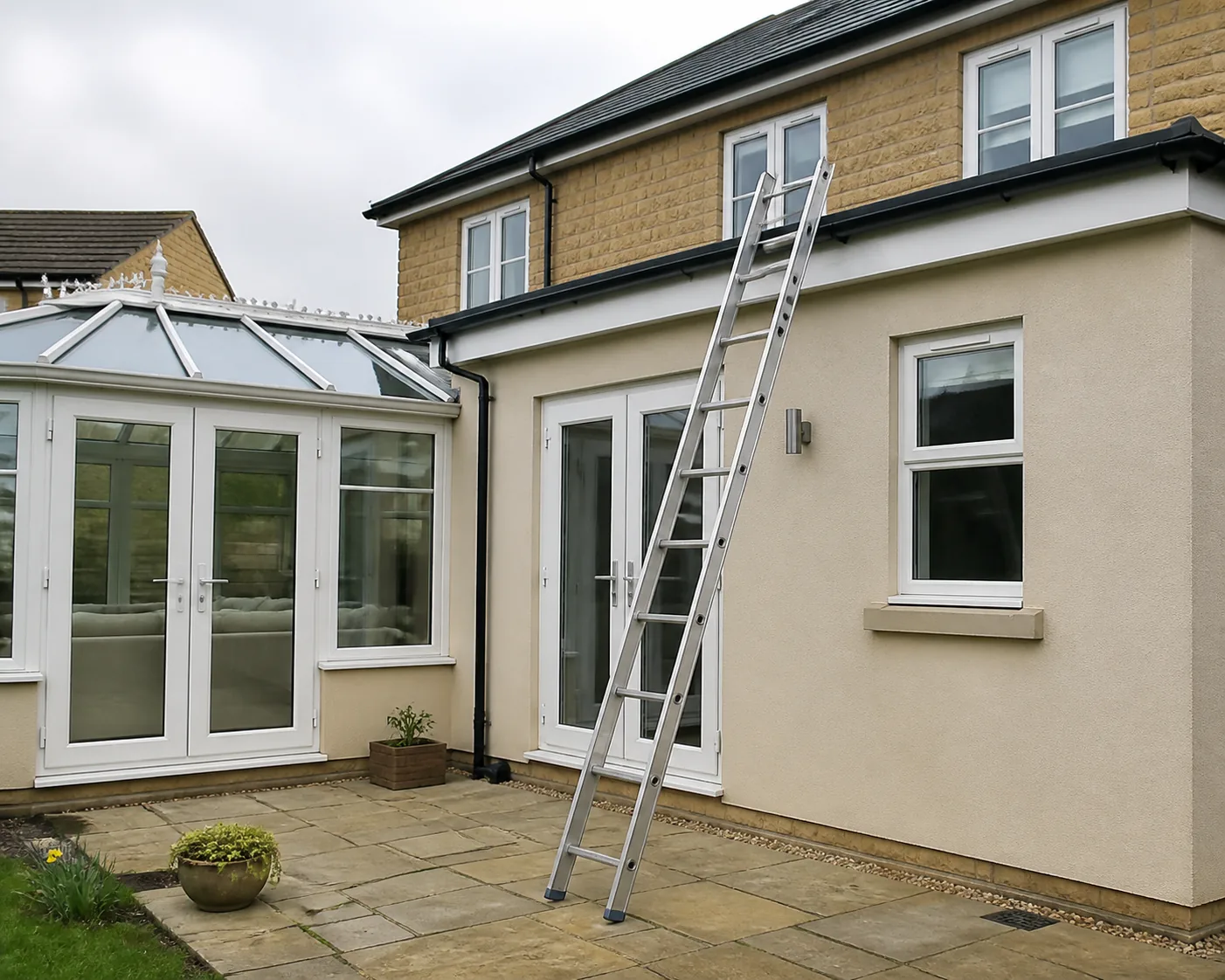
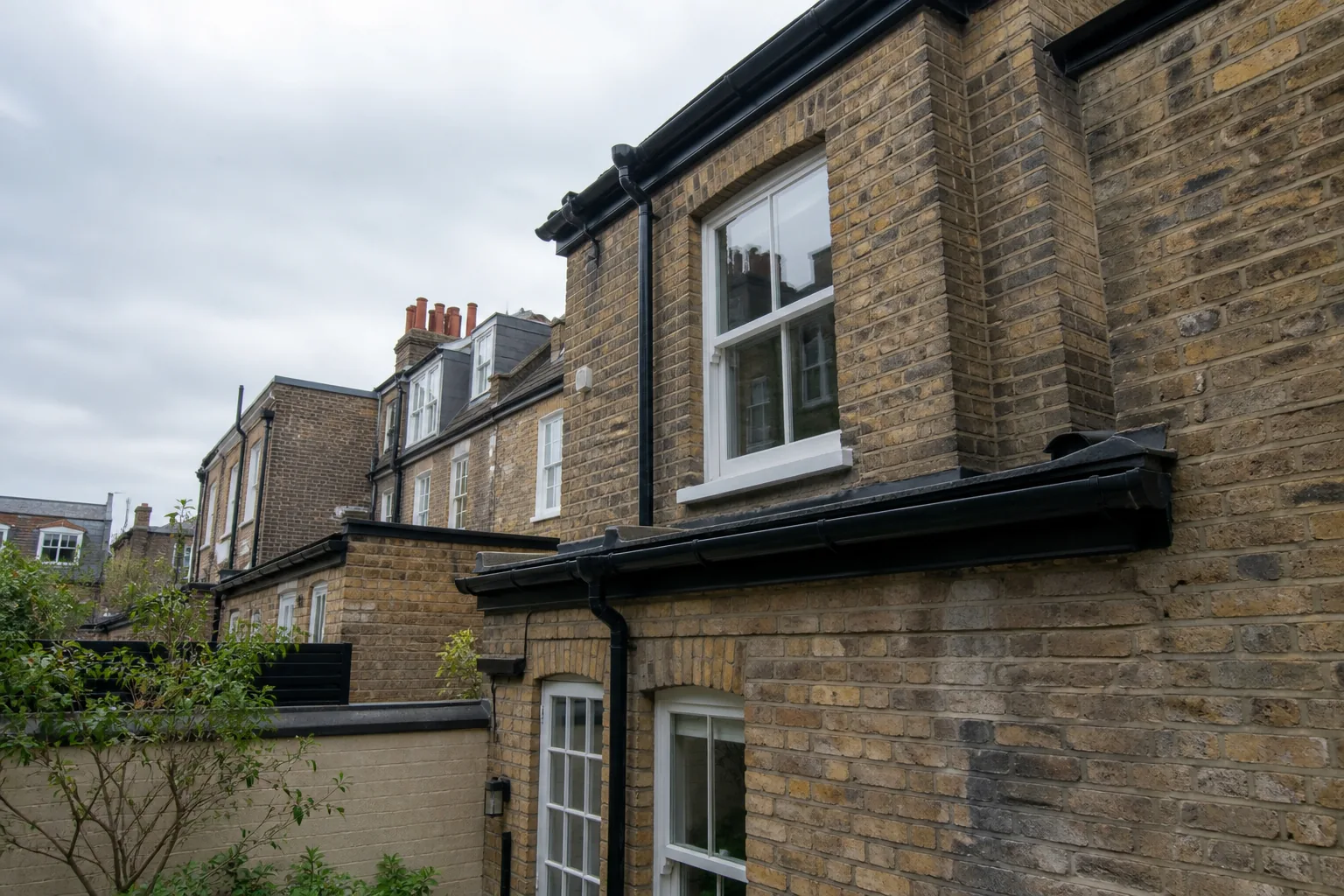
A Borehamwood home may present quite different conditions at the front and back. One side could have a direct approach, while the other may sit beyond an extension, enclosed garden or shared route. Garages, porches and lower additions can also carry gutters that are separate from the main roof. The initial conversation should identify every elevation requiring attention, along with building levels and practical obstructions. This address-specific view is more useful than assuming access from whether a house is terraced, semi-detached or detached.
Overflow should be described as precisely as possible. Water spreading over a long edge can reflect widespread build-up, while a concentrated spill may sit near a blocked outlet or defective joint. Stains alone can remain after an older event and do not establish what is happening now. The cleaning task is to remove routine loose matter from sections within reach. Cracks, sagging runs, broken brackets and resistance deeper in the rainwater system are different problems, even when they appear alongside leaves in the channel.
Whether a run can be reached depends on its height and surroundings. Rear structures, narrow passages, boundary fences, stored items and different ground levels may all matter. Describe the route to each elevation and arrange any permission needed for communal areas in advance.
| Property situation | Access or gutter consideration |
|---|---|
| Semi-detached houses | Side access may help with one elevation, but gates and adjoining rooflines still need clarification. |
| Homes with rear extensions | The addition may have its own gutter and may screen the original upper run. |
| Flats and converted buildings | Responsibility for communal roofline sections and access permission should be confirmed. |
| Properties with porches or bay roofs | Short lower channels should be listed if they are to be cleaned. |
A clear service sequence
Structured service guide
| Part | Routine scope | Separate scope |
|---|---|---|
| Open accessible channel | Lift common loose debris | Fix cracks, joints or supports |
| Outlet entrance within reach | Remove covering material | Investigate resistance below |
| Buried drain connection | Not included | Drainage work |
Structured service guide
| Symptom | Cleaning is relevant when | Repair may be relevant when |
|---|---|---|
| Long-edge overflow | Material reduces channel space | The run is poorly aligned |
| Water under a joint | Debris causes backing up | The union has failed |
| Channel pulling away | Contents can be removed if agreed | Brackets or fascia need attention |
Structured service guide
| Factor | Practical effect |
|---|---|
| Number of separate runs | Sets the requested area |
| Front and rear access | Can differ at one home |
| Several building levels | Changes the access picture |
| Loose or compacted debris | Changes the clearing work |
Structured service guide
| Where the home has | The enquiry should cover |
|---|---|
| A deep rear addition | Whether it screens the upper gutter |
| A shared side passage | Permission and unlocked access |
| A porch and bay | Which lower channels are included |
| A communal roofline | Responsibility for the named section |
Quick answers
A rear-only request can be considered when the section and route are clear. An extension or enclosed access may affect reach, so describe the layout before assuming that the run is included.
Leaves, moss, silt and similar loose organic build-up are typical. Fixed objects, building waste or unusual material can change the task and should be assessed before anyone treats it as ordinary cleaning.
Not necessarily. Removing debris from a reachable outlet mouth may help, but a restriction can remain lower inside the pipe. Concealed sections and underground connections fall outside routine channel cleaning.
An extension can add a separate gutter and block the approach to an upper one. Its depth, position and roof arrangement help determine which sections can be included in a realistic agreement.
No. Removing the weight of wet debris may reduce strain, but supports and alignment are repair matters. A channel that still dips when clear needs separate assessment rather than further cleaning.
A safely taken ground-level image can show roof levels, additions and access routes. It helps explain the request, although it cannot by itself confirm that every visible channel will be reachable.
Borehamwood service area
Nearby gutter-cleaning pages
Before booking
The agreed accessible channels are cleared of ordinary leaves, moss, silt and comparable debris. Reachable outlet mouths may be included when confirmed. Repairing components, clearing deep downpipes and investigating underground drainage are separate services, not implied parts of the clean.
Yes. A channel with poor fall, a failed joint, a restricted downpipe or heavy roof discharge can all cause spilling. Cleaning is appropriate where debris occupies accessible areas, but it should not be presented as the answer to every possible cause.
Establish who is responsible for the relevant roofline and whether permission or shared access is required. The sections requested should be clearly identified before booking. A routine visit cannot assume authority to work on every connected channel around a divided building.
They can gather leaves and sediment despite their shorter length. Porches, bays and additions may also drain through their own outlets. Include them explicitly in the enquiry, because asking about the main roof does not automatically cover every lower feature.
Debris may force water to rise and track behind the channel, but roof-edge details, alignment or damaged parts can also be responsible. Clearing accessible build-up is a sensible step when present; continued tracking calls for a separate inspection.
No. Visibility from the garden does not establish access. The extension's depth, roof surface and position relative to the upper channel can restrict the approach. Share the arrangement early so that an inaccessible run is not promised as part of routine work.
Yes, where loose moss occupies an accessible channel or covers an outlet entrance. Moss can hold moisture and trap finer particles. The task remains limited to removal from the agreed run and does not include treating the roof itself.
There is no universal interval. Nearby planting, roof condition, channel shape and the property's previous accumulation all influence timing. Observe what returns after cleaning and how water behaves, then choose checks that match the actual pattern rather than a fixed rule.
The reachable elevations can still form a limited agreement if useful, while the excluded section remains clearly outside it. Do not describe an inaccessible run as cleaned. Any different access requirement can then be considered separately with the layout understood.
No. Clips, brackets, seals and channel pieces are components that may need repair or replacement. Routine cleaning removes debris only. If a broken support is visible, mention it beforehand so the maintenance request is not mistaken for corrective work.
Discuss the actual roofline
A useful estimate considers total requested length, separate roof levels, access restrictions and the amount of material to clear. A garage or porch adds scope only when named. Suspected leaks, component failures and deeper restrictions are not folded into routine cleaning without separate assessment.
