Gutter channel clearing
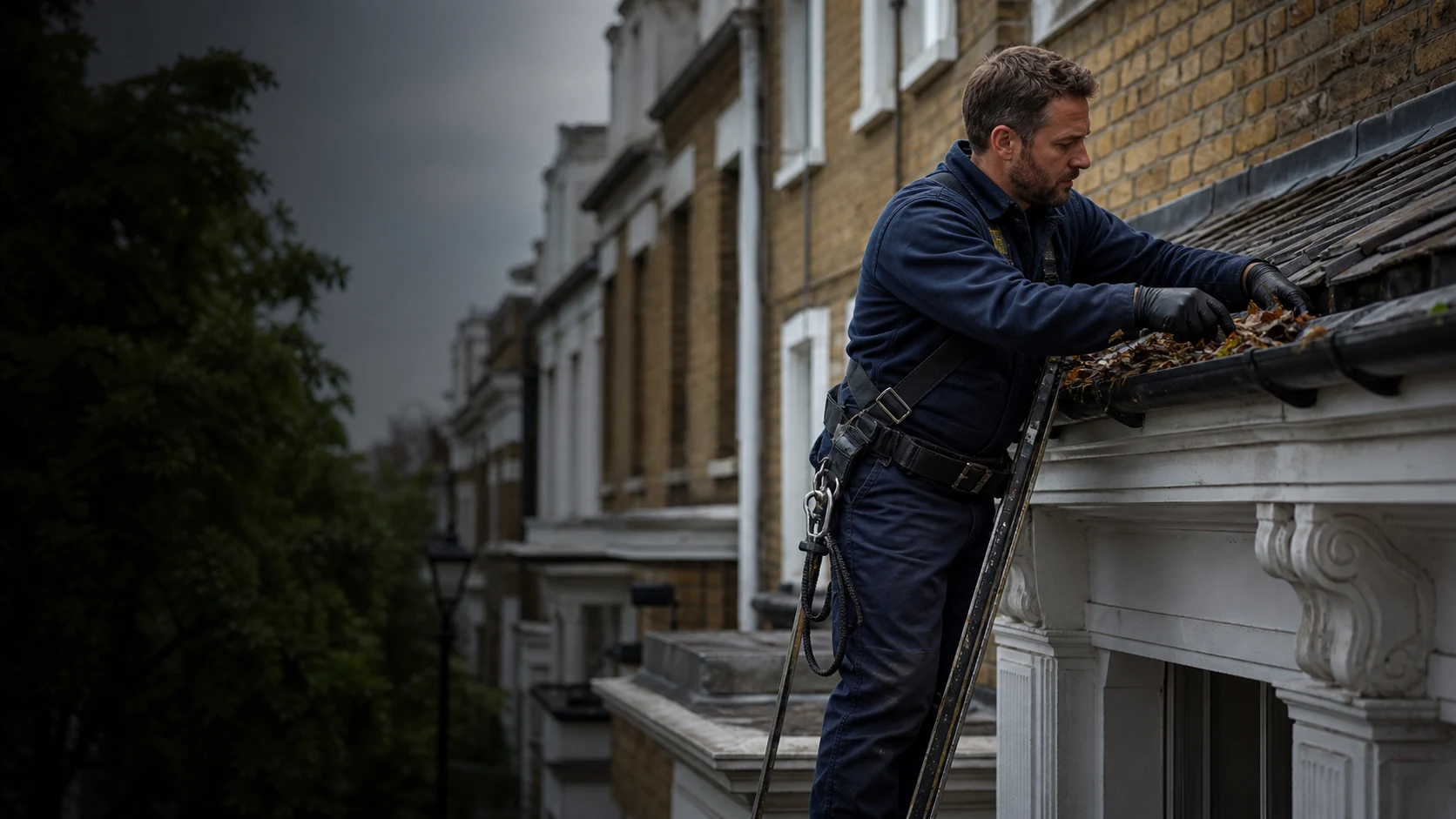
Accessible leaves, moss, silt and routine loose debris removed from agreed elevations.
Alesta · Gutter cleaning in London
Removal of leaves, silt and routine debris from accessible domestic guttering, with building height, roofline, conservatories, access and downpipe symptoms assessed before the visit.
☎ Call 020 3608 3976Roofline access before cleaning
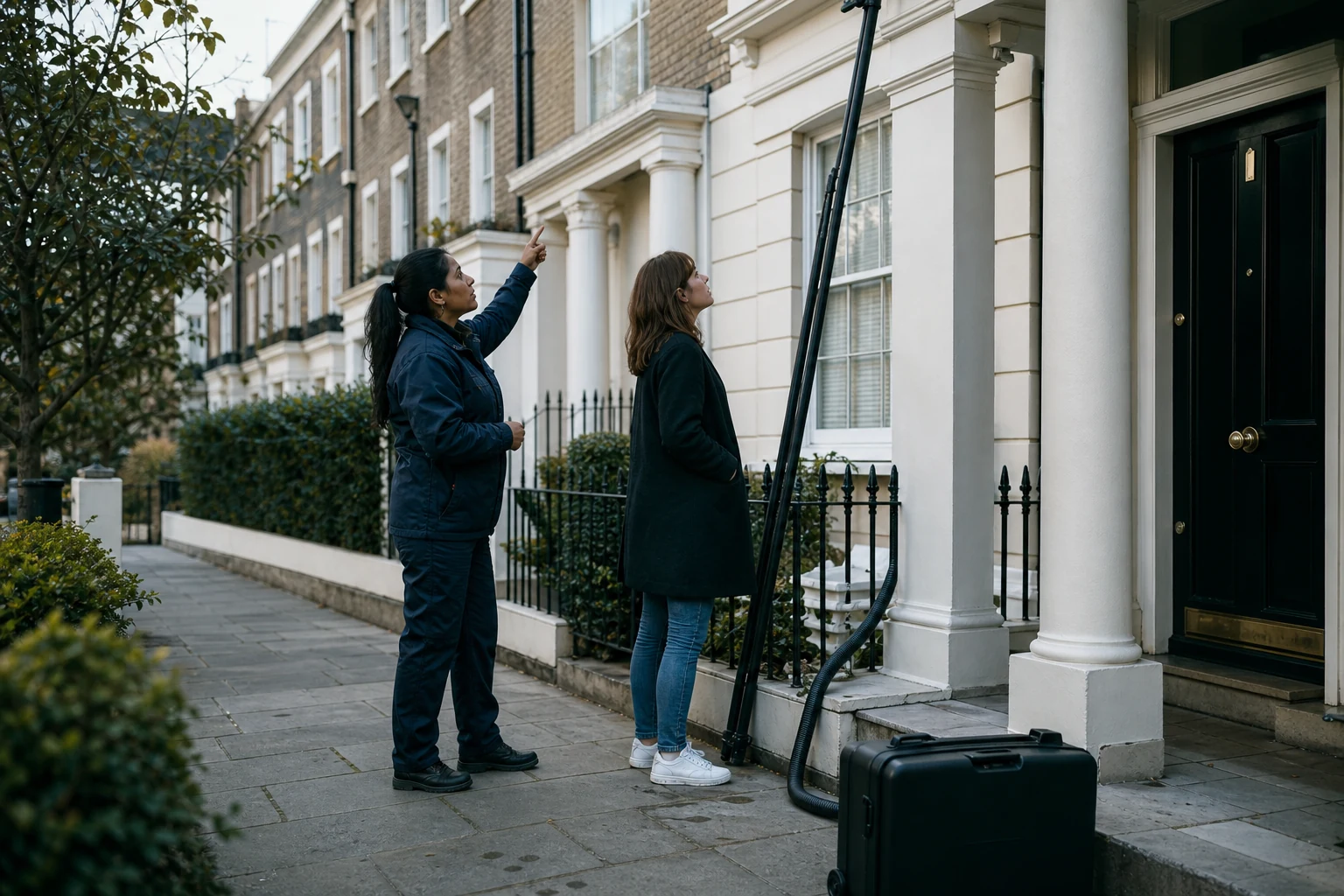
London properties can have narrow side access, basement areas, extensions, conservatories, sloping ground and several roof levels. These conditions determine whether a gutter vacuum, suitable access equipment or a different specialist method is required.
We ask for photographs of every elevation and the problem area before confirming the scope. Routine debris removal is distinguished from cracked joints, failed brackets, leaking roofs, concealed drains, pest nests and high-risk access, which may require separate work.
Accessible leaves, moss, silt and routine loose debris removed from agreed elevations.
Reachable gutter outlets checked and cleared where debris is obstructing the opening.
External symptoms and accessible connections observed without promising underground drainage work.
Cleared sections and visible defects reported, with water checks used only where suitable.
Common reasons customers call
Leaves, moss or silt may be restricting the channel or outlet during rainfall.
Accumulated organic material has created a bed that needs careful removal.
The outlet and accessible pipe need checking while buried drainage remains a separate issue.
Nearby trees and roof moss can justify planned cleaning before repeated overflow occurs.
Why Alesta for gutter cleaning
Height, extensions, conservatories, steps and ground conditions are considered in advance.
Work is postponed or re-specified when weather or building conditions make access unsuitable.
Loose debris can be removed without pretending damaged guttering has been repaired.
Separated joints, sagging runs or suspect downpipes are noted for an appropriate next step.
A safe roofline process
Planning begins with clear photographs of the front, rear and side elevations, plus close views of overflow or visible growth where possible from ground level. We ask about storeys, roofline changes, conservatories, extensions, balconies, basement lightwells, side access, gates, power availability and parking. The team selects a potential method only after these constraints are understood; customers should never climb to take photographs for us.
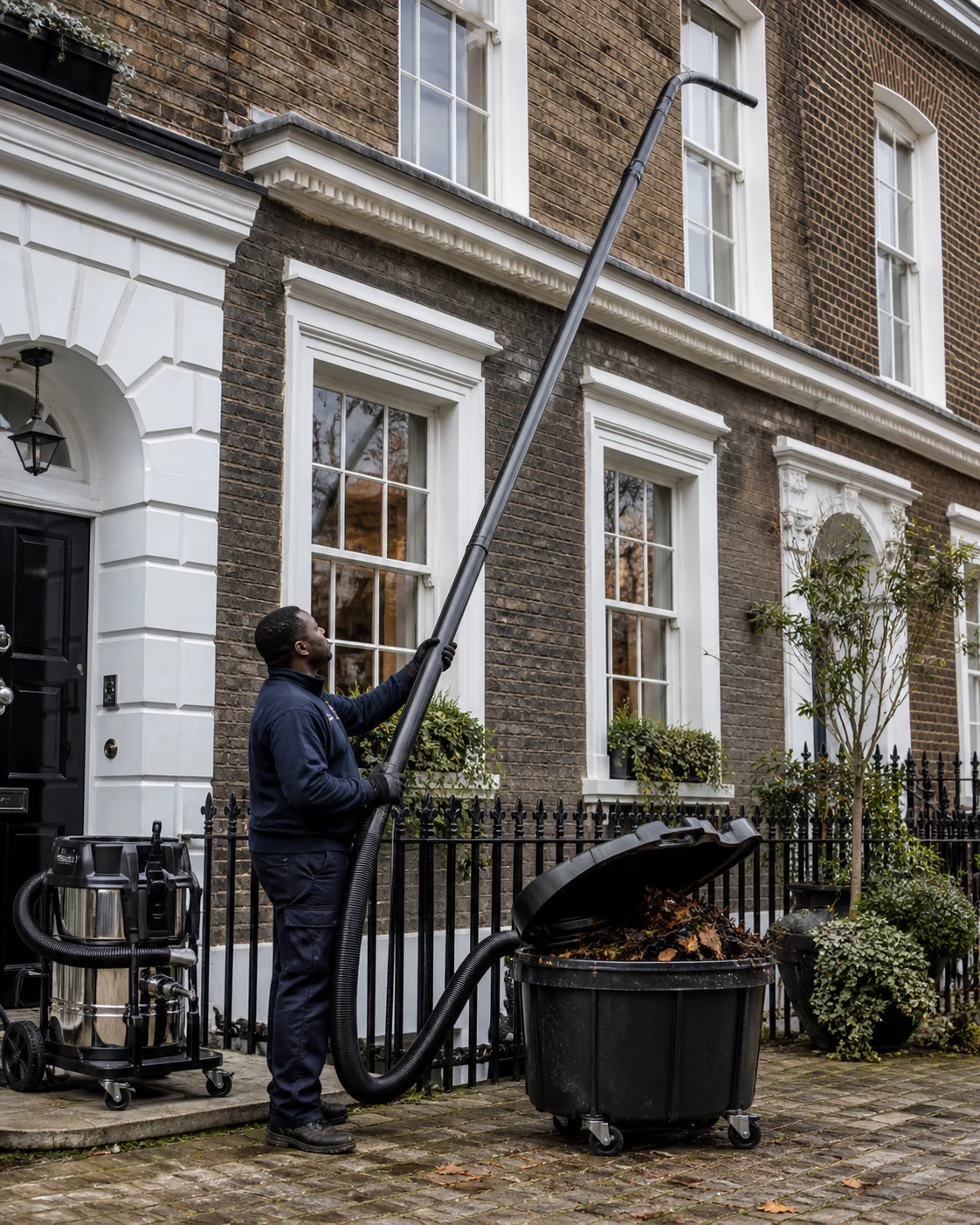
On arrival, the technician checks the working zone, weather, ground, overhead hazards and public or neighbour access. High wind, ice, lightning or unstable ground can make roofline work unsuitable. Vehicles, furniture and fragile items may need moving from beneath the area. Where a gutter-vacuum method is appropriate, poles and inspection equipment can allow work from ground level; other configurations may need access equipment or a separate specialist assessment.
The agreed gutter runs are cleared methodically, with leaves, moss, silt and loose organic debris removed without forcing material into the downpipe. Reachable outlets receive particular attention. Compacted blockage deep within a sealed downpipe, underground drain or inaccessible hopper may need additional investigation. The team avoids leaning on brittle guttering or roof coverings, and does not reseal joints, replace brackets or lift tiles unless repair work was separately surveyed and authorised.
Collected debris is contained and the immediate work area receives a practical tidy. Where conditions and the installation make it sensible, an agreed flow check may help confirm that accessible outlets pass water, but it cannot certify concealed drainage. The technician reports visible sagging, open joints, corrosion, damaged fittings or recurring roof moss. Cleaning restores available capacity; it cannot correct inadequate gutter design, a failed roof covering or a broken underground rainwater route.
Clear pricing
Cost depends on building height, total gutter length, elevations, debris level, roofline complexity, access, equipment, parking and downpipe symptoms.
| Service scope | Price | What affects the final price |
|---|---|---|
| Single accessible elevation | Quoted after assessment | Height, length, ground access, debris and working method |
| Typical house gutter cleaning | Quoted after assessment | Front and rear access, storeys, extensions and outlets |
| Complex or multi-level roofline | Quoted after assessment | Multiple heights, conservatories, restricted access and specialist equipment |
Pricing context: Current photographs of all elevations are required for a reliable quote. Gutter repairs, high-access systems, underground drainage and pest or nest removal are separate scopes.
How the service works
Send safe ground-level photos, storey details and overflow symptoms.
We agree gutter runs, access equipment, weather limits and downpipe scope.
Accessible channels and outlets are cleaned and visible defects explained.
Local guides
Choose a region to find your local guide. Please confirm your address and the work required when enquiring.
Gutter cleaning FAQ
Useful answers about access, weather, downpipes, repairs, preparation and pricing.
☎ Call 020 3608 3976From ground level, send every elevation, roofline changes, extensions, conservatories, gates, narrow passages and the area where water overflows. Do not climb to take pictures.
Sometimes. Gutter-vacuum systems can reach many rooflines from suitable ground, but property height, reach, debris and obstructions determine the safe method.
Accessible outlets and visible downpipe symptoms can be checked within the agreed scope. Deep sealed blockages and underground drainage require different equipment and assessment.
No. Loose joints, failed seals, broken brackets, corroded sections and poor falls are repair work and must be surveyed and quoted separately.
Light conditions may be manageable, but high winds, ice, lightning, heavy rain or unstable ground can make roofline work unsafe. The visit may need rescheduling.
Unlock access, move vehicles and fragile items from the working zone, notify neighbours where access is shared, secure pets and arrange parking if possible.
Storeys, gutter length, number of elevations, debris, extensions, access, equipment, parking and downpipe complexity all affect the quote.