
Leaves
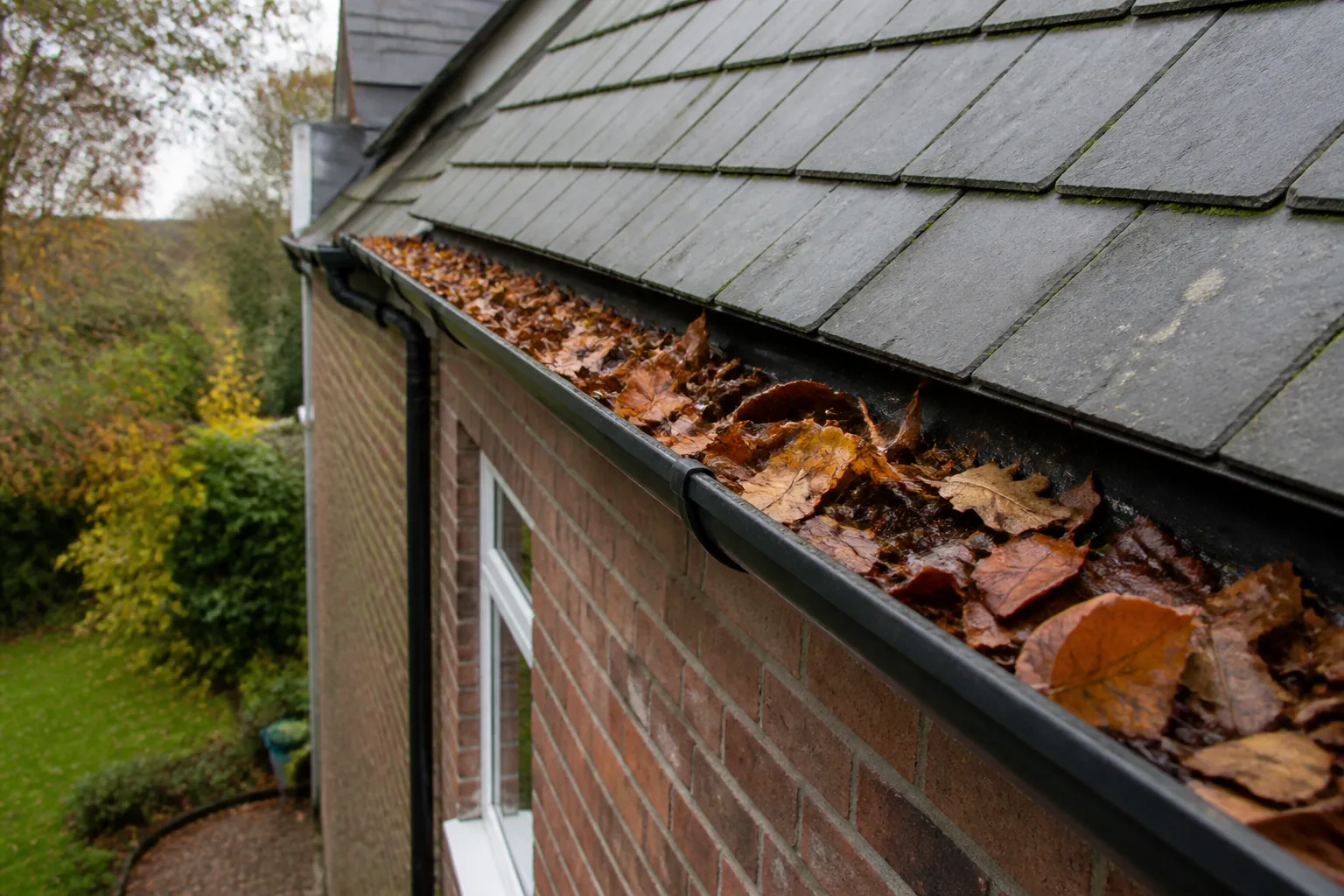
Wet leaves can settle into layers and slow water moving towards an outlet.
Rainwater routes · access · clear scope
A property with several roof edges needs a list, not a blanket assumption. For Cobham, routine gutter cleaning means clearing leaves, loose moss, silt and everyday deposits from the accessible runs agreed for service. Reachable outlet mouths can be covered when requested. Inaccessible sections, damaged fittings, deep downpipe obstructions, underground drainage and specialist access require separate decisions.
Seasonal context
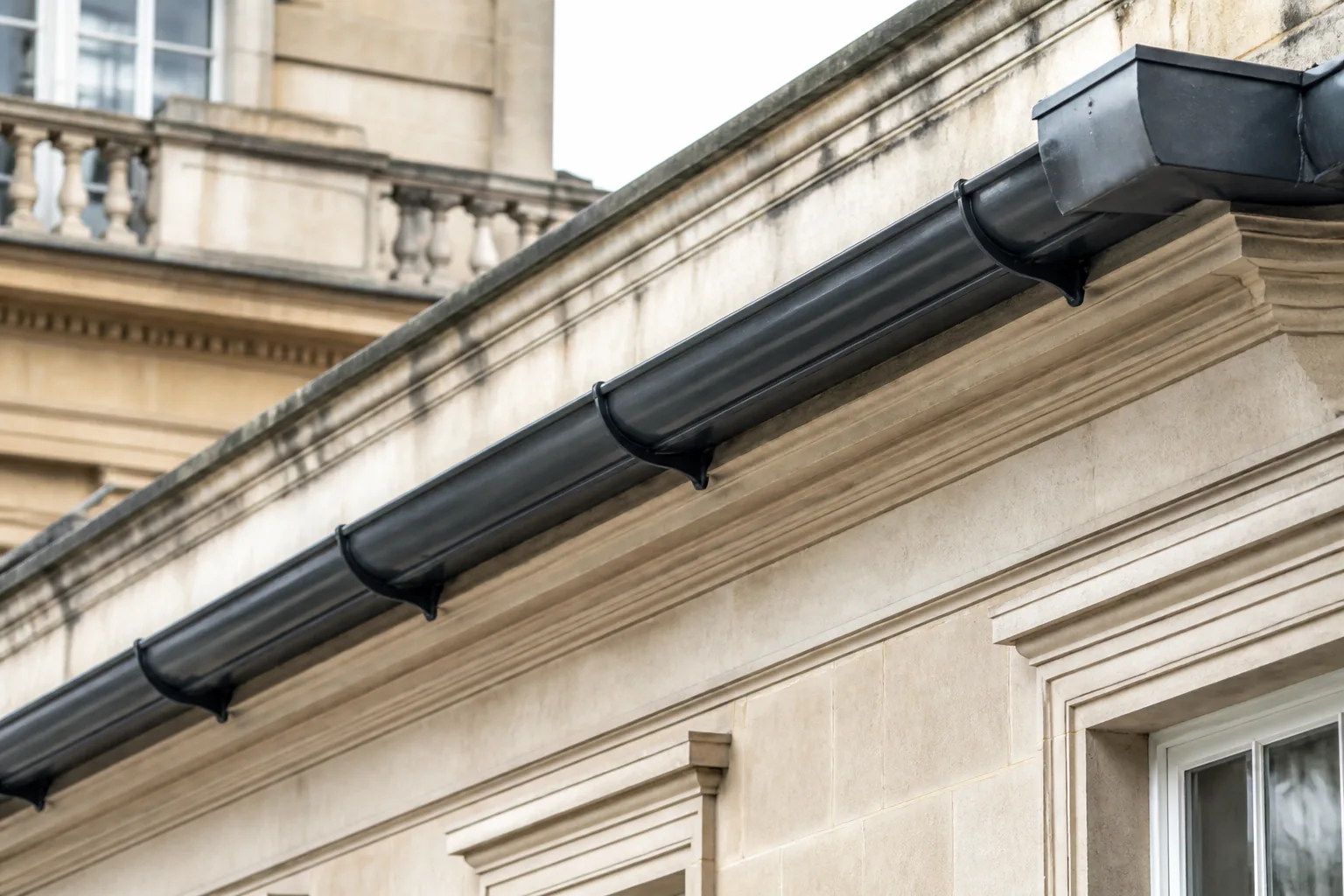
Leaf fall, seeds, loose roof moss and wind-blown grit may reach different elevations at different times. Corners sheltered by the building can behave unlike exposed straight runs. Let previous accumulation and water movement guide future checks instead of using one date for the entire address.
Nearby trees, roof moss, gutter shape and exposure can all affect how quickly material accumulates. A visible symptom is more useful than applying one fixed timetable to every address.
Common causes
A long run can be largely open yet restricted at a single corner or outlet. Conversely, fine sediment may spread shallowly across its base. The accessible extent agreed for cleaning matters more than whether the build-up is concentrated or dispersed.
Wet leaves can settle into layers and slow water moving towards an outlet.
Loose roof moss can collect in the channel and hold other material in place.
Small twigs can bridge narrow points and trap lighter debris behind them.
Loose surface material may wash down from the roof during wet weather.
Older material can become dense and reduce the channel available for runoff.
Fine deposits can gather beneath larger debris and close to an outlet.
Local property context
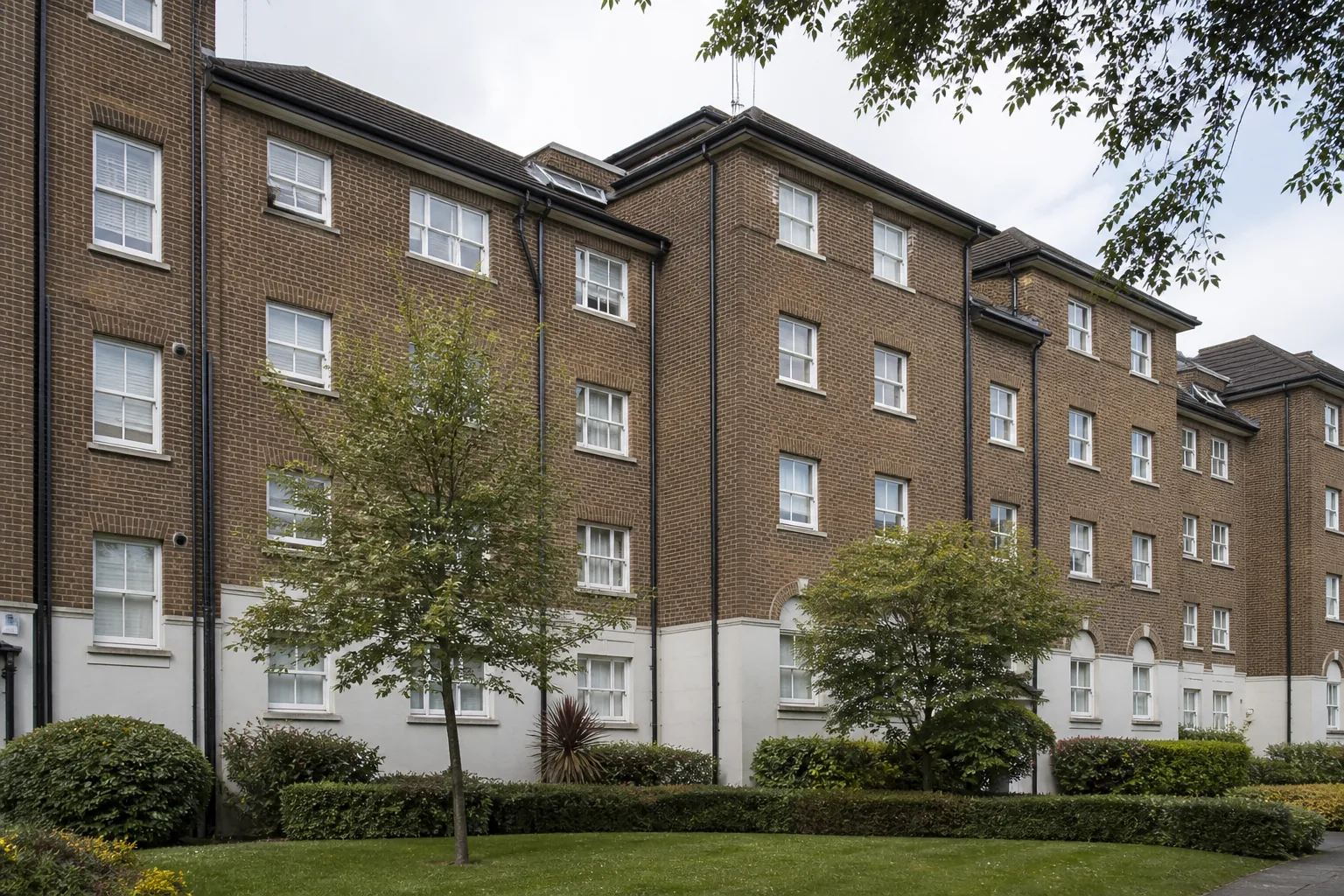
Some Cobham properties may have multiple roof levels, long side elevations or separate roofed structures; others will be much simpler. The actual layout, rather than an area-wide house type, determines the task. Identify where the reported overflow or accumulation appears and name every roof edge expected within the visit. If there is a garage, porch, extension or outbuilding, state whether its channels are required. It is also helpful to describe changes in ground height, enclosed courtyards, gates and anything directly below the eaves that could affect approach.
Once the list is clear, each symptom can be matched to the right boundary. Routine work removes accessible loose material from the selected channels and reachable outlet openings where agreed. A drip through a split, an empty section that sags or a downpipe that remains slow after its mouth is clear suggests something other than channel debris. Those conditions need repair, pipe or drainage assessment as appropriate. Keeping them out of the basic clean prevents one affected elevation from turning into an undefined promise across every roof and rainwater route at the address.
Open space at one elevation does not establish access everywhere. Roof levels, courtyards, extensions, conservatories, planting, walls and locked areas may make another side different. Each requested section is considered individually, and no particular access method is promised in advance.
| Property situation | Access or gutter consideration |
|---|---|
| House with several elevations | Front, rear and side channels may differ in height, approach and amount of material present. |
| Property with an enclosed courtyard | Entry width and the structures surrounding the space may affect which internal roof edges can be reached. |
| Home with separate roofed buildings | Every garage, workshop or outbuilding run must be named if it is expected in the agreed work. |
| Roofline above a conservatory | The structure below may alter access even when the gutter is clearly visible from the garden. |
A clear service sequence
Structured service guide
| Section | Routine action if accessible | Outside that action |
|---|---|---|
| Named house elevation | Clear ordinary loose deposits | Unlisted roof edges |
| Specified ancillary building | Attend to chosen channels | Other structures on the site |
| Reachable outlet mouth | Remove loose material if agreed | Hidden downpipe bends |
| Drain beyond the pipe | No gutter-cleaning action | Below-ground investigation |
Structured service guide
| What is observed | Clearance can do | What it cannot do |
|---|---|---|
| Silt spread along a run | Restore available channel space | Alter the gutter gradient |
| Leaves bridging a corner | Remove the accessible cluster | Confirm buried drainage is clear |
| Split or cracked fitting | Clear loose matter nearby | Mend the damaged part |
| Detached bracket | No structural correction | Provide repair within routine cleaning |
Structured service guide
| Detail | Reason for considering it |
|---|---|
| Total channel length | Defines the amount selected for clearance |
| Number of roof levels | Creates separate access considerations |
| Courtyards or structures below | May restrict the usable approach |
| Concentrated or widespread debris | Changes the clearing effort |
Structured service guide
| If the particular address includes | Useful point to confirm |
|---|---|
| Several side elevations | Which runs actually show build-up or overflow |
| A conservatory | Whether it affects access to the main eaves |
| An enclosed courtyard | How the selected internal edge can be approached |
| Separate roofed structures | Which buildings belong in the quotation |
Quick answers
Describe the building, elevation and level for each run, such as the upper rear house channel or one side of a garage. This is clearer than asking for every gutter at the address.
The connected accessible run can be scoped around that reported area if agreed. Describe the corner and nearest outlet, because a very small visible symptom may relate to material spread farther along the channel.
Leaves, loose moss, seeds, silt, grit and small twigs are ordinary channel contents. Fixed objects, contamination, roof-surface growth and anything concealed within pipework require a separate conversation.
Pricing reflects their length, level, access and build-up rather than the word ‘side’. One may be straightforward while another has a narrow route or a structure below, so actual conditions matter.
A crack is a repair matter. Loose deposits in the adjacent accessible channel may still be removed as agreed, but the clean should not be described as restoring or replacing the damaged component.
No. Routine scope ends at agreed channels and reachable outlet openings. A restriction within a buried drain or concealed lower connection needs separate drainage assessment, even if overflow first appeared at roof level.
Cobham service area
Nearby gutter-cleaning pages
Before booking
It covers only the accessible runs that have been listed and agreed. A request can include several buildings and elevations, but none should be assumed. Clear identification also shows which sections were outside the intended visit.
Each elevation may differ in height, debris, ground conditions and obstacles beneath the eaves. A separate list allows those practical differences to be considered and avoids treating a straightforward front run as proof that all others are accessible.
It may change the available approach to the channel above, depending on the exact position and layout. Mention the structure before booking. The higher run needs an access decision of its own and cannot be guaranteed from visibility alone.
Material may repeatedly collect at a turn or near the outlet, but a fitting, alignment or capacity issue is also possible. Describe when the spill occurs. Clearance addresses accessible deposits, not every possible alternative cause.
Yes. Damaged parts, unsuitable fall, restricted concealed pipework or conditions beyond the gutter can continue to affect discharge. Removing ordinary contents from the selected channel does not guarantee that the wider rainwater system has no fault.
No. The entrance, surrounding structures, roof level and usable space below all matter. Provide details of the courtyard and how it is reached. That section is included only after its practical access has been considered.
Only if you want its channels assessed and cleared within the visit. Sharing the same address does not make an outbuilding part of the house scope. Its roof edges can be left out or named expressly.
That run remains outside the routine work completed. The access limitation can be explained and any different requirement considered separately. Agreeing an elevation for assessment does not override the access conditions found at the property.
Note whether material is visible in the channel, whether water reaches the outlet and where it then appears. These clues guide assessment but may not settle the cause. Concealed downpipe restrictions remain separate from roof-edge cleaning.
Base the timing on what each side collects and how water has behaved there. Exposure, shelter, planting and roof condition can vary around one building, so all elevations need not follow the same maintenance interval.
Discuss the actual roofline
Cost is shaped by the total selected channel length, number of elevations and levels, route beneath each run and quantity of deposits. Separate buildings count only when listed. Repairs, concealed downpipe work, buried drains and any specialist access are quoted apart.
