
Can fine silt be removed?
Yes, accessible settled silt is part of ordinary debris clearance in an agreed channel. Its removal creates space for water, although it does not correct damage or poor gutter alignment.
Rainwater routes · access · clear scope
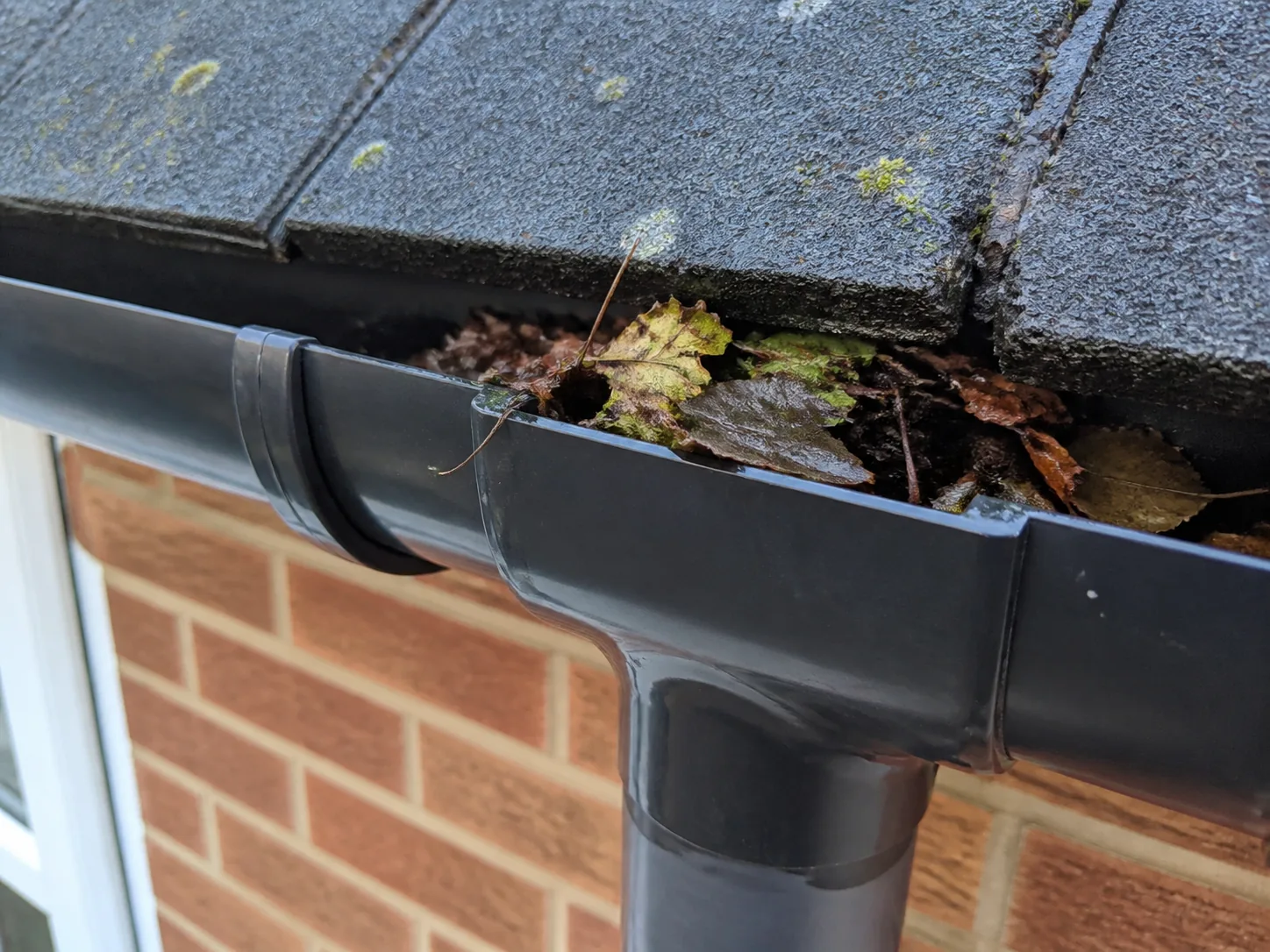
A channel does not have to look full for settled debris to affect rainwater flow. Teddington gutter cleaning removes routine leaves, loose moss and silt from the accessible sections named in the agreement, with reachable outlet openings added where confirmed. The individual roof layout and surrounding space determine reach. Repairs, internal pipe restrictions, underground drains and specialist access require separate consideration.

Local property context
Properties in Teddington may have several short channels as well as a main roof run, particularly where a porch, bay, garage or later addition is present. Some addresses could have open space at one elevation and tighter boundaries or planted areas at another. These conditional details matter more than a general property label. List every section that needs clearing, including lower roofs, and mention anything positioned beneath an upper channel. The resulting plan can then reflect what is requested and accessible rather than relying on an assumption of whole-building coverage.
Debris distribution also varies from one section to the next. Fine silt can lie below a thin layer of leaves; a clump of moss may settle at a bend; seeds can collect behind an outlet lip. These are ordinary cleaning matters when they occur in agreed accessible channels. Water escaping through a cracked piece, remaining in a clear run or backing up from below calls for a different assessment. Removing visible material does not mend guttering or reach into concealed downpipes and drains, so persistent symptoms should be followed to their likely part of the system.
Each elevation is judged on its actual height, nearby structures, boundary space, surfaces and route through the property. An addition beneath the eaves can make an otherwise visible run unsuitable for ordinary access. Such sections require a separate discussion rather than an automatic promise.
| Property situation | Access or gutter consideration |
|---|---|
| House with bay windows | Lower bay gutters should be identified separately from the main upper roof edge. |
| Semi-detached property | Side access may vary in width and does not confirm reach to every rear section. |
| Home with an outbuilding | The structure needs its own requested sides, access review and outlet scope. |
| Shared or converted residence | Confirm which party is responsible and who can authorise work to communal channels. |
Visible clues
Plant shoots, a tide line of sediment, water spilling in rain or damp debris left after a dry period may indicate reduced flow. A separated joint, twisted section or isolated drip suggests that repair could also be needed and should be mentioned early.
Structured service guide
| Feature | Within scope when agreed | Outside routine work |
|---|---|---|
| Accessible gutter run | Remove loose leaves, moss and silt | Repair or realign it |
| Reachable outlet entrance | Lift ordinary debris | Clear internal bends |
| Hidden or underground route | No clearance included | Separate pipe or drain assessment |
Structured service guide
| Condition | Cleaning contribution | Different work |
|---|---|---|
| Sediment along the bottom | Remove accessible deposits | None if flow is then normal |
| Channel pulling from a bracket | Reduce debris where safe and agreed | Support repair |
| Outlet open but discharge poor | No further visible material | Downpipe assessment |
Structured service guide
| Property detail | Effect on scope |
|---|---|
| Several short lower runs | Increases the number of sections |
| Different roof heights | Changes access by elevation |
| Boundaries and structures | May limit approach |
| Heavy or compacted material | Changes clearing effort |
| Requested outlet attention | Must be included expressly |
Structured service guide
| If there is | Clarify |
|---|---|
| A bay below an upper gutter | Whether that run can be reached |
| A narrow side boundary | Whether the route is clear and usable |
| An outbuilding | Which channels belong in the request |
| Shared rainwater goods | Who has responsibility and authority |
A clear service sequence
Quick answers
Yes, accessible settled silt is part of ordinary debris clearance in an agreed channel. Its removal creates space for water, although it does not correct damage or poor gutter alignment.
No. The service can cover selected accessible runs. Clearly identify front, side, rear and lower gutters so that excluded sections are not mistaken for part of a whole-property arrangement.
Only loose debris at a reachable opening may be covered when agreed. Bends inside the downpipe are concealed and any restriction there needs a distinct assessment.
A fixed interval may not match the property. Leaf fall, moss, shelter, roof condition and prior build-up all influence when another check becomes useful locally.
No. Water may still escape because of a failed joint, poor fall, damaged section or obstruction below the outlet. Those conditions are not solved by routine debris removal.
State which structure and elevations need attention, their approximate level and how they are approached. Outbuilding gutters are not included automatically with work requested for the main home.

Seasonal context
A burst of leaf fall can create obvious build-up, yet sediment and roof moss may arrive more gradually. Some corners stay sheltered while other runs are exposed to wind. Checks should respond to visible conditions, recent weather and previous collection points at the specific home.
Nearby trees, roof moss, gutter shape and exposure can all affect how quickly material accumulates. A visible symptom is more useful than applying one fixed timetable to every address.
Teddington service area
Nearby gutter-cleaning pages
Before booking
Routine work stops at the accessible agreed channels and reachable outlet openings specifically included. It does not cover repairing components, clearing downpipes below reach, investigating underground drainage or treating roof edges that need a different access arrangement.
A compact pocket may be blocking an outlet, or silt could be reducing depth along the bottom. A pipe restriction, poor alignment or intense roof discharge may produce similar behaviour. The exact section needs to be considered.
No. Debris can be removed from the accessible channel if appropriate, but securing or replacing a bracket is repair work. A loose support may also affect fall, so its condition should be assessed independently of cleaning.
That depends on the bay’s shape, the height of the run and the space around it. Describe the feature in advance. The upper section should only be included after its access has been assessed, not presumed from photographs.
It may indicate resistance inside the downpipe or at a lower connection, although the precise cause cannot be assumed. Routine work only addresses the reachable mouth. Investigation farther along the route needs a separate scope.
Yes. Porch, bay, garage and extension channels add separate areas even when they are short. Listing each one in advance allows access and debris to be considered properly and ensures the quotation reflects all requested sections.
It may reduce the usable space beside an elevation or alter the approach to a rear channel. Mention close boundaries, retaining walls and enclosed routes. A constrained section may have to be excluded or assessed for different access.
No. Clear gutters can help rainwater follow its intended route, but damp has many possible sources. Cleaning is relevant where overflow contributes; it should not be treated as a remedy for unrelated roof, wall, plumbing or ventilation issues.
The chosen runs, channel length, separate roof heights, access restrictions and debris volume determine the ordinary work. Details about outlet concerns and visible defects help keep later pipe investigation or repair outside the cleaning quotation.
Observe which side receives leaves, moss or wind-blown material and where overflow has returned before. One elevation may need attention sooner than another. Base future checks on those actual differences instead of assuming an identical interval all around.
Discuss the actual roofline
Expected cost changes with the number and length of selected gutters, differing roof levels, restrictions around the elevations and the amount of material present. Outlet work must be expressly included. Component repairs and concealed drainage concerns do not form part of the clearance price.
