Condition-led recommendations
Visible structure, vitality and site constraints inform the proposed work.
Alesta · Tree surgery in London
Professional tree surgery organised around species, condition, objectives, access, protected status, rigging and the people and property below.
☎ Call 020 3608 3976Assessment before cutting
Pruning, crown reduction and removal affect tree health, balance and the space around it. Species, defects, season, nesting wildlife, nearby buildings, roads and utilities all influence what work is appropriate.
We establish the objective and arrange suitable arboricultural assessment. Permission checks, traffic management, climbing, machinery, waste and stump treatment are defined before the team arrives.
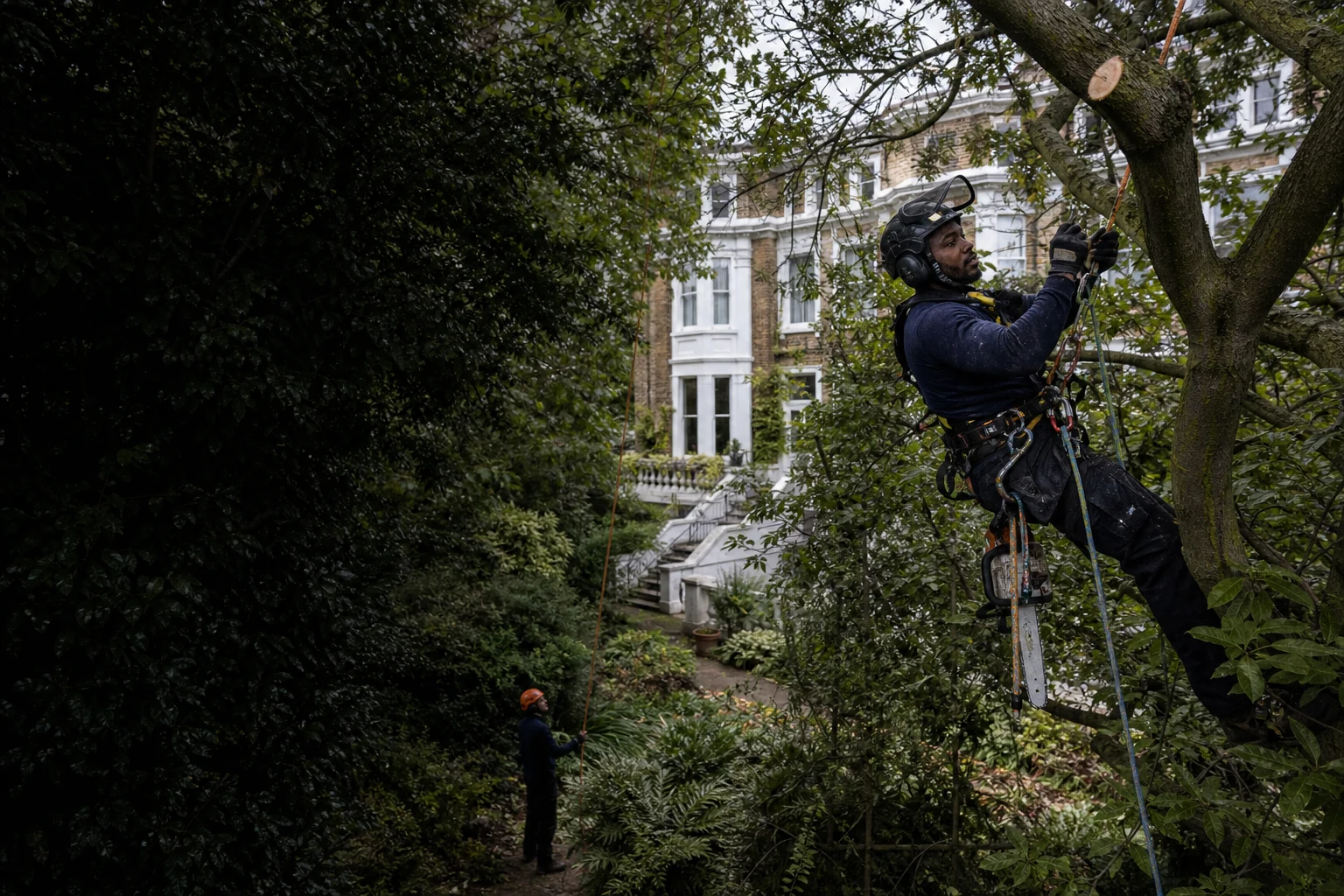
Visible structure, vitality and site constraints inform the proposed work.
Cuts follow an agreed specification rather than indiscriminate height removal.
Where removal is necessary, sections can be controlled around restricted targets.
Chipping, timber removal and retained logs are agreed as part of the quotation.
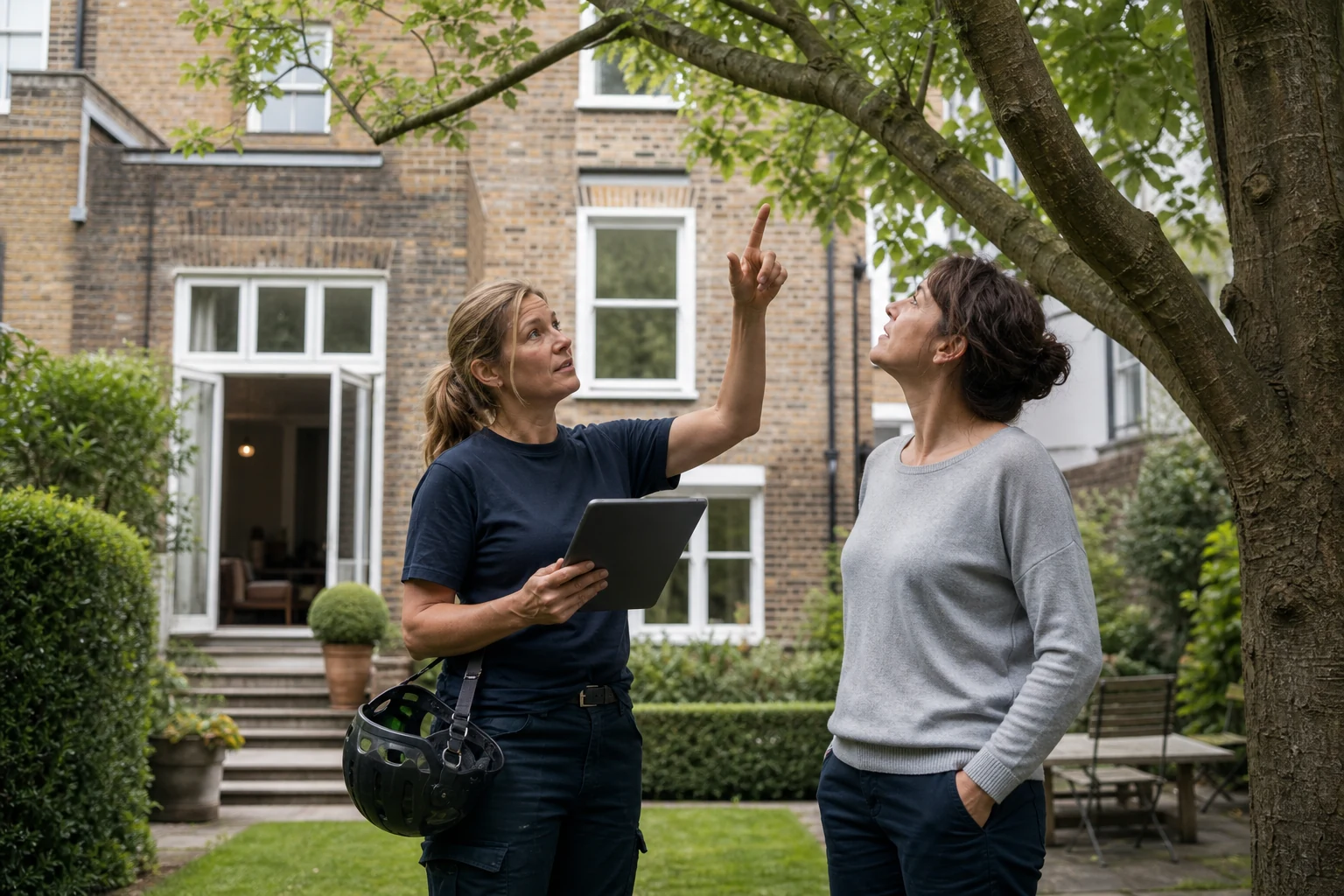
Common reasons customers call
Growth approaches roofs, windows, access routes or neighbouring space.
Size or spread needs changing without careless topping or structural imbalance.
Broken or hanging limbs require exclusion and prompt specialist inspection.
A dead, unsuitable or structurally compromised tree needs a controlled plan.
Why Alesta for tree surgery
Conservation areas and Tree Preservation Orders are identified before scheduled work.
Active nests and protected species can require postponement or specialist advice.
Buildings, gardens, roads and people below shape rigging and exclusion zones.
Pruning type, percentage, clearance and waste handling are written clearly.
A controlled arboricultural process
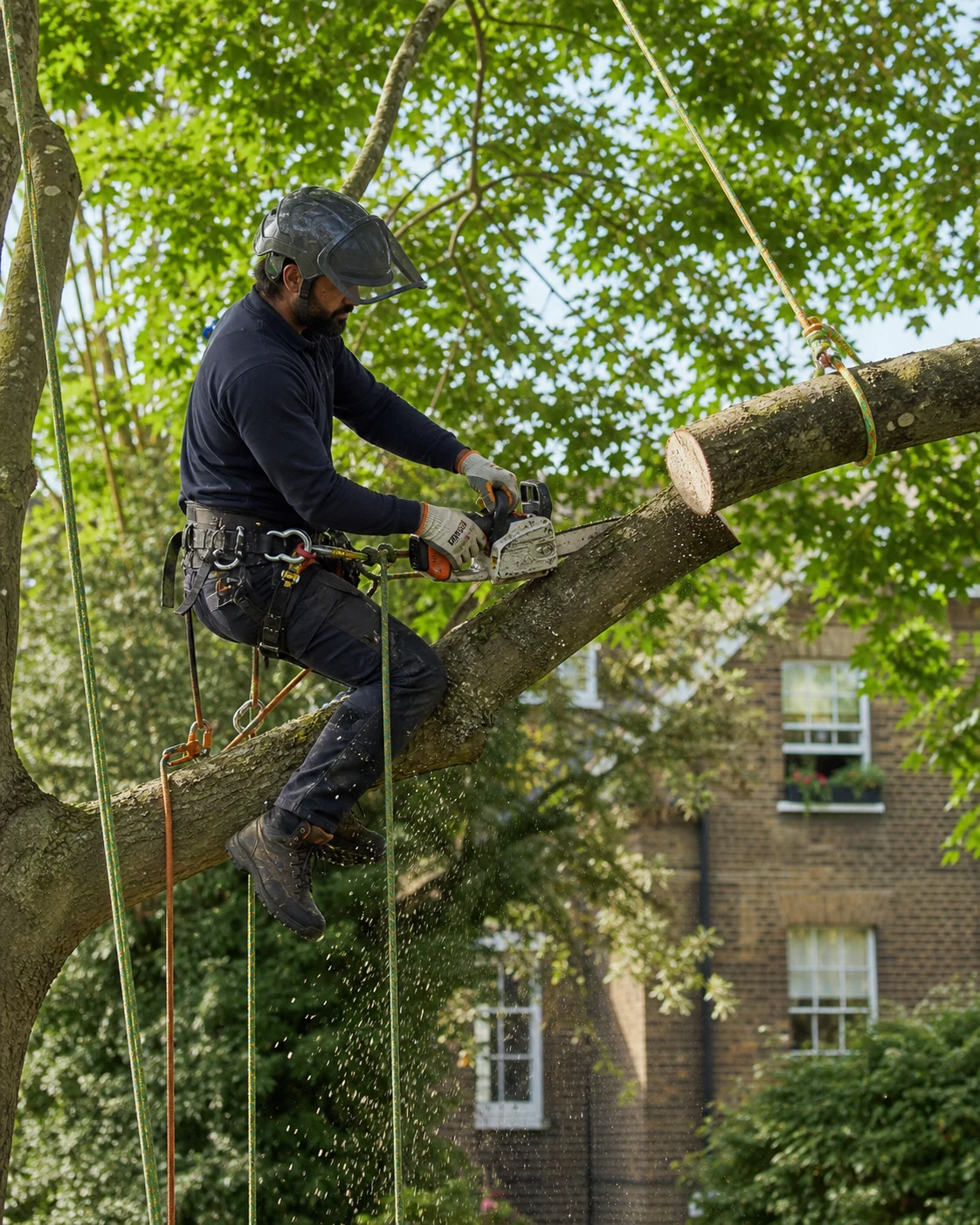
The process begins with the customer objective and a clear view of the whole tree. Photographs help identify urgency, but mature, declining or confined trees often require an on-site assessment. The arborist considers species, approximate size, vitality, visible defects, lean, branch unions, root area and targets such as buildings, roads, sheds, glasshouses and overhead lines. Ownership, boundaries, conservation-area status and Tree Preservation Orders must be clarified before work is authorised.
A written specification defines pruning or removal. Crown lifting, thinning and reduction are different operations and should state clearances or proportions; topping is not used as a vague substitute. The plan sets access, climbing or platform needs, rigging, ground crew, chipper position, parking and exclusion zones. Active nests, bats or other protected wildlife stop or change work as legislation requires. Utility conflicts, highways and structurally uncertain trees can require additional specialists or permissions.
On the day, the team establishes the protected work area and confirms the tree and specification. Equipment is inspected and access controlled. Suitable cuts are made progressively, preserving branch collars and avoiding unnecessary wounds. Where sections cannot fall freely, ropes and lowering equipment control them to a planned landing zone. Dismantling proceeds in an order that maintains stability. Conditions that differ from the assessment, including decay or cracks revealed at height, are communicated before the plan materially changes.
Arisings are processed according to the quote: branches may be chipped, timber removed or logs left in manageable agreed positions. Stump grinding, root removal and importing soil are separate unless listed. The area is left practically tidy, but fine sawdust and impressions in soft ground can remain after machinery. Handover records the work completed and any observed issue requiring monitoring. Tree condition can change, so surgery is not a permanent guarantee against future failure or growth.
Clear pricing
Cost depends on tree size and condition, specification, access, climbing, rigging, targets, permissions, waste and machinery.
| Service scope | Price | What affects the final price |
|---|---|---|
| Defined pruning work | Quoted after assessment | Species, size, pruning specification, access and waste |
| Large-tree reduction or dismantling | Quoted after site survey | Climbing, rigging, crew, targets, machinery and programme |
| Removal with stump work | Detailed quotation | Tree, dismantling, timber, stump access and disposal |
Pricing context: Tree work requires photographs and often a site assessment. Permission applications, traffic control, utility attendance and stump grinding are included only when stated.
How the service works
We review condition, objective, access, targets, ownership and protection constraints.
Pruning, rigging, crew, permissions, waste and exclusion zones are defined.
The team carries out the specification and reports the work and future observations.
Local guides
Choose a region to find your local guide. Please confirm your address and the work required when enquiring.
Tree surgery FAQ
Useful answers about permissions, nesting birds, pruning, access, waste, stumps and pricing.
☎ Call 020 3608 3976Possibly. Trees covered by a Tree Preservation Order or in a conservation area can require consent or notice. Ownership and local restrictions must be checked.
Active nests are legally protected and must not be damaged or disturbed. Work may need to stop, change or be rescheduled after assessment.
Not responsibly in every case. Species, structure, health and suitable growth points determine what reduction can be achieved without unacceptable damage.
Access depends on climbing, rigging, chipper and timber handling. Share gates, steps, parking, neighbouring access and restricted routes before quoting.
Only as agreed. Chipping, timber removal, retained logs and fine cleanup are specified in the quotation.
Not automatically. The stump can be cut to an agreed height, while grinding requires separate access, underground-risk checks and pricing.
Tree size, condition, climbing, rigging, buildings below, access, crew, machinery, permissions, waste and traffic control affect the quote.