Room-by-room schedule
Rooms, fixed features and listed contents are recorded in a logical, repeatable order.

Alesta · Inventory reports in London
Independent, structured inventory reporting for London rentals, with the property, contents, condition language, photographs and appointment access agreed before the visit.
☎ Call 020 3608 3976Evidence before occupation
A rental inventory should identify what is present and describe its condition at a defined point in time. General phrases and a few wide photographs are rarely enough when a later question concerns a particular wall, appliance, fitting or item of furniture.
We establish the property size, furnishing level, appointment purpose and access arrangements first. The visit then follows a consistent room sequence so the written observations and dated images can be understood by landlords, agents and tenants.
Rooms, fixed features and listed contents are recorded in a logical, repeatable order.
Visible wear, marks, damage and cleanliness are described factually without assigning blame.
Dated images provide context and closer evidence for material observations in the report.
Accessible meters, keys and relevant safety-device observations are included when agreed.

Common reasons customers call
The property and included contents need documenting before occupation changes their condition.
New finishes, appliances or furniture need an accurate baseline after works are complete.
A structured report supports handover across several parties without relying on memory.
Layout, contents or condition has changed enough that amendments would be unclear.
Why Alesta for inventory reports
Property size, furnishing, access and report purpose determine the appointment and format.
The report records visible facts and does not decide responsibility, value or deposit outcomes.
Photographs are organised as evidence rather than supplied as an unexplained image dump.
The completed report can be reviewed while observations are still current and identifiable.
A structured inspection
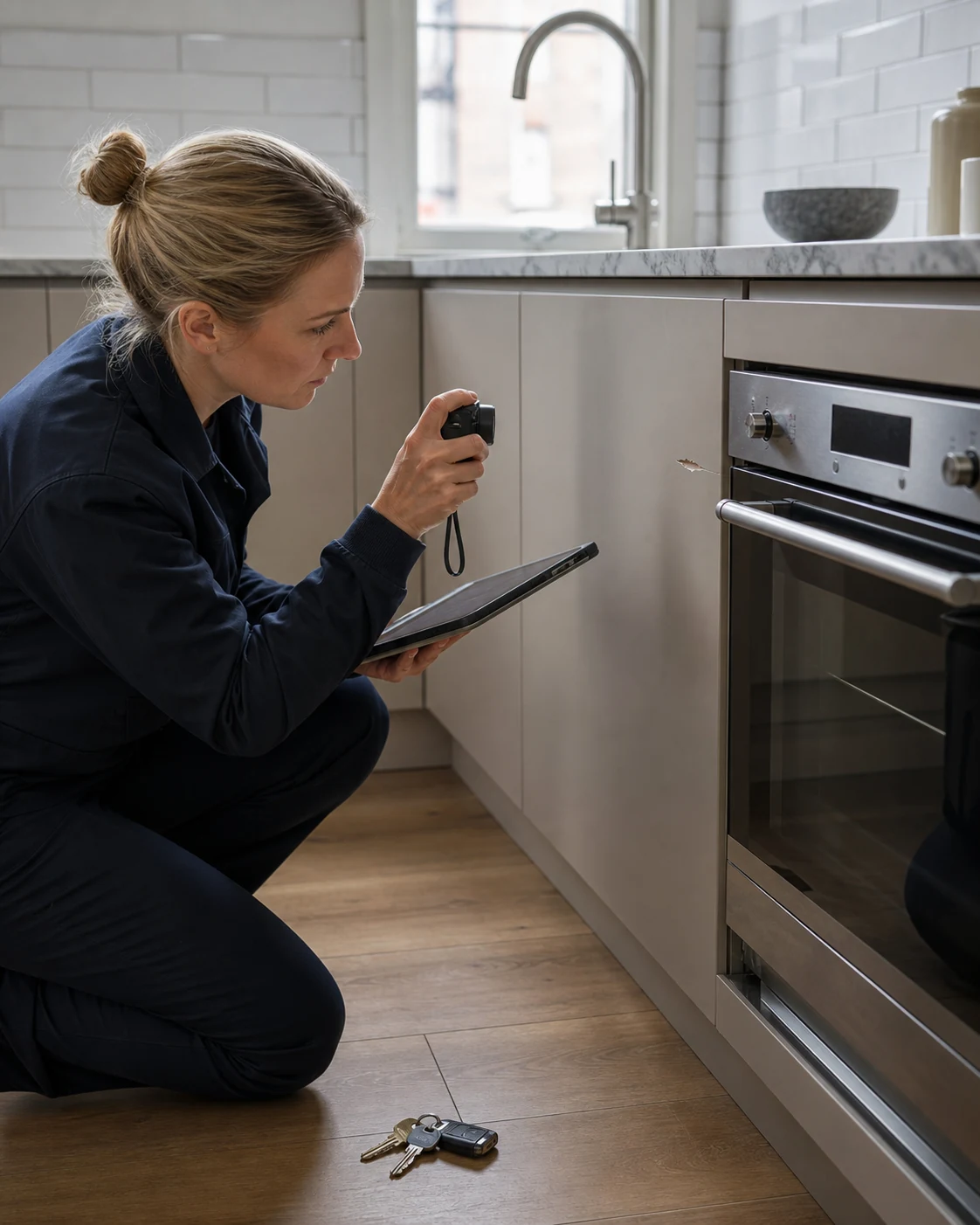
Preparation starts with the tenancy stage and the property specification. We ask whether the report is for check-in, a new baseline or an updated inventory, then confirm bedrooms, bathrooms, reception rooms, outside spaces and furnishing level. The property should be ready in the condition being handed over, with cleaning and maintenance completed. We also confirm keys, concierge access, parking, alarms, pets and the location of meters so avoidable delays do not reduce inspection time.
At the appointment, the clerk follows a consistent route through the property. Each room is identified and its principal surfaces, doors, windows, fixed fittings, floor coverings and included contents are observed. Descriptions distinguish material, colour and visible condition where practical. Existing chips, scratches, stains, missing pieces and signs of wear are recorded without guessing how they occurred. Cupboards and appliances are inspected only where accessible, safe, empty enough to view and included in the agreed scope.
Photographs are taken to establish both context and detail. Wide images identify the room and arrangement, while closer images support significant condition notes. Accessible meter readings, key sets, smoke alarms or carbon-monoxide alarms can be noted where requested, but an inventory visit is not an electrical, gas, fire-risk or appliance safety inspection. The clerk does not dismantle items, move heavy furniture or test concealed building systems, and inaccessible areas are described as limitations rather than assumed to be satisfactory.
After the visit, observations and images are organised into a readable report. Terminology is checked for consistency so a mark described in one room is not presented as a different type of issue elsewhere. The report records the visible position at the inspection time; it does not determine ownership, depreciation, repair cost or responsibility for a future deposit deduction. Prompt review by the relevant parties is encouraged so any factual amendment can be raised while the property condition and handover timing remain current.
Clear pricing
Cost depends on property size, furnishing level, number of contents, outside areas, access and the required report type.
| Service scope | Price | What affects the final price |
|---|---|---|
| Studio or one-bedroom inventory | Quoted after assessment | Rooms, furnishing, contents, access and report format |
| Two or three-bedroom inventory | Quoted after assessment | Property size, item count, outside areas and visit time |
| Large or highly furnished property | Quoted after assessment | Multiple rooms, extensive contents, outbuildings and documentation time |
Pricing context: A reliable price requires the full property specification. Check-in attendance, checkout comparison and inventory creation are different scopes and are quoted separately when required.
How the service works
Share room count, furnishing, access and the tenancy stage the report must support.
The clerk records visible condition and contents through a structured room sequence.
Written observations and supporting images are organised into a clear handover record.
Inventory reports FAQ
Useful answers about preparation, photographs, testing, attendance, amendments and pricing.
☎ Call 020 3608 3976The agreed report records rooms, principal finishes, fixed fittings, listed contents, visible condition and supporting photographs. Meter or key details can be included where accessible and requested.
Personal belongings should normally be removed unless they form part of the furnished tenancy. Included furniture and supplied items should remain in their intended rooms.
Yes. The report records the condition at the appointment, so cleaning, decorating and maintenance should be complete before the clerk arrives.
Only simple visible or operational observations specifically agreed may be noted. The report is not a gas, electrical, fire-safety or appliance engineering inspection.
Attendance can be arranged, but the clerk needs uninterrupted access to inspect and photograph each area. Key points can be raised without directing the report language.
Factual queries should be raised promptly with clear evidence. An amendment is not automatically made where parties simply disagree about responsibility or interpretation.
Room count, furnishing, volume of contents, external areas, access, parking, appointment type and report preparation time all affect the quote.