
Authorised entry
For a lockout, the locksmith checks reasonable evidence of occupancy, ownership or management authority. The least damaging suitable method is considered from the actual lock and door condition, not guaranteed remotely.
Property · authority · door boundary · suitable work
Before choosing a lock service, identify which door is affected and who controls it. A converted townhouse, a mansion flat and an office with a separate residential entrance can place similar-looking locks under very different authority.
Fitzrovia property boundaries
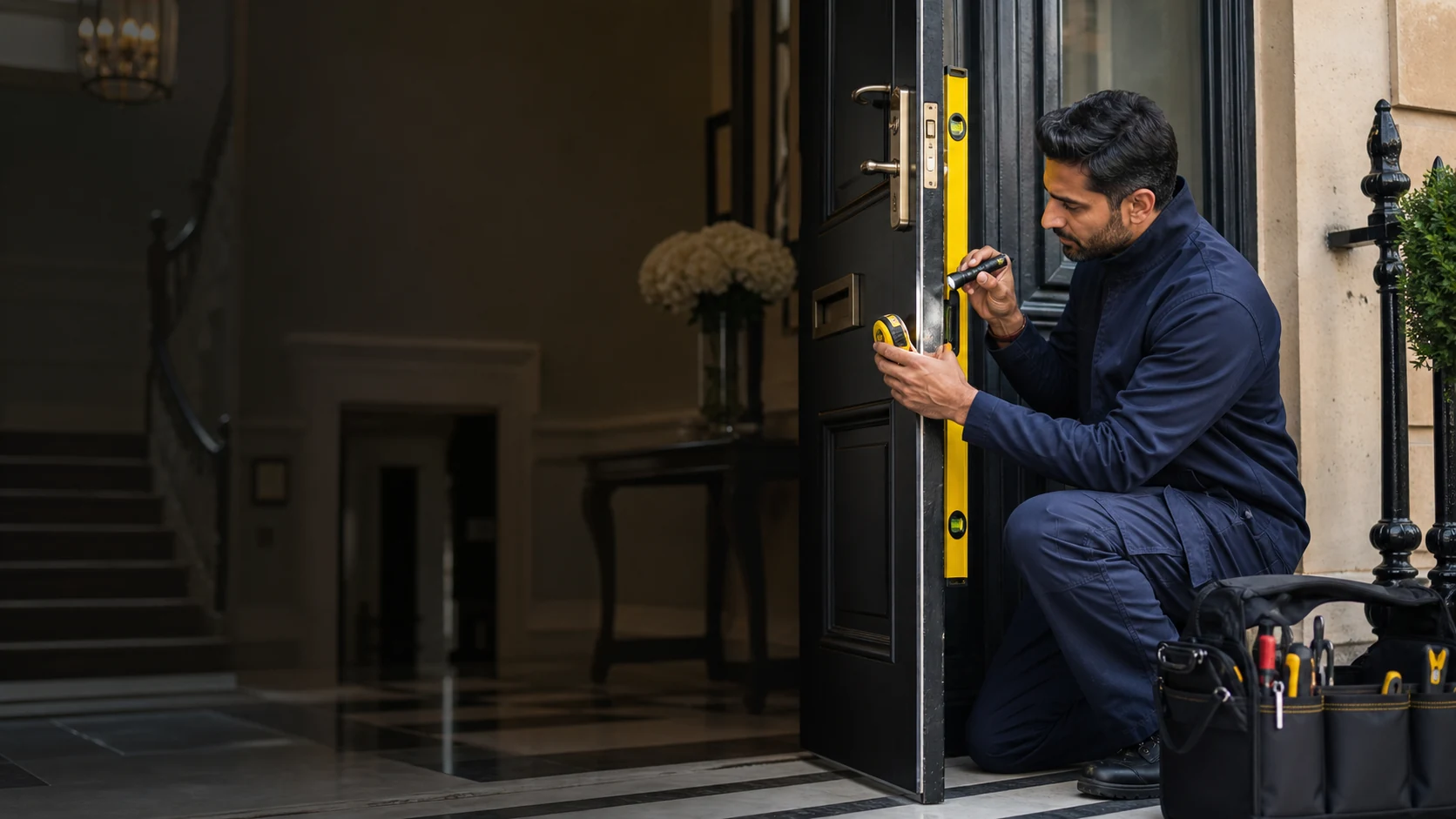
Fitzrovia has residential doors within converted townhouses, mansion blocks and buildings where offices and homes use neighbouring or shared approaches. The lock on a flat belongs to a different decision chain from the main street entrance. A door between a common stair and an office suite may involve a landlord or facilities manager, while a resident may control only the hardware inside their demised property. These distinctions affect who can instruct a locksmith, which keys must continue to work and whether fire-door or electronic access arrangements are involved.
When you call, give the exact floor, entrance and door function. State whether you are locked outside the building, outside the flat or unable to secure a door from inside. If a porter, managing agent or commercial reception controls arrival, confirm its operating procedure. A locksmith can then assess the authorised door without being asked to alter shared hardware on one person’s instruction.
| Property situation | Question to settle | Effect on the visit |
|---|---|---|
| Flat in a converted townhouse | Does the problem concern the flat entrance or the common front door? | The freeholder or agent may need to approve work outside the private flat. |
| Mansion flat | Who holds service keys and controls door standards? | Management rules can affect access, hardware choice and permitted working times. |
| Residence beside offices | Which entrance reaches the home without crossing a controlled workplace? | The locksmith needs the correct route and a contact able to admit them. |
| Common parts with access control | Is the fault mechanical, electronic or shared between both systems? | Electrical access-control work may sit outside a conventional lock repair. |
A door-by-door brief
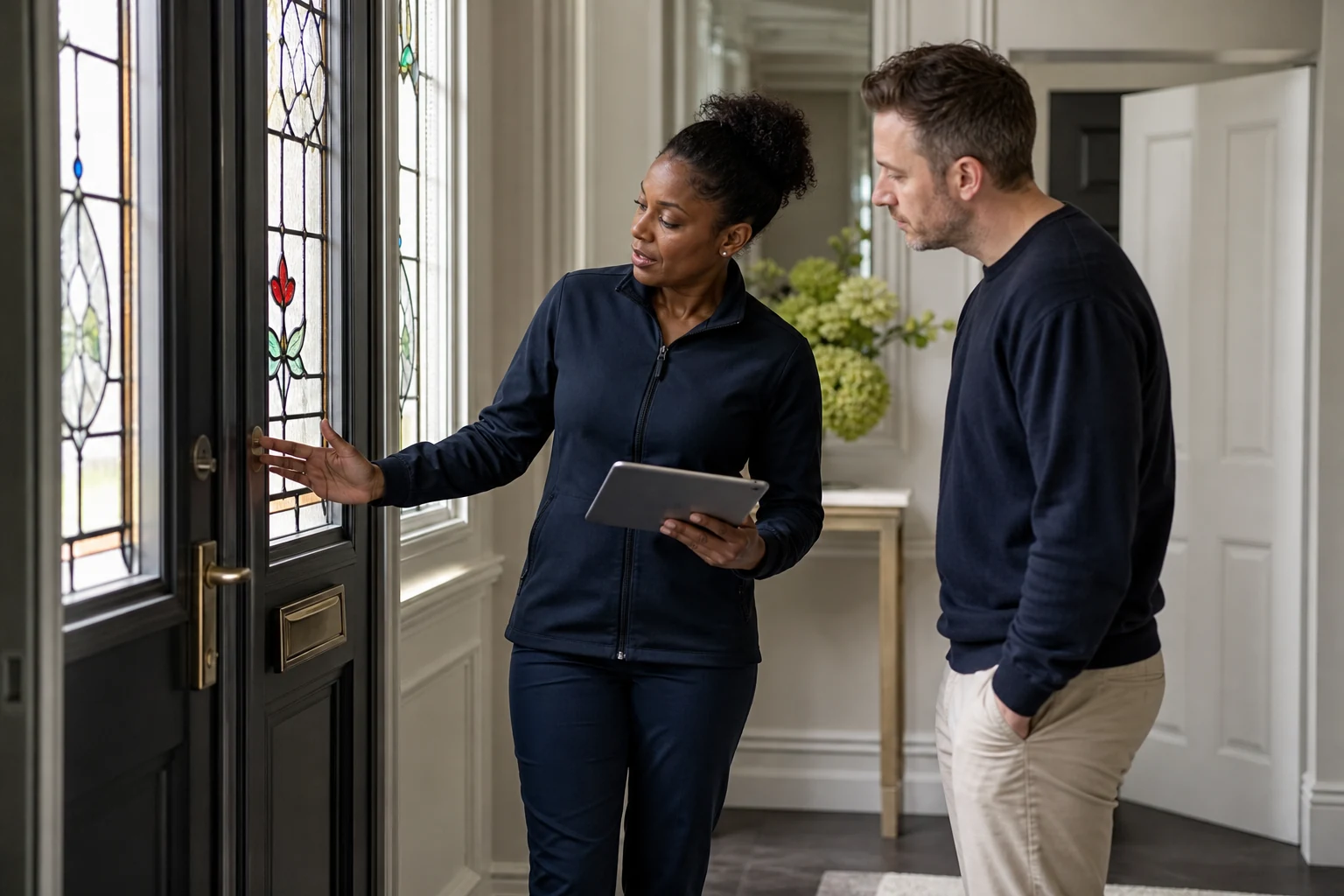
“The building will not open” is rarely enough detail. Say what the key, handle, latch or access credential does, whether the door is open or closed, and whether the symptom changes when pressure is taken off the leaf. Do not force a stiff key, spray an unidentified product into the keyway or remove a communal cover. If there are two secured doors between the pavement and the home, report each one separately.
For a planned change, explain the desired outcome. You may need new key control after an occupancy change, a reliable repair to existing hardware, or a replacement that respects the door and building rules. Those are different briefs. Existing keys, clear images and any schedule supplied by the managing agent help identify what should remain compatible.
Problem and next step
| Observed situation | Safe information to gather | Likely first decision |
|---|---|---|
| Key turns but the flat door stays shut | Door position, handle movement and whether another authorised key behaves the same way | Assess opening and the connected latch or mechanism before specifying a part. |
| Communal entrance does not latch | Who manages it, whether the closer works and whether access control releases normally | Refer authority and separate lock, closer, frame and electrical possibilities. |
| Key is missing after an occupancy change | Which doors it serves and which authorised users still require access | Plan key control for the relevant private doors without altering common locks improperly. |
| Mortice lock feels stiff only with the door closed | Operation when open, visible frame contact and recent door movement | Compare alignment and lock condition before choosing repair or replacement. |
| Damage appears around the frame | Safe photographs and whether the entrance can presently be secured | Define immediate securing, locksmith work and separate joinery or door repair. |
Services within the agreed boundary
For a lockout, the locksmith checks reasonable evidence of occupancy, ownership or management authority. The least damaging suitable method is considered from the actual lock and door condition, not guaranteed remotely.
A loose case, unreliable latch or difficult key movement may be repairable. The door is checked open and closed so frame pressure is not mistaken for an internal lock failure.
When keys are unaccounted for, replacement may restore control for the private entrance. The number of authorised users and any building master-key arrangement must be clarified first.
Extraction, opening and replacement are separate outcomes. The fragment position and the reason for the break matter before further work is agreed.
On UPVC or composite doors, cylinder, handle, gearbox, strip, keeps and alignment form a system. One symptom does not identify one universal replacement.
A locksmith may restore locking or provide an agreed temporary security measure. Damaged timber, metalwork, glazing or electronic control may require another specialist.
Quotation boundaries
There is no responsible Fitzrovia price based solely on a postcode or property label. The useful comparison is between equivalent scopes: attendance, authorised opening, diagnostic work, hardware, supplied keys, adjustments and any follow-on repair should be visible rather than compressed into an unexplained figure.
| Scope item | Information needed | Point to confirm in writing |
|---|---|---|
| Lockout or failed entry | Door state, lock type, timing, proof route and known damage | Whether the quote covers attendance, opening and any replacement needed afterwards. |
| Repair assessment | Symptoms with the door open and closed, plus clear hardware images | Which labour is investigative and which remedial action has been approved. |
| Replacement hardware | Measurements, door construction, security aim and required key quantity | The exact supplied part, fitting, testing and key handover. |
| Managed-building access | Reception window, parking, permit and common-part authority | Who bears delays or a return visit when controlled access is unavailable. |
| Door or frame damage | Extent of visible damage and immediate security requirement | Whether temporary securing, permanent door repair and decoration are separate. |
Ask before any destructive opening is attempted. A method may become necessary in some circumstances, but the expected damage, replacement requirement and revised total should be explained to the authorised person first.
Preparing common parts and finished doors
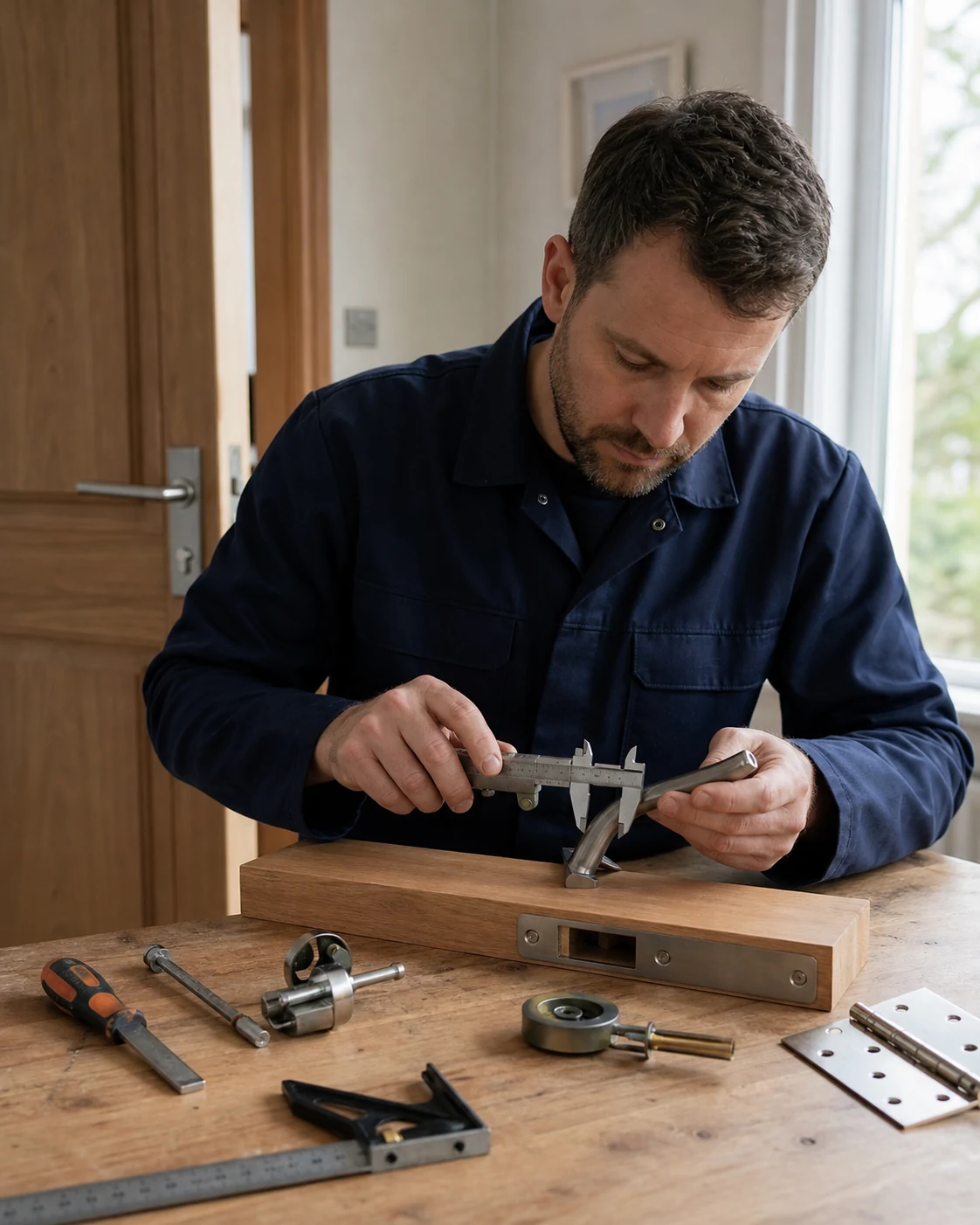
Gather information, not loose components. Photograph both faces of the door, the edge hardware and the relevant frame keeps while everything remains assembled. For a mansion flat or conversion, include enough of the hallway to explain whether the door opens into a private or shared route. If the door has a closer, intercom release or electronic strike, show those items too and say who manages them.
Original timber, decorative metalwork and fitted panelling may affect a replacement. A visually similar lock is not necessarily compatible with the case, backset, door thickness or existing cut-outs. If appearance matters, state that before parts are ordered. Likewise, if business activity restricts the shared corridor, agree a working window with the responsible contact. Preparation should protect the property while leaving technical decisions for the on-site assessment.
Check that the door closes, latches, locks and unlocks in its normal positions. Count new keys, identify which old keys no longer work and record any limitation involving the frame, closer or access-control system. Where management action remains outstanding, obtain a clear description that can be passed to the correct party.
Fitzrovia locksmith FAQ
Only with authority from the party responsible for that communal entrance. One flat occupier should not alter a shared lock without freeholder or managing-agent approval and a plan for every authorised user.
Describe the exact private entrance, the lock and door state, and how you can demonstrate occupancy or authority. Explain in advance if identification is inside so a reasonable verification route can be discussed.
Not automatically. Reception may provide physical access, while the resident, owner, landlord or building manager holds the authority to instruct work. Confirm both parts before attendance.
No. It is considered where suitable, but a failed, damaged or deadlocked device may require another method. Any destructive approach and resulting replacement should be explained before approval.
No. Door alignment, frame pressure, loose hardware or a serviceable component can cause stiffness. The locksmith should compare operation with the door open and closed before recommending a solution.
Report whether the mechanical key, electric release, credential and closer behave normally. The electrical or management-controlled part may need a separate access-control provider rather than unauthorised alteration by a resident.
List which doors each missing key serves and who still needs access. Commercial and residential key-control decisions may belong to different authorised people even when the entrances share one address.
Send the complete door, inside and outside hardware, door edge, frame keeps and any visible markings. Keep covers fitted and include a ruler only where a safe measurement has been requested.
Not unless the quote says so. Lock fitting, temporary securing, joinery repair and decorative making good can be separate scopes, particularly on an older or carefully finished entrance.
Local map and nearby pages
Use the page for the actual property location so its entrance and authority notes match the building context. These nearby pages are present in the current local batch.
Name the door and the decision-maker
Send the entrance, door behaviour, property arrangement, safe photographs and the contact who can authorise the agreed work.
