
Apartment lockout
The locksmith confirms authority, inspects the secured door and considers an appropriate opening method. A failed part or door pressure may still need attention after entry.
Reception · contractor access · private door · shared system
In a managed development, reaching the faulty lock can require as much planning as assessing it. Confirm reception registration, the contractor route, the apartment contact and the point where building responsibility ends before the appointment begins.
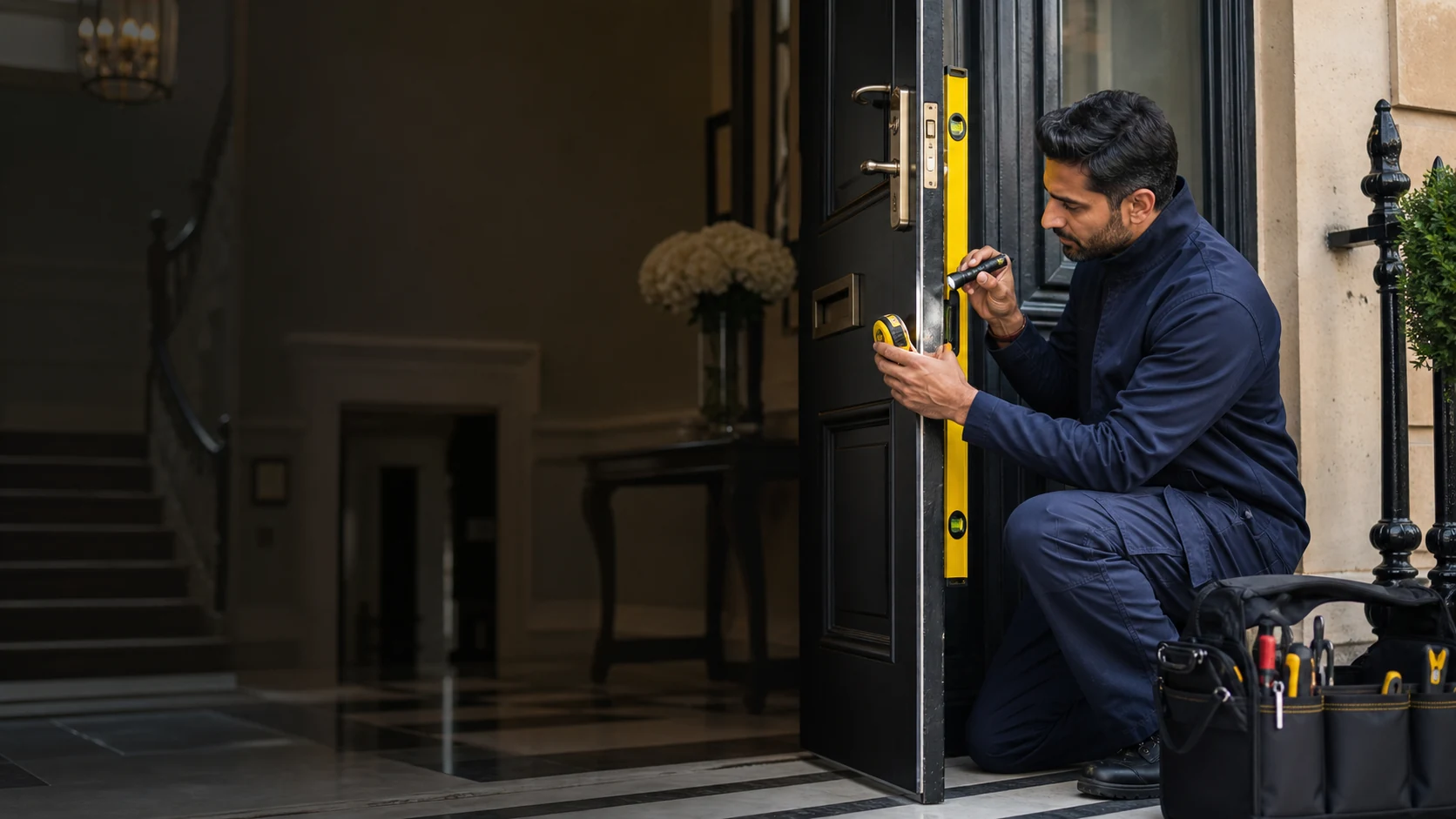
Managed-building preparation
Newer King’s Cross apartment developments can have staffed reception, timed contractor access, controlled lifts and doors linked to electronic credentials. A resident may be able to instruct work on the lock to their own apartment but not on the lobby entrance, riser door or building access system. Ask the concierge or managing agent which entrance a tradesperson should use, whether identification or insurance details are requested, and who must release any service key.
Older terraces and mixed-use buildings in the area need a different arrival note. The residential entrance may sit beside a commercial frontage, and the correct staircase may not be obvious from the street. In either setting, give the full property name or number, floor, door and contact telephone. An appointment cannot be assessed properly from “meet at reception” if reception does not hold the relevant key or authority.
| Access stage | Detail to confirm | Reason it matters |
|---|---|---|
| Arrival at the development | Approved entrance, booking reference and reception hours | The locksmith must reach the correct building without relying on resident-only access. |
| Tools and equipment | Loading point, parking restriction, trolley route and lift procedure | Managed routes can affect the usable time available at the door. |
| Common doors | Key holder, fire-door responsibility and access-control operator | A resident should not authorise changes to equipment controlled by management. |
| Private apartment | Occupier or owner authority and the exact entrance involved | The locksmith needs a lawful instruction for opening, repair or replacement. |
| Completion and exit | Who receives keys and whether reception needs a work record | Handover should preserve the building’s agreed access arrangements. |
Private lock or building system?
A lobby door that stays locked may have a perfectly serviceable mechanical lock but a failed release signal. A private apartment door may use a conventional cylinder within hardware specified by the building. A service entrance can combine a closer, panic hardware, electric strike and management-controlled credential. The report should say which action fails: key operation, handle return, latch engagement, credential response, intercom release or physical closing.
Do not wedge open a security or fire-resisting communal door while waiting for an appointment. Do not remove an electronic reader or strike cover. Instead, report the symptom to building management and ask whether its nominated access-control contractor must attend. For the private entrance, send safe photographs of the complete door, edge hardware and frame. The locksmith can then decide what needs direct inspection.
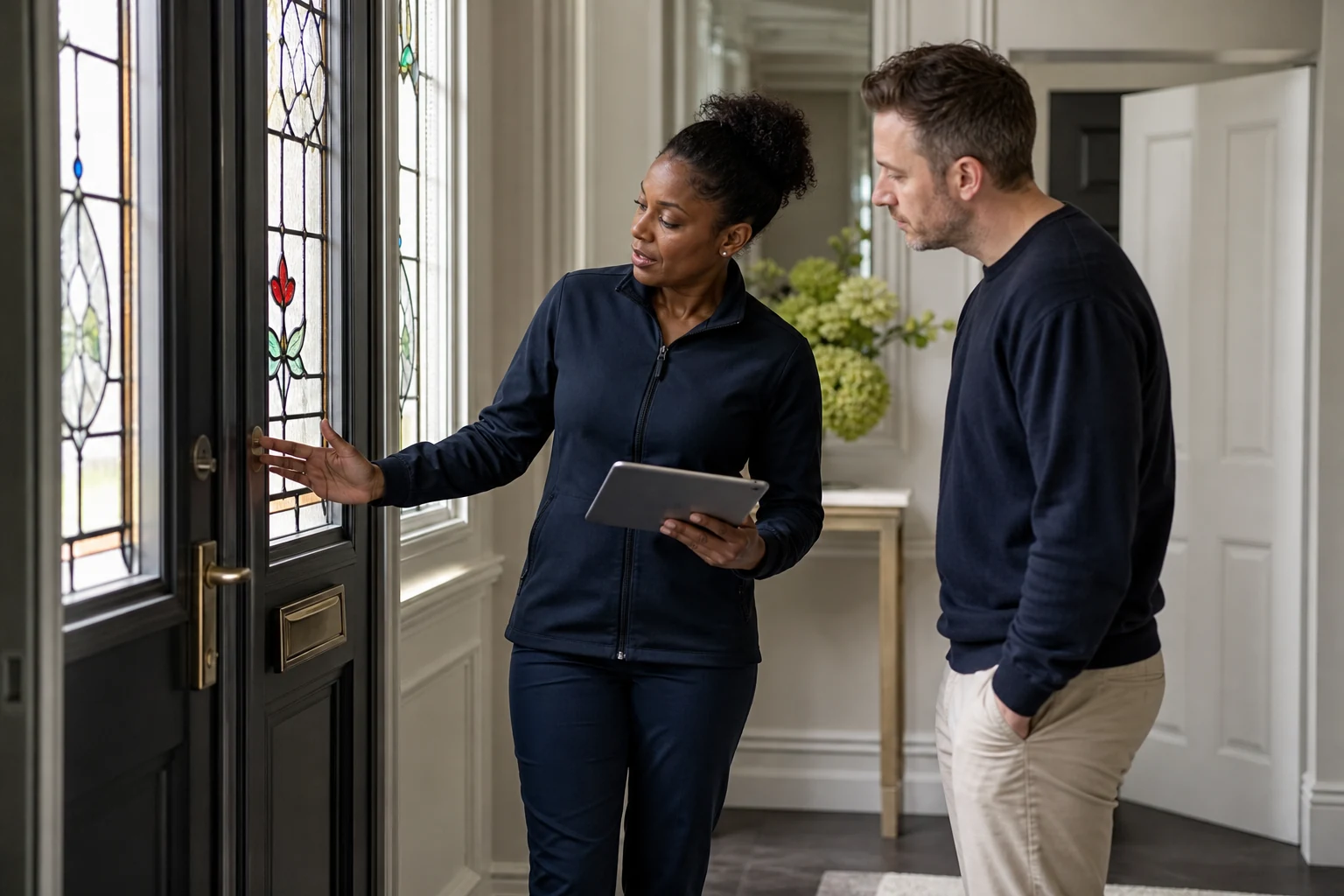
Responsibility and next step
| Reported problem | Likely controller | Useful next action |
|---|---|---|
| Apartment key will not turn | Resident or owner, subject to tenancy and building rules | Arrange a locksmith assessment of the private door and verify occupancy. |
| Lobby fob is rejected | Building management or its access-control provider | Check credential status and system records before changing mechanical hardware. |
| Communal door fails to latch | Manager, freeholder or facilities team | Assess closer, hinges, frame, latch and electric release as connected elements. |
| Key broke in the apartment cylinder | Authorised occupier or owner | Leave the fragment undisturbed and describe whether the door is open or secured. |
| Delivery or service entrance is damaged | Building operator | Define temporary security, door repair and any electronic-system work separately. |
| Older terrace flat cannot reach shared meter area | Landlord, freeholder or managing agent | Arrange the responsible key holder rather than forcing a common cupboard. |
Services for the authorised door
The locksmith confirms authority, inspects the secured door and considers an appropriate opening method. A failed part or door pressure may still need attention after entry.
Intermittent latching, loose hardware and difficult key movement are checked through a normal operating cycle. The cause can sit beyond the visible cylinder.
New key control or failed hardware may call for replacement. Door dimensions, permitted specification and required key numbers are established before ordering.
Extraction is assessed without pushing the fragment deeper. The lock is then tested to decide whether continued use, repair or replacement is reasonable.
Private balcony-side or entrance doors can involve cylinders, gearboxes, handles, keeps and alignment. Compatibility cannot be established from one front-facing image.
Where damage prevents normal locking, an agreed temporary measure may be possible. Permanent door, frame, glazing or control-system reinstatement should remain explicit.
Price and logistics
No fixed locksmith figure follows from the King’s Cross location. A useful quotation reflects the service, time, door and building arrangements. It should also state what happens if reception cannot admit the locksmith, a service key is missing or the finding belongs to the management system rather than the apartment lock.
| Quote element | Details to provide | Boundary to request |
|---|---|---|
| Attendance and building entry | Booking slot, sign-in, parking, loading, lift and escort requirements | State any effect of delayed or refused contractor access. |
| Authorised opening | Door state, lock description, known damage and proof route | Distinguish attendance, entry, securing and replacement parts. |
| Private lock repair | Key, handle and latch behaviour with the door open and closed | Separate investigation from the agreed repair and parts. |
| Hardware replacement | Door construction, existing measurements, building standard and key quantity | Name the product or specification and the tests included after fitting. |
| Communal-system finding | Management contact and evidence that the issue extends beyond the flat | Record the referral rather than pricing unauthorised building work. |
| Damage response | Current security, leaf and frame condition, plus insurer or police evidence needs | Clarify temporary work, permanent reinstatement and other trades. |
A destructive method should never appear as an unexplained surprise. If direct inspection shows that it is justified, the locksmith should outline the expected effect, required replacement and revised scope before proceeding with the authorised person’s agreement.
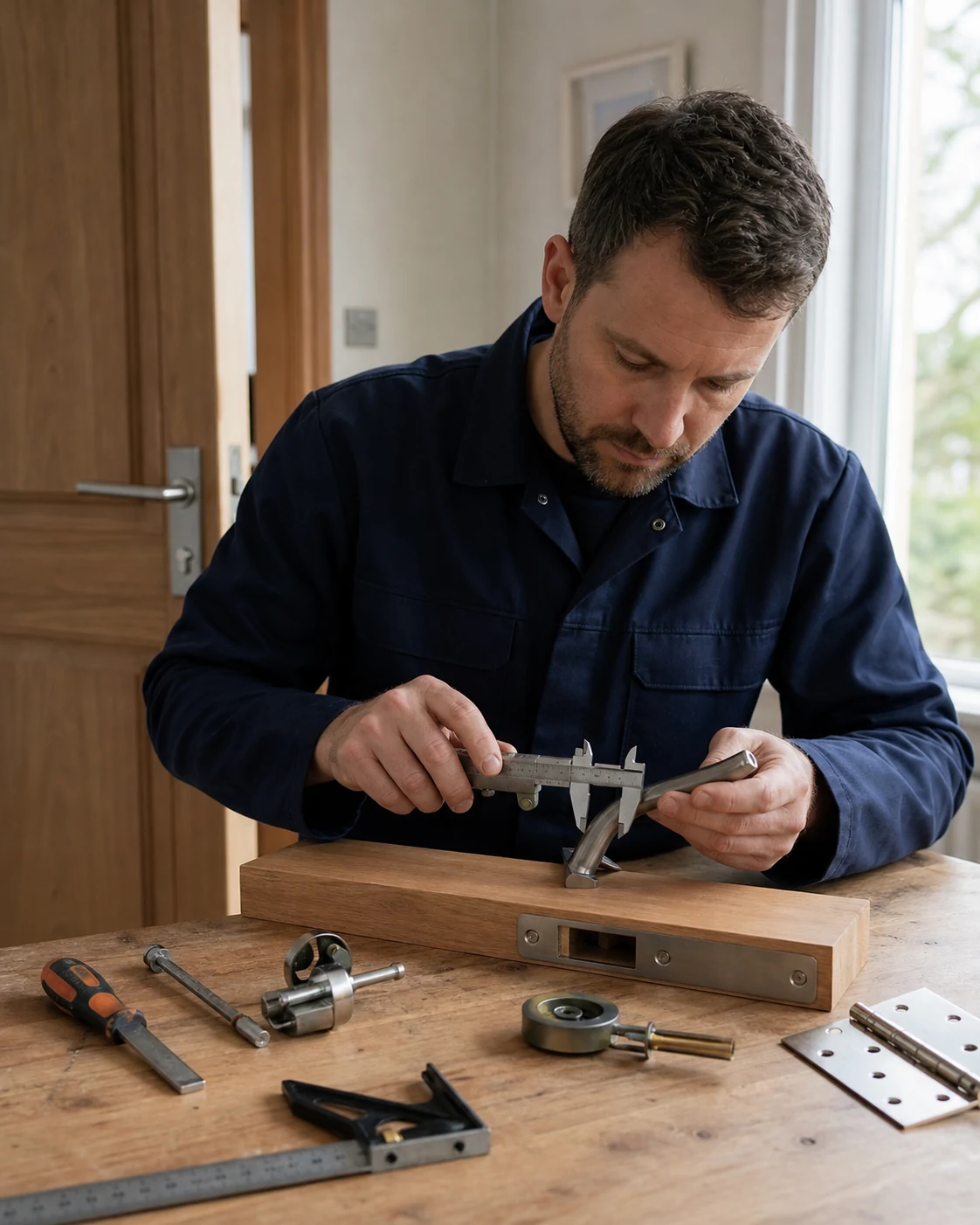
From reception to handover
The best contact can answer questions about both the apartment and the building procedure. They should know whether the resident may approve a changed lock, who to call for a communal key, and whether the service lift booking has an end time. If a landlord must approve added work, obtain a direct route to that decision rather than leaving the locksmith between unrelated reception and tenancy contacts.
At the door, the agreed mechanical work is completed and normal functions are tested: closing, latching, locking, unlocking and handle return where relevant. Any new keys are counted and handed to the nominated person. If a common closer, electric release or damaged frame still affects performance, it should be recorded rather than disguised by repeated lock adjustment.
Keep the accepted quotation, invoice, product or lock description and key count. Where building management needs a note, share only the information necessary to record the work. Security-sensitive key or access details should not be circulated in an open resident group.
King’s Cross locksmith FAQ
In many managed developments, yes. Ask about contractor registration, the correct entrance, working hours, lift use and any documents requested. Do not assume a resident invitation overrides the building procedure.
Not on their sole authority. The managing agent, freeholder or building operator must control changes, replacement keys and any interaction with fire-door or access-control arrangements.
The locksmith requires reasonable evidence that the customer occupies, owns or is authorised to manage the flat. Mention in advance if identification is inside the property.
A reader or credential problem belongs to the electronic access system and may need the building’s nominated specialist. A locksmith can assess authorised mechanical hardware without bypassing management controls.
That behaviour can involve alignment, frame pressure or the lock mechanism. Report it accurately and avoid forcing the key; direct assessment is needed before parts are selected.
The building decides the route for contractors and tools. Confirm whether the main lift is permitted, a service lift needs booking or an escort is required.
No. A suitable non-destructive method is considered where possible, but failure, deadlocking or prior damage may change the approach. Any destructive method should be authorised first.
Report it to management because closer, hinge, frame, latch and electronic release may all be involved. The responsible party can coordinate the relevant locksmith, door or access-control trade.
Ask explicitly. Controlled access, parking and waiting conditions should be discussed before attendance so the written scope does not rely on an unavailable route.
Map and nearby live pages
The following local pages exist in this batch and cover their own access contexts. Use the property address rather than choosing a neighbouring name for convenience.
Confirm the route before the locksmith travels
Provide reception instructions, the exact private door, management boundaries, safe photographs and the person who can approve the agreed result.
