
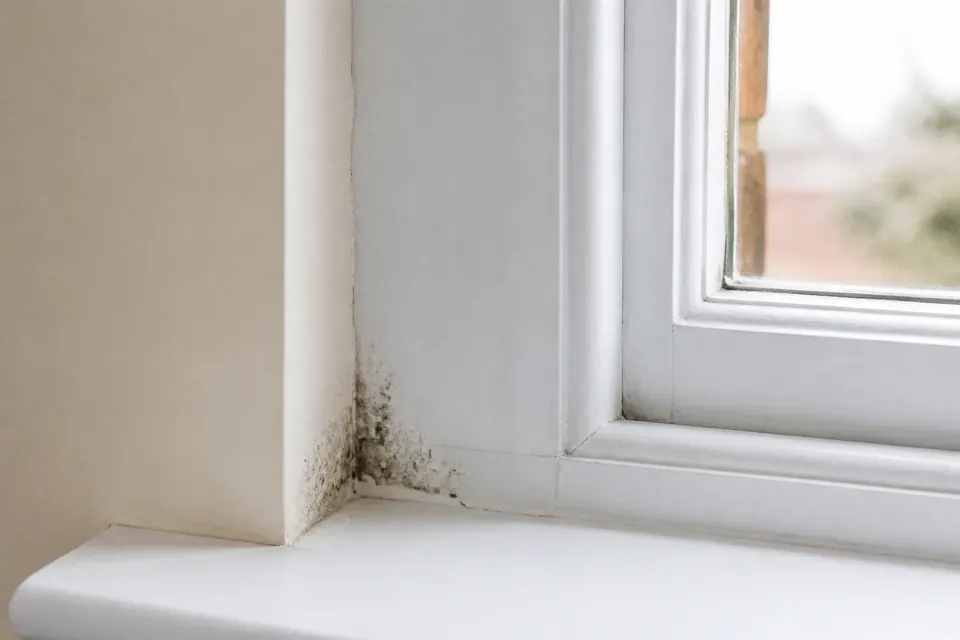
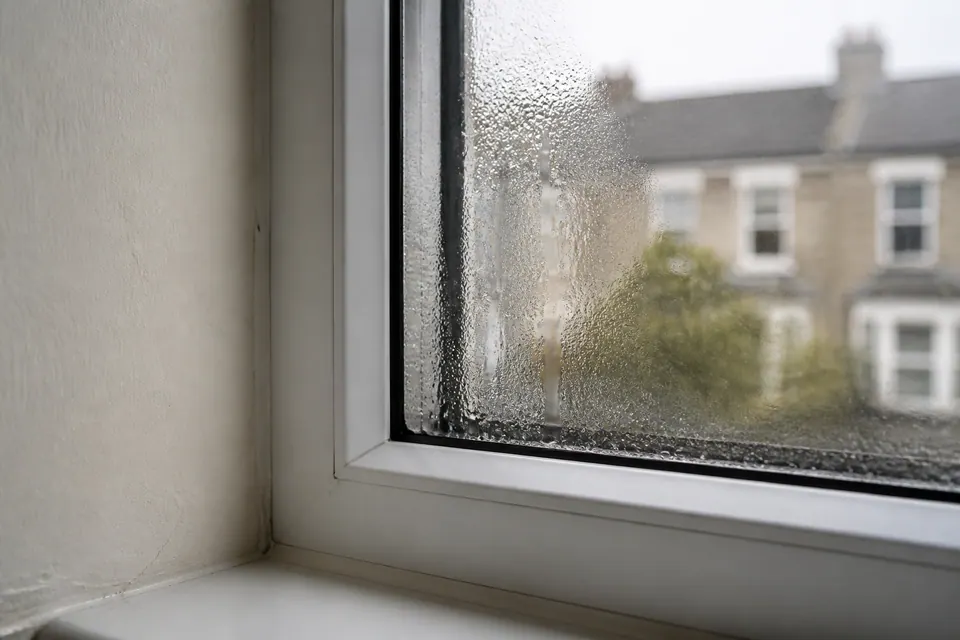
Ceiling near a window wall
Include the window and upper corner for orientation. Describe actual water observations separately from the apparent direction of the patch.
Gravesend / A CHANGING CEILING OUTLINE
Explain what is changing before deciding what it means.
If a ceiling patch appears to spread or shift, describe the direction and timing in a safe room-wide record. For Gravesend, confirm postcode availability and include earlier ceiling work without assuming that an old cause has necessarily returned.
Room feature · outline · timing · repair history
01 / LOCATE THE ISSUE
Select the room and retain a fixed feature in the photograph. Position and visible progression help assessment without identifying a concealed source.
Include the window and upper corner for orientation. Describe actual water observations separately from the apparent direction of the patch.
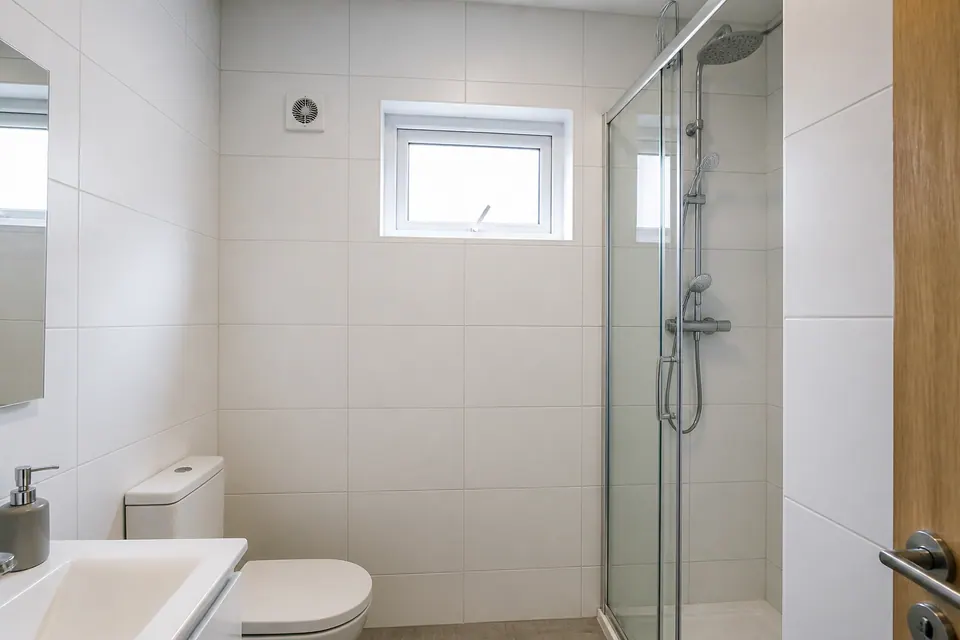
Identify paint condition and the patch’s relation to fittings. A spreading outline should not automatically be assigned to normal bathroom moisture.
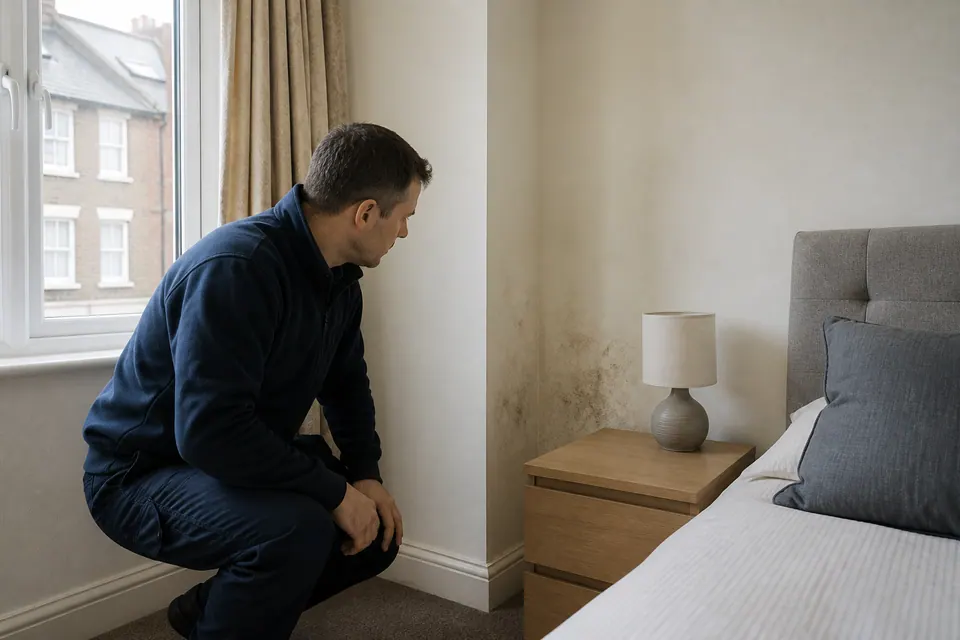
Photograph from the floor and state the approximate position. Do not stand on furniture to trace an edge or inspect loose material.
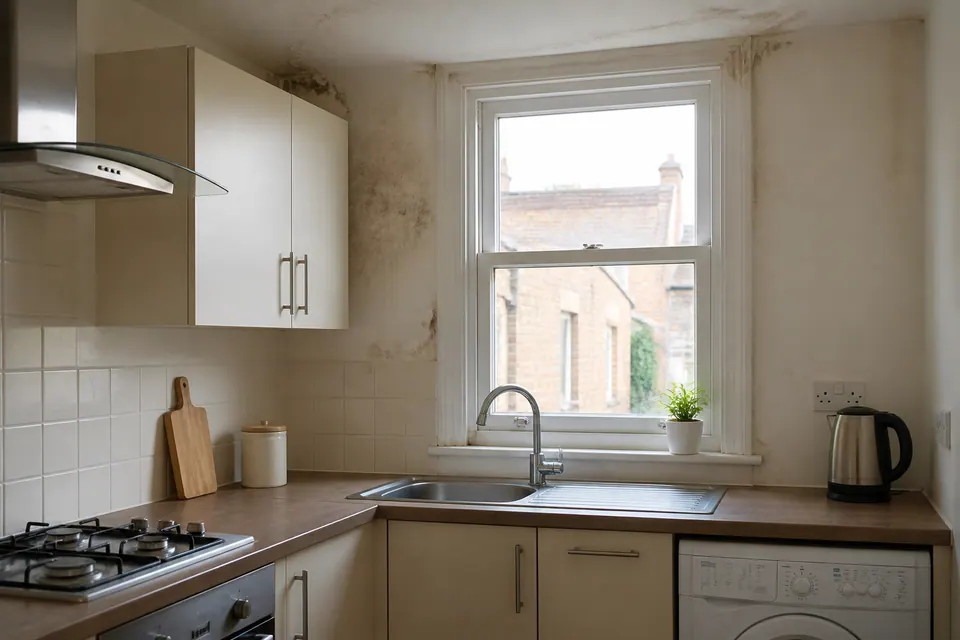
Provide known history but do not draw a leak route from the stain shape. Current material condition still needs consideration.
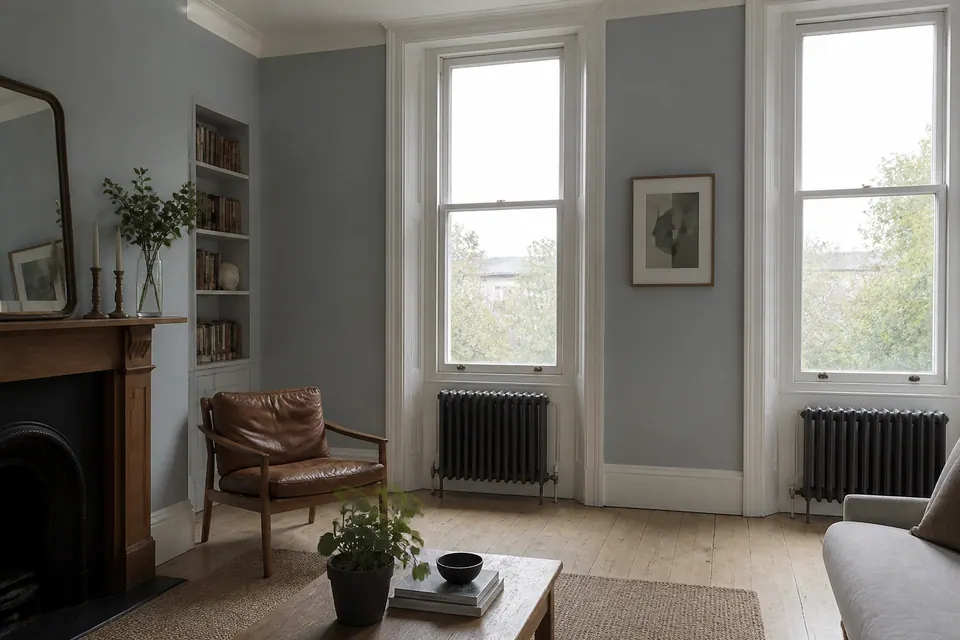
Show the repaired section’s location if known. A new mark near it is evidence to review, not proof that the same cause has returned.
State whether the visible movement is across the ceiling, down the wall or uncertain. Different faces may have different finishes and histories.
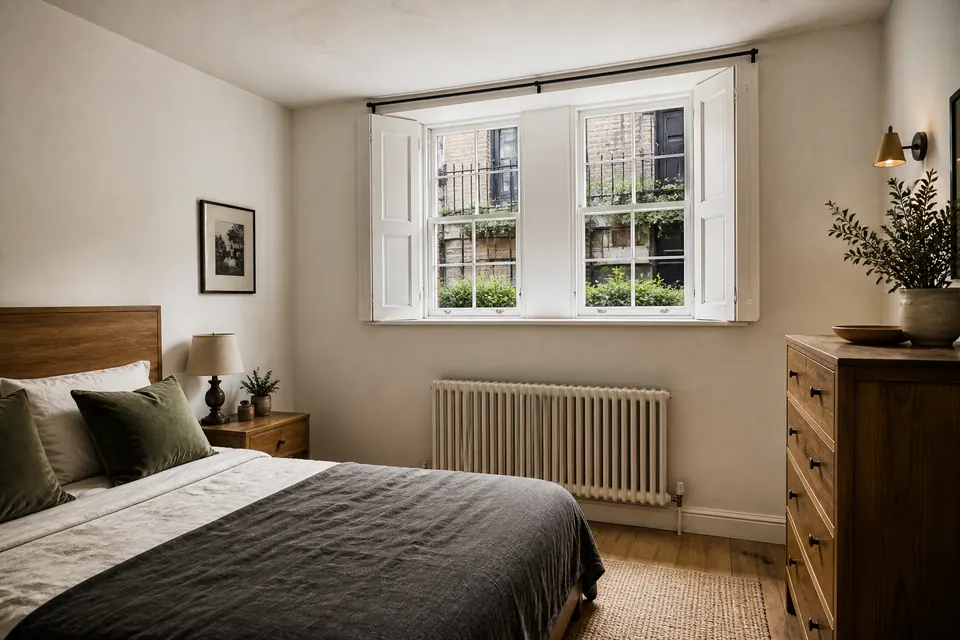
Explain what the normal view shows and what is obstructed. Do not present concealed extent as measured growth.
A changing outline is an observation, not a map of water travel or a confirmed mould diagnosis. Describe it without disturbing the surface.
Gravesend / ACCESS & PEOPLE
Identify the known repair boundary and present appearance. The new concern may not have the same explanation or material limits.
Show the access restriction from floor level. A small-looking patch does not guarantee simple reach.
State what is known and which area is private. Further access or investigation may require another contact.
Share current progression and available history with the authorised contact. Do not disturb material to demonstrate responsibility.
Provide relevant ceiling work details and dates. Avoid presenting an old cause as confirmed for today’s change.
Separate suitable surface treatment from any concealed investigation and redecoration. Ask what the present evidence supports before arranging finishes.
Gravesend / THE PROPERTY BRIEF
The present outline needs its own record.
Confirm availability for the full Gravesend postcode and provide a wide image showing the patch within the room. Explain whether it seems to be expanding, staying stable or changing in appearance. If the ceiling was repaired before, give the known location and date but leave the current explanation open for assessment rather than reusing an old diagnosis.
04 / WHEN IT COMES BACK
If another change is noticed, use the room reference and describe which edge differs. A wider view helps distinguish progression from a different camera angle or a newly visible portion.
Keep the current observations alongside, not inside, an assumed old explanation. The surface and any unresolved moisture issue may need a fresh assessment.
Use existing records and honest approximate timing. Avoid touching the ceiling to make a visual comparison more obvious.
05 / A CONTROLLED APPROACH
Locate the patch within the room and separate observed change from a suspected source. Note material damage and known repairs.
Clarify access from a safe working arrangement. Do not scrape, trace or open the ceiling to prepare evidence for the visit.
Follow the agreed scope for the present condition. New extent or deterioration may require another decision before more work.
Distinguish treated growth, residual stain and damage. Keep concealed investigation or repair questions explicit.
The sequence does not promise that the visible shape identifies or resolves the moisture route.
Use fixed room features to keep the record recognisable.
Do not infer opening-up from a surface appointment.
Separate appearance limits from repairs.
The diagrams are illustrative and do not document customer ceiling repairs or guarantee a permanent cosmetic result.
06 / QUOTATION, NOT GUESSWORK
For Gravesend, confirm address coverage and show the present extent with any reliable earlier view. The proposal should account for current material and change rather than assume an old repair area or a fixed cosmetic stain defines the work.
Read the main assessment scope ↗| Present condition | Quotation route | Evidence to add |
|---|---|---|
| Limited suitable accessible growth | Photographs may support a quote | Current outline and finish |
| Changing or recurring ceiling areas | Assessment informs the proposal | Dated comparisons and known history |
| Damaged or wet-looking material | Specialist quotation may be needed | Unresolved water and repair questions |
Confirm availability and inclusions before booking. A surface quote does not certify a concealed cause or promise complete restoration of a changing ceiling.
07 / SEPARATE THE QUESTIONS
Visible progression can help frame questions, while material condition and water history remain separate evidence.
| Current observation | Context to provide | What remains uncertain |
|---|---|---|
| An edge appears wider | Earlier and current room views | What condition is changing? |
| A mark approaches a repaired section | Known repair location and timing | Whether it relates to the earlier issue |
| Paint deteriorates near the outline | Current visible damage | Whether surface treatment is suitable |
| New spotting appears within an old stain | Which change is recent | Growth, staining and material limits |
Opening ceilings, investigating hidden services and replacing damaged material need separate agreement. The shape of a patch should not be treated as a repair specification.
A visible boundary may change without showing the source or complete extent of moisture above it.
| Question | Mould | Damp |
|---|---|---|
| What can be observed? | Current marks and their visible outline | Actual water or documented events |
| What is not mapped by the outline? | The identity of every discoloured area | The concealed route or source |
| Why keep the distinction? | Suitable work depends on the present finish | Investigation may extend beyond surface removal |
| What should be agreed? | Accepted accessible treatment and limitations | Any separately needed repair or investigation |
08 / ROOM-BY-ROOM CONTEXT
Describe the current coating and visible progression. The room type does not establish the moisture explanation.
Use safe floor-level views and identify furniture below. Room-use planning remains separate from the patch history.
Provide actual water or maintenance information without tracing a source from the stain shape.
Identify earlier repair or decorative sections where known. Their proximity does not confirm recurrence of the same cause.
Record location and authorisation boundaries. A private treatment proposal does not automatically cover communal areas.
Give the actual level and known history above if available. Do not infer a concealed route solely from position.
09 / DIRECT ANSWERS
Approximate dimensions and a safe wider view are useful. Do not climb or disturb material to trace a precise line.
Do not cover current evidence. Decoration is separate from understanding growth-like change, damage and moisture context.
No. Provide the previous history and current observations without assuming an identical cause.
Explain that it is changing. Current extent and material may need assessment before a suitable scope and timetable are agreed.
Ask for preparation guidance and provide a floor-level image first. Do not use furniture as a platform or move heavy items on an assumption.
Report the deterioration separately from spotting. Material repair or replacement may fall outside suitable surface treatment.
Report actual observations, but do not infer a concealed path from proximity or stain direction. Assessment needs the broader context.
Not automatically. Concealed investigation and opening-up require their own appropriate scope.
Gravesend / PLAN THE APPOINTMENT
Request availability for the full Gravesend postcode before arranging a visit. Submit safe current views and the reliable sequence so the appropriate assessment can be discussed.
The map is town context only, not confirmation of coverage, a local office or a ceiling-repair service.
Load the Gravesend map for the address discussion.
Gravesend / BEFORE BOOKING
Record what is changing without turning the outline into a diagnosis.
Not reliably by itself. Describe the visible change and actual history rather than treating the shape as a confirmed concealed route.
No. Check availability using the full postcode before arranging access or preparation.
No. Use a safe floor-level wide view and describe approximate position and extent without reaching into the material.
Provide the history if known, but do not assume the old cause explains the current change. Current material still needs review.
Do not alter or touch the affected finish for comparison. Existing photographs with fixed room features can provide a useful record.
Yes. New extent or material deterioration can affect the proposed scope and should not be treated as an unchanged small patch.
Describe that distinction. Colour change alone does not establish growth, cause or the same condition as before.
Not necessarily. Residual stain and material damage can require separate decorative or repair work.
Do not assume concealed inspection or opening-up is included. Ask for any such scope separately.
MAKE THE CHANGE EASY TO LOCATE
Send the postcode, safe wide view and known timing or repair history. Confirm availability and ask what the current condition needs without reusing an unconfirmed old diagnosis.
The property scenes are illustrative and do not establish customer ceiling progression or repair outcomes.
