
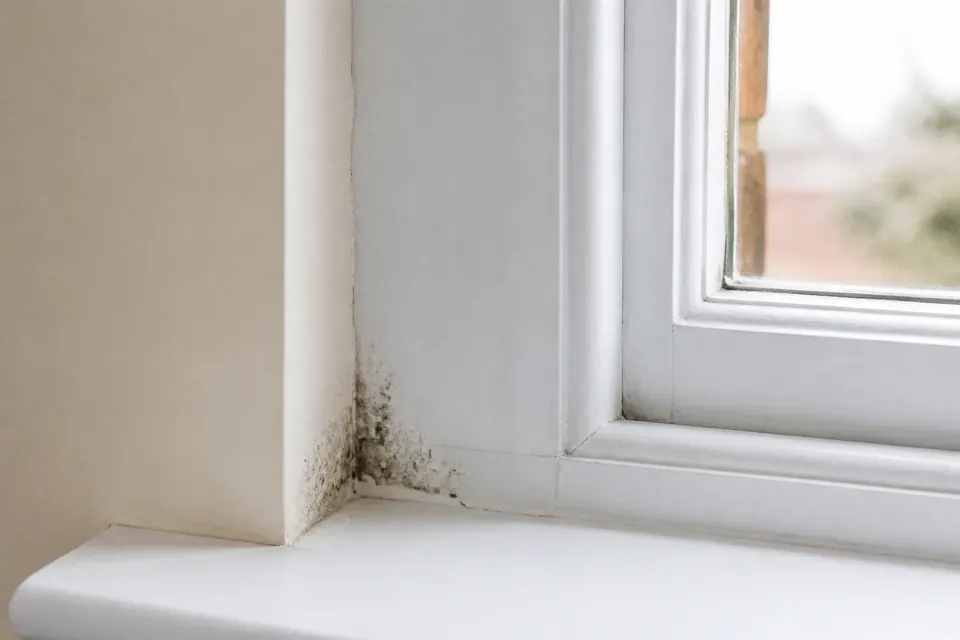
At a window reveal
Explain whether the water was seen there or whether only staining remains. The opening being nearby does not establish the entry route.
MITCHAM / AFTER A WATER INCIDENT
The leak history matters. So does the surface left behind.
Where mould is suspected on water-damaged paint in Mitcham, describe the present coating rather than only the original incident. A repaired leak does not confirm that the material is dry or suitable for treatment. Share what was repaired, what remains uncertain and whether the finish is intact, blistered or soft.
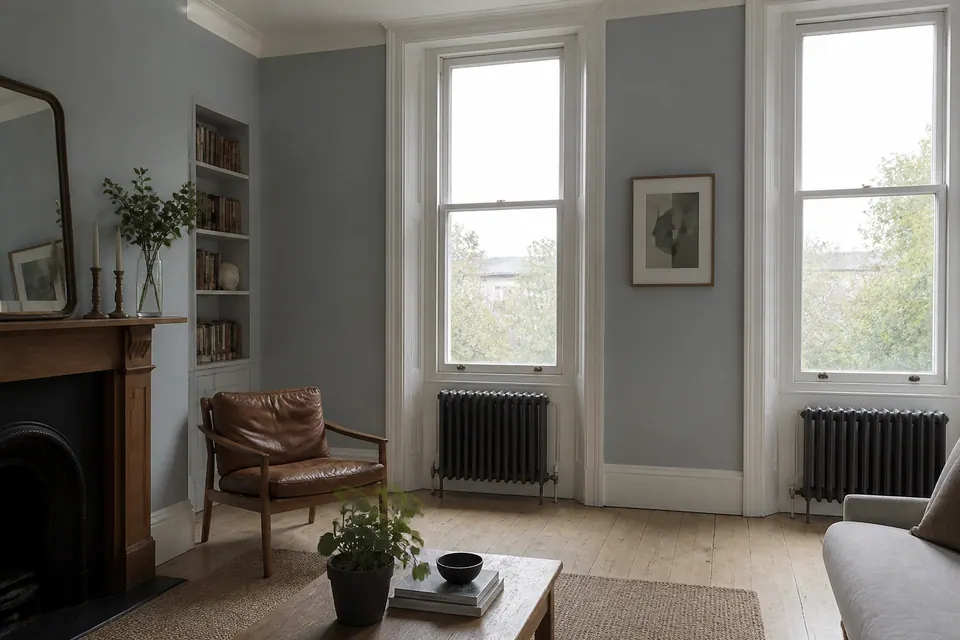
Incident · repair record · present condition
01 / SEPARATE THE QUESTIONS
Keep the water event, the present material and suspected growth as separate observations. Each can affect the next decision.
| Record | Useful meaning | Limit |
|---|---|---|
| A completed leak repair | Identifies work already undertaken | Does not establish the condition of every affected material |
| Paint blistering | Shows a finish that may need further attention | Does not reveal the concealed substrate |
| A residual stain | Marks an area to locate and compare | Does not alone confirm living growth or continuing wetting |
| New water after repair | A reason to revisit the moisture question | Needs assessment rather than another coat of paint |
Replacing damaged plaster, resolving a leak and redecorating require explicit separate agreement.
A treatment enquiry can identify its own limits while another investigation remains necessary.
| Decision | Mould removal | Moisture and material work |
|---|---|---|
| Present concern | Affected suitable exposed surfaces | Remaining wetness, damage or unresolved source |
| Evidence | Clear views of the suspected growth and finish | Incident details and actual repair information |
| Important limit | Cannot promise to restore failed paint or plaster | A repair record is not proof of a treatable finish |
| Next agreement | Scope, preparation and method-related guidance | Investigation, drying or replacement as applicable |
02 / LOCATE THE ISSUE
A spreading stain may cross several surfaces with different treatment and repair needs.
Explain whether the water was seen there or whether only staining remains. The opening being nearby does not establish the entry route.
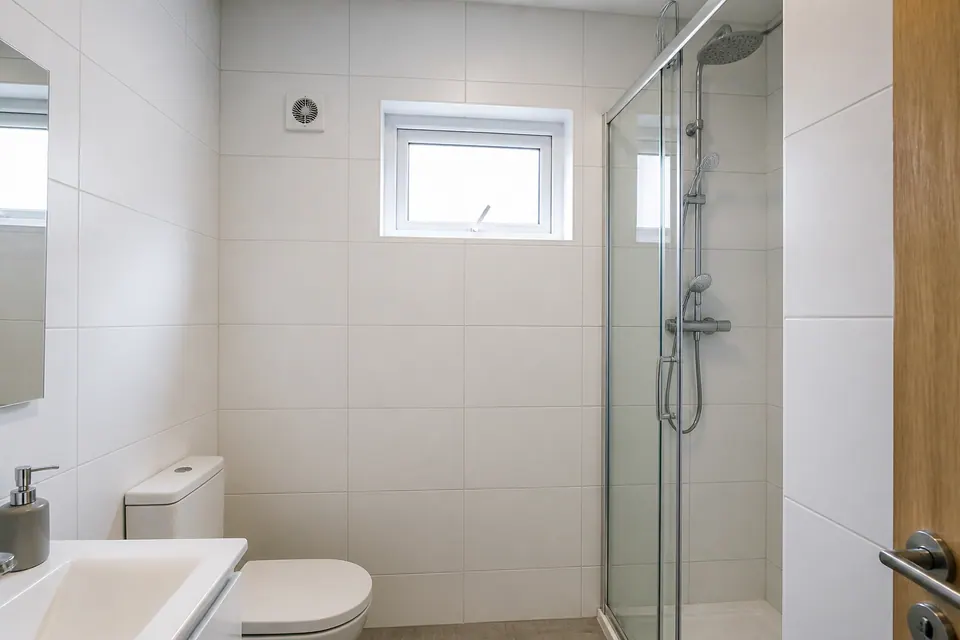
Separate painted plaster from grout and seals. If a leak was repaired, describe the remaining affected material rather than treating all bathroom surfaces as one item.
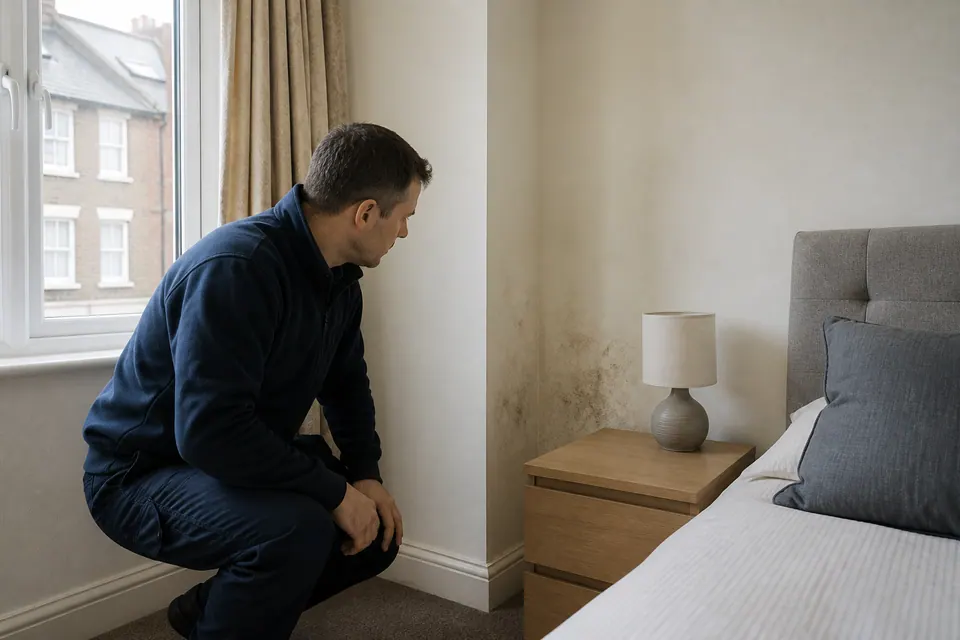
Show the finish and bed clearance together. Mention any changed belongings separately from the wall enquiry.
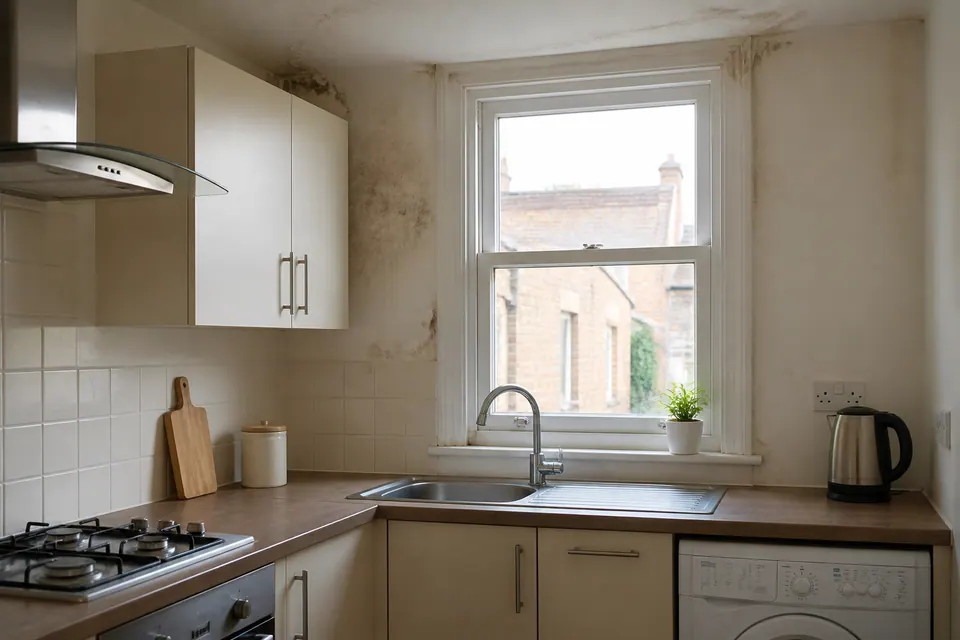
State which appliance or pipe repair is documented, if any. Do not infer an active fault merely because the mark lies below a fitting.
Include the wider extent of discolouration and exposed damage. Distinguish the area suspected of growth from the whole stained area.
Blistered, peeling or soft-looking areas may alter the plan. Do not scrape them to reveal the substrate for a photograph.
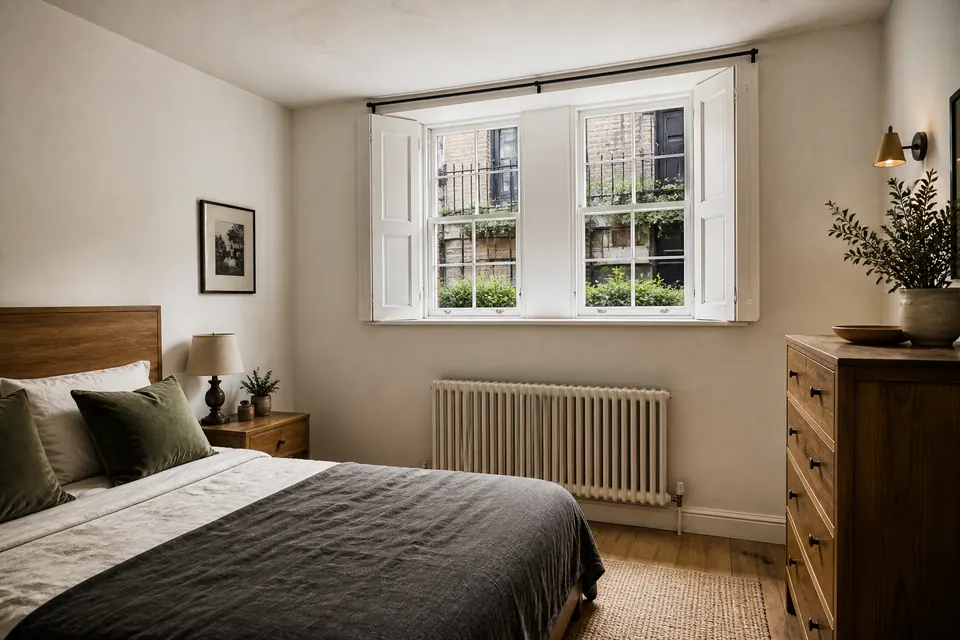
If the incident reached a cupboard, explain which surfaces remain visible. Unseen backing or cavities should not be described as inspected.
A dry-looking photograph does not verify drying, and discolouration alone does not confirm mould.
Mitcham / WATER-DAMAGED COATINGS
The account of the leak should lead to a description of the remaining finish.
Identify the affected wall or ceiling and explain whether paint has lifted, discoloured or changed texture. Share any completed repair record, but leave unconfirmed drying or concealed damage open for assessment. This helps distinguish suitable accessible mould-removal work from a surface that needs another trade before it can be reinstated.
04 / A CONTROLLED APPROACH
Compare the account of water exposure with the currently visible finish and proposed treatment area.
Clarify access and protection without asking occupants to strip or disturb damaged coatings.
Limit mould-removal work to the agreed appropriate exposed material; unresolved damage is not silently covered over.
Explain any separate moisture, replacement or decoration question and the relevant return guidance.
The stages should make unfinished work visible, not imply full restoration.
Keep the original incident and repair dates with current photographs.
Differentiate treatment of suitable surfaces from any material that needs another response.
Ask what is still excluded or unresolved before arranging subsequent decoration.
Illustrations show a service sequence, not a verified water-damage restoration result.
05 / QUOTATION, NOT GUESSWORK
A photograph-led quotation may be possible for a small suitable accessible area. Damage, repeat growth or unresolved damp can require assessment and a different scope.
See the current mould-removal scope ↗| Observed situation | How work is considered | What to include |
|---|---|---|
| Small suitable exposed area | Photographic quotation where appropriate | Present finish and accessible extent |
| Recurring or several affected areas | Assessment to establish the treatment scope | Changes since the incident or earlier treatment |
| Failed material or complex damp | Specialist quotation may be needed | Repair history and unresolved conditions |
Agree the total for named work. A mould-removal quote should not be read as an all-in water-damage restoration price.
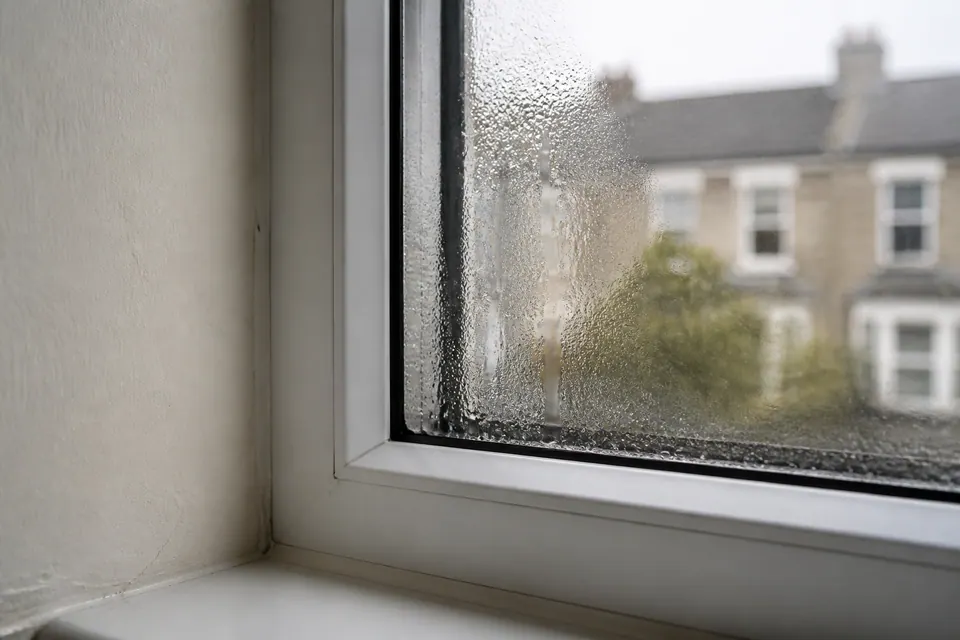
06 / WHEN IT COMES BACK
Note new water separately from a remaining stain. Record when suspected growth changed and whether the finish deteriorated further.
A repeated mark after treatment may call for reassessment of material and moisture conditions. It should not be dismissed as an inevitable cosmetic issue or solved by concealing the evidence.
The leak, repair, treatment and any later change may happen at different times and answer different questions.
Mitcham / ACCESS & PEOPLE
A short factual sequence helps more than an unsupported statement that the wall is now fine.
Identify paint, plaster or covering where known and leave concealed conditions unconfirmed.
Keep leak repair, affected-surface treatment and reinstatement visible as different decisions.
Share current photographs and practical room-use limits with the person arranging the work.
Provide the actual repair description and date rather than asking a treatment visit to verify unrelated works retrospectively.
Agree any further material decision before treating repainting as the final step.
08 / ROOM-BY-ROOM CONTEXT
Identify the repaired item if known and describe the remaining paint, seal or grout separately.
Explain the present wall condition and practical arrangements for furniture and sleeping use.
Distinguish an appliance repair from the finish below it; both records may matter but they are not the same work.
Keep a wider view of the affected decoration so isolated growth is not confused with every water stain.
If the incident crosses a shared area, confirm access permissions and the precise boundary of proposed work.
Describe the level, water event and present finish without assuming that all moisture has the same source.
09 / DIRECT ANSWERS
Yes, identify the intact portion and its boundary. Suitability still needs confirmation rather than assumption.
No. Describe and photograph the condition from a safe accessible position, then seek preparation advice.
Not necessarily. The current material condition and remaining moisture question must be considered.
Do not assume a cosmetic restoration result. Residual discolouration and reinstatement need a separate discussion.
They can be described together, but identify their different finishes, extent and access requirements.
It is not an automatic part of surface mould treatment; obtain an explicit scope for any replacement.
Say so. An unresolved water problem may require investigation beyond the treatment enquiry.
Follow guidance for the agreed work; neither drying nor immediate room return should be inferred from the quote.
Mitcham / PLAN THE APPOINTMENT
Send the Mitcham postcode to confirm availability for the proposed visit.
Mention floor level, ceiling access and any restrictions around the damaged room before a date is agreed.
Load the area map.
Mitcham / BEFORE BOOKING
Provide a factual history without needing to diagnose the remaining condition.
Give the date it was noticed and identify uncertainty rather than inventing a duration.
Relevant repair details may help explain what was done; they do not verify the current condition by themselves.
Colour alone cannot establish that. Show the suspected growth separately from general water staining.
Its suitability must be assessed. Do not assume treatment will restore a failed coating.
Describe what is visible without disturbing it and request appropriate assessment guidance.
Explain the unresolved issue first; the necessary assessment and sequence may affect what can be quoted.
Replacement, repair and decoration need explicit agreement and are not automatically part of mould removal.
Follow the agreed preparation instructions rather than scraping, painting or applying products on your own.
Keep dated room-context photographs with the separate incident, repair and treatment information.
MITCHAM / START WITH THE CURRENT FINISH
Send photographs, the postcode and a short repair history. Make loose finishes, continuing water and unknown conditions clear in the enquiry.
Illustrative room scenes are not evidence of completed customer repairs or treatment.
