
BLACKHEATH · EACH RUG DESERVES ITS OWN PLAN
Material-aware Rug Cleaning for Blackheath Homes
A faded label need not turn a cleaning enquiry into guesswork. We begin with what can genuinely be observed: the rug’s weave, feel, colours, underside, worn areas and domestic history. Those clues shape a sensible conversation before any work is agreed.
- Take one photograph showing the complete rug and its surroundings
- Measure the textile itself from edge to edge, excluding loose tassels
- Capture the old repair, nearby colour and underside in separate close-ups
- Mention tight corners, stairs or communal entrances at your Blackheath address
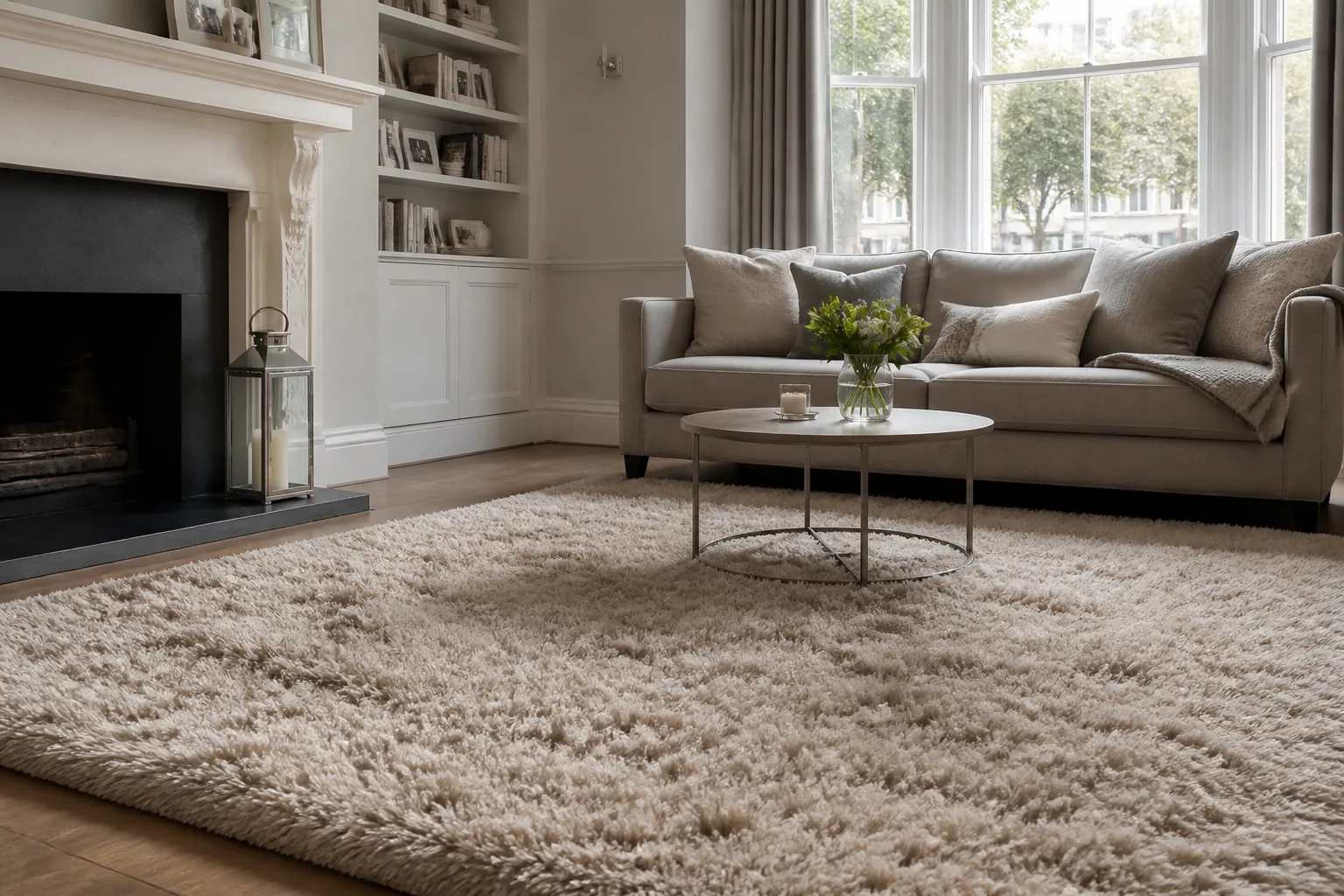
A BLACKHEATH HOME IN PRACTICE
Planning begins before the rug leaves its room
Picture a generous period flat reached by a narrow communal stair. A repaired rug fills much of the sitting room, while its fibre label is no longer readable. Here, logistics and textile condition are equally relevant: there must be room to roll and carry the piece without stressing its weakened edge.
A useful visual story. Start wide enough to include furniture, doorway and exposed floor. Then photograph the repaired section beside an unchanged part of the rug. This makes scale and differences in colour easier to interpret.
Turn back one accessible corner rather than dragging the whole item. A clear underside image may reveal stitching, backing, dust migration or an earlier intervention. Unknown details can remain unknown until an in-person check.
Notes worth gathering before you contact us
Identity: Treat this loose rug as an individual furnishing, not an extension of the carpet.
Footprint: Record the furthest edge-to-edge measurements in metres.
Main concern: Circle the changed colour near the historic repair in a wide photograph.
Fibre clues: Copy label wording exactly, including uncertainty or missing sections.
Weave: Show the face and underside so pile and foundation can be compared.
Palette: Highlight bold light-dark boundaries and any colours that have shifted.
Perimeter: Photograph pulled binding, thinning tassels, waves and fragile corners.
Back: Look for patches, powder, cracks, staining or marks passing through.
Past care: Name spotters, hired equipment and previous cleaning where remembered.
Smell: Give its likely origin, approximate age and whether it changes with humidity.
Setting: Include the room use, flooring and items normally resting on top.
Movement: Flag any part of the property where safe carrying may be awkward.
Ventilation: Note usable windows and a place away from everyday traffic.
Repositioning: Do not plan to load the rug with furniture before final advice.
Priorities: Separate appearance, hygiene, smell and damaged structure.
Realism: Washing can lift contamination, but cannot recreate missing yarn or pigment.
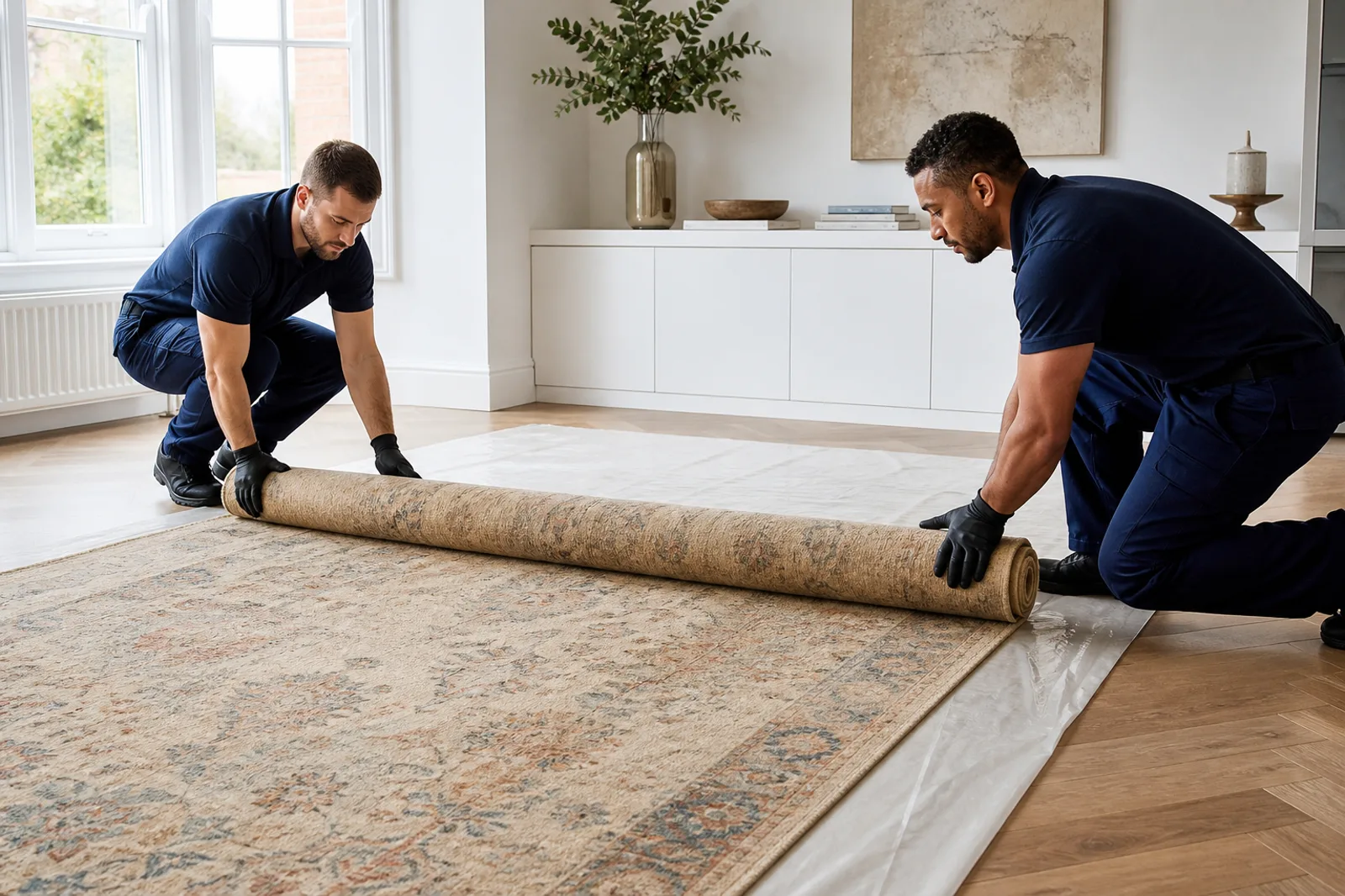
READING THE TEXTILE
Four clues guide the early conversation
A rug is a layered object. Its yarns, colourants, underlying structure and later alterations may react differently, so no single surface clue tells the whole story.
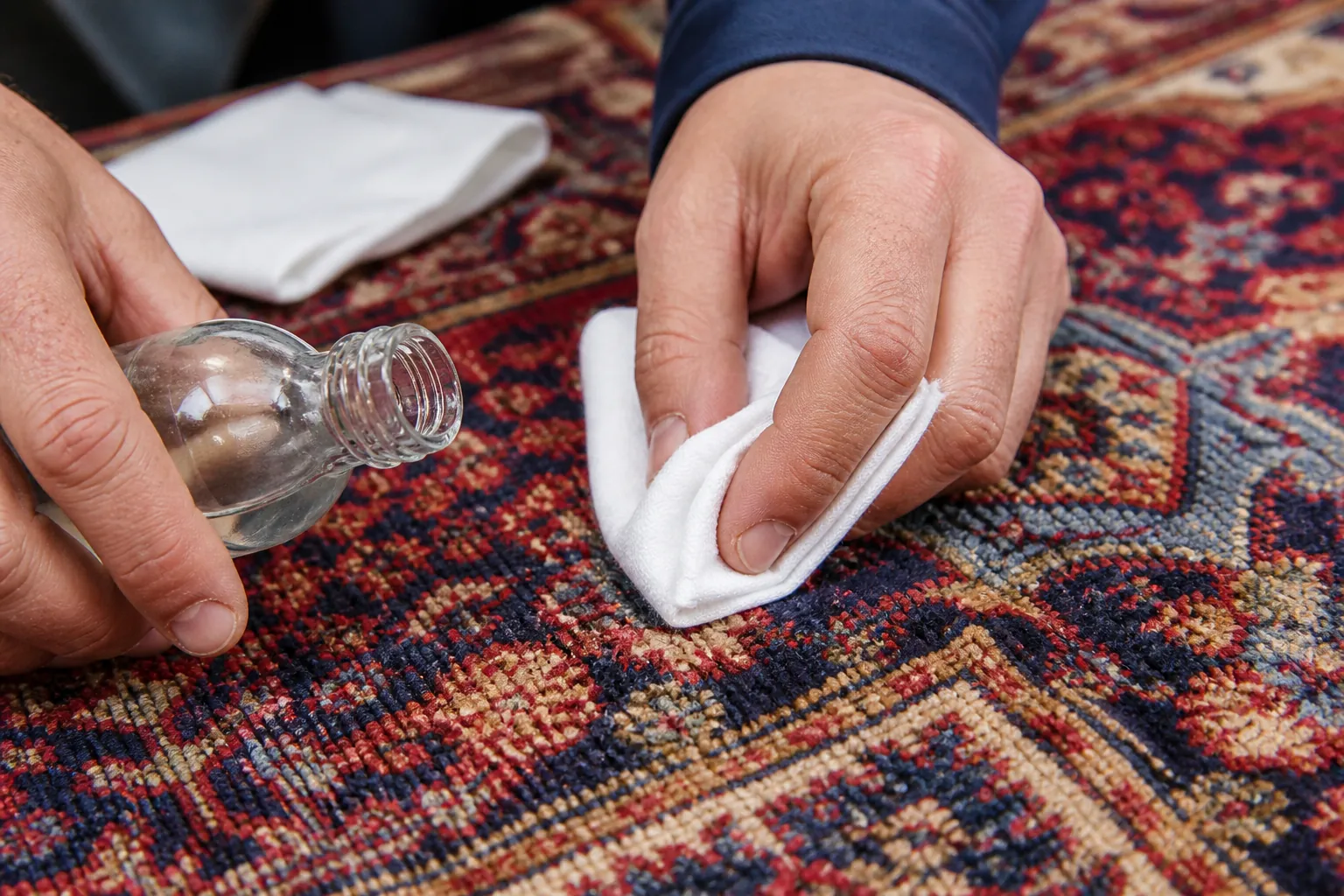
How the yarn behaves
Texture and absorbency can narrow the safe choices without replacing testing.
How shades respond
Neighbouring dark and pale areas deserve particular attention.
How it was assembled
Knots, tufting and flat weave each place different demands on handling.
What has changed
Repairs, adhesive, fringe damage and ageing backing can introduce local weakness.
LOOK BEYOND THE COLOUR
A patch is an observation, not a diagnosis
What looks brown from one angle may be compacted pile, greasy soil or shadow. A lighter patch can be worn yarn, missing dye, leftover product or chemical damage. Viewing it from several directions and checking the reverse prevents an early label from dictating the wrong expectation.
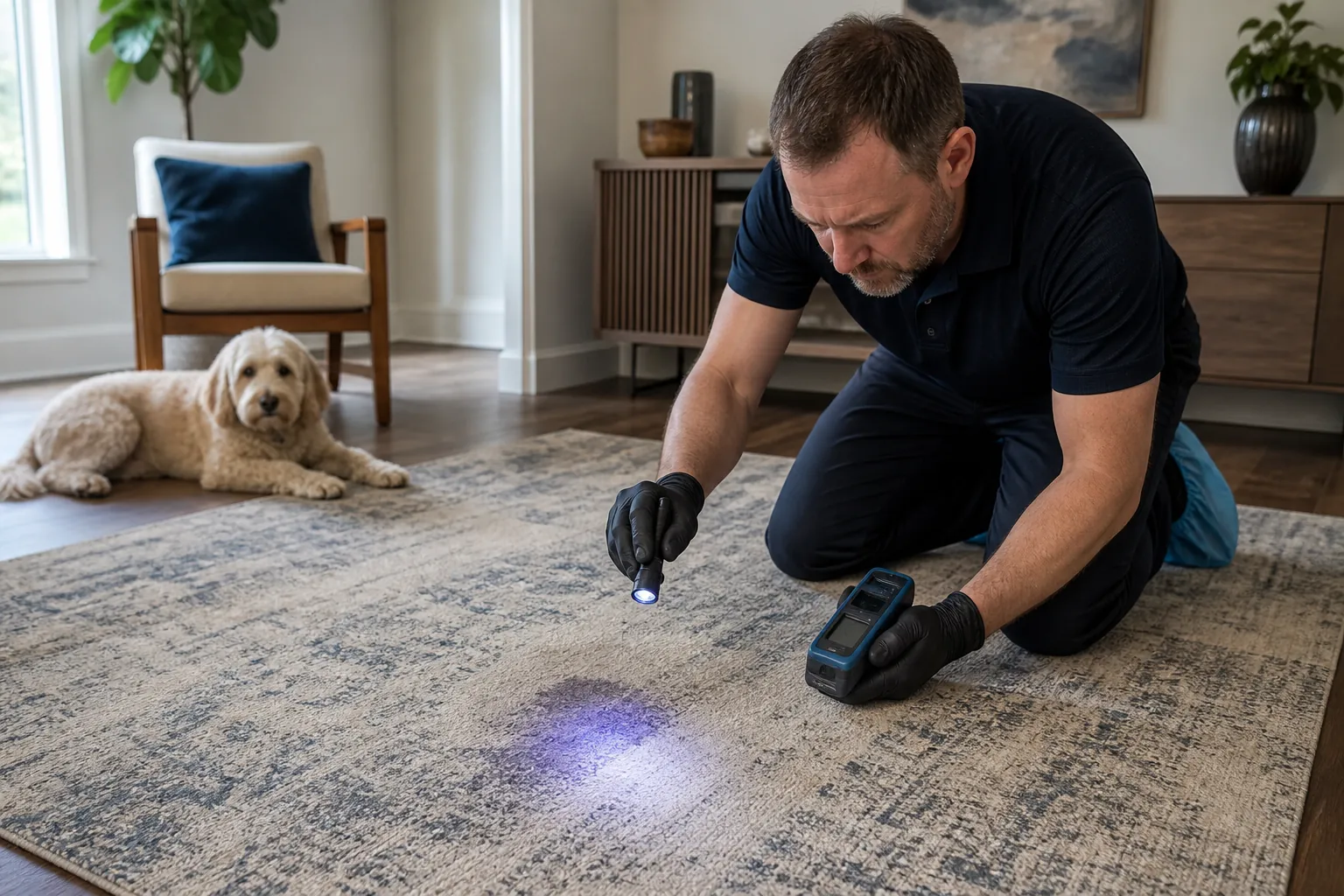
WHEN LIQUID HAS TRAVELLED
The source of a smell may sit deeper than the surface
Liquid near an older repair may have passed between yarns or collected around backing and stitching. Tell us what was spilled and what was used afterwards. That history helps distinguish a local surface issue from one involving several layers.
- When the incident happened and what probably caused it
- Whether the underside or flooring also shows a change
- Every known home treatment, even plain water
- Any improvement or return of the odour over time
FROM ENQUIRY TO HANDOVER
Each checkpoint answers a different question
The working method is chosen after the rug is understood. Construction and condition set the boundaries; household circumstances influence movement, drying and the advice given at the end.
- 01
Document
Build a record of size, faults, history and desired outcome
- 02
Identify risks
Check colour relationships, yarn, seams and vulnerable backing
- 03
Release dry debris
Lift suitable loose material before introducing moisture
- 04
Treat selectively
Concentrate on the agreed priorities within safe boundaries
- 05
Manage water
Limit and remove moisture in a way suited to the construction
- 06
Review the result
Look again at repaired areas, edges, field and overall finish
- 07
Return with guidance
Set out ventilation, use and furniture timing for this rug
MAKE A QUICK OBSERVATION CARD
Choose only what you can see or reliably remember
This short tool helps organise your message. It is not a remote fibre test and will not prescribe a process.
HELP US PRICE THE RIGHT JOB
A concise brief can prevent several rounds of questions
Combine factual dimensions with a small, purposeful set of images. Add the item’s story and the realities of entering your Blackheath home; leave out confident guesses that a label or photograph cannot support.
- Your postcode and best way to reply
- Longest edge measurement
- Widest edge measurement
- One image of the rug in its room
- Several angles on the repaired and discoloured area
- Underside, label, fringe and notable damage
- Spill response and earlier cleaning
- Type of floor and movable furniture
- Parking limitations and route from entrance
Four points to settle before booking
Does a maker’s label provide a complete specification?
Not always. Labels are helpful, yet condition, construction and colour behaviour still require attention.
Does visible fading mean dirt is present?
Not necessarily. Light exposure, abrasion and lost colour can resemble removable soiling.
Is there a fixed drying duration?
No single duration fits every rug, process, season and room environment.
May a table be replaced straight away?
Wait for the item-specific guidance provided when the work is handed over.
INDICATIVE BLACKHEATH PRICING
Size places the rug in an opening price band
We then consider the actual fibre, weave, present condition, access requirements and any separately agreed specialist attention before confirming scope.
QUESTIONS FROM BLACKHEATH HOUSEHOLDS
Direct answers for a more informed booking
What information is most useful in my first message?
Include your postcode, accurate dimensions, overview and detail images, the main concern, known treatment history and access notes.
Can you identify delicate fibres from a phone picture?
A picture offers clues, but it cannot establish fibre composition or colourfastness with certainty.
Can the altered area beside my repair return to one colour?
That depends on its cause. Removable residue may improve, whereas lost dye and abraded yarn will not be rebuilt by cleaning.
Why do you ask to see underneath?
The underside can reveal repairs, construction, transferred liquid and deterioration concealed by the pile.
Is it sensible to use a shop-bought spotter meanwhile?
It is safer to pause, retain the product details and report anything already applied.
Why can an odour remain after wiping the face?
Its source may have penetrated the foundation, backing, underlay or floor, beyond the area reached by wiping.
When is it safe to put furniture on the rug?
Use the guidance supplied for the finished item, because weight can impede drying or cause transfer.
Which factors affect drying at my address?
Yarn absorbency, pile density, backing, chosen method, indoor warmth and moving air all have an effect.
Are the displayed size prices guaranteed quotes?
No. They are entry bands; the final quotation reflects the full item and the agreed work.
What does the £68 minimum visit mean?
An eligible appointment starts at that amount, and compatible work booked together may contribute to it.
START YOUR BLACKHEATH ENQUIRY
Let the rug’s details shape the conversation
Send a measured overview, honest history and clear close-ups for a practical first response.
