
ENFIELD · ONE ADDRESS, SEVERAL DISTINCT TEXTILES
Rug Cleaning in Enfield, Organised Item by Item
A hall runner, bedroom flatweave and large lounge rug should not disappear into one vague “rug clean”. Enfield enquiries are easier to scope when every item receives its own number, dimensions, condition note and route through the house.
- Give each rug a room name and simple reference number
- Measure runners without including loose fringe in the length
- Record drinks, dry soil and odour as separate observations
- Map upper floors, stair landings, permit bays and loading time
CREATE THE INVENTORY
Nine fields keep several Enfield rugs separate
Repeat this short record for every textile. Matching numbers should appear in filenames or on a paper card beside the item.
- Reference number and room
- Length, width and shape
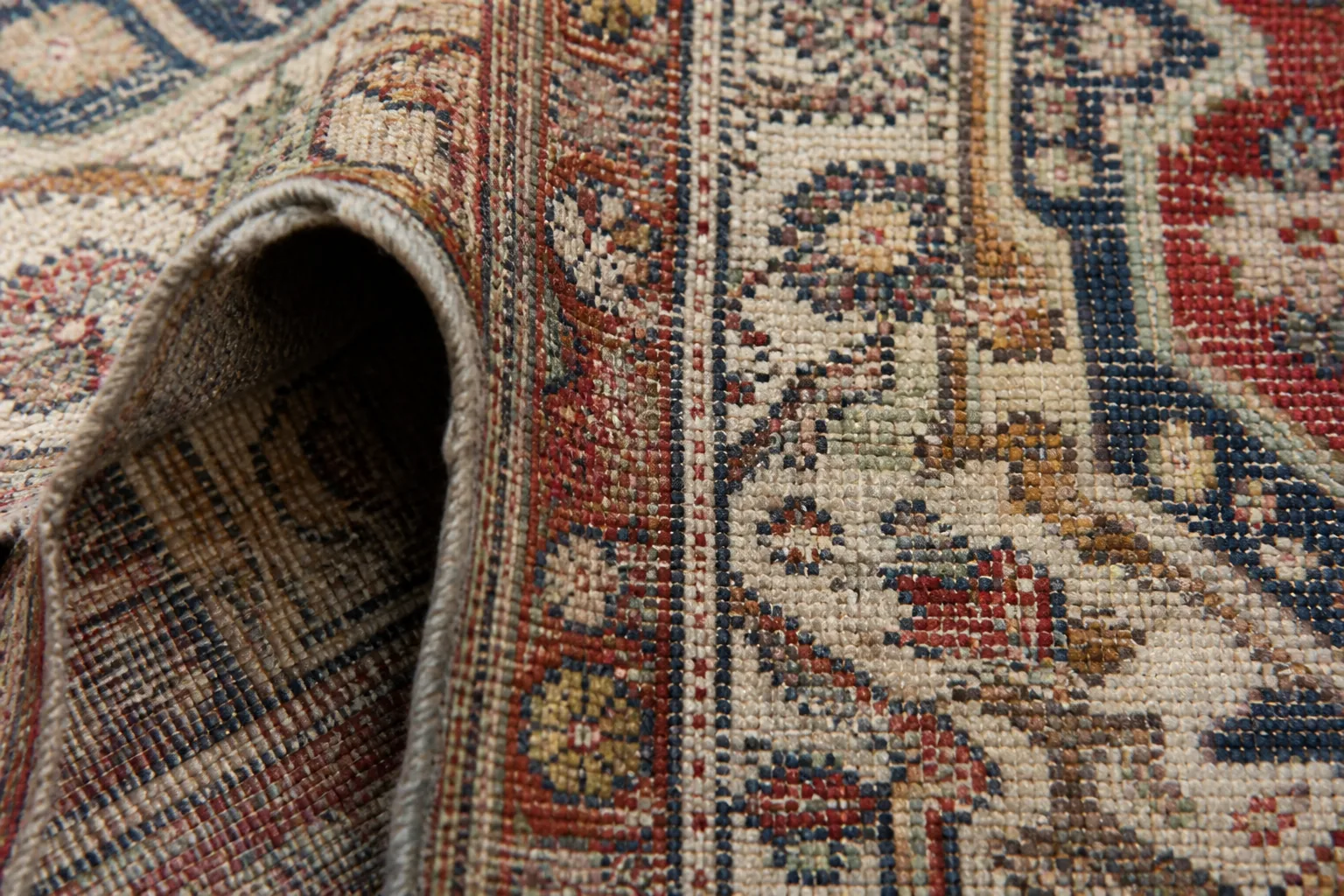
- Full face photograph
- Reverse and label photograph
- Construction or “undetermined”
- Main condition observation
- Previous products or treatments
- Furniture sitting on the rug
- Floor level and carrying route
Inventory mistakes to avoid
Can every rug share one photograph?
No. An individual overview prevents dimensions and condition notes from being mixed.
Should fringe count in the measured length?
State the body length first and give fringe depth separately.
What if two rugs look identical?
Use room and number labels; wear history can still differ.
Do I need to identify every fibre?
No. “Undetermined” is safer than an unsupported guess.
SORT BEFORE SELECTING A METHOD
The inventory exposes different risk profiles
A long runner and a deep lounge piece can respond differently even at the same address.
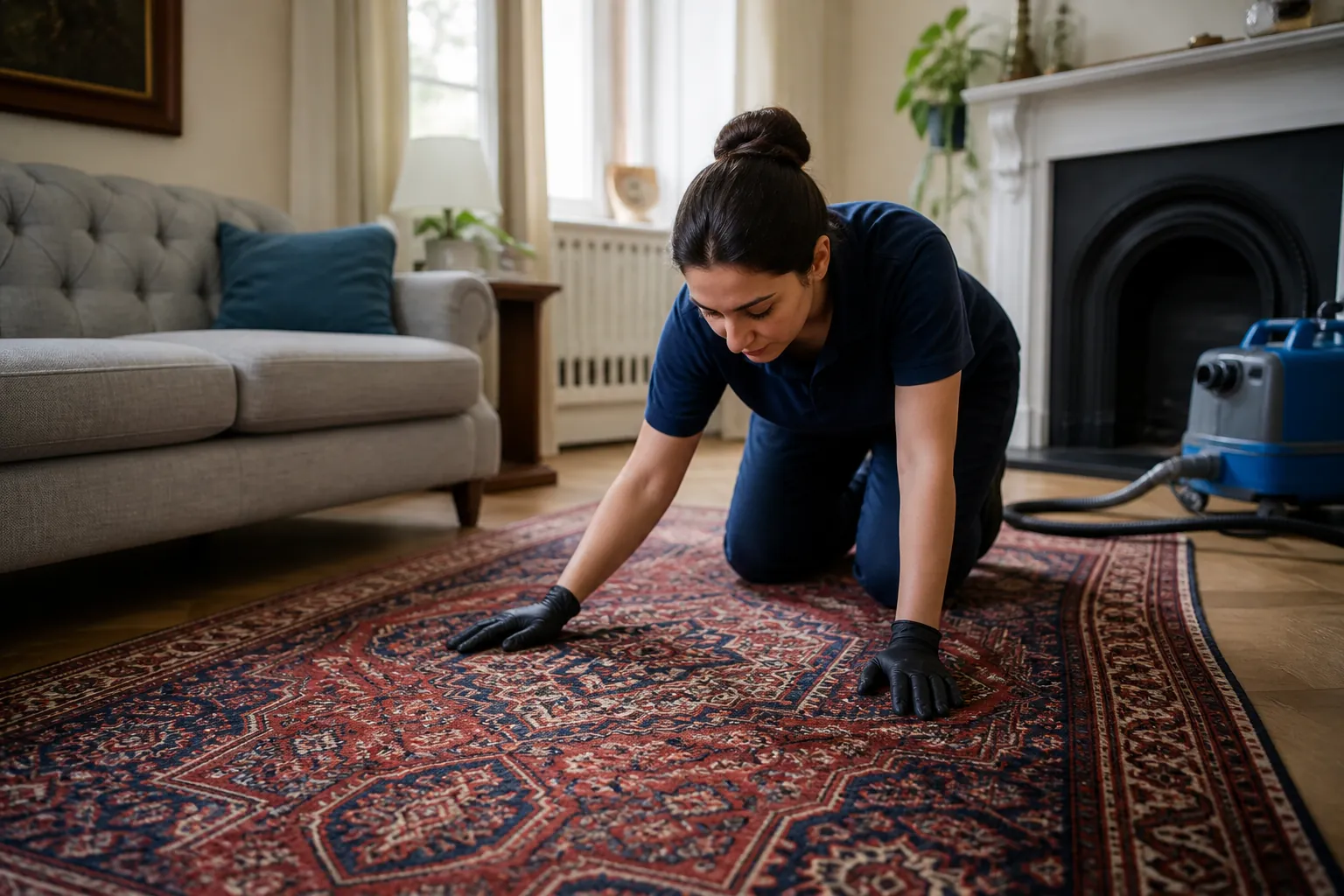
Runner or room rug
Shape affects handling and measurement.
Flat, tufted or knotted
Construction informs moisture limits.
Hall, bedroom or lounge
Use explains likely soil patterns.
Stairs and landings
Large pieces need a viable exit route.
LIQUID MARKS NEED A TIMELINE
A drink spot is more than its current colour
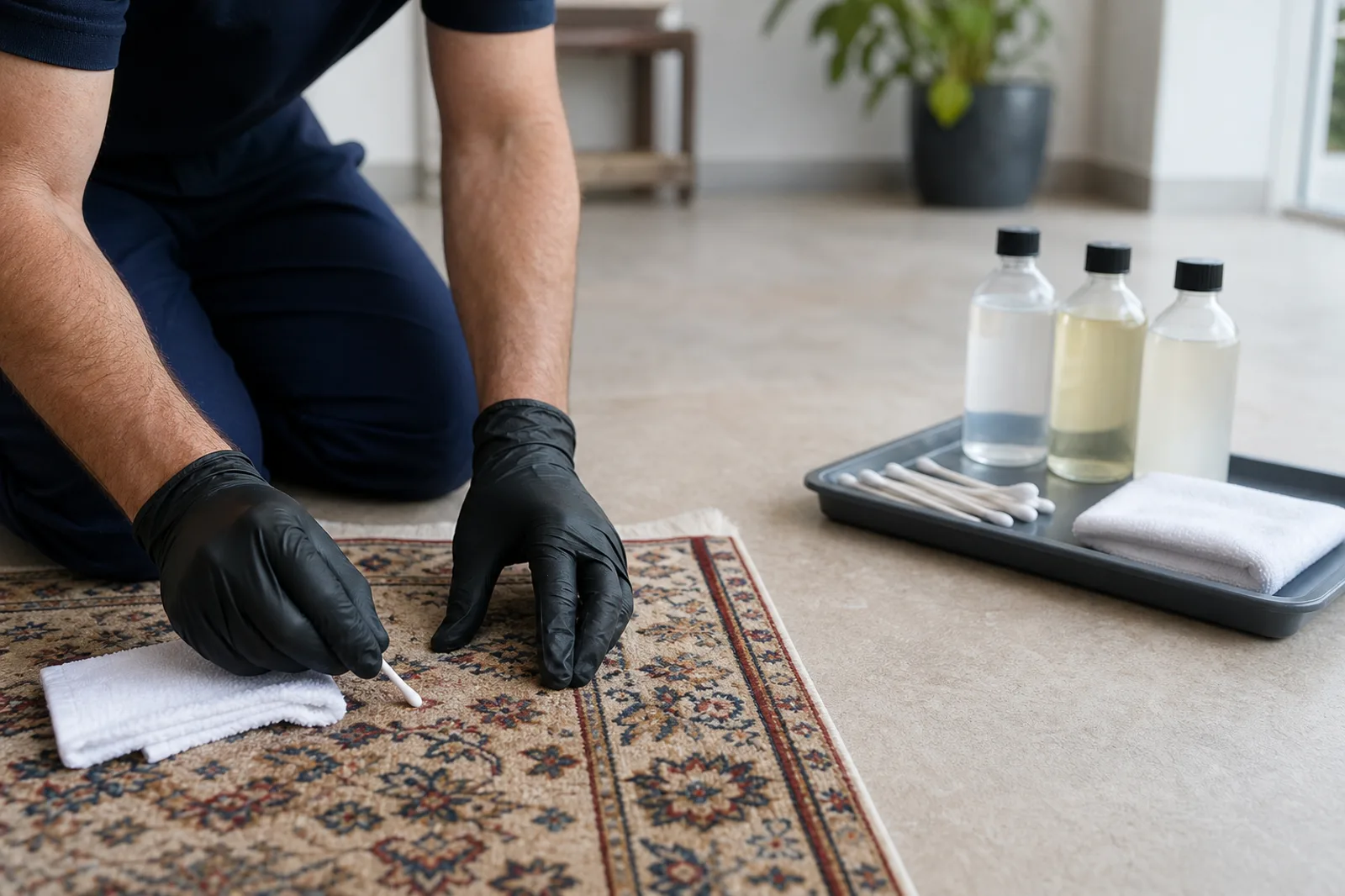
Record what was spilled, when it happened, how it was blotted and which product followed. Sugars or detergent residue may remain even when the mark appears faint.
DRY GRIT IN BUSY ROUTES
Hall soil belongs to the runner’s story
Particles near an entrance differ from drink residue in a family room. Keep those observations attached to the correct inventory number.
- Show the cleaner area used for comparison
- Note shoes, buggies or pets only when relevant
- Photograph edge curl before moving the runner
- Do not combine unrelated defects into one stain label
TAG ONE ENFIELD ITEM
Build a compact card for the selected rug
The tool structures your message; it does not prescribe a treatment.
THE ENFIELD HOUSE ROUTE
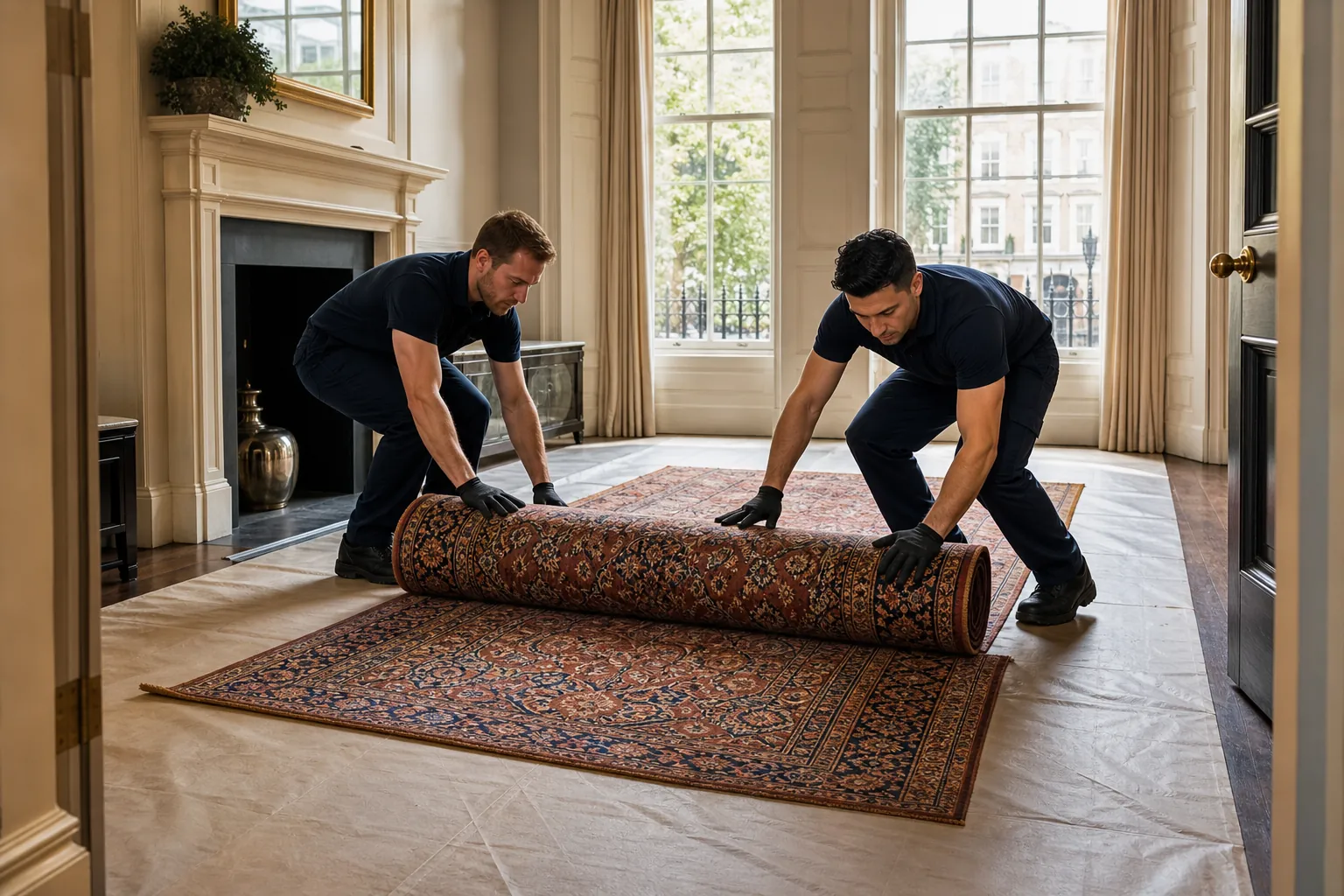
A rolled rug still needs length, clearance and control
Long halls may look generous until a turn meets a stair rail. Before agreeing handling, we compare the rolled dimension with doors, landings and the final approach to the vehicle.
Example inventory. Item 01 is a wool-blend lounge rug with a drink mark; Item 02 is a synthetic runner carrying entrance grit; Item 03 is a small bedroom flatweave with no priority stain.
Logistics note. Items 01 and 03 are upstairs, the half landing is narrow, and weekday permit parking limits loading time. Those facts belong beside the textile records.
Enfield inventory control
Number. Use the same reference in every photograph.
Room. Record where the textile normally sits.
Shape. Note oval, runner or irregular outline.
Body size. Exclude fringe and record it separately.
Face. Photograph pattern square-on.
Reverse. Show backing, weave and label.
Edges. Capture binding, curl and old repair.
Incident. Attach date and location to one item.
Residue. List named household products.
Floor. Identify laminate, wood, tile or carpet beneath.
Furniture. State what overlaps the rug.
Level. Give floor and lift availability.
Landing. Include the tightest turn.
Loading. Explain permit or distance constraints.
Outcome. Keep appearance, odour and damage distinct.
Approval. Confirm scope per item before work.
THE INVENTORY WORKFLOW
Seven controls for a multi-rug address
Each textile keeps its identity from first image to final handover.
- 01
Number
Assign a room reference
- 02
Measure
Record body dimensions
- 03
Inspect
Review face and reverse
- 04
Route
Confirm stairs and loading
- 05
Agree
Set the item-specific scope
- 06
Track
Keep observations attached
- 07
Handover
Issue separate care notes
PRICE EACH OBJECT CLEARLY
Area bands help organise the Enfield list
Final scope may differ between items because construction, condition and floor level are recorded independently.
ENFIELD INVENTORY QUESTIONS
Answers for homes with more than one rug
Why number the rugs?
It prevents a stain note, size or photograph from being attached to the wrong textile.
Can runners be priced only by length?
Width, construction, condition and access also matter.
Should fringe be measured separately?
Yes. Give the woven body size and then the fringe depth.
What should an upstairs photo show?
Include the narrowest landing, rail and door alignment.
Can all rugs use one method?
No assumption is made; every construction receives its own assessment.
Does a faint drink mark still matter?
Yes. Residue and earlier products can matter even when colour has faded.
What if parking is permit-only?
Supply the operating hours, likely distance and any visitor arrangement.
May I roll rugs before photographing?
Take the full face and room view first, then discuss safe preparation.
Will all items dry together?
Not necessarily; fibre, pile, treatment and airflow can produce different timings.
How is the £68 minimum applied?
It is the visit minimum; confirmed eligible items may contribute to the combined booking.
NUMBER, MEASURE, PHOTOGRAPH
Turn several Enfield rugs into one clear enquiry
A tidy inventory gives each textile the attention and logistics it needs.
