
STOKE NEWINGTON · KEEP THE UNKNOWN VISIBLE
Stoke Newington Rug Cleaning for Older Textiles
An inherited rug may arrive without a label, receipt or reliable fibre description. Instead of inventing certainty, build its Stoke Newington brief from observable facts: weave, fringe attachment, colour layout, repairs, storage history and the changes noticed since it entered the home.
- Lay out any provenance notes, old photographs or retailer information
- Capture both faces in diffuse daylight without filters or flash glare
- Point out reworked edges, patched foundation and brittle fringe sections
- Describe the narrowest doorway between the rug and the street
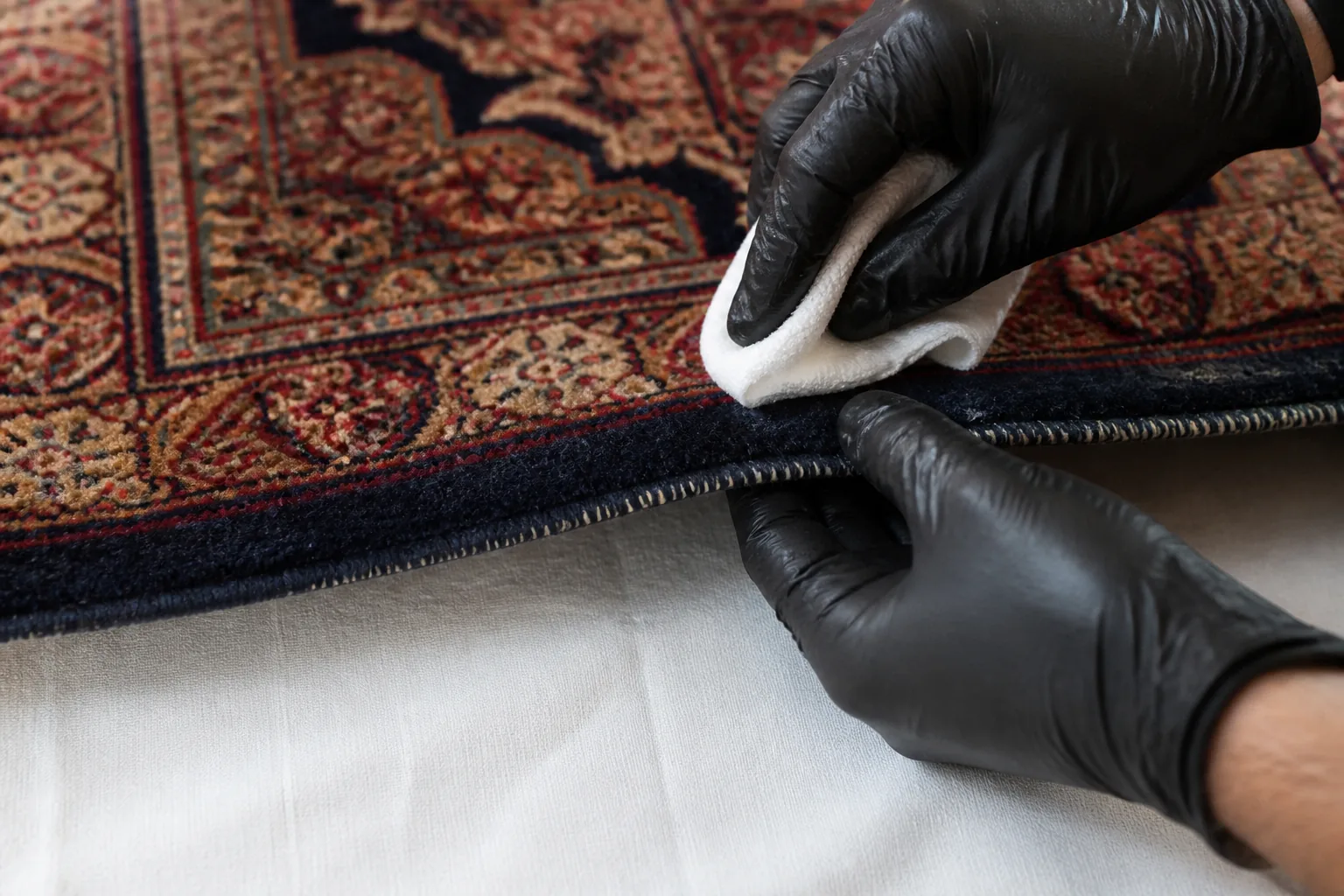
ASSEMBLE THE ARCHIVE CARD
Give the rug a history before asking for a method
Useful provenance can be incomplete. Dates, photographs and remembered events are labelled by confidence, so family recollection is not confused with verified construction.
- Approximate age or date acquired
- Country or shop only when genuinely known
- Front, reverse and side-profile photographs
- Close views of knots, selvedges and fringe roots
- Every visible patch or reinforcement
- Storage locations and any damp episode
- Earlier washing or household products
- Present dimensions without stretching
- Stoke Newington collection route
Evidence labels for older rugs
Family recollection
Record who supplied the information and whether a date is approximate.
Photographic evidence
An older room photograph may reveal pre-existing fading, fringe length or missing motifs.
Physical clue
A knot, backing or label can guide inspection but should not be overinterpreted.
Unknown
This is a legitimate finding and safer than an unsupported claim.
STOKE NEWINGTON TEXTILE FILE
An inherited rug carries more than surface soil
Imagine a patterned piece moved from a relative’s house into an upper-floor flat near Church Street. The colours look uneven, one fringe has been shortened, and a corner contains neat hand stitching. None of those observations proves damage caused by cleaning.
The starting record. The owner finds a photograph from the 1990s showing the paler window-facing side already present. They remember professional work once, but not the process. Both facts are useful because their confidence is clearly stated.
The handling question. The rolled rug fits the internal staircase only when lifted vertically at one landing. Weight, rigidity and weak edges therefore matter before arrival, not after work begins.
Entries in the Stoke Newington textile file
Identity. Use a plain visual description if origin or maker is unverified.
Chronology. List ownership changes, moves and long storage periods.
Images. Date older photographs where possible and preserve originals.
Palette. Note which colours sit beside one another at motif boundaries.
Fading. Compare window-facing and sheltered portions under similar light.
Fringe. Separate original extension, replacement and later machine stitching.
Foundation. Show cracks, holes, stiffening or powdering on the reverse.
Shape. Record bowing or ripples without pulling the rug square.
Residue. Name any moth spray, powder, shampoo or adhesive used.
Storage. Include wrapping material, loft or cellar exposure and duration.
Concern. Rank structural preservation above cosmetic improvement when appropriate.
Agreement. The quoted boundary reflects what inspection can responsibly support.
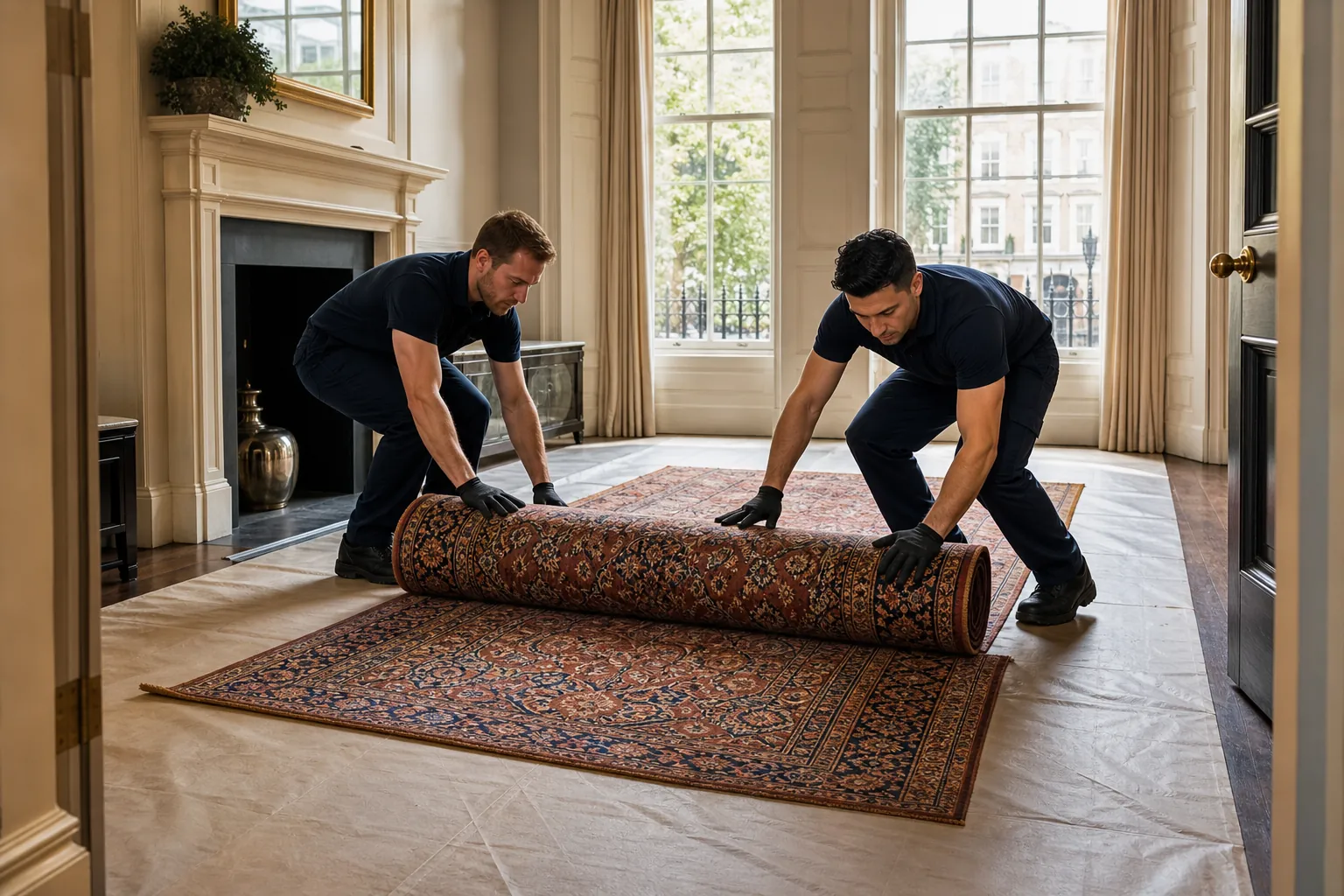
FOUR EVIDENCE TYPES
Read the object without assigning a false pedigree
Age and origin do not need to be settled for a responsible cleaning discussion. Material response and present strength are more immediate questions.
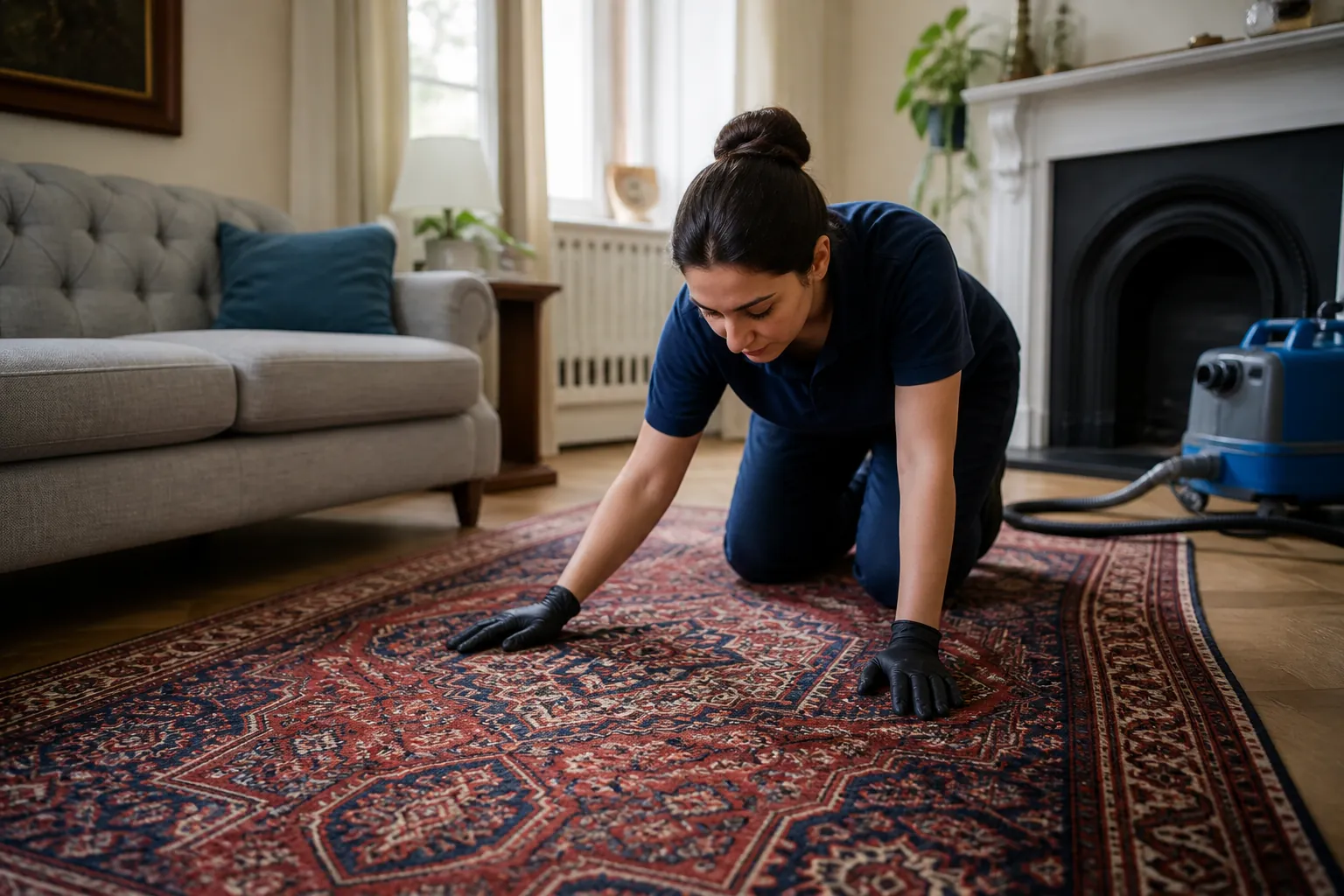
Visible assembly
Face and reverse help describe how the field is held together.
Adjacent colours
Strong contrasts deserve their own stability observations.
Later intervention
Patches and re-edging may respond differently from original material.
Current handling limit
Brittle or detached areas can set the boundary for the whole piece.
CATALOGUE WHAT IS KNOWN
Build a vocabulary from evidence
The selector creates a descriptive inventory. It does not authenticate, value or date a rug.
SIZE REFERENCE, NOT VALUATION
Guide prices describe area bands
These figures do not estimate a rug’s market value or promise acceptance. Fragility, repair work, construction, colour behaviour and access determine whether and how a scope can be offered.
A CONSERVATIVE DECISION PATH
Pause whenever the evidence changes
Older textiles benefit from explicit review points rather than an automatic march through a standard routine.
- 01
Receive
Log dimensions, history and visible interventions
- 02
Survey
Read field, reverse, edges and repaired zones
- 03
Test
Check relevant material and colour responses
- 04
Decide
Confirm, narrow or decline the proposed scope
- 05
Document
Record condition at the working boundary
- 06
Reassess
Stop if a new weakness or reaction appears
- 07
Handover
Explain outcome, remaining change and aftercare
OLDER-RUG QUESTIONS
Ten answers without invented certainty
Can Alesta authenticate my rug?
No. Cleaning assessment is not appraisal, dating or authentication.
Does “handmade” prove a fibre?
No. Construction and fibre are different characteristics and both require evidence.
Is an old rug automatically too fragile?
No. Present condition matters more than age alone, but weakened areas can restrict work.
Why send historical photographs?
They can show whether fading, distortion or missing fringe predates the current enquiry.
Can a faded side regain its original colour?
Cleaning removes suitable soil; it does not recreate dye lost through light exposure.
Will a repair be cleaned identically?
Not necessarily. Replacement fibres, thread or adhesive may behave differently.
Should I beat out dust first?
No. Aggressive handling can stress a weak foundation; describe current condition untouched.
Can storage odour be guaranteed away?
No. Source, depth, wrapping and any damp history affect realistic expectations.
When can the rug return upstairs?
Only when handling and moisture guidance for that specific piece allows it.
What does the £68 minimum include?
It is a visit threshold, not a universal package; the written quotation defines inclusions.
COLOUR CHANGE HAS CONTEXT
Window exposure can mimic uneven cleaning
Compare motif sections from sheltered and exposed zones. A historic photograph may confirm that a pale band existed years before the present request.
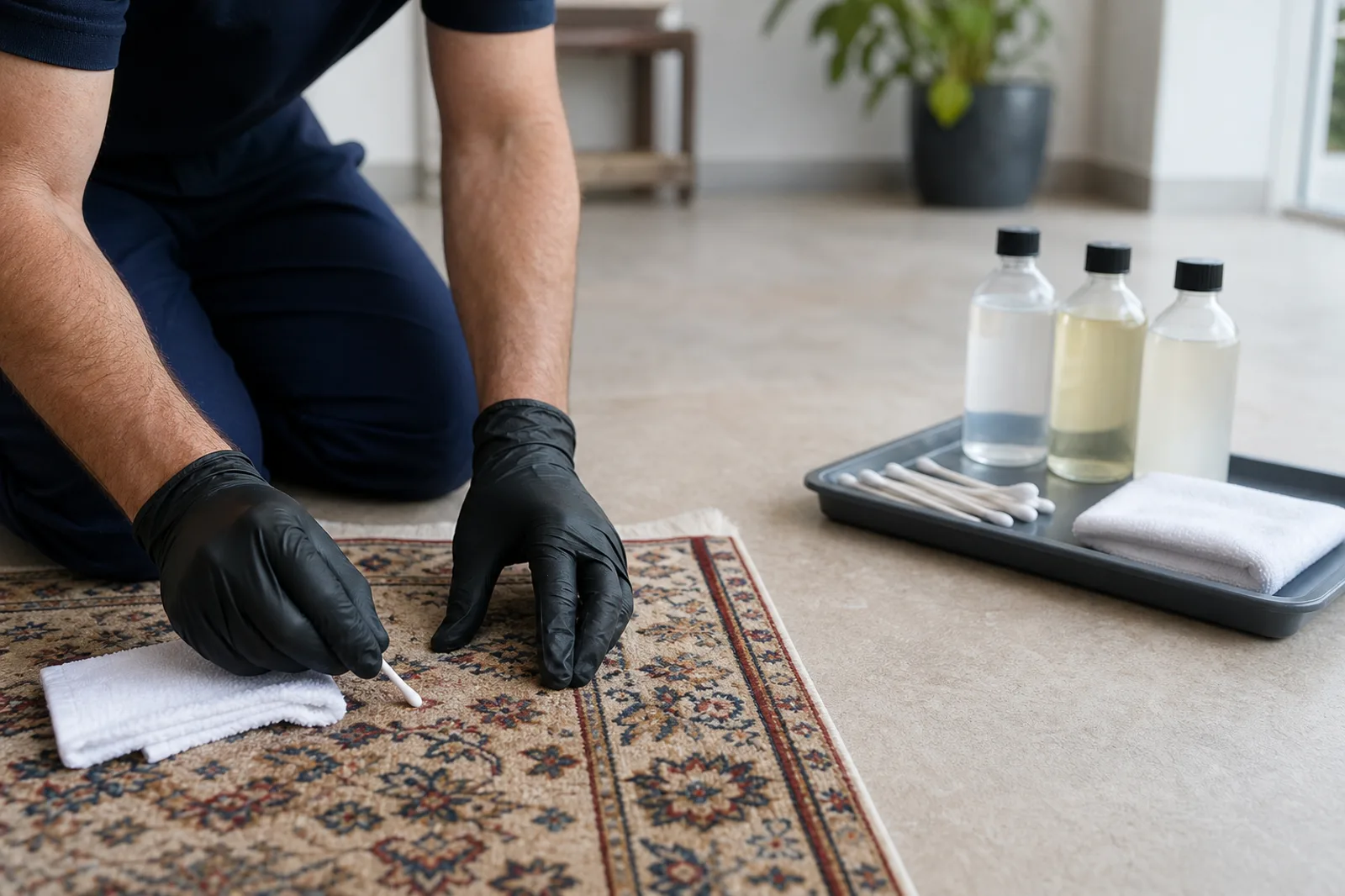
STORAGE LEAVES CLUES
Packaging belongs in the history
Plastic wrapping, newspaper, a damp loft or cedar products can each shape smell and surface condition.
- Photograph the wrapping if retained
- State where and how long the rug was stored
- Look for powder, staining or insect evidence
- Avoid adding fragrance before assessment
PRESERVE THE UNCERTAINTY
Create an honest Stoke Newington textile record
Bring together history, photographs and current condition before asking what is practical.
