
ESHER · DINING ROOMS, DELICATE EDGES, PRACTICAL ACCESS
Rug Cleaning in Esher, Planned Around the Whole Textile
An Esher dining-room rug has two stories: how it was made and how the room uses it. We document both before discussing treatment, from knots and fringe to chair tracks, a faded splash and the carry across a gravel approach.
- Send one overhead view before shifting the dining table
- Show the pale splash beside an unaffected colour
- Measure the rolled width as well as the rug on the floor
- Describe the side entrance from drive to dining room
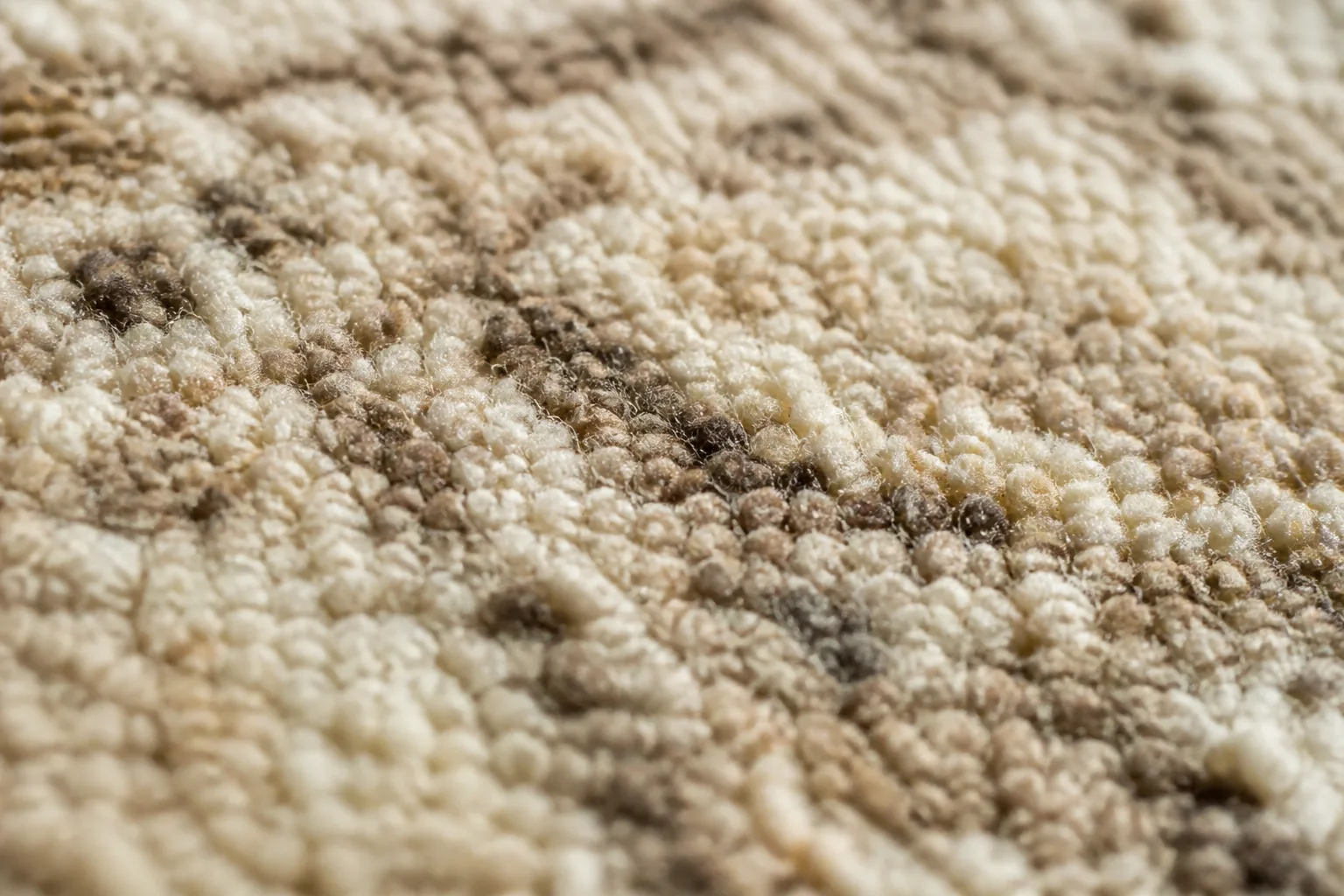
BUILD ESHER’S EVIDENCE NOTE
Record what you can see without guessing the treatment
The controls organise photographs and questions for finely knotted dining-room rug. They do not identify fibre remotely or select a cleaning product.
ESHER ROOM RECORD
Dining furniture leaves clues worth recording
Chair legs can compress a repeated line while daylight changes how a pale mark reads across the pile. Photographing the table position first preserves that evidence.
The object. This enquiry concerns a finely knotted dining-room rug. Its outline, working face, reverse and edges are photographed as one set.
The route. gravel approach and a narrow side passage is described before lifting, so the carrying plan is not improvised at the appointment.
Esher working file
Overview. One square photograph establishes proportion and placement.
Scale. Length, width and rolled diameter answer different handling questions.
Face. Daylight photographs distinguish surface debris from pile-direction shading.
Reverse. A safe corner view may reveal construction, staining depth or an attached backing.
Edges. Binding, fringe roots and weak corners are recorded independently.
Colour. Affected and unaffected motifs appear in the same frame for comparison.
History. The owner names earlier sprays, powders, rental machines or professional work.
Use. Furniture, footwear, pets and repeated routes are included only where relevant.
Floor. finished timber boards remains a separate surface with its own care limits.
Access. gravel approach and a narrow side passage becomes part of the handling brief.
Unknowns. Missing fibre or dye information is recorded honestly rather than inferred.
Expectation. Soil removal, mark improvement, odour work and wear are discussed separately.
Preparation. Movable items are agreed; heavy pieces are never assumed.
Drying. Airflow, density and method determine the return point.
Price. Size is considered with build, condition, access and accepted extras.
Decision. The final route follows assessment of this rug, not its postcode.
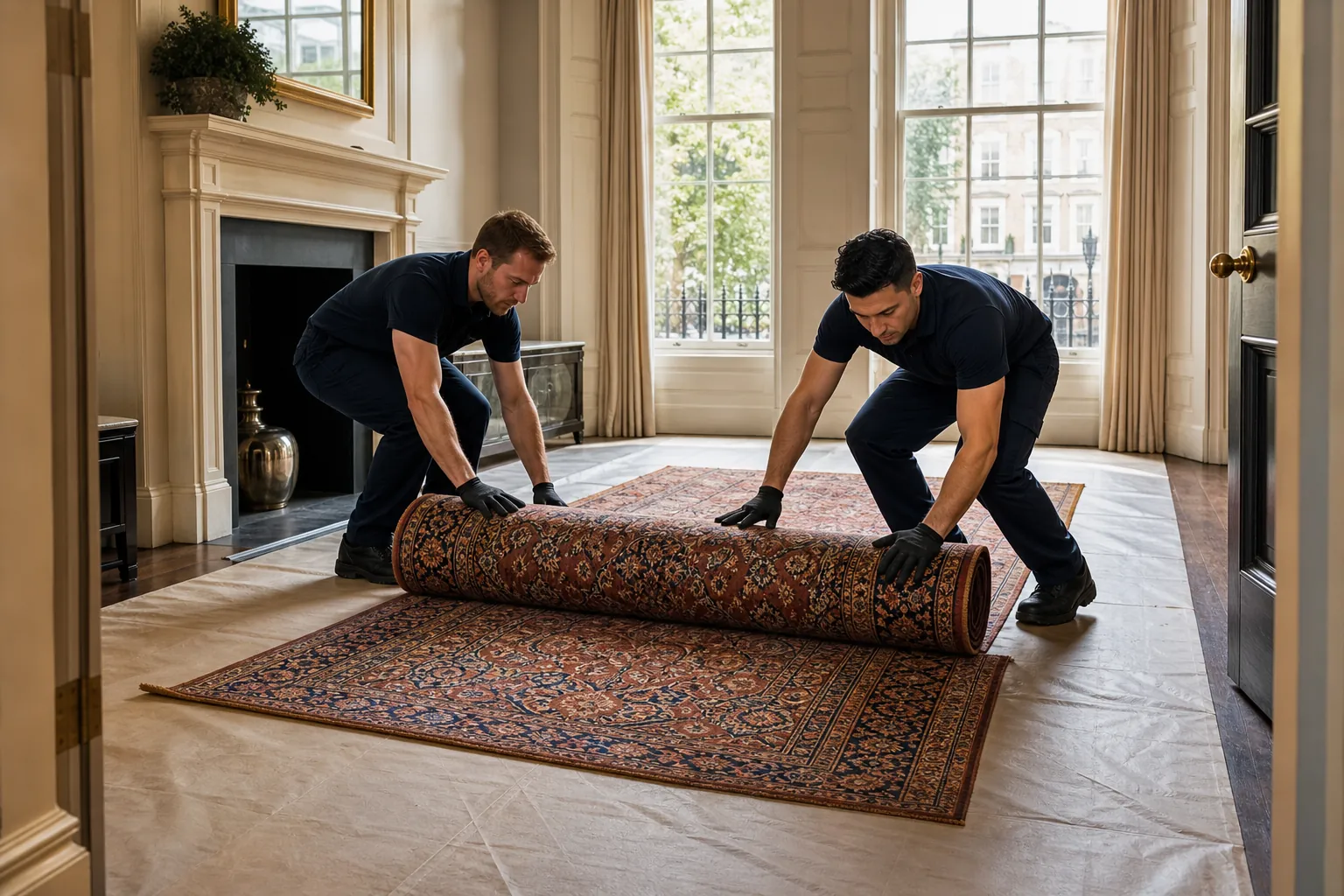
COMPARE, DON’T ASSUME
chair compression and a pale historic splash may contain more than one change
Loose material, residue, flattened pile, shifted dye and worn fibre can overlap visually. A wide reference photograph and a close view help separate these possibilities without promising that every contrast will disappear.
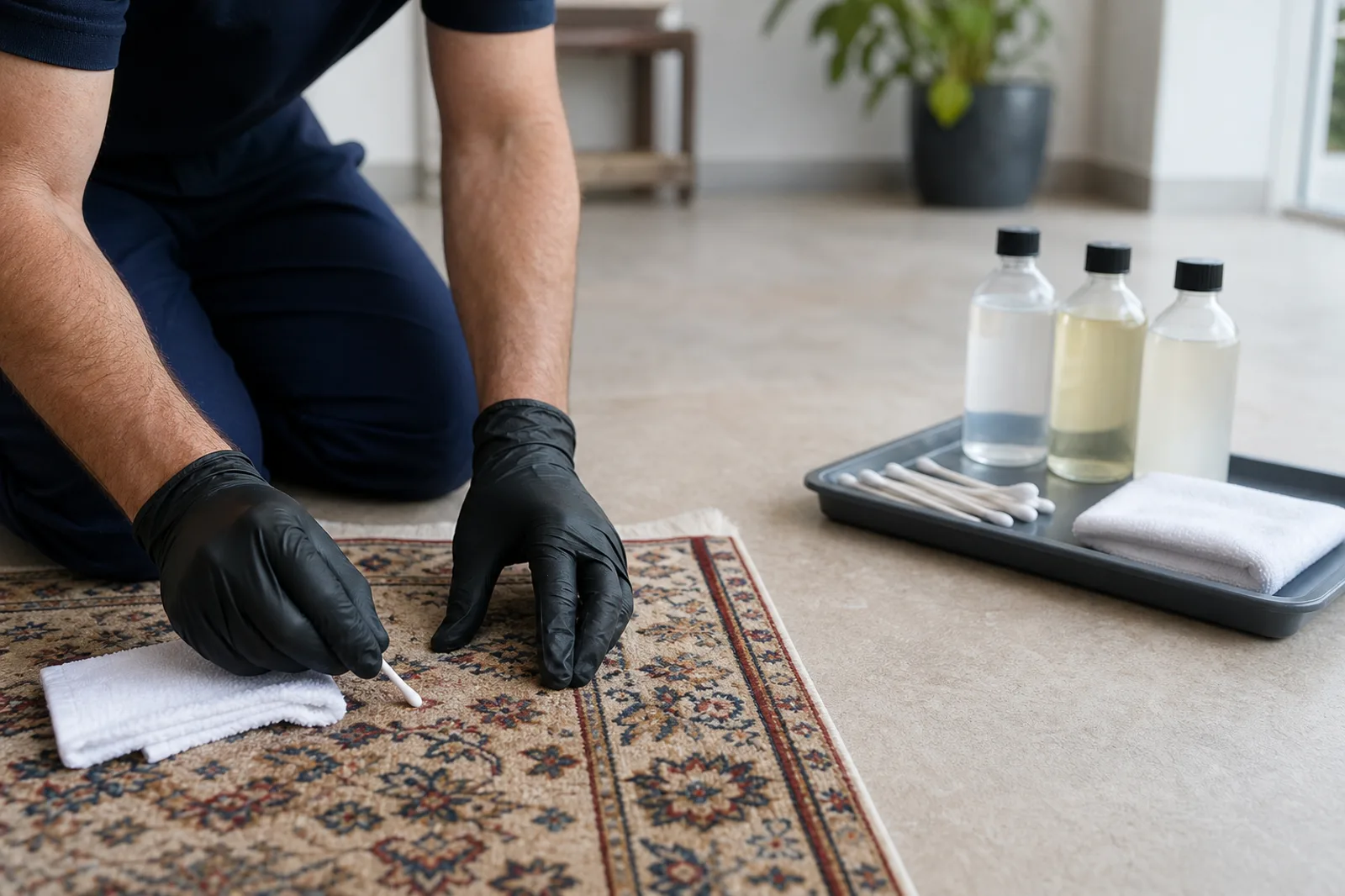
TRACE DEPTH AND HISTORY
Odour questions begin at the surface and continue below
Describe when a smell appears, where it is strongest and whether a liquid could have crossed the foundation. Include the under-rug surface and every product already used.
- Map the area on face and reverse
- Separate room odour from textile odour
- Give approximate age and repeat history
- Leave outcome limits until the build is assessed
SEND A COMPLETE ESHER SNAPSHOT
Useful evidence arrives as a short, ordered pack
Start with the whole object, then move closer. This sequence gives scale before detail and keeps the quotation conversation efficient.
- Postcode and best contact
- Longest and widest measurements
- Full-rug view in its normal position
- Reverse and label photographs
- Close view of chair compression and a pale historic splash
- Edge, corner and fringe condition
- Earlier product or cleaning history
- Notes on gravel approach and a narrow side passage
Before choosing an appointment
Can a photograph identify the fibre?
Not reliably. It helps frame questions, while labels, construction clues and appropriate checks guide the assessment.
Does a visible mark equal removable soil?
No. Residue, wear, dye change and pile distortion can resemble soil in an image.
Why record the surface underneath?
It can affect moisture, colour transfer and the safe point for putting the rug back.
When can furniture return?
Only after the item-specific handover confirms the textile is ready.
ESHER WORKFLOW
From dining-room record to careful return
the dining-room field stays visible at each stage, while material checks set the working boundary.
- 01
Frame
Capture the object and its surroundings
- 02
Compare
Relate the priority area to an unaffected field
- 03
Confirm
Review fibre, colour, backing and weak points
- 04
Prepare
Agree movement, access and room protection
- 05
Work
Use the selected method within assessed limits
- 06
Read
Check edges, field and original observations
- 07
Replace
Give drying, placement and aftercare guidance
SIZE REFERENCE FOR ESHER
Measurements open the estimate; complexity completes it
Area provides a consistent starting reference. Construction, chair compression and a pale historic splash, handling via gravel approach and a narrow side passage, and optional agreed work can change the confirmed quotation.
READ THE RUG AS A LAYERED OBJECT
Four checks shape the Esher boundary
finely knotted dining-room rug is more than its visible face. Fibre, colour, foundation and attachments each limit what can be done safely.
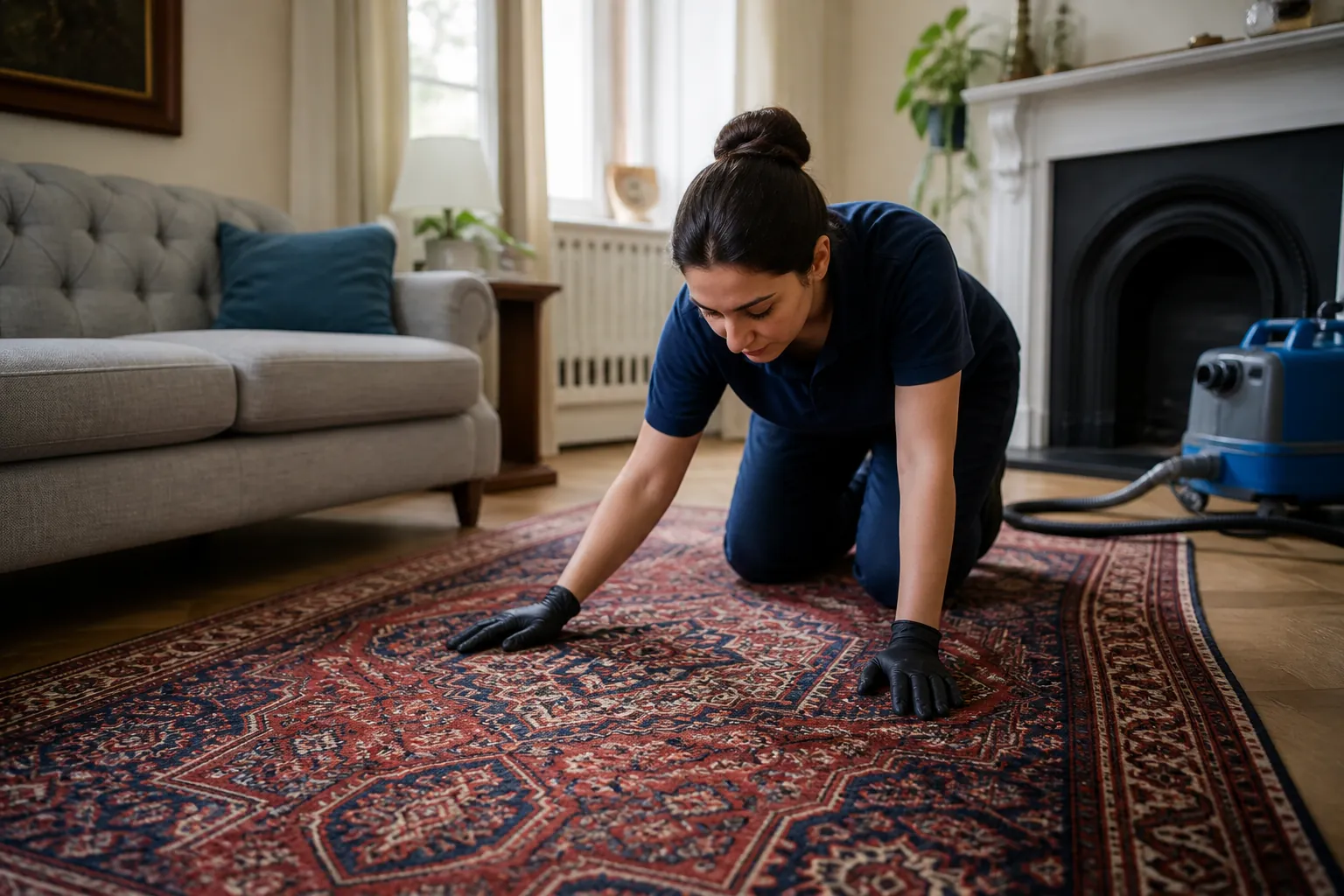
Absorbency and resilience
Known content narrows compatible moisture and mechanical action.
Contrast and previous change
Motifs, fading and transfer risk are observed separately.
How the textile holds together
Knotted, woven and tufted builds respond differently.
Edges, fringe and repairs
Weak details can set the limit for handling.
ESHER QUESTIONS
Ten practical answers for this rug record
What belongs in the first photograph?
The complete finely knotted dining-room rug, nearby floor and enough of the room to understand scale and placement.
Is the quoted method chosen from images?
No. Images organise evidence; assessment of material, colour and construction guides the method.
Why mention finished timber boards?
Because the supporting surface has separate moisture, transfer and replacement considerations.
Which access detail matters most?
gravel approach and a narrow side passage should be described together with turns, steps and the rolled size.
Will flattened pile definitely stand up?
Not always. Compression may improve, while permanent wear or distortion can remain.
Should another spot product be applied first?
No. Preserve the current evidence and report every substance already used.
How is drying discussed?
By fibre, density, process, room temperature and airflow rather than a fixed local timetable.
Can complete odour removal be promised?
No. Depth, age, foundation and any affected surface below must first be understood.
When is the rug ready to go back?
Follow the handover for this item and keep furniture off until advised.
How does the £68 minimum apply?
It is the current visit minimum; only confirmed eligible combined work may contribute.
START WITH THE ACTUAL ESHER RUG
Turn dining-room evidence into a clear enquiry
Share measurements, photographs, condition history and the carrying route for a better-scoped quotation.
