
WEYBRIDGE · FROM RIVER-SIDE LIGHT TO FAMILY FOOTFALL
Weybridge Rug Cleaning Planned Around the Room
A rug beside broad glazing ages differently from one in a shaded hallway. Our Weybridge brief starts with placement: daylight direction, the path people take across the room, and how the textile can leave its present position without scraping furniture or flooring.
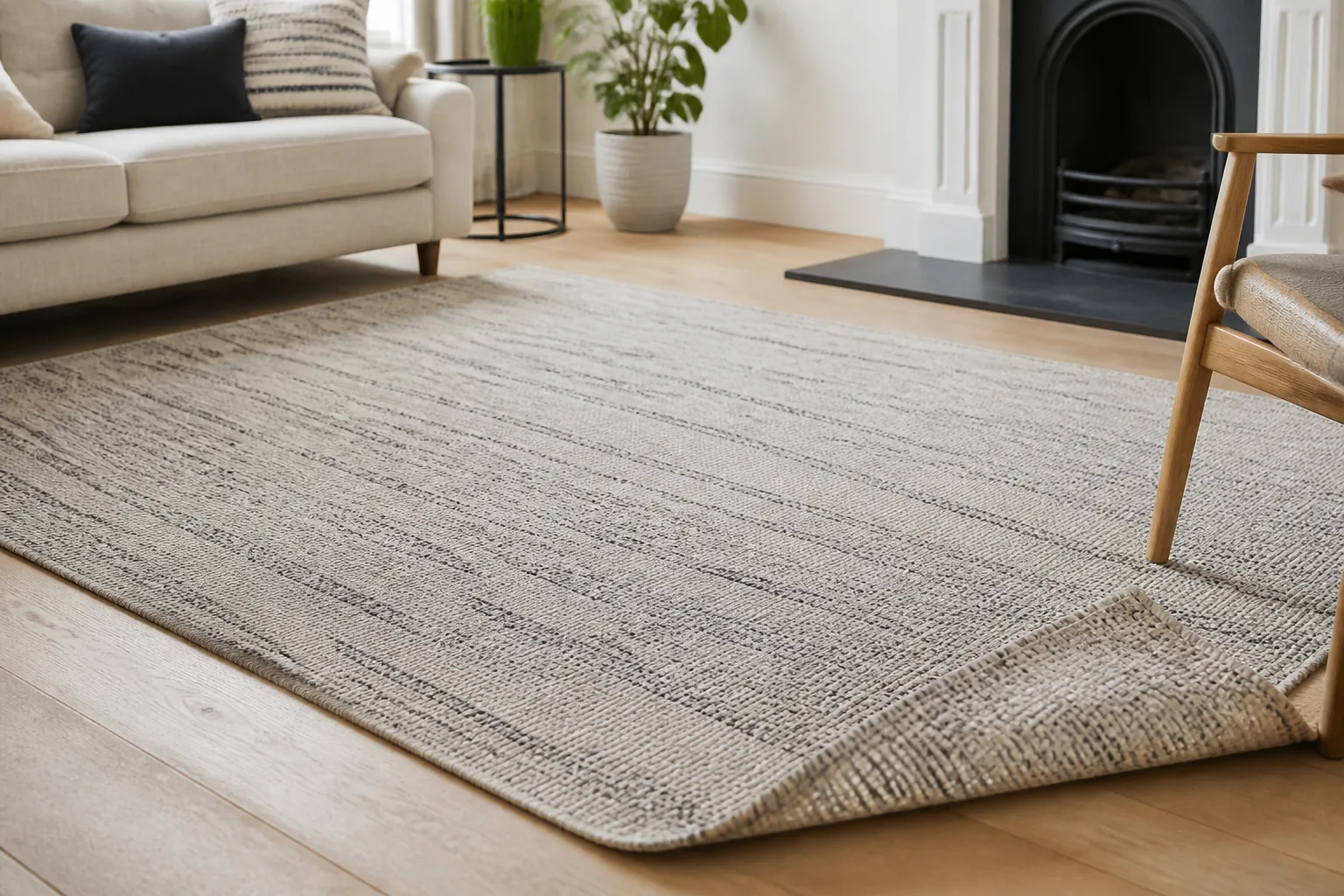
- Mark which edge faces the windows and which side meets the main walking line
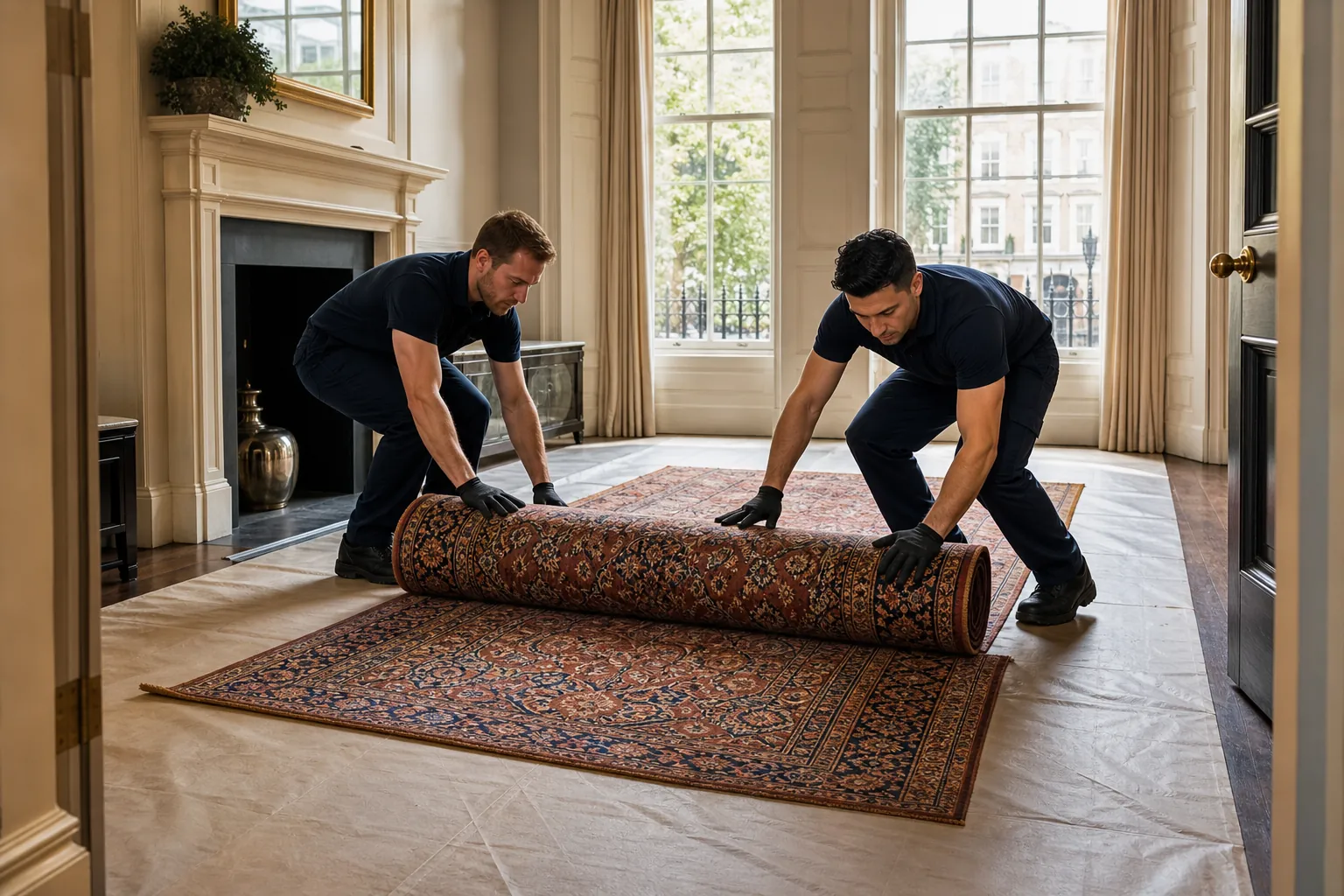
- Measure the clear route from the rug to the entrance, including turns and lift doors
- Show pile flattening in raking daylight rather than describing every dark band as dirt
- Name any underlay, anti-slip mesh or floor finish hidden beneath the textile
BUILD A PLACEMENT MAP
Record what the rug experiences each day
This short note organises room evidence. It cannot identify a fibre or confirm a treatment from the screen.
A RUG WITH A VIEW AND A ROUTE
Weybridge rooms add practical information to the textile record
Wide windows, open-plan living areas and apartment access can all affect the enquiry. We connect the textile to its actual setting so that colour variation, compressed pile and lifting arrangements are discussed in the right order.
A riverside sitting room. A patterned rug runs from a low sofa towards glazed doors. The bright edge appears paler while the central path lies flatter. One overview taken at midday and another with curtains drawn reveal more than an isolated phone close-up.
A managed arrival. The resident confirms reception hours, the permitted loading point and the internal lift width. Furniture feet resting on the border are photographed, but no promise to move them is assumed.
The Weybridge room-and-rug record
Compass. Say which border faces the strongest daylight and photograph the opposite side for comparison
Traffic. Trace the normal route between seating, doors and adjacent rooms instead of calling the entire field worn
Scale. Give exact length and width together with a view showing furniture overlap
Reverse. Lift only a safe corner to reveal backing, label and underlay; do not strain a fragile edge
Floor. Identify timber, stone or another finish because it remains a separate surface
Windows. Note prolonged sun, privacy film and seasonal shading where they explain colour difference
Furniture. Count legs or bases on the textile and distinguish movable objects from fixed pieces
Access. Provide concierge instructions, lift limits and the nearest lawful unloading point
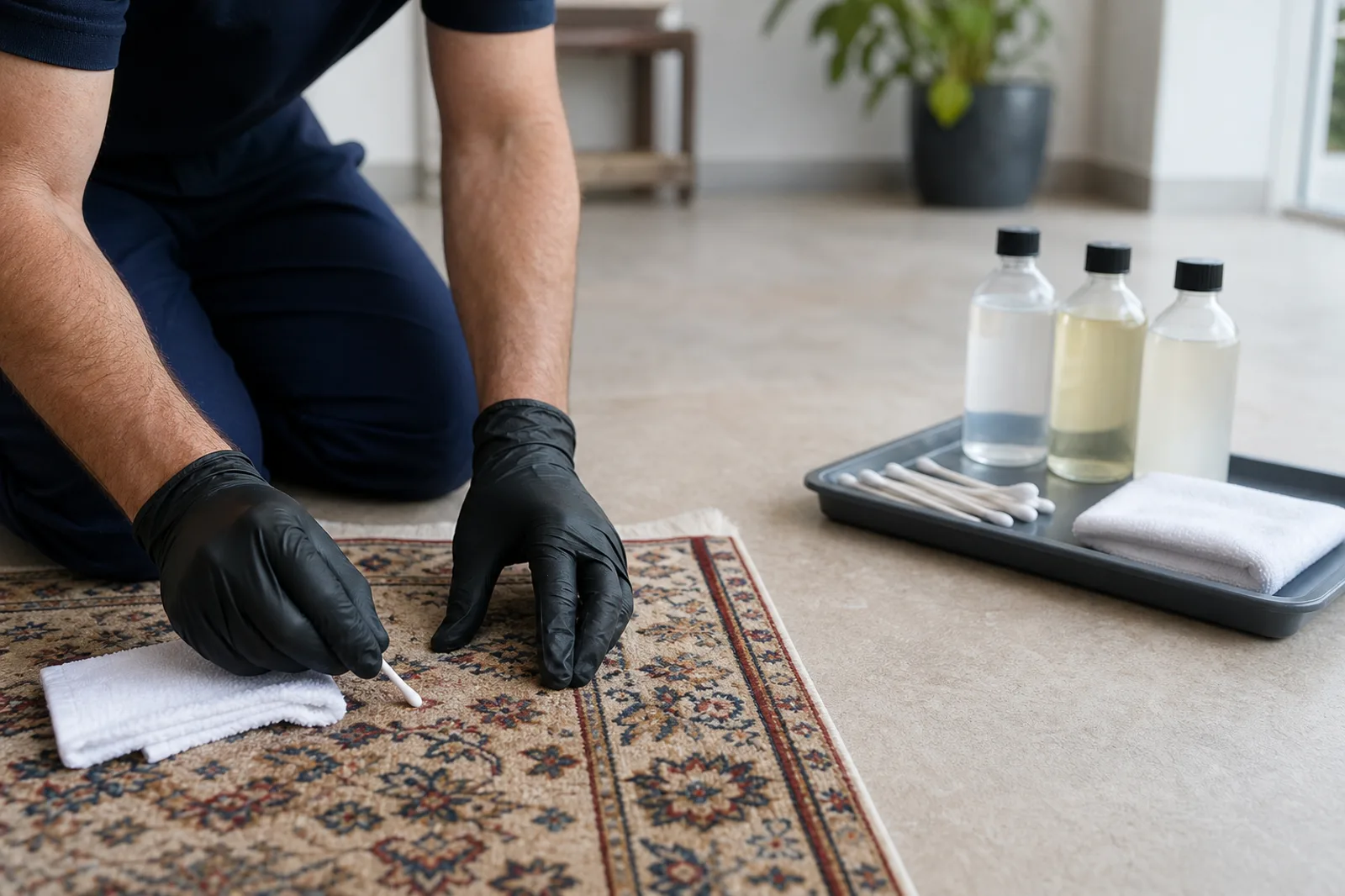
Past work. List spot products, rental machines and professional cleaning dates without guessing concentrations
Odour. Describe the location and circumstances in which it becomes noticeable
Damage. Photograph loose binding, splitting backing or brittle fringe before rolling
Priority. Choose the one outcome that matters most while keeping fade, wear and soil as different categories
Airflow. Identify a protected space where air can circulate after the agreed work
Timing. Mention guests, travel or building restrictions as planning facts rather than demands for instant drying
Estimate. Allow construction, condition and handling to sit beside measured area
Consent. Confirm optional movement or additional treatment in writing before it enters the scope
SUNLIGHT LEAVES A DIRECTIONAL CLUE
Compare both sides before calling a pale zone a stain
Light exposure can change dyes gradually, while pile direction alters how the same colour reflects. Photograph the rug from the window side and the room side, then include an unaffected border. Cleaning may release soil; it cannot restore pigment removed by years of light.
FOOTFALL HAS A SHAPE
A walking lane is read from more than colour
Compressed yarn, grit below the pile and physical abrasion can occupy the same route. The assessment considers texture, resilience and construction before setting a realistic aim.
- Brush nothing aggressively before the inspection
- Show the transition from busy lane to quiet corner
- Mention castors, chair legs and door sweep contact
- Keep irreversible wear outside any soil-removal promise
READ THE LAYERS
Four observations govern a room-led scope
A convincing plan connects what is seen above with what supports the rug below.
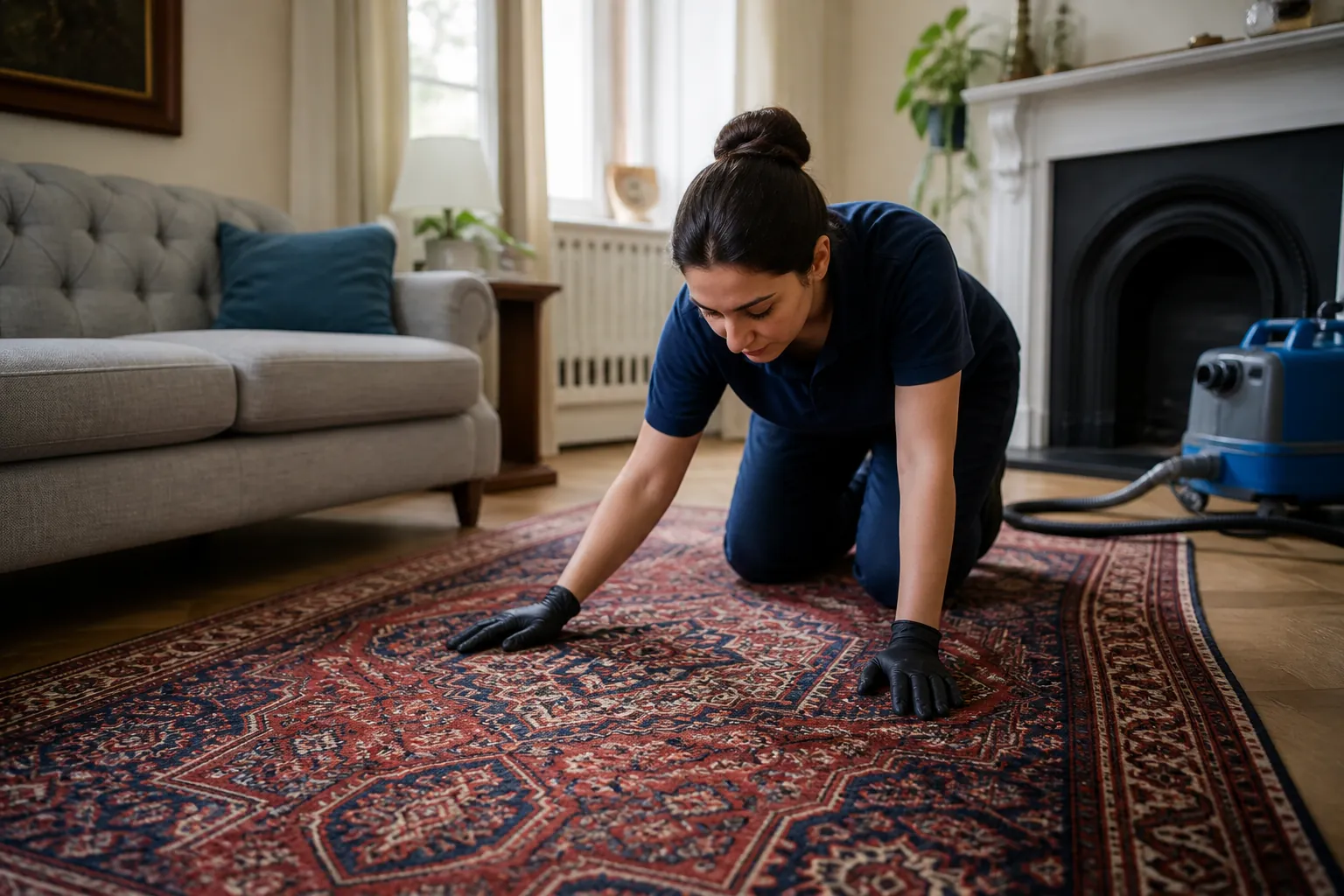
Light and pile direction
Surface appearance is compared from several viewing angles.
Yarn and build
The way fibres are held affects tolerance for moisture and movement.
Backing and underlay
Hidden layers may retain residue or restrict handling.
Loaded edges
Furniture contact, binding and corners define vulnerable points.
A WEYBRIDGE WORKFLOW
Move from room evidence to a controlled handover
Each checkpoint answers a different question; none is skipped simply because the rug looks familiar.
- 01
Orient
Mark window, doorway and traffic sides
- 02
Measure
Record textile size and carrying clearance
- 03
Compare
View active and quiet areas in consistent light
- 04
Inspect
Review fibre clues, backing and weak edges
- 05
Agree
Write the practical boundary and optional tasks
- 06
Work
Follow the selected textile-compatible route
- 07
Handover
Protect the drying position and explain return timing
CURRENT AREA REFERENCES
Size gives the quote a scale, not a verdict
The guide bands below help place the enquiry. A confirmed Weybridge figure also reflects construction, fragile borders, soil load, room preparation and the carrying route.
SEND A ROOM-SMART ENQUIRY
Nine details make the first conversation useful
Group the evidence in one message so dimensions, access and condition do not become disconnected fragments.
- Full Weybridge postcode and contact preference
- Length and width measured at the widest points
- One photograph from the room entrance
- One view from the window side
- Close detail of the changed traffic lane
- Safe reverse and label image if accessible
- Floor, underlay and furniture-contact notes
- Earlier product or cleaning history
- Lift, parking and reception arrangements
Before the rug is moved
Should it be rolled now?
Wait if edges are weak or furniture blocks a straight lift. The handling route should be agreed first.
Can photographs prove fading?
They can suggest a directional difference, but inspection separates loose soil, pile reflection and dye change.
Is engineered wood part of the rug booking?
No. It is recorded as the supporting surface and requires its own appropriate care.
Will the £68 visit minimum always be the final price?
It is a minimum reference, not a universal total. The accepted scope determines the confirmed amount.
WEYBRIDGE QUESTIONS
Practical answers for rugs in bright, connected rooms
Why photograph towards and away from the windows?
The comparison reveals directional reflection and exposure patterns that one viewpoint can conceal.
Does a flat walkway mean the rug is dirty?
Not necessarily. Loose grit, crushed pile and worn fibre can share the same route and need different expectations.
What should I do with a coffee spill before assessment?
Blot accessible liquid with a clean absorbent material, avoid rubbing, and report any product already used.
Can you move a dining table from the rug?
Movement is discussed from weight, clearance and safety. It is not automatically included.
Why provide lift dimensions?
A rolled textile may be long even when its floor area is modest, so turns and lift depth affect handling.
Will cleaning reverse sun fade?
No process can promise to recreate pigment lost through exposure. Soil removal and colour loss are separate issues.
How is an odour described usefully?
State its precise location, when it intensifies and whether a liquid may have reached the base or floor.
What if the fibre label is absent?
Send clear face and reverse photographs and mark the material unknown; assessment remains necessary.
When can the rug go back under furniture?
Follow the item-specific handover after condition and airflow have been checked.
How are Weybridge guide prices used?
Measured area establishes a band, while build, condition, access and accepted extras shape the quotation.
START WITH THE ROOM
Turn Weybridge observations into an assessable rug brief
Show orientation, scale and the path out of the property so the textile conversation begins with evidence.
