
FITZROVIA · A PRECISE RUG PROFILE PREVENTS GENERIC ASSUMPTIONS.
Material-aware Rug Cleaning for Fitzrovia Homes
In a Fitzrovia loft above commercial premises, a low-pile synthetic rug may carry two unrelated problems: repeated office-chair tracking through the field and adhesive residue at a lifted corner. The goods-lift timetable, polished concrete and mixed residential access shape the appointment, while polymer type and backing condition shape the textile decision. A workstation overview preserves cable runs, caster paths and floor-box positions before clearance. Recent fit-out dust may sit beside physical wheel abrasion without sharing its cause. The owner leaves sticky material intact, records installation history and photographs the printed colour boundary, backing bond and curl profile. The loft record distinguishes parallel caster lines from irregular grit and from the tacky corner itself. Delivery schedules, shared reception rules and protective lift coverings are confirmed before arrival. No one tugs the raised backing merely to inspect underneath. A side-profile image records its natural height against concrete. During handover, desk feet, chair mat use and cable routing are discussed as future pressure factors rather than cleaning outcomes.
- Show the whole graphic rug with desk, chair and doorway positions
- Photograph adhesive residue without peeling or dissolving it first
- Capture the lifted corner, backing texture and bound edge in profile
- Provide Fitzrovia goods-lift hours and commercial reception procedure

FITZROVIA · ROOM AND ROUTE
The room changes logistics, not material facts
Fitzrovia planning begins in the room where the rug is used. Here, the working example is a upper-floor loft apartment with a low-pile synthetic rug over polished concrete; goods-lift timing shared with commercial units affects the carrying plan, while the textile assessment remains centred on office-chair tracking and adhesive residue at one corner.
A realistic Fitzrovia case. The full-room image establishes scale and furniture position. Separate close-ups then distinguish office-chair tracking and adhesive residue at one corner from ordinary loose soil, shading or wear. None of those photographs is treated as proof that a mark can be removed.
Before the visit, the owner notes the rug’s approximate dimensions, known cleaning history and whether the polished concrete can be protected during inspection. The team can then discuss a proportionate route without promising a technique or drying time in advance.
fitzrovia field dossier
Live-work pattern: The Fitzrovia rug experiences narrow chair-wheel passes rather than ordinary domestic footfall alone. The record maps those tracks against desk placement and the route from the apartment entrance.
Synthetic identity: The broad category synthetic can cover different face yarns and backing systems. A label helps, yet testing and construction observations remain necessary.
Adhesive corner: Sticky residue is left undisturbed for the photograph. Solvent experiments can spread material, affect colour or weaken the bond between face and backing.
Lifted edge: A raised corner may reflect curl, delamination, tension or old adhesive. Cleaning is not represented as a guaranteed structural repair.
Goods-lift timetable: Commercial deliveries compete for the same Fitzrovia route. The booking confirms access authority, lift protection and a realistic interval for careful handling.
Polished concrete: The hard support surface can transfer grit during movement and may require protection from contact. Its finish is recorded at the affected corner.
Chair tracking: Parallel lines are examined for dry soil, pressure, abrasion and backing movement. More aggressive action is not automatically appropriate because the marks follow wheels.
Fitzrovia handover: The review compares the adhesive boundary, corner profile, wheel paths and overall field. Aftercare covers safe desk reset without claiming to correct pre-existing delamination.
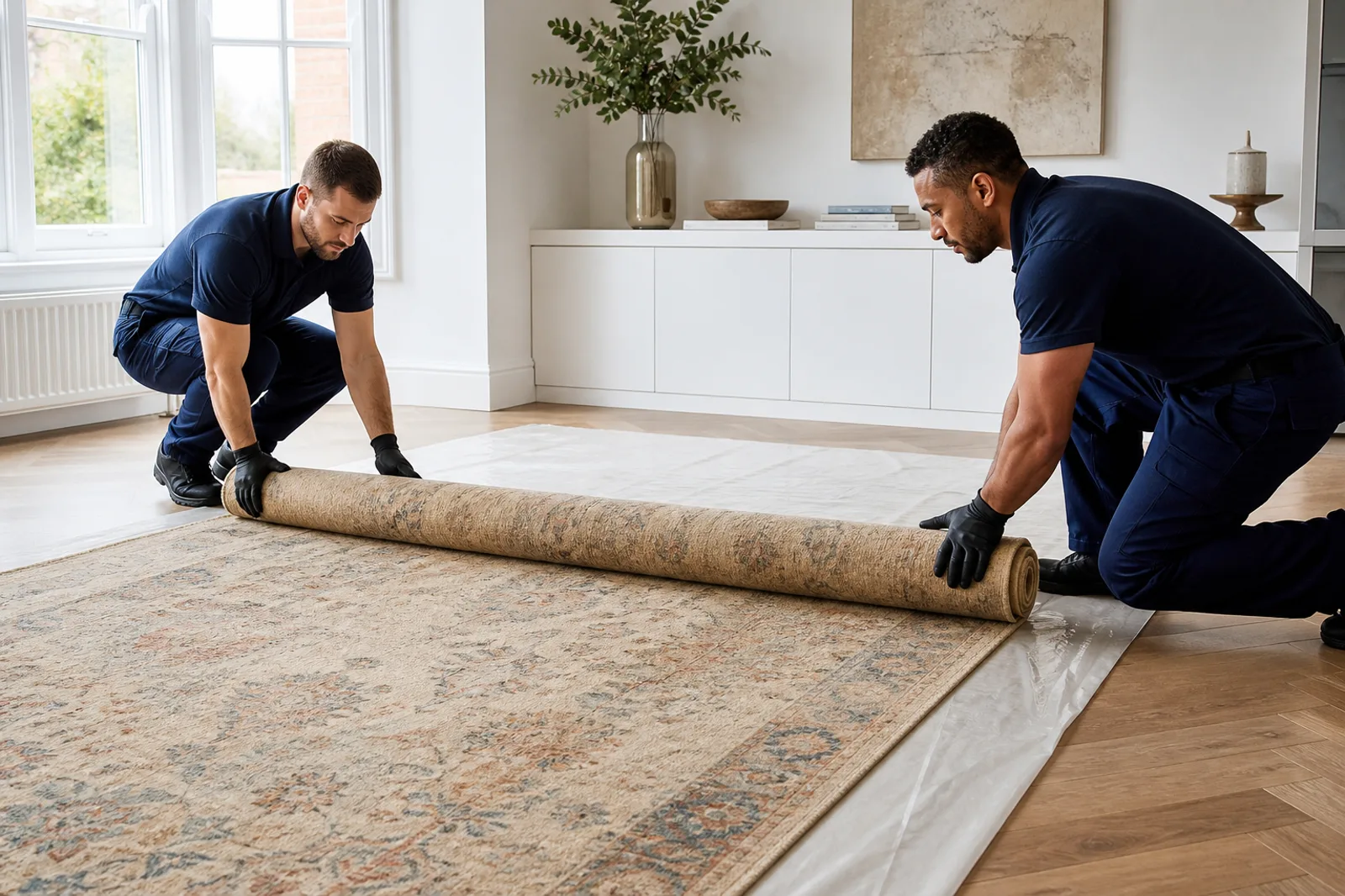
FIBRE + DYE + CONSTRUCTION
Colour and build belong in the same assessment
The label is useful, but it never tells the whole story of this low-pile synthetic rug. Fibre response, dye stability, edge finish and the way the rug was assembled have to be considered together.
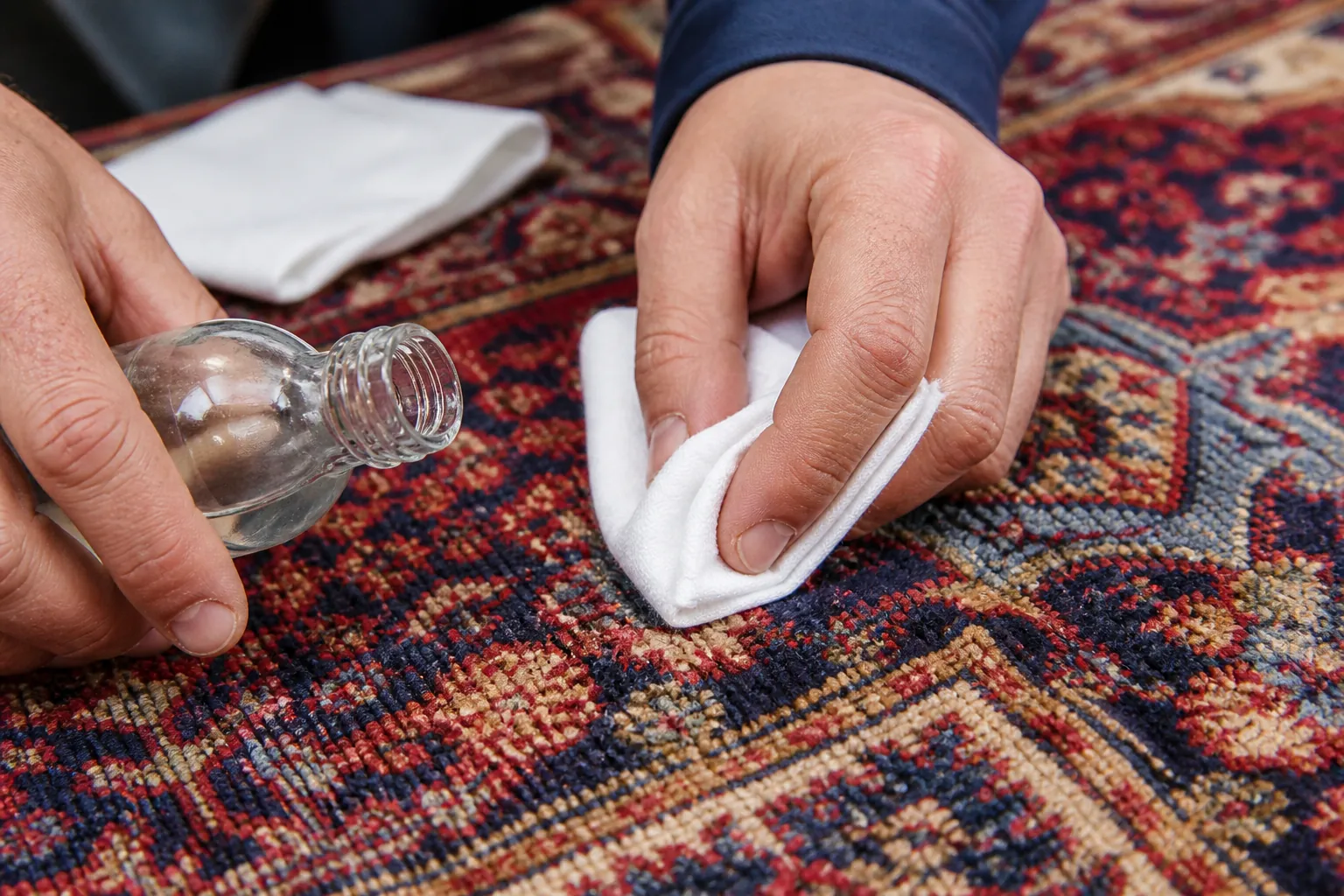
Material response
Sets the limits for agitation, solution choice and handling.
Colour stability
A stability check helps identify colours that need a more cautious approach.
Construction
Knots, tufting, foundation and pile density affect moisture and finishing.
Backing, decorative fringe, recorded repairs
Edges, backing and old repairs are documented so weakness is not mistaken for new damage.
A MARK IS NOT ALWAYS SOIL
Separate contamination from permanent change
Report the exact area and any known source or product. A concern can involve the pile, foundation, reverse or even the polished concrete below, so total removal is never assumed from a description.
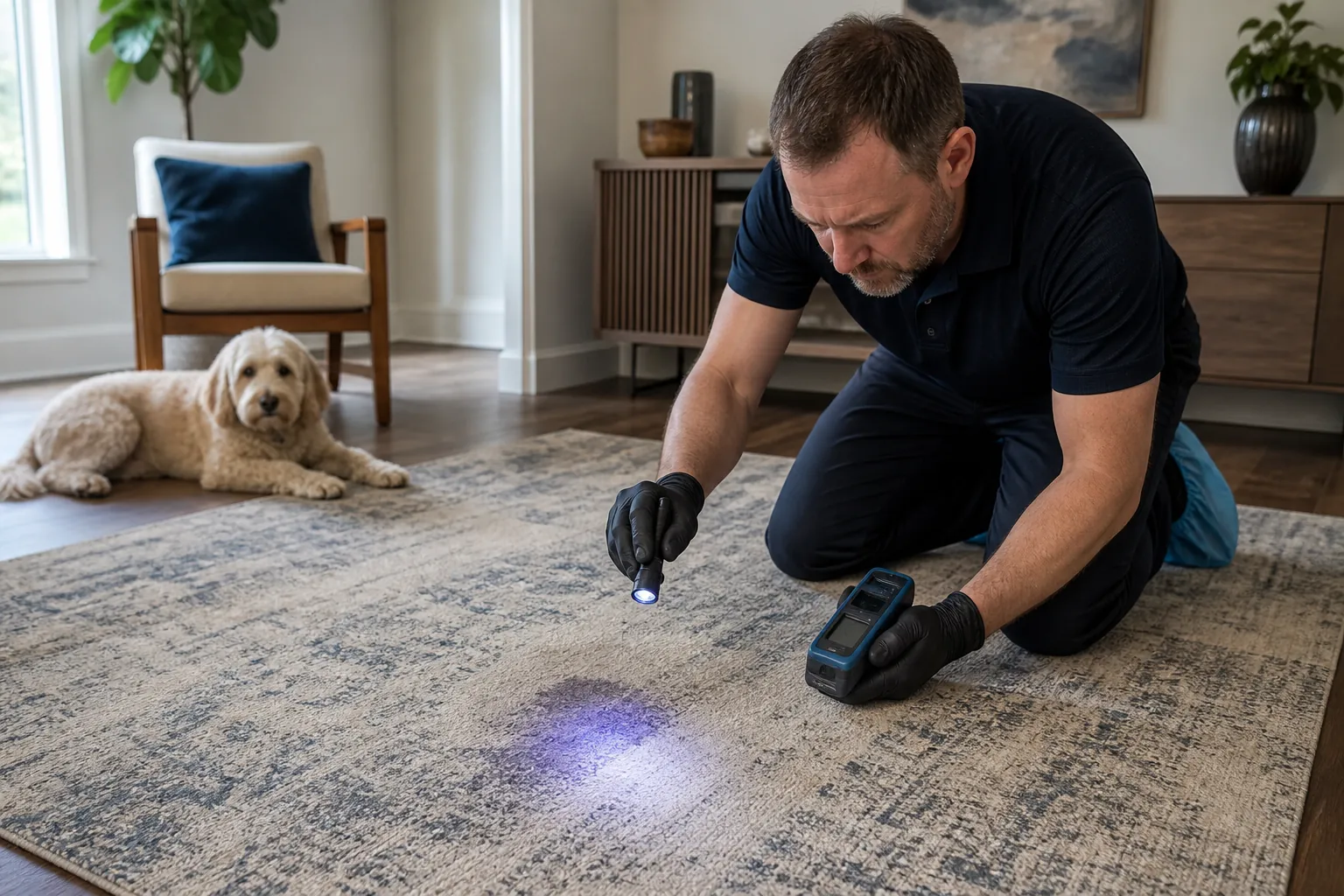
ODOUR + PREVIOUS PRODUCTS
Trace odour and residue before treating
Report the exact area and any known source or product. A concern can involve the pile, foundation, reverse or even the polished concrete below, so total removal is never assumed from a description.
- Identify the precise affected area
- List known spill and product history
- Check pile, foundation, reverse and floor contact
- Keep the outcome conditional until assessment
FITZROVIA TREATMENT ROUTE
The agreed service route follows the evidence
Drying for this low-pile synthetic rug is based on absorbency, pile density, backing, airflow and the selected treatment. If office-chair tracking and adhesive residue at one corner includes an odour concern, the affected area and any known source are recorded rather than covered by a standard deodorising promise.
- 01
Record
Measure the low-pile synthetic rug; map wear, marks and repairs
- 02
Verify
Check material clues and colour response where suitable
- 03
Release soil
Remove accessible dry particles without assuming all dullness is soil
- 04
Work
Apply only the route supported by the assessment
- 05
Control
Manage recovered moisture, pile and edges
- 06
Compare
Review the field, borders and the priority area in Fitzrovia
- 07
Explain
Provide condition-specific drying and furniture guidance over polished concrete
TELL US ABOUT YOUR RUG
Sort the observations before choosing a route
Use the profile to flag material, construction and condition. Physical checks still set the safe boundary.
QUOTE PREPARATION
Give the assessor a clear picture before arrival
- Fitzrovia postcode and preferred timing
- Approximate length and width
- One complete-rug photograph
- Close-up of office-chair tracking and adhesive residue at one corner
- Label and reverse if reachable
- Border, fringe and corner images
- Known fibre or construction
- Earlier products or cleaning history
- Notes about goods-lift timing shared with commercial units
Practical answers for Fitzrovia
Can you name the method from a photo?
No. Images improve the brief, but handling and treatment still depend on physical assessment of the low-pile synthetic rug.
Does a dark patch always mean dirt?
No. In Fitzrovia, shading, fibre wear, dye change and residue must be distinguished from removable soil.
When can furniture go back?
Only after the handover guidance for this rug, its drying condition and the polished concrete beneath it.
Is an odour treatment automatically included?
No. The location, likely source and depth of an odour concern need separate discussion and scope.
CASE-SPECIFIC QUESTIONS
Answers tied to this rug and property
What makes a useful Fitzrovia overview image?
Include the complete rug, workstation, chair path, lifted corner and nearest doorway in one frame.
Should I scrape adhesive before requesting a quote?
No. Leave it in place, identify the product if known and avoid introducing a solvent that changes the evidence.
Can wheel tracks be treated as ordinary dirt?
Not automatically. They may combine particles, pressure, abrasion and structural movement in the backing.
Does synthetic mean colourfast?
No. Polymer, dyes, printing, backing and previous products all influence response.
Will cleaning flatten a curled corner?
No structural correction is guaranteed. The cause and stability must be assessed separately from surface cleaning.
Which goods-lift facts should I send?
Provide operating hours, booking rules, door dimensions, floor protection requirements and reception contact procedure.
Why mention polished concrete?
It affects contact protection, grit control and return planning even though it does not prescribe treatment of the rug.
How are Fitzrovia costs qualified?
Existing guide wording is retained; measured area, construction, adhesive concern, access and agreed extras determine the final scope.
Can the desk go back immediately?
Follow item-specific drying and placement advice, particularly where chair pressure could affect a damp or lifted area.
Is an unknown glue mark an odour problem too?
Possibly, but smell does not identify chemistry. Describe location, age and any known installation or repair history.
DEFINE THE FITZROVIA WORKING AREA
