
PIMLICO · TRACE THE MARK, CHECK THE TURN
Area Rug Cleaning in Pimlico, Planned Item by Item
A wool rug in a Pimlico mansion flat may hold road dust through its centre while an old spot-product ring interrupts one corner. We record these separately, then consider yarn, foundation and the narrow communal landing before defining suitable work.
- Take one daylight view of the complete outline
- Name anything previously applied to the marked corner
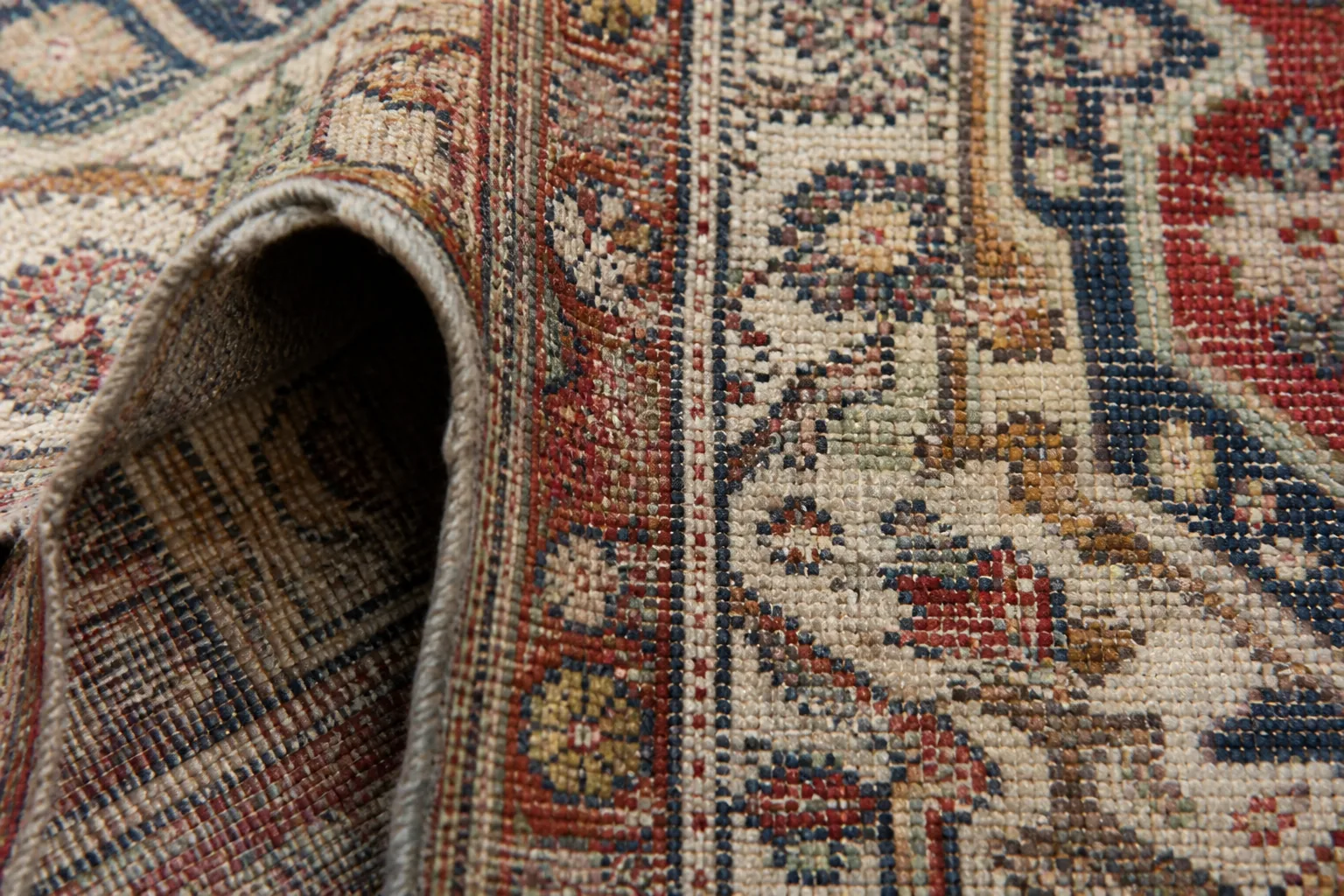
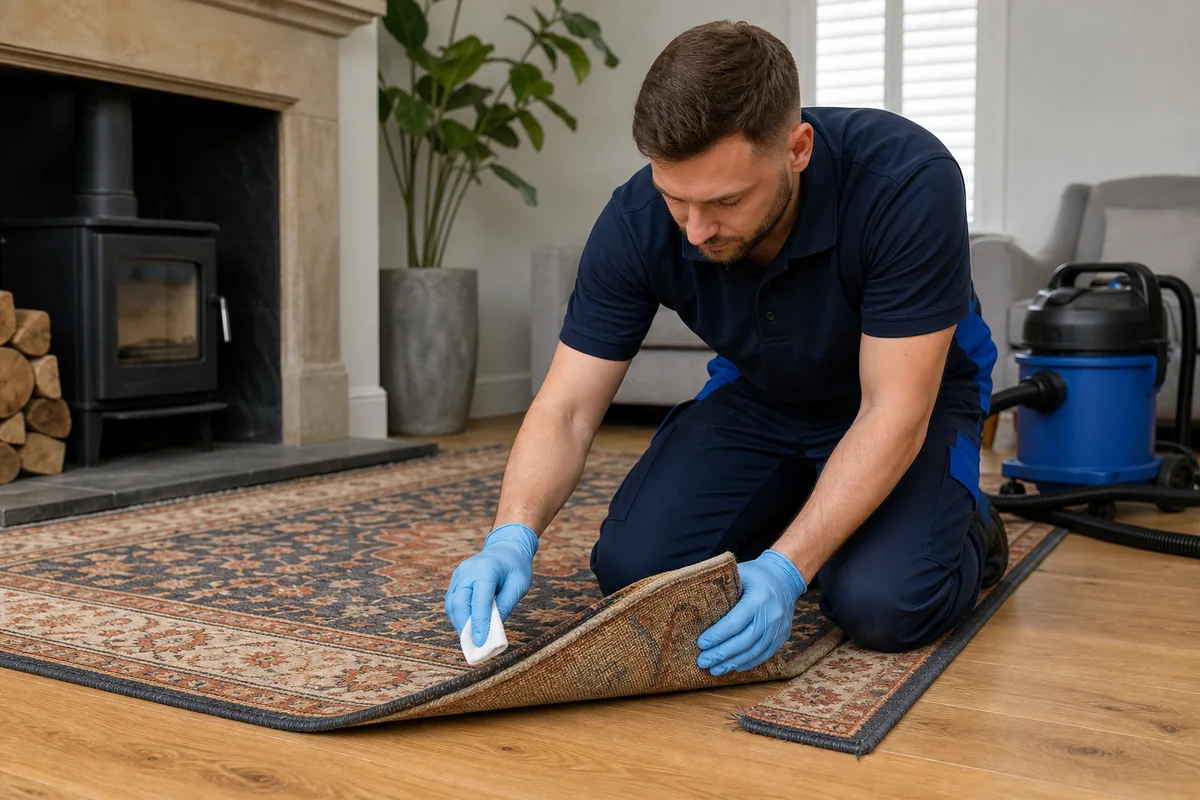
- Show binding, reverse and compressed walking lane
- Measure the sharpest stair turn before moving the rug
BUILD A FIRST-HAND DESCRIPTION
Separate facts from guesses
Selections organise inspection questions; they never prescribe chemistry.
A FOUR-WAY CHECK
A pale field can tell several stories
Grey particles, brighter residue and worn yarn may share one view. Side lighting and a reverse inspection keep cleaning potential apart from permanent change.
Fibre clues
Feel, label wording and worn tips frame testing.
Contrast
Border and field are considered independently.
Foundation
Stiffness, weave and coating affect handling.
Treated corner
Product, date and later changes stay in the record.
PIMLICO · ROOM TO STREET
The route matters as much as the rug
This example lies over painted boards in a converted stucco building. A sharp half-landing makes folding unsafe, so textile condition, floor protection and carrying clearance are planned together.
A representative brief. Opposing photographs reveal that the charcoal lane and curved spray outline respond differently to light.
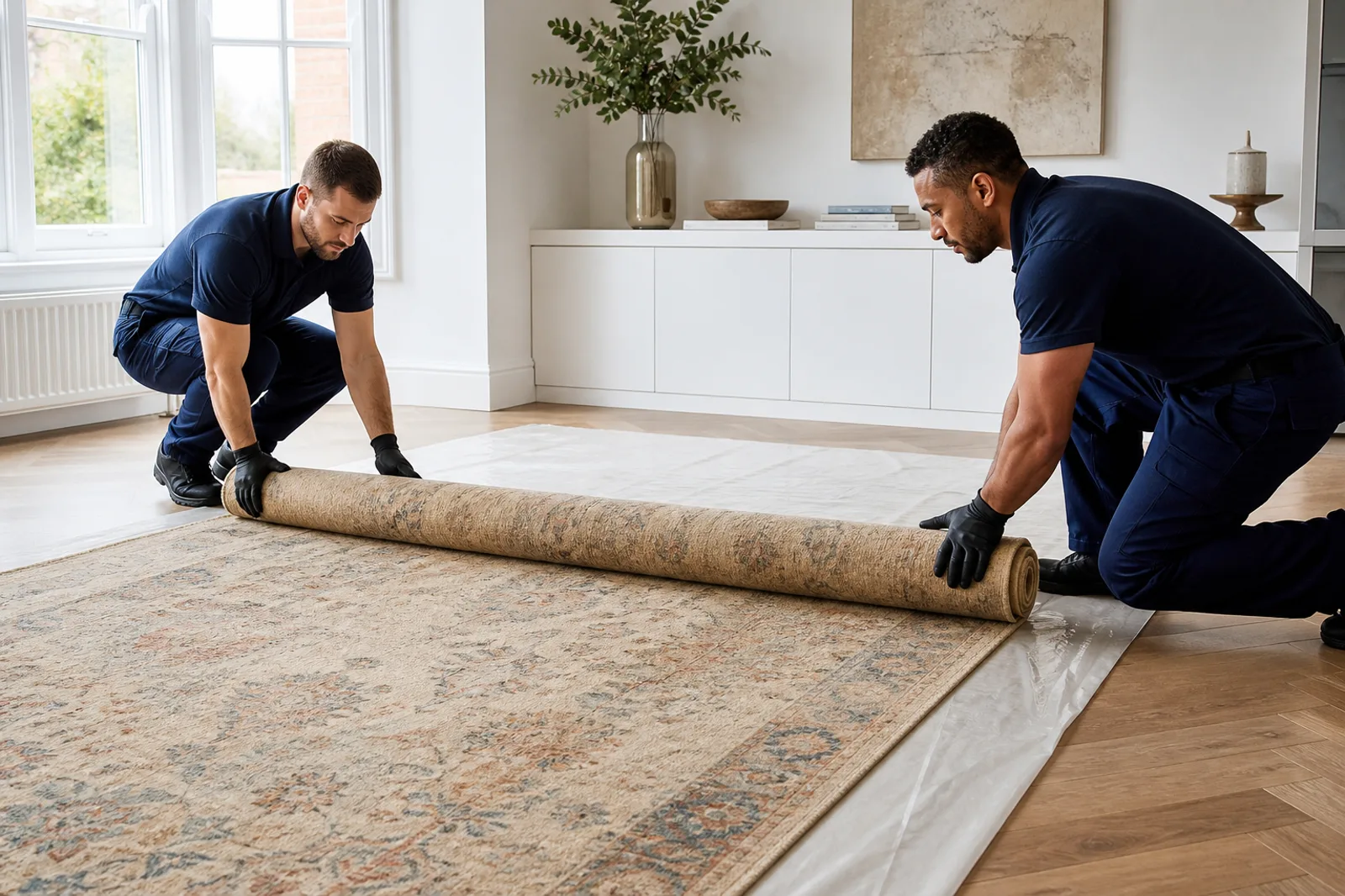
The rug stays flat until dimensions, reverse condition and diagonal landing clearance are known.
Pimlico case dossier
Sash-window light: Directional brightness can imitate a cleaned stripe.
Foaming spray: Unknown residue requires caution, not another application.
Border ripple: Its starting shape is photographed before lifting.
Wool wording: A face-fibre label does not identify every backing material.
Painted floor: Lifting points prevent grit being dragged across the finish.
Half-landing: The newel and handrail matter more than doorway width.
Urban dust: Distribution is examined; postcode alone proves nothing.
Airflow: Basement humidity can change practical drying advice.
Outcome: Removed soil does not restore abraded yarn or altered dye.
Handover: Remaining characteristics and safe room return are explained.
EVIDENCE-LED SEQUENCE
Seven decisions rather than one recipe
The route can pause whenever colour, backing or access raises a concern.
- 01
Frame
Record size, room and landing.
- 02
Read
Inspect yarn, edges and base.
- 03
Separate
Map soil, wear and residue.
- 04
Test
Check relevant response where suitable.
- 05
Proceed
Use only the supported approach.
- 06
Stabilise
Manage shape and recovered moisture.
- 07
Explain
Compare findings and give return guidance.
PIMLICO SIZE GUIDES
Dimensions open the estimate; condition completes it
Construction, previous products and carrying constraints qualify the final scope.
PREPARE THE ENQUIRY
Nine useful pieces of evidence
- Pimlico address area
- Length and width
- Whole-rug image
- Views along and against the lane
- Close-up of the spray outline
- Label and reverse
- Known product and date
- Floor and furniture notes
- Landing measurements
Before booking
Roll it now?
No, not if a stiff base or weak edge could be stressed.
Can the ring be guaranteed away?
No; residue, dye alteration and wear may overlap.
Is all wool treated alike?
No; build, colour and condition narrow the options.
One drying time?
No; absorbency, method and airflow decide handover.
PIMLICO QUESTIONS
Answers without shortcuts
Why photograph from opposite sides?
Pile brightness changes with viewing angle.
Keep the spray bottle?
Yes, or photograph its ingredients; apply no more.
Does wool settle the method?
No, backing and dye behaviour remain unknown.
Why measure the landing?
The turn may restrict handling after the door is cleared.
Can greying be wear?
Yes; particles, compression and abrasion may coincide.
Move furniture first?
Photograph positions, then agree safe movement.
How do guides apply?
£27, £37 and £46 start size bands; £68 is the visit minimum.
Is deodorising automatic?
No; source and extent require separate assessment.
When may it return to boards?
After item-specific dryness and floor guidance.
What if stairs are unsuitable?
Revise the route rather than force a fold.
START WITH THE COMPLETE PICTURE
