
HARROW · MAP EVERYDAY USE
Family-Room Rug Cleaning in Harrow
Hall shoes, sofa seats, toy baskets and snack tables leave different evidence on the same rug. A Harrow enquiry becomes clearer when those zones are mapped separately and the textile’s label, backing and edges are shown before a method is discussed.
- Divide the rug into entrance, seating, play and protected zones
- Photograph individual spills instead of calling the whole surface stained
- Include the label, backing and corners in the first message
- Plan a child- and pet-free working area for the agreed visit
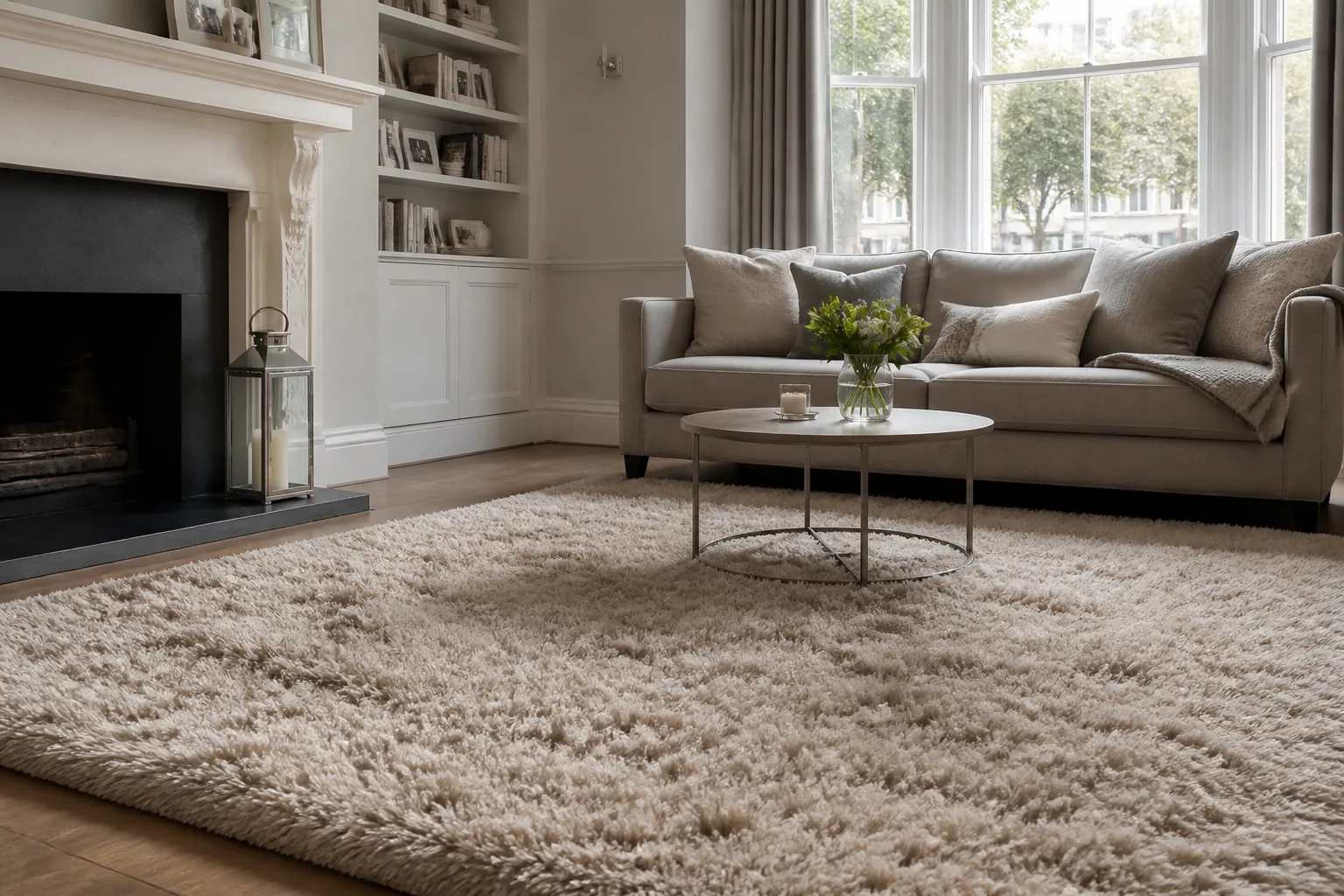
MARK THE HARROW ZONES
Turn household observations into a usable brief
Choose the nearest descriptions. They help separate wear patterns and incidents, but they do not diagnose fibre or guarantee a result.
ONE HARROW LIVING-ROOM SCENARIO
A shared rug tells several small stories
Imagine a medium synthetic rug between a Harrow sofa and television. The pile is flattened where feet rest, cereal has dried near a child’s seat and a dog repeatedly crosses one corner after returning from the garden. Treating that as one uniform condition would hide the information needed for a sensible plan.
Zone sketch. The owner numbers four photographs: A for the sofa lane, B for the dried spill, C for the garden corner and D for the little-used field beneath a side table.
Preparation sketch. Toys, cables and light objects can be cleared. The sofa stays in place, so its feet and the inaccessible strip beneath it are identified before the appointment.
Harrow household use record
Zone A. Show the sofa frontage straight on so repeated foot placement can be recognised.
Zone B. Put a coin or ruler beside the food mark to communicate scale without touching it.
Zone C. Photograph the garden-route corner from above and at pile level.
Zone D. Include a less-used area; this may reveal the original texture and colour.
Label. Copy fibre percentages, care symbols and backing information exactly as printed.
Backing. Lift only a safe corner and show any foam, latex, woven base or repair tape.
Products. Name wipes, powders or spotters used after spills, including homemade mixtures.
Timing. Approximate incident dates help distinguish fresh residue from an established change.
Children. Arrange supervision away from equipment and damp textiles during the visit.
Animals. Note repeat locations and provide a separate safe space while work takes place.
Cables. Clear chargers and trailing leads rather than hiding them beneath furniture.
Furniture. Agree movement in advance; technicians should not discover an immovable unit on arrival.
Floor. Record laminate, wood, tile or carpet beneath the removable rug.
Airflow. Explain whether windows open and whether the room can remain unused afterwards.
Outcome. Soil release, stain improvement, odour reduction and pile recovery remain distinct aims.
Budget. Final scope combines area with condition, construction and optional treatment choices.
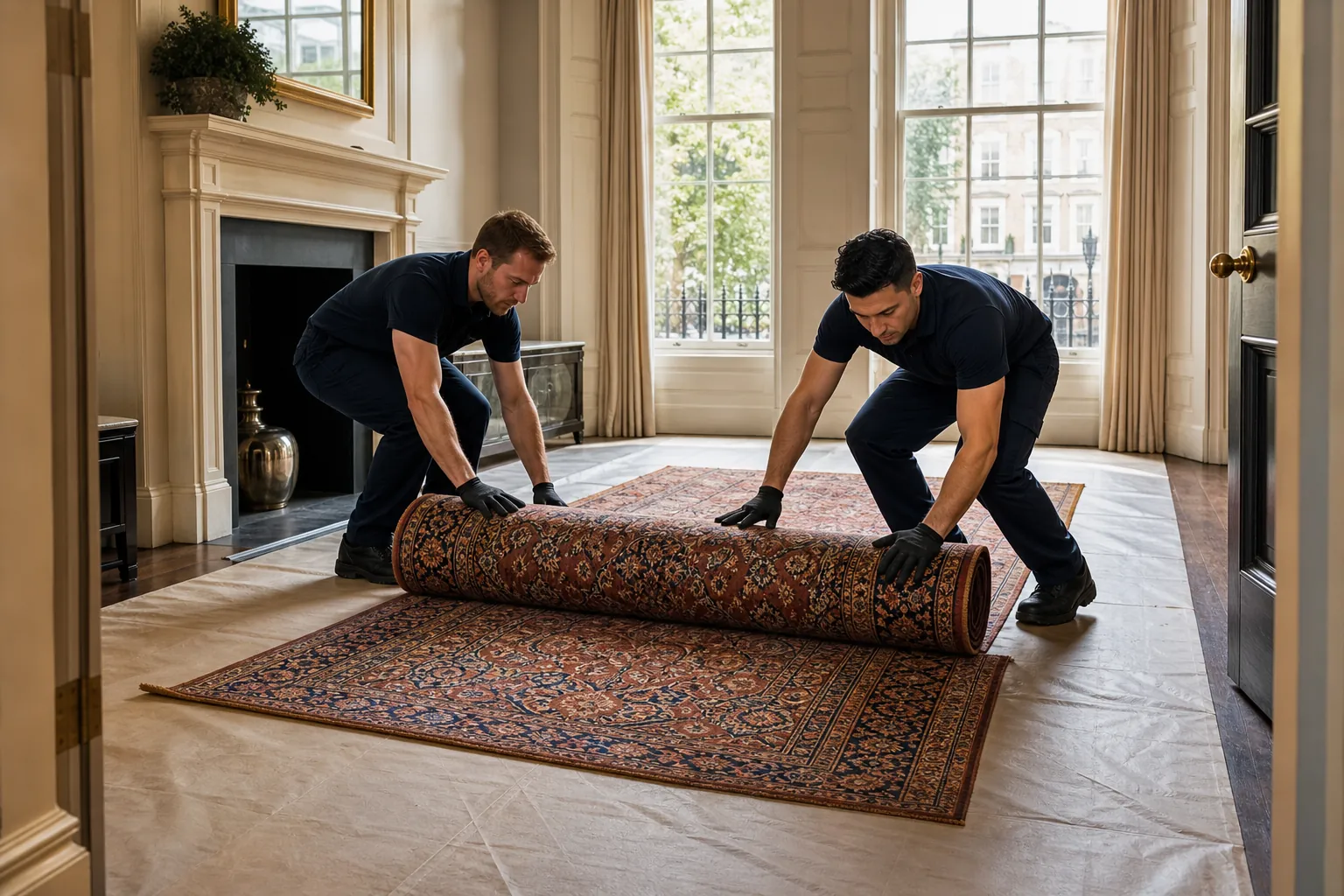
FOOD, DRINK AND CRAFT RESIDUE
Describe the substance before its colour
A red patch might be fruit drink, paint, dye movement or an earlier cleaning reaction. Record what happened, what was picked up and what was added afterwards. Substance history can be more informative than the shade visible on screen.
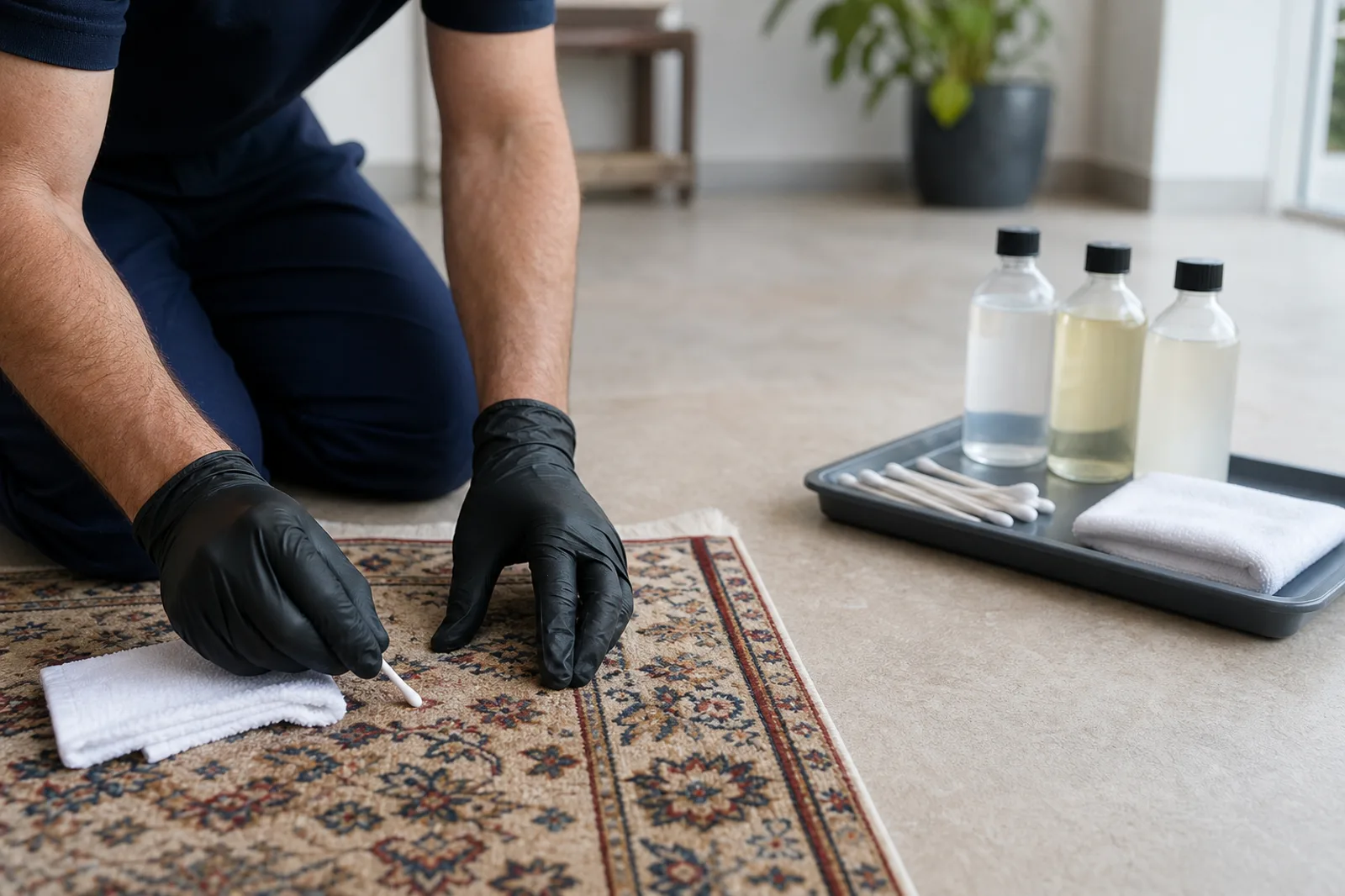
PILE UNDER DAILY PRESSURE
Flattening is not always removable soil
Repeated feet, wheels and furniture can bend or abrade fibres. Photograph the same place with and against the pile direction. A change that moves with viewing angle is different from a fixed discoloured patch.
- Show caster or furniture-foot impressions
- Compare busy and protected sections
- Flag loose yarns before vacuuming
- Keep restoration outside a cleaning promise
WHAT THE LABEL CANNOT SETTLE
Construction modifies the fibre description
Two polypropylene rugs can behave differently because their pile height, backing, edge finish and prior use are not the same.
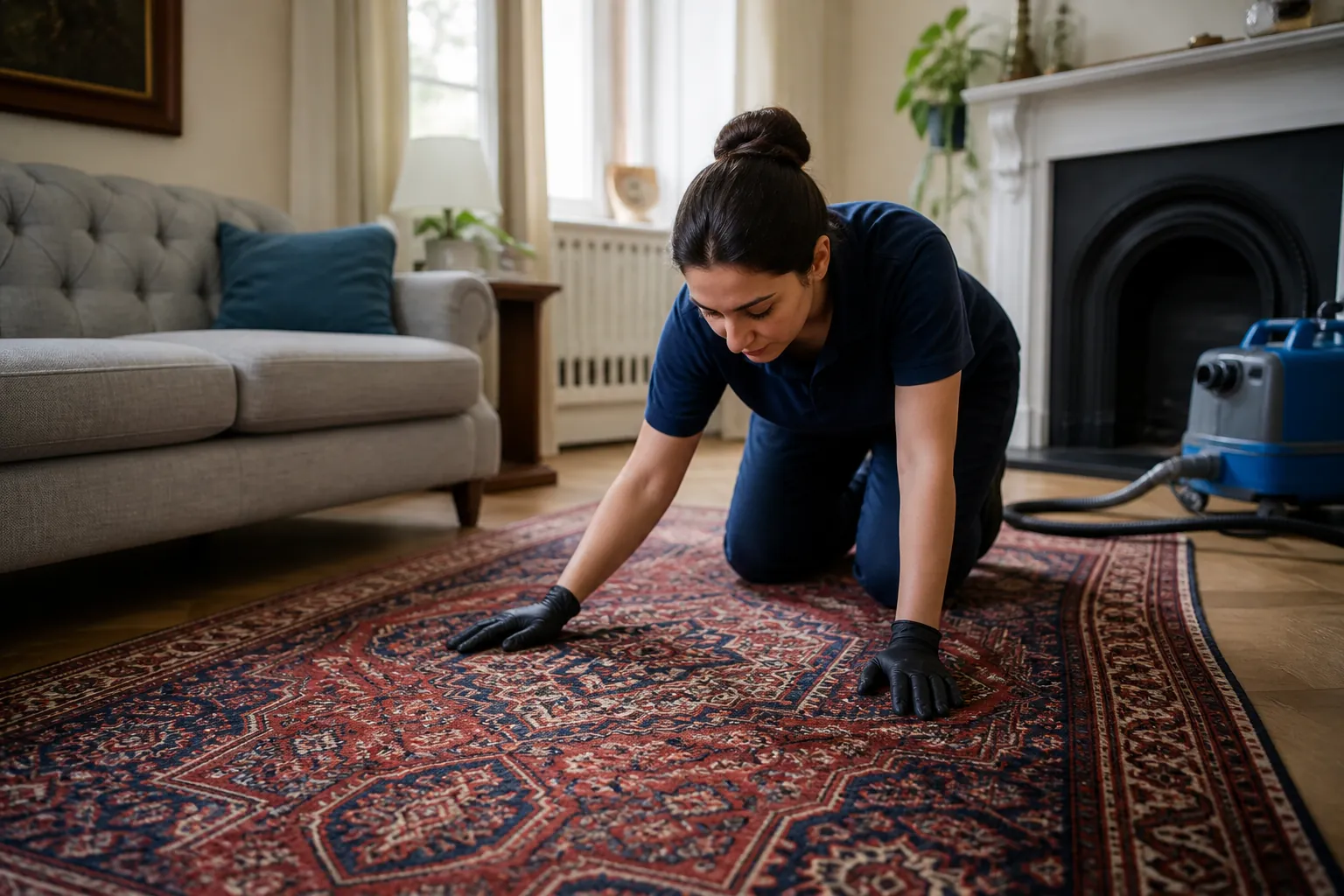
Pile form
Loops, cut ends and long tufts invite different handling.
Primary construction
Woven, tufted and bonded bodies respond differently.
Backing condition
A brittle or separating layer can restrict moisture.
Corners and binding
Loose details are documented before work begins.
FROM FAMILY MAP TO HANDOVER
Eight short decisions for a Harrow visit
The order prevents preparation, cleaning and aftercare from being treated as one vague step.
- 01
Number
Assign each busy or marked zone a clear reference
- 02
Read
Capture label, face, reverse and edge construction
- 03
Clear
Remove toys, cables and agreed light furniture
- 04
Screen
Check colours, residues and weak features
- 05
Clean
Follow the method selected for the actual rug
- 06
Inspect
Review zones against the pre-work record
- 07
Protect
Keep children, pets and feet away as advised
- 08
Reopen
Return the room to use after the handover point
HARROW AREA BANDS
Measure the rug, then add the household facts
These figures give orientation only. Unidentified products, dense pile, damaged backing, furniture limitations and requested incident treatment can affect the confirmed scope.
PREPARE THE HARROW MESSAGE
Label the zones so photographs stay meaningful
A short numbered sequence is easier to assess than a large folder of unexplained close-ups.
- Address area and contact information
- Rug length, width and pile depth
- Full-room orientation photograph
- Numbered view of each use zone
- Close image of every priority mark
- Care label and backing photographs
- Known spill and product timeline
- Furniture that will remain in place
- Child, pet, parking and stair arrangements
Practical household checks
Should toys appear in the first photograph?
A normal room overview is helpful, but clear all loose objects before the booked work begins.
Can the sofa remain?
Often it can, provided its position and the accessible boundary are agreed during quotation.
Is pile flattening a stain?
No. Compression, abrasion, shading and deposited soil are different conditions even when they overlap.
May pets enter after cleaning?
Follow the actual handover guidance and keep animals away until the rug is ready for use.
HARROW FAMILY-RUG FAQ
Answers for a busy shared room
How do I mark separate zones?
Use letters on a simple room sketch and repeat each letter in the corresponding photograph filename or message.
Does a synthetic label guarantee easy stain removal?
No. Substance, age, prior products, backing and fibre alteration all influence the realistic outcome.
What should happen to a fresh spill?
Remove safe excess without rubbing, avoid unapproved mixtures and report the event promptly.
Why include a protected area?
It offers a comparison for original pile height and colour, although differences may include light exposure as well as soil.
Can crushed pile be lifted completely?
Some compression may improve, but abrasion or permanently distorted fibres cannot be promised away.
Do all marks need individual close-ups?
Group similar tiny marks if practical, but give any unusual residue, colour change or damaged area its own view.
What if a backing corner is crumbling?
Stop lifting it, photograph what is safely visible and flag the weakness before any booking.
How is room downtime estimated?
The rug’s fibre, thickness, process, ventilation and household access needs determine the advice after work.
Can children stay in another room?
Yes, if the working route remains controlled and a responsible adult maintains separation throughout the visit.
What does the £68 minimum mean?
It is the current minimum visit value, with eligible combined work counted only after the complete booking is accepted.
MAKE THE FAMILY ROOM LEGIBLE
Send a Harrow rug map with real household context
Four labelled zones can tell us more than four paragraphs of generic condition wording.
