
STANMORE · LARGE ROOMS, FINE EDGES AND CAREFUL MOVEMENT
Rug Cleaning for Stanmore’s Collected Interiors
In a Stanmore house, a rug may anchor a formal reception room, sit beneath a piano or carry a family history that is not written on its label. The useful starting point is a calm inventory: provenance where known, present condition, vulnerable details and the clear route through the home.
- Photograph the rug in soft daylight before altering its position
- Record moth activity, fading and old repairs as separate condition notes
- Identify furniture that cannot be lifted or shifted without specialist help
- Measure doorways, stair turns and gated access before planning movement
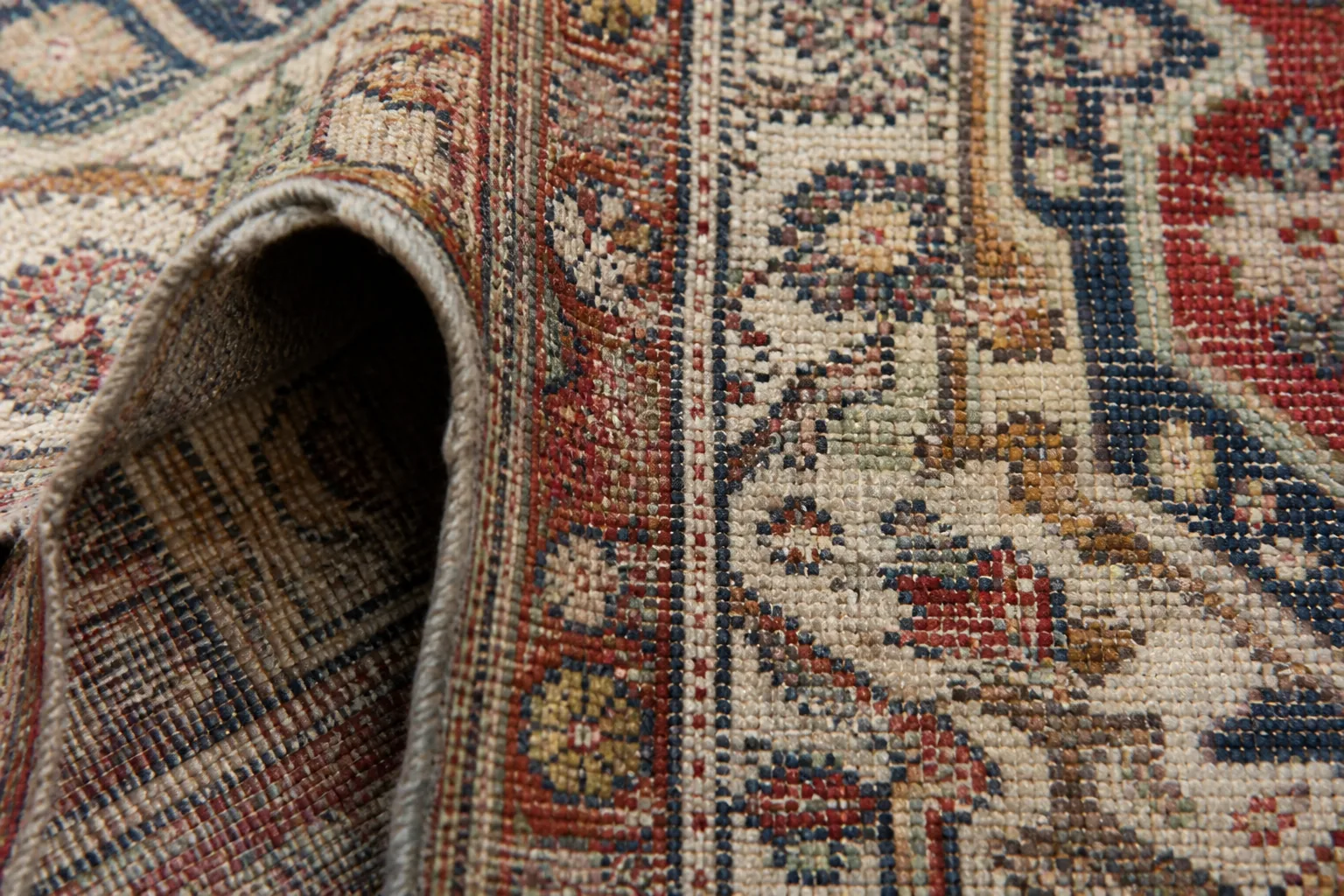
CATALOGUE WHAT IS PRESENT
Create a condition card, not a treatment instruction
Select only observations you can support. The purpose is to keep a delicate feature, an old intervention and a new concern from being collapsed into one vague description.
QUESTIONS FROM STANMORE OWNERS
Ten answers for rugs whose history matters
Should an inherited rug be valued before cleaning?
If monetary or cultural value is uncertain, independent specialist advice may be sensible. A cleaning quotation is not an appraisal or attribution service.
What photographs reveal an earlier repair?
Use raking light across the face, then show the same zone from the reverse. Different knot density, yarn or stitching can become easier to see.
Can faded borders regain their original colour?
Cleaning addresses removable material; it does not replace colour lost through sunlight or age. Fading is documented so it is not mistaken for remaining soil.
How should moth evidence be reported?
Photograph loose fibres, webbing, cases or irregular pile loss without brushing them away. Active infestation and textile cleaning are distinct scopes.
Does a large room make handling simple?
Not always. A piano, display cabinet or fixed hearth can divide the floor and remove a safe rolling line even when the room itself is generous.
Why include a photograph of the entrance gate?
Gate width, intercom procedure and the distance to the door influence vehicle position and carrying preparation, particularly for a heavy rolled rug.
May antique furniture be placed straight back?
Only according to the actual handover guidance. Metal feet, timber finishes and concentrated weight can interact badly with residual dampness.
Is a test patch a promise that every colour is stable?
No. A relevant check informs the assessment at that location; it cannot prove identical behaviour across every dye, repair and aged section.
What information helps with a water mark?
State the source, approximate date, depth reached and whether underfloor heating was operating. Include both the tide line and a wider unaffected field.
How does the minimum charge work in Stanmore?
The current guide begins at £68 for a visit. Eligible work can contribute when one combined booking is reviewed and confirmed in advance.
THE RECEPTION-ROOM SURVEY
Plan around what should remain undisturbed
Detached homes and larger apartments can offer space while containing objects that make improvised movement inappropriate. The scope identifies protected furniture, thresholds, security procedures and a suitable resting position before the rug is touched.
A typical Stanmore brief might concern a wool rug beneath occasional furniture. One border appears lighter near tall windows, while a small repaired corner has begun to curl. The owner supplies old purchase notes but does not treat them as proof of current fibre behaviour.
The plan preserves distinctions. Sun change is not called soil; historic stitching is not called damage caused by cleaning; and one recent drink mark is mapped without implying that the entire foundation is affected.
A Stanmore provenance and condition ledger
Known history. Record an approximate age, country of purchase and prior professional care only when supported by documents or clear recollection.
Uncertain claims. Descriptions such as Persian, silk or antique remain reported information until appropriate expertise confirms them.
Window exposure. Note which side receives direct sun and whether furniture has protected part of the pattern.
Previous repairs. Photograph reweaving, patched backing and replaced fringe from both sides without pulling loose yarn.
Insect signs. Keep evidence intact for identification and distinguish an infestation response from the later textile-care decision.
Water history. Give the source and spread of any leak, including contact with boards, underlay or protective pad.
Room geometry. Sketch the route around a hearth, island or piano where a straight roll is impossible.
Surface beneath. Stone, sealed timber and sensitive wood finishes are documented before protective movement is agreed.
Weight clues. Dense pile and substantial dimensions may require additional people even when the doorway is wide.
Colour record. Neutral daylight images establish differences between centre, border and zones once hidden by furniture.
Edge restraint. A stretched selvage or weak fringe root may require a change in how the rug is lifted.
Household rhythm. Pets, children, staff schedules and quiet hours inform timing but never dictate chemistry.
Outcome language. Soil reduction, mark improvement and preservation of existing character are discussed independently.
Final placement. Orientation markers prevent an important rug returning in the wrong direction.
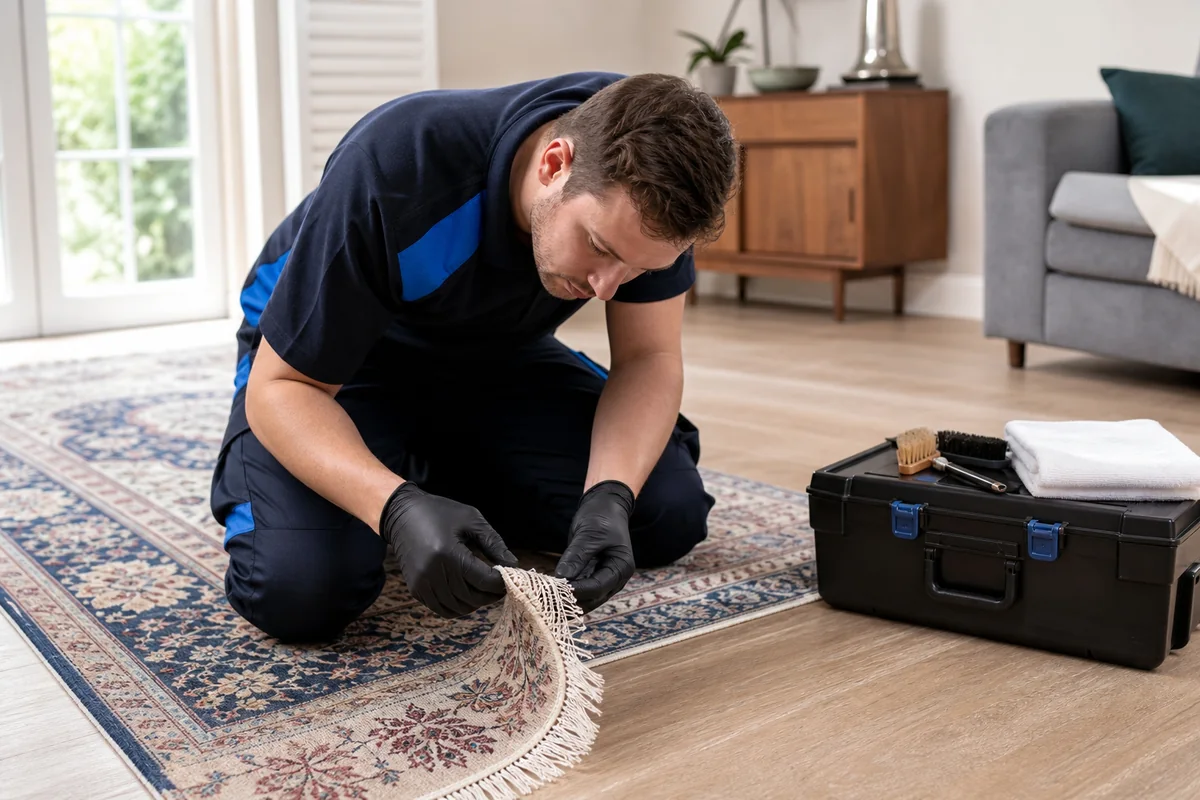
DIMENSIONS WITH CONTEXT
Size guides the estimate; significance guides the questions
Measured area is transparent, but a hand repair, fragile selvage, dense wet weight or restricted movement around valuable furnishings can materially change the proposed scope.
A FOUR-PART CONSERVATION VIEW
Read ageing, making and intervention together
A fine-looking surface can conceal a brittle foundation, a replacement patch or dyes with different histories.
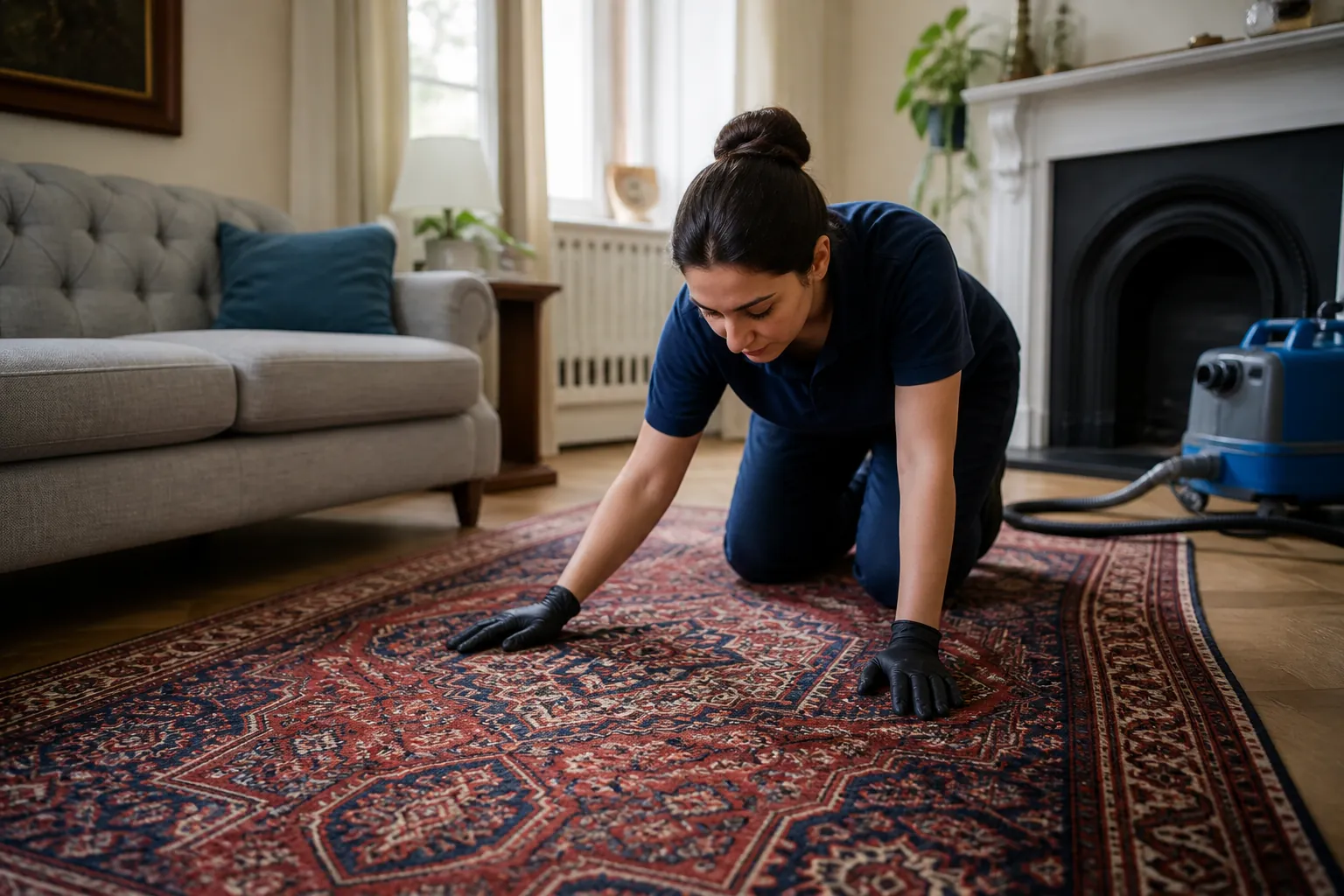
Strength before sheen
Fibre loss and brittleness matter more than a broad visual label.
Foundation continuity
Open areas and differing density can expose old intervention.
Ageing by zone
Window edges and protected fields may no longer match.
New material, old structure
A repair can respond differently from the surrounding original.
ASSEMBLE THE STANMORE FILE
Pair provenance notes with present-day evidence
Documents add context, but current photographs and measurements still carry the practical decision.
- Room name and exact rug dimensions
- Full face photographed square-on in diffuse daylight
- Reverse view where lifting can be done without strain
- Close studies of repaired, faded or weakened sections
- Care label, invoice or provenance note if available
- Date and source of any recent liquid contact
- Position of piano, cabinet and other immovable pieces
- Door, gate and turning measurements for the carrying route
- Preferred contact for security and household coordination
Four boundaries worth stating
Can photographs authenticate a rug?
No. They support scope planning, not expert attribution, age verification or valuation.
Does cleaning repair moth damage?
No. Fibre loss is physical damage; any repair belongs to a separate specialist conversation.
Will treatment even out sun fading?
Lost dye is not soil. The visible contrast may remain after removable deposits are addressed.
Can every rug be handled at the property?
No universal arrangement is assumed. Construction, condition, dimensions and access determine what can be offered.
A QUIET, DOCUMENTED SEQUENCE
Seven Stanmore stages with a record at each handoff
The process protects provenance and fragile detail by making observation precede action.
- I
Catalogue
Fix orientation, dimensions and known history
- II
Protect
Define furniture, floor and access boundaries
- III
Examine
Read yarn, dyes, knots and repairs by zone
- IV
Evaluate
Check only the compatibility questions that matter
- V
Undertake
Follow the agreed conservative working scope
- VI
Reconcile
Compare condition notes without hiding permanence
- VII
Replace
Restore orientation when drying guidance allows
A PALE BORDER MAY BE HISTORY
Stanmore window exposure needs honest interpretation
A sunward edge can carry both loose soil and irreversible colour loss. Compare it with a section once covered by furniture, record the light direction and resist the temptation to promise uniformity.
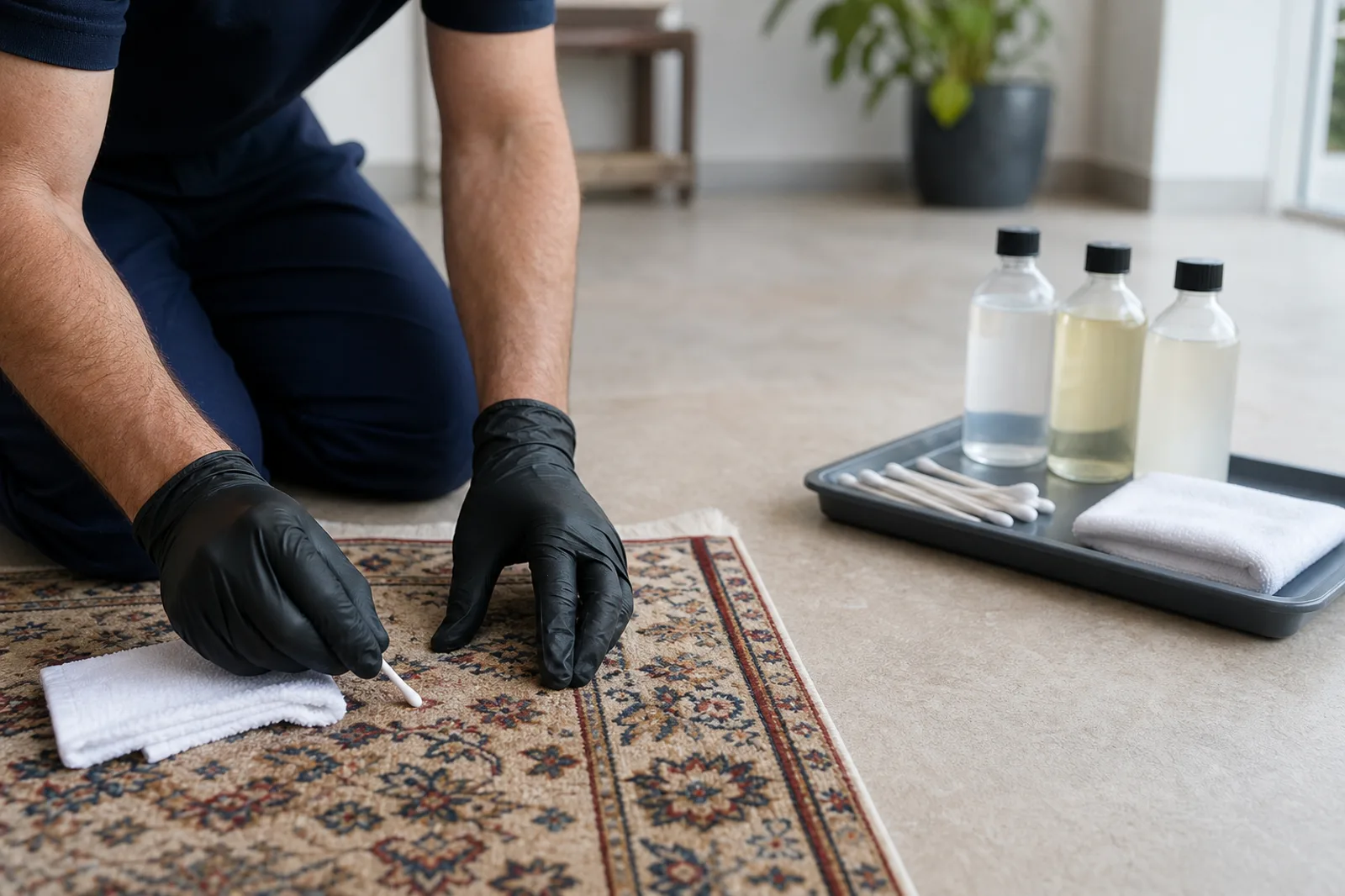
INSECT EVIDENCE CHANGES THE ORDER
Preserve clues before vacuuming them away
Larval cases, webbing and irregular fibre loss should be photographed and considered separately from routine dust removal. Cleaning does not replace pest identification or repair missing pile.
- Isolate the observation from general surface debris
- Check dark edges beneath furniture without dragging the rug
- Record other textiles that show similar signs
- Arrange the correct specialist step before cosmetic expectations
BEGIN WITH A CONDITION RECORD
Give your Stanmore rug a precise, unhurried introduction
Send its measurements, history, vulnerable details and movement constraints for a properly scoped response.
