
ST JOHN’S WOOD · START WITH THE OBJECT, NOT A STOCK METHOD
Rug Cleaning Assessment in St John’s Wood
A rug carried through a mansion-block entrance deserves a more careful brief than “clean the stain”. We record how it is made, what has happened to it and where it normally lies before discussing suitable work.
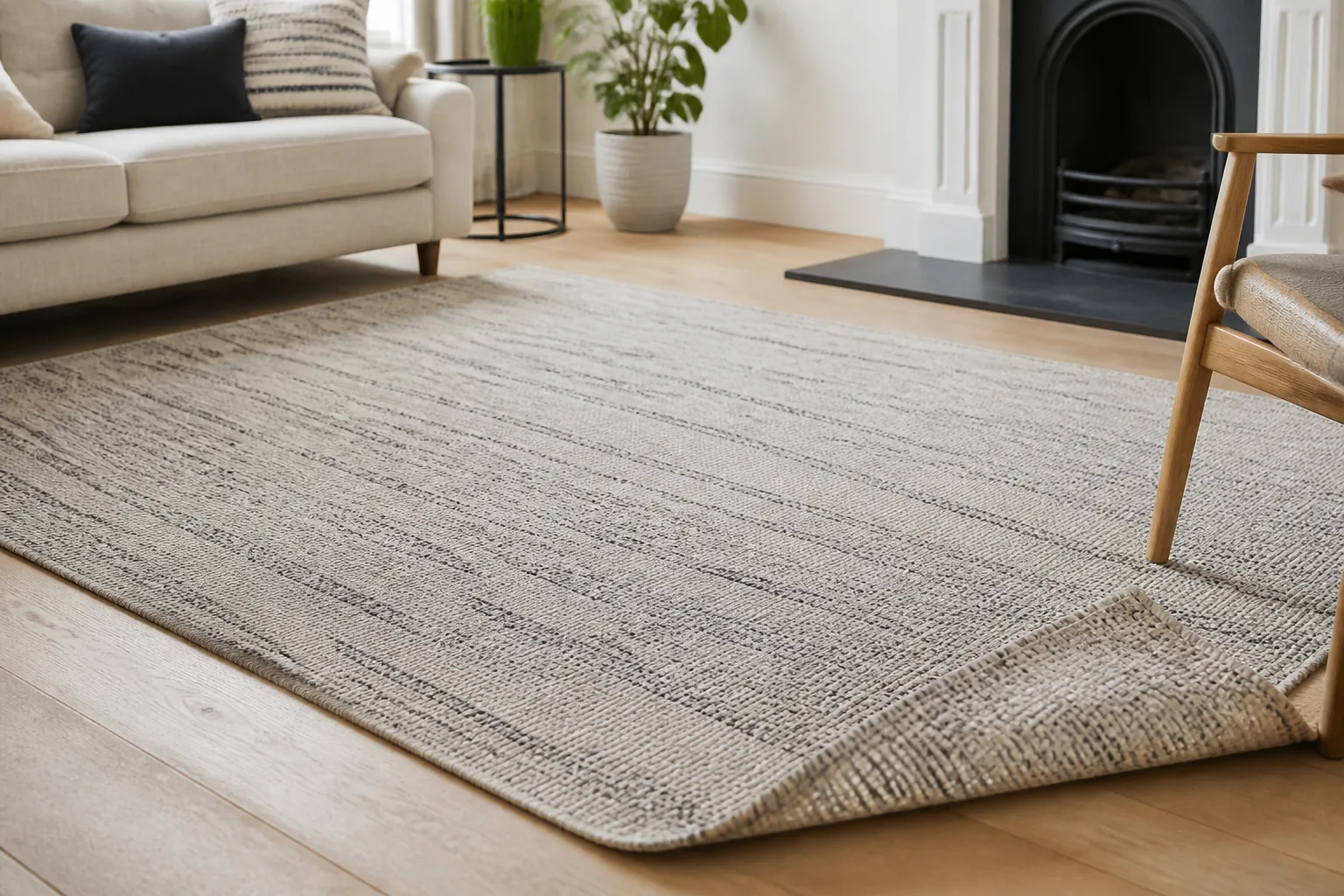
- Photograph the whole rug square-on, with every edge visible
- Show the oily seating-side mark separately from general grey traffic soil
- Capture the underside, label, fringe and any older repair
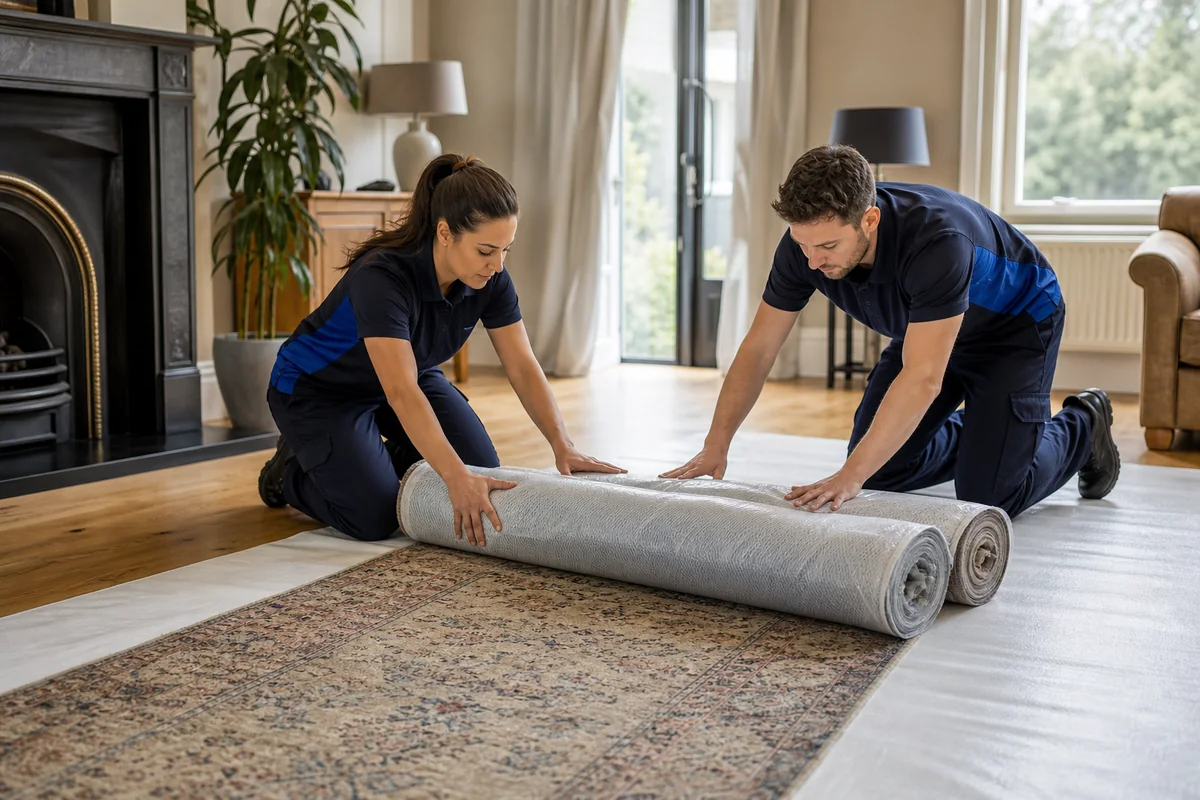
- Confirm porter arrangements, lift protection and the parquet beneath
BUILD A USEFUL FIRST RECORD
Four sets of clues shape the inspection
Select what you genuinely know. An unanswered question is more useful than an invented fibre or construction.
THE ST JOHN’S WOOD SETTING
Plan the journey through the building as carefully as the room
For our example, a hand-knotted rug sits on parquet inside a porter-managed mansion block. The lift lining, doorway turns and furniture clearance govern movement; they do not reveal what the fibres or dyes will tolerate.
Read the photographs in sequence. A full-room picture explains scale and placement. A second image isolates the darkened seating edge, while reverse and border views show construction clues and vulnerable areas.
Measurements, previous cleaning and products used belong in the same record. This lets the assessor separate handling questions from treatment questions before anyone arrives.
A complete mansion-block brief
Orientation: Mark which edge faces the windows and which runs beside the most-used chair.
Dimensions: Record maximum length and width without counting loose fringe.
Incident map: Circle the oily patch in a photograph rather than calling the whole field stained.
Daily traffic: Note shoes, pets and frequently moved seating that may explain uneven soil.
Ownership history: Say whether the rug is inherited, recently purchased or of uncertain age.
Past work: Name any professional cleaning, hired machine or household spotter you remember.
Construction clues: Supply clear photographs of knots, backing and edge finish without guessing.
Colour layout: Flag pale grounds, saturated motifs and colour seen on an old cloth or floor.
Weak points: Photograph open seams, brittle fringe, curling corners and historic patches.
Underfloor risk: Identify parquet finish and any underlay so lifting can be considered beforehand.
Obstructions: Include door closers, narrow landings and fixed furnishings on the carrying line.
Building protocol: Give the booking window agreed with reception and rules for padded lifts.
Smell report: Describe when an odour is strongest and whether it changes with humidity.
Priority: Rank appearance, local contamination and general soil instead of treating them as identical.
Return plan: Decide where the rug can remain undisturbed while condition and dryness are reviewed.
Expectation: Keep removal claims open until wear, dye change and removable matter are distinguished.
READING THE DARKENED AREA
An oily-looking patch may have several layers
The seating-side concern might include transferred skin oils, tracked dust, crushed pile or an earlier product. Its position and history matter as much as its colour.
WHEN ODOUR ENTERS THE BRIEF
Locate the source before discussing control
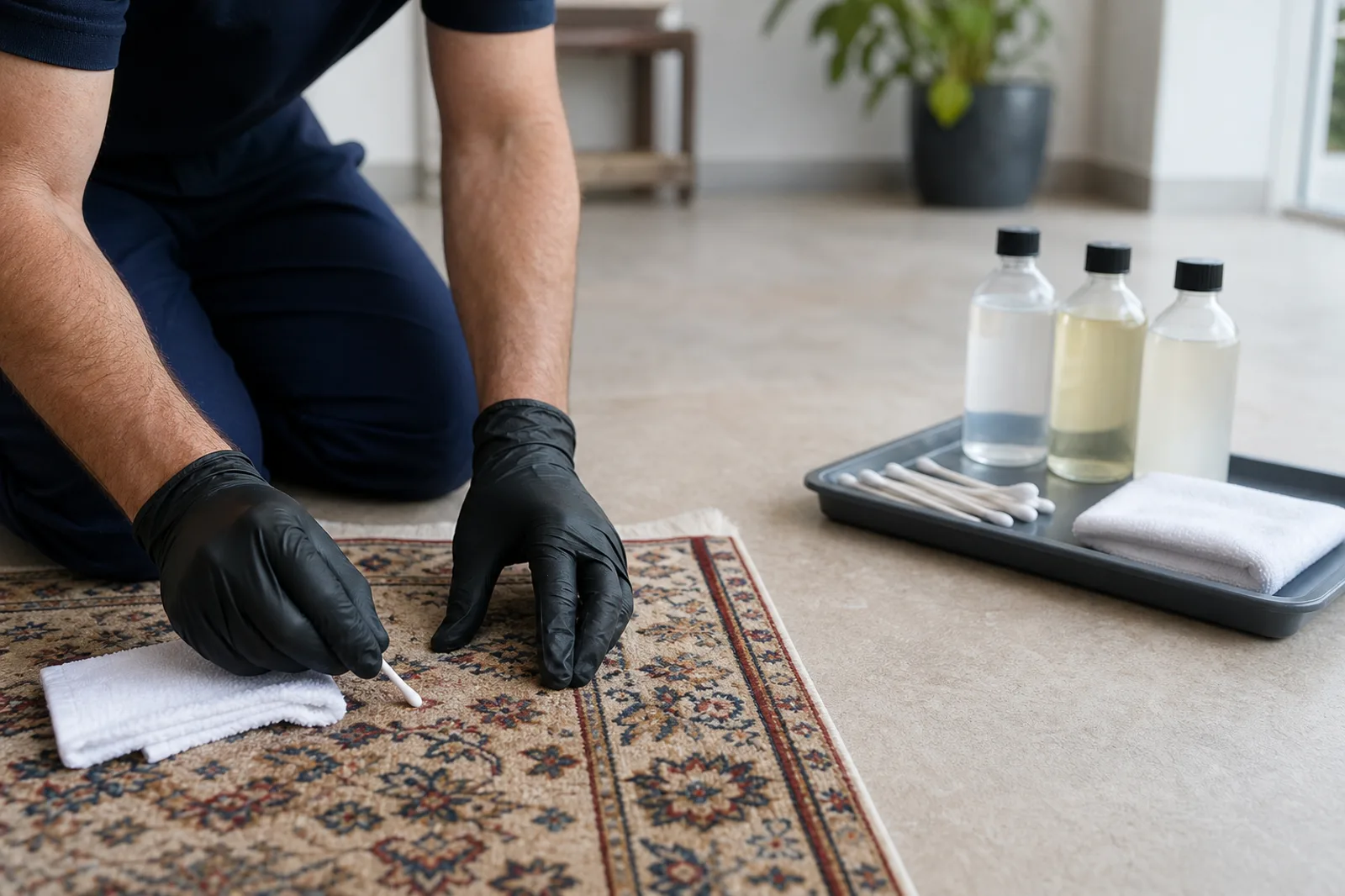
A room smell does not establish that the pile is the only affected layer. Record its boundary, timing and known cause, including possible contact with the reverse or parquet.
- Mark the smallest confidently affected zone
- List liquids, powders and sprays already applied
- Say whether the underside or floor also smells
- Treat improvement as conditional on what inspection finds
THE TECHNICAL CROSS-CHECK
No single clue authorises a treatment
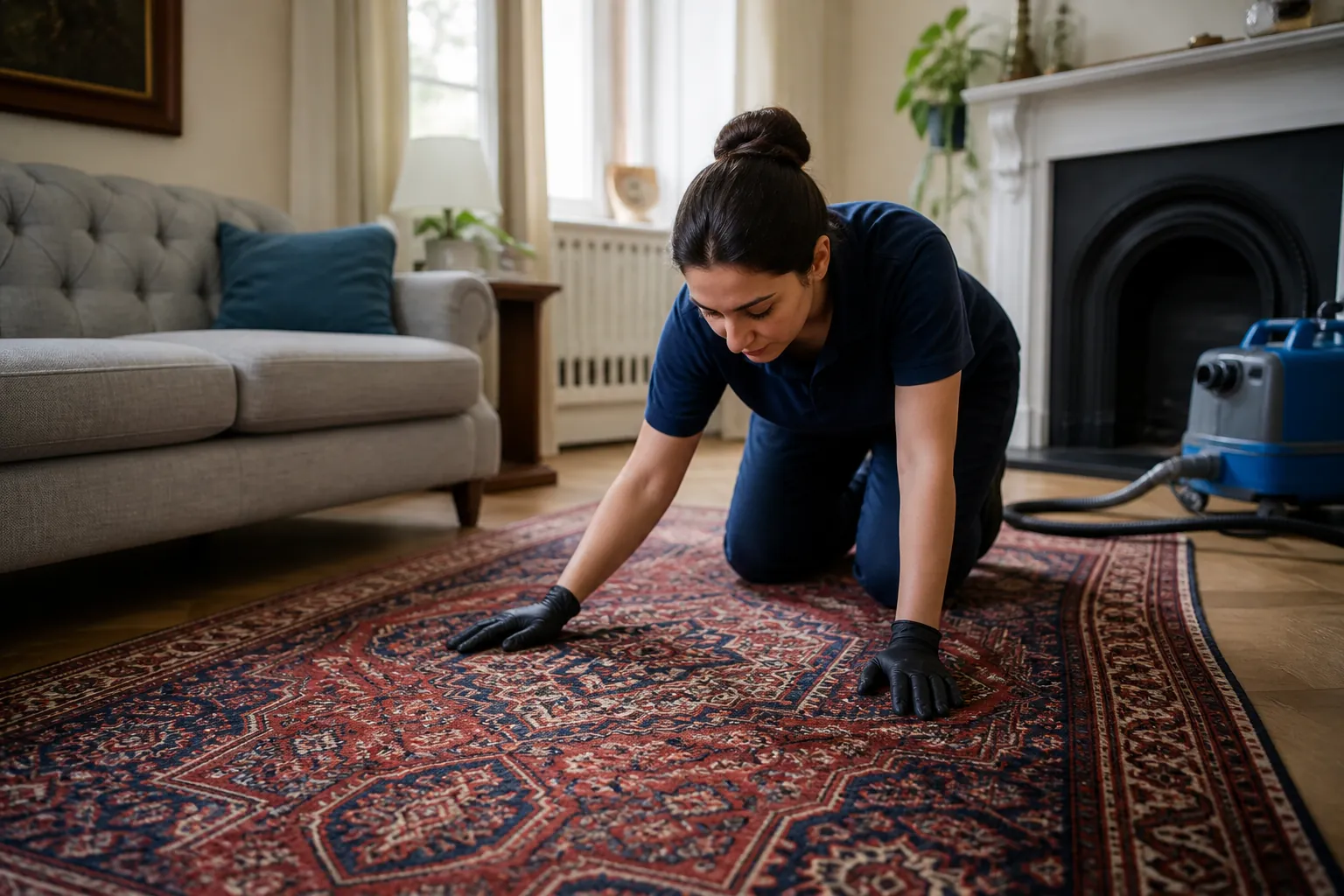
A label, knot pattern or colourfastness observation answers only part of the question. The assessor combines evidence before defining boundaries.
Likely fibre behaviour
Influences chemistry, friction and moisture tolerance.
Dye response
Contrasting motifs may call for testing and tighter control.
How the rug holds together
Knots, density and backing affect handling from both faces.
Edges, fringe and former repairs
Pre-existing weakness is documented before the rug is lifted or worked.
A ROUTE FOR THIS PARTICULAR RUG
Seven decisions link arrival to handover
The sequence stays flexible because a dense hand-knotted rug, an oily local concern and limited mansion-block access can each change the practical scope.
- 01
Survey
Confirm dimensions, orientation, damage and the priority patch
- 02
Interpret
Compare label information with fibre, weave and colour observations
- 03
Protect
Agree handling around fringe, repairs, parquet and the building route
- 04
Reduce dry soil
Address accessible grit without treating wear as removable dirt
- 05
Apply the scope
Work only within the limits supported by testing and condition
- 06
Reassess
Compare the seating edge, open field and border after the agreed work
- 07
Hand over
Explain airflow, disturbance and safe return over the parquet
MEASURED-AREA GUIDE
Size opens the estimate; complexity completes it
Use the bands to orient your enquiry. A quotation can then account for construction, condition, access, testing and optional tasks actually agreed.
MAKE THE FIRST MESSAGE COUNT
Send evidence that answers practical questions
- St John’s Wood postcode and building type
- Maximum rug length and width
- One uncropped photograph of the whole piece
- Detailed image of the seating-side oily patch
- Back, label and weave close-up
- Fringe, corners and previous repairs
- Known age, fibre or maker information
- Spill products and earlier cleaning
- Porter, lift and parquet notes
Short answers before you book
Will photographs identify the exact fibre?
Not reliably. They provide clues and reveal where closer physical checks are needed.
Is traffic shading the same as dirt?
No. Directional pile, abrasion and removable matter can look similar in a static image.
Should the rug be rolled before the visit?
Wait for handling advice if it is large, fragile or trapped by furniture.
Can the parquet stay unmentioned?
No. The underlying finish matters to lifting, protection and the return arrangement.
QUESTIONS FROM ST JOHN’S WOOD HOMES
Useful distinctions before an appointment
Which image is most useful for the initial enquiry?
Start with a level, well-lit view showing the complete outline. Add close-ups afterwards so detail never loses its position in the whole rug.
Why record the room if the rug is removable?
The room shows scale, access, furniture and the floor interface. Those facts affect logistics even when the textile is treated elsewhere.
Can the oily mark beside a chair be guaranteed to lift?
No. Oil, residue, pile compression and permanent colour change may overlap, so outcome remains conditional on assessment.
What information does the porter need?
Agree arrival hours, parking or loading rules, lift use and required protective coverings before the team travels.
Is a hand-knotted rug automatically wool?
No. Construction does not prove fibre content. Labels, visual clues and appropriate testing are considered together.
May I use a household stain remover while waiting?
It is safer to pause. Photograph the concern and report any product already used because residues can alter later decisions.
How are loose fringes handled?
Their condition is recorded before movement. Fragility can change lifting, agitation and the scope accepted.
What should I say about an intermittent smell?
Note its location, likely event, humidity pattern and whether the reverse or underlying floor seems involved.
When will I receive drying guidance?
At handover, once construction, absorbency, treatment and room conditions are known. A universal clock would be misleading.
How do the four advertised prices relate to my quote?
Measured area selects a starting band. Inspection can then qualify the figure for build, condition, access and agreed extras.
START WITH A WELL-DOCUMENTED RUG
