
BAYSWATER · START WITH THE RUG IN FRONT OF YOU
Rug Cleaning in Bayswater for Runners and Area Rugs
A narrow hallway runner and a heavy drawing-room rug ask different questions. Tell us how yours is made, where it lies and what has changed, so the visit begins with evidence rather than a stock cleaning formula.
- Measure the textile at its widest and longest points
- Photograph the complete face, reverse and maker’s label
- Separate colour change, worn edges and fresh marks in the brief
- Explain porter, lift, parking and doorway arrangements

SORT OBSERVATIONS BEFORE THE VISIT
Build a profile without guessing the answer
Select what you can establish confidently. “Not known” is more useful than an invented fibre or method.
FOUR THINGS THAT CAN DISAGREE
A label never tells the whole story
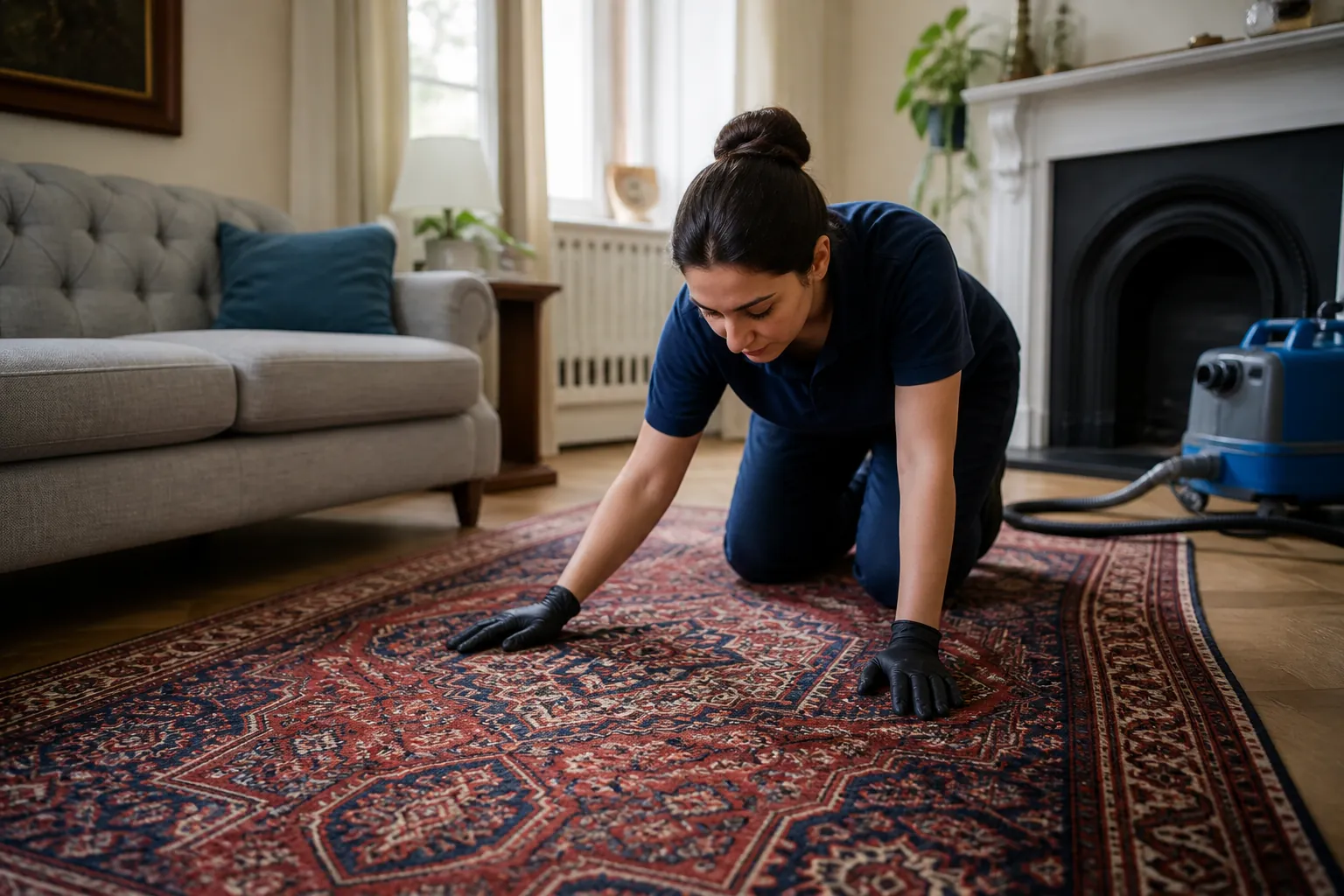
A fibre description may be correct while a border dye, later repair or backing behaves differently. Looking at the assembly as well as the face helps reveal those conflicts before work is proposed.
What the yarn may tolerate
Absorbency, resilience and feel provide practical clues.
Which shades need caution
Deep borders and contrasting motifs may warrant separate checks.
How face and foundation connect
Knots, tufting and backing affect handling and moisture decisions.
What is already vulnerable
Thinning pile, split binding and repairs are logged before movement.
A BAYSWATER ROOM SCENARIO
The route through the building belongs in the plan
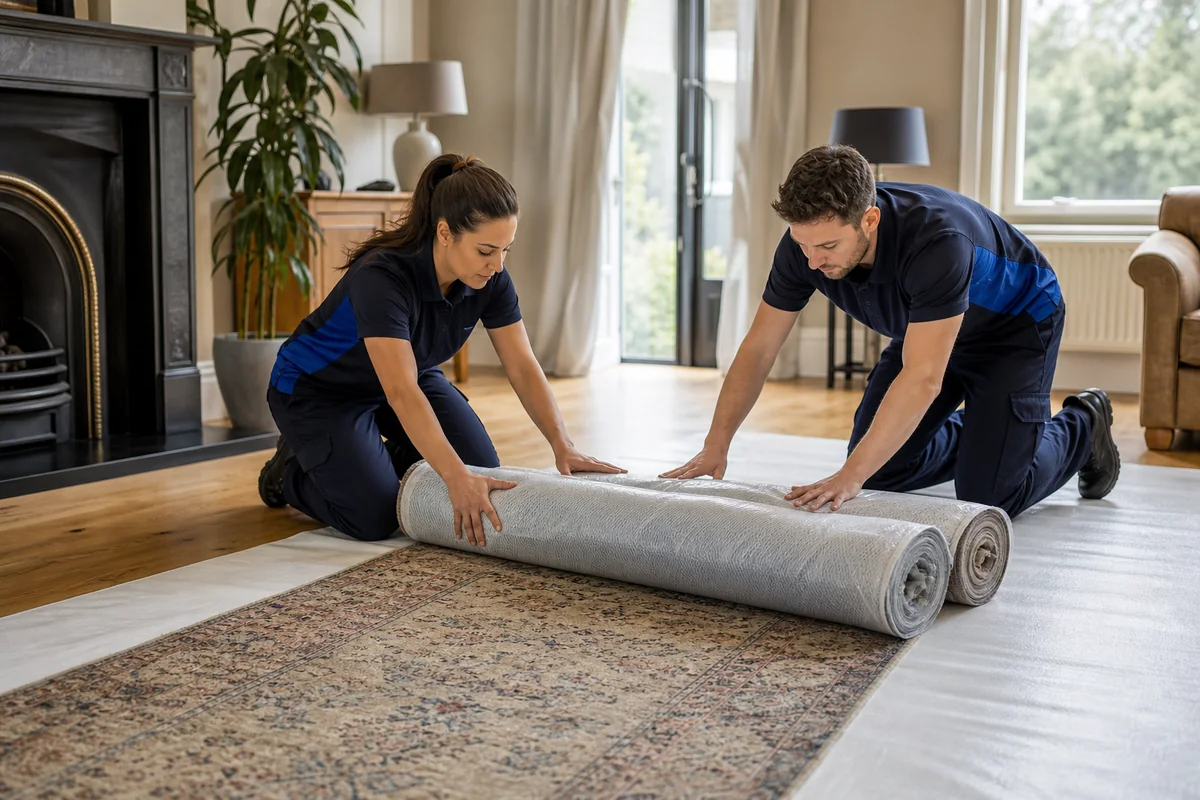
Imagine a striped runner in a converted stucco townhouse near Queensway. It crosses a timber hall, ends at a tight stair turn and cannot leave through the front door without rolling. Those facts shape handling and floor protection, while examination of the rug determines the cleaning boundary.
Photograph context and detail separately. A room view records scale, furniture and the direction of foot traffic. Closer images can then show a tea mark near the console, abrasion at the stair end and a cotton fringe that is beginning to separate.
Building logistics deserve equal precision. State whether a porter controls entry, a lift is available, loading has a time limit or the household needs the hall returned to use by an agreed point.
Bayswater enquiry notes worth collecting
Position: Show where the runner begins and ends before anything is shifted.
Scale: Put length and width beside a full photograph rather than estimating from the room.
Face: Record pile direction, pattern and differences between busy and sheltered sections.
Reverse: Photograph backing, exposed foundation and any transferred residue.
Edges: Isolate curling, frayed binding and missing fringe from central staining.
Label: Transcribe readable wording, while treating it as one clue rather than proof.
Colour: Highlight saturated reds, dark outlines and areas that appear faded.
Repairs: Point out patches, re-knotting, glued sections or replaced edge tape.
History: Name professional cleans, rented machines and household products already tried.
Incident: Give the substance, approximate date and immediate response to a spill.
Odour: Locate the affected zone and say whether it changes with damp or warmth.
Wear: Distinguish flattened or missing yarn from removable surface matter.
Furniture: List legs or castors currently bearing on the textile.
Arrival: Include parking controls, reception hours and service-access rules.
Aftercare: Reserve a realistic place for the rug while handover guidance is followed.
Budget: Use measured area as a starting band, not a promise of final scope.
READ THE MARK BEFORE NAMING IT
Soiling, damage and colour loss can look alike
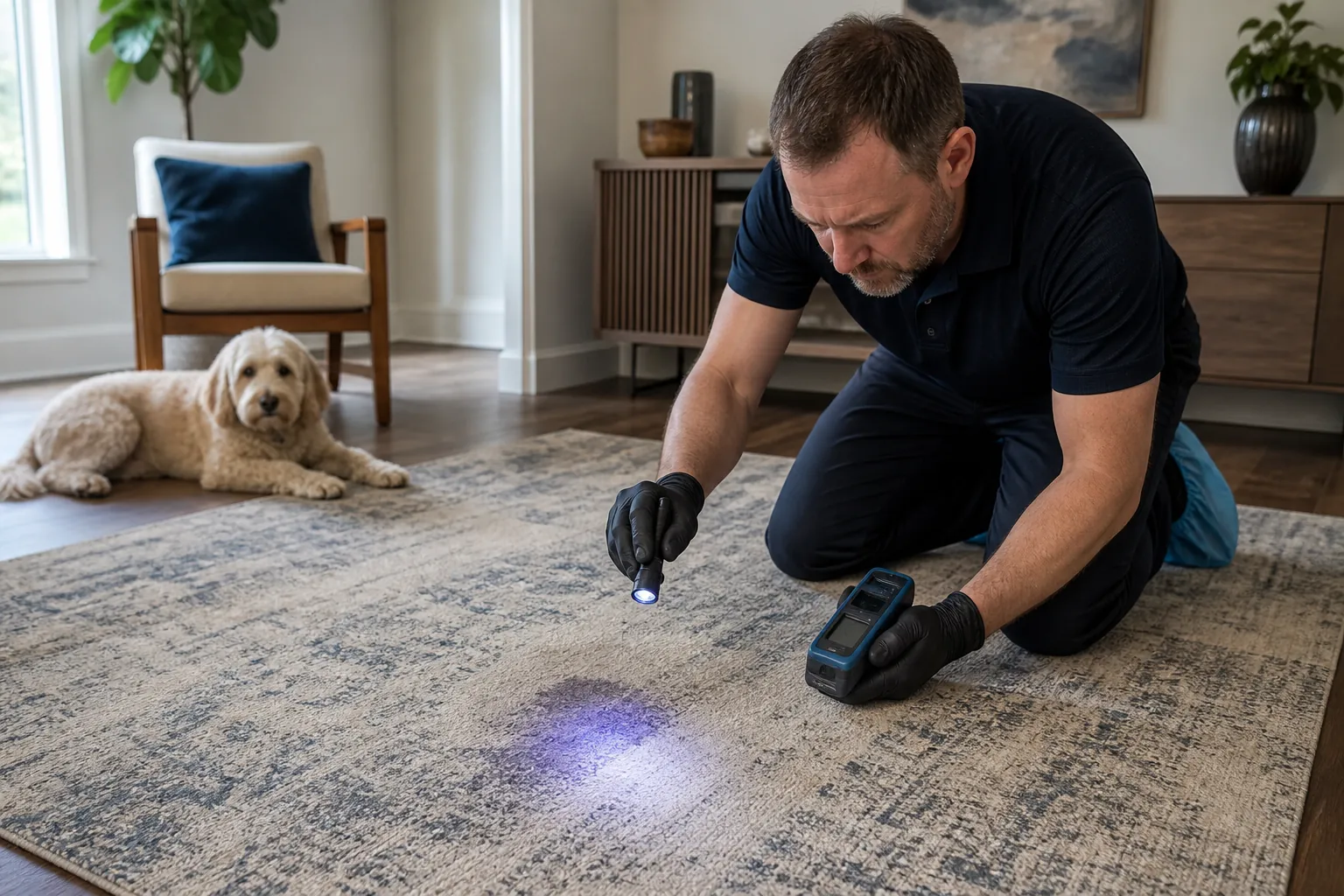
A grey pathway may combine dry particles with crushed pile. A pale patch could be residue, fading or dye change. The record should describe what is visible without promising that washing will reverse it.
PRODUCT AND ODOUR HISTORY
Earlier action changes the questions
Tell us if powder, detergent, disinfectant, spot remover or a hired machine touched the area. For odour, indicate whether it is local, widespread or stronger at the back.
- Identify the affected face and underside
- Check the floor below for related transfer
- Keep age and extent as separate facts
- Avoid a removal guarantee before examination
A TRACEABLE WORKING SEQUENCE
Each stage answers the next question
Readiness for use depends on the real fibre, density, foundation, selected work and room conditions. A fixed drying-hour claim would ignore the variables that matter.
- 01
Record
Map measurements, wear, marks and fragile parts
- 02
Examine
Compare face, reverse, colour and construction clues
- 03
Prepare
Remove accessible particles within safe handling limits
- 04
Proceed
Apply only the route supported by the findings
- 05
Finish
Manage pile, edges and moisture deliberately
- 06
Compare
Review priorities against the opening record
- 07
Explain
Give room-specific drying and furniture advice
BAYSWATER GUIDE PRICES
Area sets the opening band
Construction, condition, access and separately agreed tasks can alter the final quotation. Confirm what is included before the appointment.
TURN OBSERVATIONS INTO A QUOTE BRIEF
Send nine concrete details
- Bayswater postcode and preferred timing
- Maximum length and width
- One photograph containing the whole rug
- Close views of each priority mark
- Label and reverse images where accessible
- Fringe, binding and repair details
- Known material and construction information
- Previous cleaning or spot-product history
- Parking, stairs, lift and entry restrictions
Four points to settle early
Can images confirm the fibre?
Usually not. They improve the brief, while physical examination and testing resolve uncertainty.
Does every stain disappear?
No. Permanent dye alteration, abrasion and fibre loss can remain after removable matter is addressed.
When may the rug go back into use?
Follow the actual handover advice, which reflects construction, work completed and indoor conditions.
Is odour treatment automatically included?
No. Its likely source, reach and requested outcome must first become part of the agreed scope.
BAYSWATER RUG CLEANING QUESTIONS
Answers that keep expectations realistic
What should appear in the first photograph?
Include every edge and enough surrounding floor to show scale, placement and access.
Why do you need a reverse image?
The underside may reveal foundation, backing, repairs, residue and contamination not visible above.
Can a wool label determine the method?
No. Dyes, construction, wear and later alterations still require consideration.
Should I move a heavy cabinet first?
Discuss it in advance. Weight, clearance and the floor beneath affect safe preparation.
How are worn fringes handled?
They are documented as vulnerable structure, and their condition may narrow the workable scope.
May I try another stain remover beforehand?
Avoid further experimentation; instead, tell us what was applied and when.
Why describe the doorway and lift?
Dimensions and turns help plan movement without confusing access logistics with textile treatment.
Can you quote from square metres alone?
Area gives an initial band, but build, condition, logistics and extras complete the amount.
Will cleaning restore crushed pile?
Not necessarily. Physical wear and lost resilience are different from detachable soil.
How long will drying take?
No single duration fits every rug; material, density, foundation, airflow and the agreed work all contribute.
BEGIN WITH MEASUREMENTS AND HONEST OBSERVATIONS
